
To keep your peace lily blooming and prevent brown tips, ensure you water it consistently when the top inch of soil feels dry, using room temperature water to avoid shock. Proper watering prevents overwatering and root issues while promoting healthy blooms. Brown tips often stem from inconsistent watering, low humidity, or dry air. Maintaining good airflow, keeping the plant clean, and avoiding pests also help. If you want to discover more tips, you’ll find helpful insights on nurturing your plant’s beauty and health.
Key Takeaways
- Ensure consistent watering to keep soil moist, preventing brown tips caused by dehydration or overwatering.
- Maintain proper light and temperature conditions to encourage healthy blooms and prevent stress-related browning.
- Regularly inspect for pests and clean leaves to promote vibrant blooms and reduce brown tips from damage.
- Use room temperature water and avoid overwatering to support root health and flower development.
- Remove dead or brown tips gently and prune spent blooms to encourage new growth and better flowering.
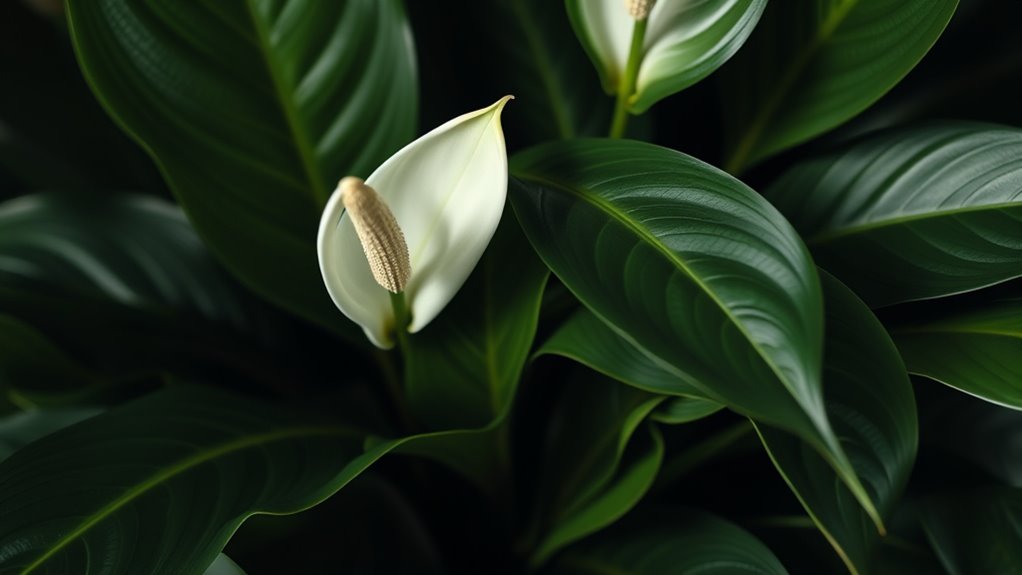
Are you wondering how to keep your peace lily healthy and thriving? One of the most important aspects is establishing a proper watering schedule. Peace lilies prefer consistently moist soil but hate sitting in water. You should water your plant when the top inch of soil feels dry to the touch, usually once a week. During warmer months or if your home is particularly dry, you might need to water a bit more often. Conversely, in cooler or more humid conditions, watering less frequently is better. Always check the soil before watering to prevent overwatering, which can lead to root rot. Using room temperature water is advisable, as cold water can shock the roots. When watering, do it thoroughly until excess water drains from the pot’s bottom, ensuring the roots receive adequate moisture. Discard any excess water from the saucer afterward to prevent the roots from sitting in standing water, which promotes disease. Regularly inspecting your plant helps catch issues early and keeps it healthy. Proper watering techniques are essential for maintaining a thriving peace lily. Pest prevention is another critical factor in maintaining a healthy peace lily. Keep an eye out for common pests like spider mites, mealybugs, and scale insects. These pests often latch onto the leaves and stems, causing damage and weakening the plant. Regularly inspecting your peace lily helps catch infestations early. To prevent pests, ensure your plant isn’t stressed by overwatering or underwatering, as stressed plants are more vulnerable. Keep the leaves clean by gently wiping them with a damp cloth to remove dust and potential pests, which also improves photosynthesis. If you notice pests, treat the plant promptly with insecticidal soap or neem oil, following the product instructions carefully. Maintaining good airflow around your plant and avoiding overcrowding also discourages pest infestations. Remember, healthy plants are less likely to attract pests, so providing proper watering and environmental conditions is key.
Frequently Asked Questions
How Often Should I Repot My Peace Lily?
You should repot your Peace Lily every 1 to 2 years or when it becomes root bound. Check if the roots are circling the pot or pushing out of the drainage holes, which indicates it’s time. Use a well-draining potting mix to give your plant the nutrients it needs. Repotting helps prevent root bound issues, encourages healthy growth, and keeps your Peace Lily thriving.
Can Peace Lilies Survive in Low Light Conditions?
Yes, peace lilies can survive in low light conditions, but they thrive best with indirect, moderate lighting. You should adjust your watering frequency based on the lighting; in low light, water less often to prevent overwatering. Keep in mind that while they tolerate low light, they might not bloom as often. make sure you monitor your plant’s health and provide occasional brighter spots to boost growth and flowering.
What Is the Best Fertilizer for Peace Lilies?
You should use a balanced, water-soluble fertilizer like 20-20-20 for your peace lily. Apply it every 6 weeks during the growing season, adjusting your watering schedule to keep the soil consistently moist but not soggy. Guarantee good soil drainage to prevent root rot, which can hinder blooming and overall health. Fertilizing correctly helps promote vibrant blooms and keeps your peace lily thriving indoors.
How Do I Prevent Pests on My Peace Lily?
To prevent pests on your peace lily, start by regularly inspecting for signs of pest identification like tiny insects or webbing. Keep your plant healthy with proper watering and humidity, which makes it less attractive to pests. Use natural remedies such as neem oil or insecticidal soap to treat infestations early. Consistent care and early detection help you prevent pests from spreading and damaging your plant.
When Is the Ideal Time to Prune My Peace Lily?
When it comes to pruning your peace lily, timing is everything—you want to strike while the iron’s hot. The best time is after it finishes blooming, typically in late spring or early summer. Use proper pruning techniques by snipping away dead or yellowing leaves and spent flower stalks. This helps with bloom maintenance and keeps your plant healthy, so it can put on a show next season.
Conclusion
Taking good care of your peace lily guarantees vibrant blooms and healthy leaves. Remember, overwatering is a common mistake that can lead to brown tips—so keep the soil moist but not soggy. Did you know that peace lilies can filter indoor air pollutants, improving your home’s air quality? By following these tips, you’ll enjoy lush, beautiful plants that brighten your space and boost your well-being. With a little attention, your peace lily will thrive and continue to grace your home with its elegance.