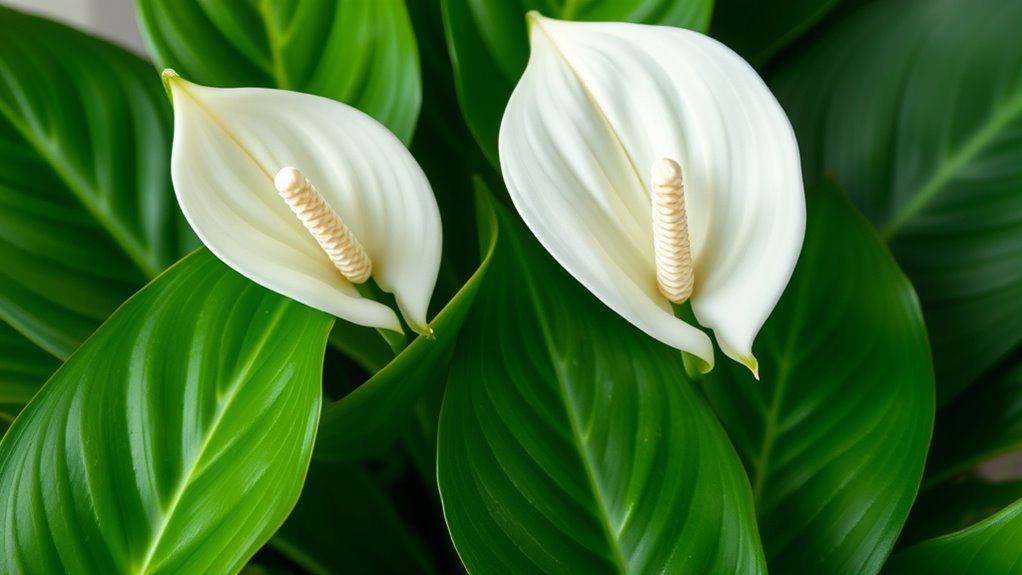

To encourage your peace lily to bloom and avoid brown tips, guarantee you’re watering when the top inch of soil feels dry, using thorough watering without overdoing it. Place your plant in bright, indirect light—too much direct sun can cause leaf burn, while low light may stop blooms. Proper watering and lighting help maintain lush leaves and vibrant flowers, and caring for these factors will reveal more tips to keep your plant healthy and beautiful.
Key Takeaways
- Ensure the Peace Lily receives bright, indirect light to promote blooming and prevent leaf scorch.
- Maintain consistent watering when the top inch of soil feels dry, avoiding overwatering or underwatering.
- Keep soil well-drained to prevent root rot and support healthy flower development.
- Brown tips often indicate overexposure to direct sunlight or inconsistent watering; adjust placement and watering habits.
- Use artificial grow lights if natural light is limited to encourage persistent blooms and vibrant foliage.
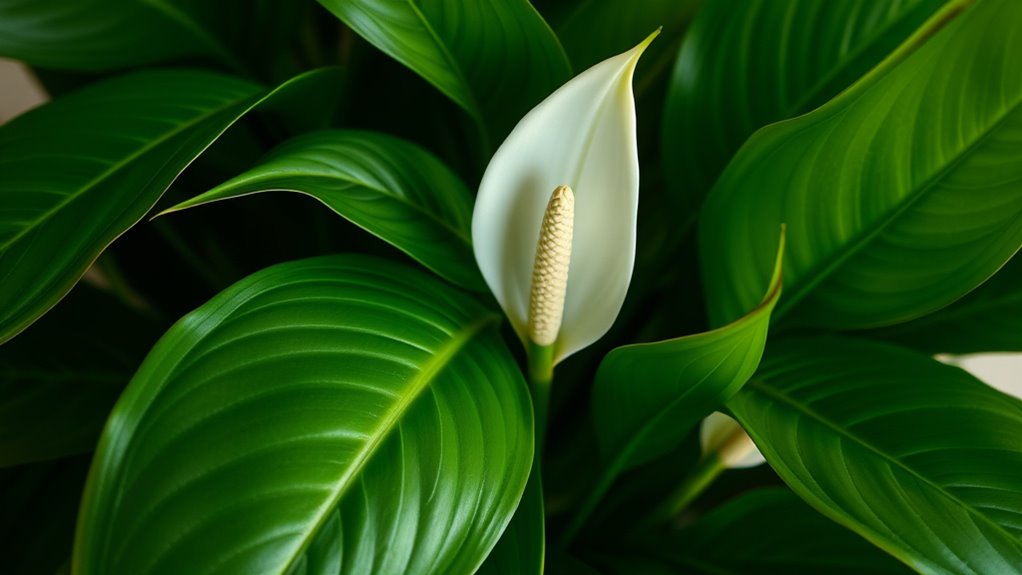
Caring for a peace lily is straightforward once you understand its basic needs. One of the most vital aspects is getting the watering frequency right. You don’t want to overwater or underwater your plant, as both can cause stress and affect its health. Typically, you should water your peace lily when the top inch of soil feels dry. Depending on your home’s environment, this could mean watering once a week or every ten days. Always check the soil moisture first, rather than sticking to a strict schedule, because indoor conditions like humidity and temperature can influence how quickly the soil dries out. When you do water, do so thoroughly until excess water drains from the pot’s bottom. This ensures that the roots get enough moisture without becoming waterlogged, which can lead to root rot. During the warmer months, you might find yourself watering more frequently, especially if your home has dry air, while in cooler months, watering less often is usually sufficient.
Sunlight requirements are equally essential for a healthy peace lily. This plant thrives in bright, indirect sunlight. You might be tempted to place it in direct sunlight to boost its blooms, but too much direct sun can scorch its glossy leaves, leading to brown tips. Conversely, insufficient light can hinder flowering and cause the plant to become leggy. It’s best to position your peace lily near a north- or east-facing window where it can receive gentle, filtered light. If you notice the leaves turning yellow or pale, it might be a sign of too much direct sun or overexposure. On the other hand, if the plant isn’t blooming and the leaves are dull, it could be in too low light. You can also supplement with artificial grow lights if natural sunlight is limited, but always keep the plant out of direct, harsh sunlight. Proper lighting helps the plant maintain its lush, vibrant appearance and encourages blooming, which is often a sign of good health.

Inground Pool Safety Covers, Fits 16x32ft Rectangular Winter Pool Cover for Swimming Pools, High Strength Mesh PP with Triple Stitching, Included Installation Tools (Blue, Fits 16x32ft Pools)
Pool Covers for Inground Pools–This Inground Pool Safety Cover size 18x34ft,fits rectangular pools size:16x32ft, with 2ft extra coverage...
As an affiliate, we earn on qualifying purchases.
Frequently Asked Questions
How Often Should I Repot My Peace Lily?
You should repot your peace lily every 1-2 years, or when it outgrows its current container. During repotting, adjust your watering schedule to keep the soil moist but not soggy. Use fertilization tips like a balanced houseplant fertilizer every 6-8 weeks to promote healthy growth. Repotting helps refresh the soil, prevent rootbound issues, and encourages more blooms. Keep an eye on plant health to determine the best repotting time.
Can Peace Lilies Survive in Low Light Conditions?
Yes, your peace lily can survive in low light conditions because it has good shade tolerance. While it prefers bright, indirect light, it adapts well to lower light environments, making it perfect for indoor spaces with limited sunlight. Just keep in mind that in low light, it might bloom less, and its growth could slow down. Make certain you avoid direct sunlight, which can scorch its leaves.
What Is Causing My Peace Lily’s Leaves to Curl?
You might notice your peace lily’s leaves curling, and it’s likely due to watering issues or leaf curl. Coincidentally, overwatering or underwatering often causes this problem, making leaves curl as they struggle to retain moisture. Check your watering habits—ensure the soil stays consistently moist but not soggy. Proper watering helps your plant stay healthy, preventing leaf curl caused by stress from inconsistent moisture levels.
How Do I Propagate a Peace Lily?
To propagate your peace lily, start by removing a healthy, mature leaf with a section of the root. Use clean, sharp scissors for leaf pruning. Place the cutting in water or moist soil, keeping watering frequency consistent. Guarantee the roots develop before transplanting into a pot. Regularly check moisture levels and prune any dead leaves to promote healthy growth, making propagation successful.
Is It Safe for Pets to Have a Peace Lily Indoors?
Did you know that peace lilies are mildly toxic to pets? If you have cats or dogs, it’s best to keep the plant out of their reach because of potential pet toxicity. While the plant isn’t deadly, ingestion can cause mouth irritation, drooling, or vomiting. To verify pet safety, consider placing your peace lily in a high, secure spot or opting for pet-friendly plants instead.

Inground Pool Safety Cover,Heavy-Duty Winter Safety Cover for Inground Swimming Pools,Triple-Stitched Rectangle Pool Cover,Reinforced Design, All-Weather Protection (Green, 16FTx34FT)
[16x34 Inground Pool Safety Cover] :Ideal Pool Safety Covers for 16x34 Ft Pools : Experience superior protection with...
As an affiliate, we earn on qualifying purchases.
Conclusion
With a little attention and care, your peace lily can thrive and brighten up your space. Remember, patience is a virtue—plants often need time to settle and show their best. Keep an eye on watering, light, and humidity, and you’ll be rewarded with lush, blooming beauty. Don’t toss in the towel at the first sign of trouble; every plant has its ups and downs. Stick with it, and you’ll soon see your peace lily flourish like never before.

VEVOR Inground Pool Safety Cover, 16 ft x 32 ft Rectangular Winter Pool Cover, Triple Stitched, High Strength Mesh PP Material with Good Rain Permeability (Fit 16x32ft Pools)
1. **Pool Covers for Inground Pools – Easy Winter Pool Care by VEVOR**: Our VEVOR pool covers for...
As an affiliate, we earn on qualifying purchases.

VEVOR Pool Safety Cover 18' x 36' Rectangle, Safety Pool Covers Green Mesh, 15-Year Warranty, Triple Stitched, MAX Strength Winter Safety Cover for Children & Pets
1. Happybuy 18x36 Inground Pool Safety Cover: Ideal Pool Safety Covers for 18x36 Ft Pools : Experience superior...
As an affiliate, we earn on qualifying purchases.