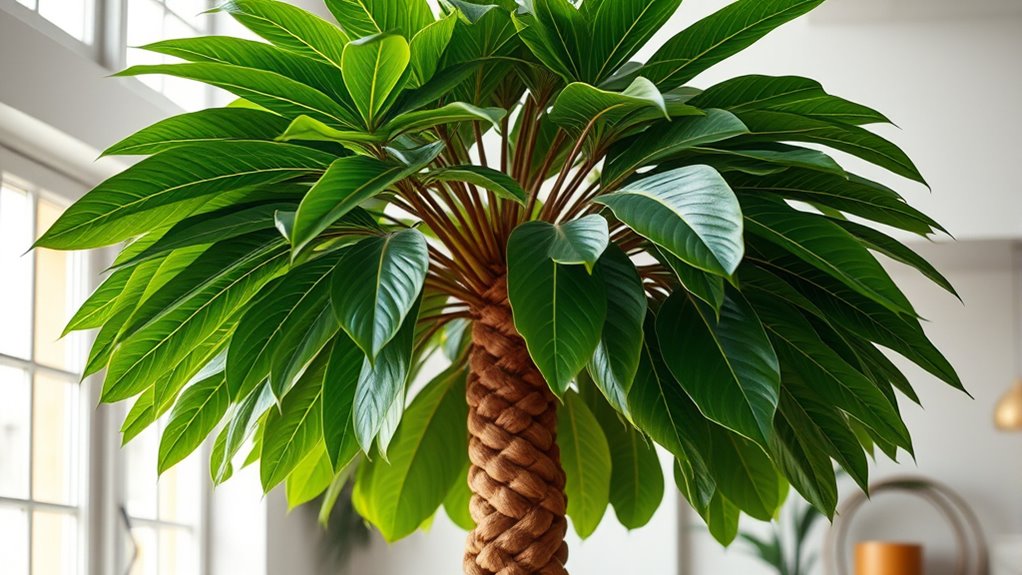

To attract wealth and promote health in your money tree (Pachira), make certain you water it thoroughly when the top inch of soil feels dry, avoiding overwatering that can cause root rot. Place it in bright, indirect light and prune carefully to maintain its shape and vitality. During spring and summer, increase watering slightly, but reduce it during cooler months. For more tips on nurturing your money tree, keep exploring ways to care for this lucky plant.
Key Takeaways
- Water the Money Tree thoroughly when the top inch of soil feels dry, avoiding overwatering to prevent root rot.
- Place in bright, indirect light for optimal growth and to attract positive energy and wealth.
- Prune dead or yellowing leaves regularly to maintain health and encourage fuller, attractive growth.
- Reduce watering during cooler months and increase slightly in spring and summer to support growth.
- Use well-draining soil and pots with drainage holes to prevent soggy soil and promote healthy root development.

The Money Tree (Pachira) is a popular houseplant known for bringing good luck and positive energy, but it requires proper care to thrive. One of the most essential aspects of caring for your Pachira is establishing a consistent watering schedule. You should water your Money Tree thoroughly when the top inch of soil feels dry to the touch. Overwatering can lead to root rot, so it’s better to err on the side of slightly less water, especially during winter months when the plant’s growth slows. Conversely, if the soil feels damp or soggy, give it a few days to dry out before watering again. Using well-draining soil and a pot with drainage holes helps prevent excess water from accumulating at the bottom. During the growing season, typically spring and summer, you might need to water slightly more often, but always monitor your plant’s specific needs. In cooler months, cut back on watering to avoid unnecessary stress on the roots.
Pruning techniques are equally vital for maintaining your Money Tree’s health and shape. Regular pruning encourages a fuller, more attractive plant and prevents it from becoming leggy or overgrown. When you prune, focus on removing dead or yellowing leaves, which helps redirect energy to healthier parts of the plant. You can also prune to control the size—cut back leggy stems just above a node to promote bushier growth. Use clean, sharp scissors or pruning shears to make clean cuts, minimizing damage and reducing the risk of disease. The best time to prune is during early spring or summer when the plant’s growth activity is at its peak. Avoid heavy pruning in winter, as the plant enters a dormant phase and may not recover as quickly. If you’re shaping your Money Tree for aesthetic reasons, keep in mind that it responds well to light pruning, but never remove more than one-third of the plant at a time to avoid stressing it.
Frequently Asked Questions
Can Pachira Tolerate Low Humidity Environments?
You wonder if Pachira can tolerate low humidity environments. While it prefers moderate humidity levels, it’s quite adaptable and can handle lower humidity environments if you guarantee proper care. To support its environmental preferences, mist the leaves occasionally or place a humidifier nearby. This way, you help maintain its humidity tolerance, promoting healthy growth and keeping your Money Tree thriving even in less humid spaces.
How Often Should I Fertilize My Money Tree?
You should fertilize your money tree about once a month during the growing season, typically spring and summer. This helps meet its nutrient requirements and supports healthy growth. Use a balanced, water-soluble fertilizer diluted to half strength for best results. In fall and winter, reduce fertilization or stop altogether, as the plant enters dormancy. Following this fertilizer schedule keeps your pachira thriving and vibrant year-round.
Is Direct Sunlight Harmful to Pachira?
Think of sunlight as a double-edged sword—too much can harm your Pachira, while too little stunts its growth. Direct sunlight, especially intense rays, can scorch leaves, causing browning and leaf drop. Yet, it’s shade-tolerant and thrives in bright, indirect light. You should place your plant where it receives ample, filtered sunlight, avoiding harsh, direct rays that could damage its delicate leaves.
What Are Common Pests That Affect Money Trees?
You should be aware that common pests like spider mites, mealybugs, and scale insects can affect your money tree. To keep them at bay, regularly inspect your plant for pest signs and practice prevention strategies such as keeping leaves clean and avoiding overwatering. Pest identification helps you choose the right treatment, while early detection ensures you can act quickly to protect your plant’s health and importance.
How Can I Propagate a Pachira From Cuttings?
To propagate a pachira from cuttings, start with healthy stems and use propagation techniques like rooting cuttings. Dip the cut end in rooting hormone to encourage growth, then plant it in well-draining soil or water. Keep the cutting in bright, indirect light and maintain moisture. Roots should develop in a few weeks, after which you can transplant it into a pot. This method makes growing new plants simple and effective.
Conclusion
Taking care of your Pachira money tree is like nurturing a tiny fortune that grows into a lush, vibrant forest of wealth and health. With proper watering, lighting, and love, you’ll see your plant thrive and attract abundance in ways that could make even a magician jealous. Remember, your dedication transforms a simple tree into a magnet for prosperity, turning your space into a thriving oasis of luck and vigor. Keep tending, and watch your wealth blossom wildly!