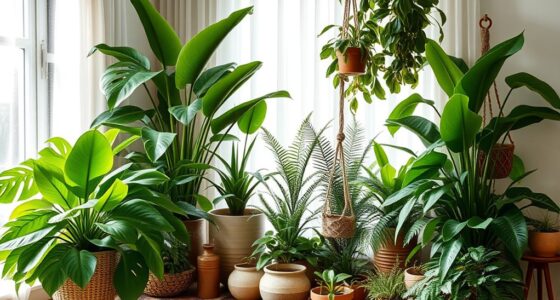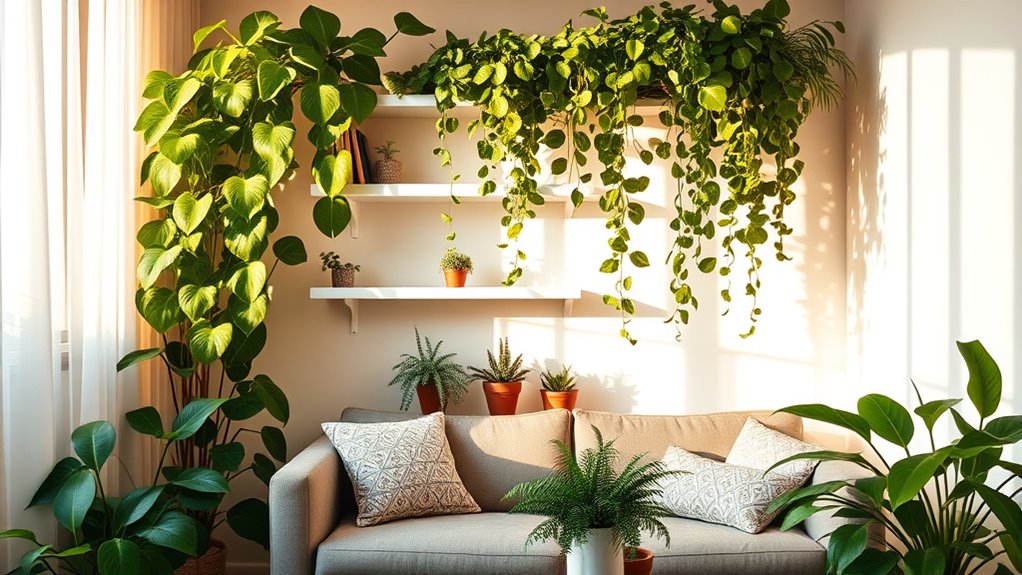

To create an apartment arboretum with large plants in small spaces, focus on strategic placement near windows for ample light and use vertical arrangements like tall planters and hanging baskets to maximize space. Incorporate resilient plants suited to indoor and balcony conditions, and regularly care for them with proper watering, dusting, and fertilization. Combining indoor and balcony greenery transforms your apartment into a lush, inviting retreat. Keep exploring to discover more tips for building your green oasis.
Key Takeaways
- Use vertical arrangements and tall planters to maximize limited space for large plants.
- Place large indoor plants near windows with bright, indirect light for optimal growth.
- Incorporate balcony greenery with tall potted plants and wall-mounted planters to create a lush outdoor oasis.
- Regularly dust leaves and provide proper watering and fertilization to keep large plants healthy.
- Combine indoor and balcony greenery to create a cohesive, vibrant apartment arboretum.

Nestled in a lush, tree-filled setting, Apartment Arboretum offers residents a tranquil oasis away from the city’s hustle. Even in this peaceful environment, creating a sense of nature within your apartment remains essential. One of the best ways to achieve this is through thoughtful indoor plant care and integrating balcony greenery. When you master indoor plant care, you bring vibrant life into your space, making it more inviting and invigorating. Larger plants, in particular, can dramatically transform small rooms, adding depth and a touch of the outdoors without taking up too much room.
Transform your apartment into a lush oasis with indoor plants and balcony greenery.
To care for big plants indoors, you need to understand their specific needs. Most large indoor plants, such as fiddle leaf figs or rubber trees, thrive in bright, indirect light. Position them near windows where they can get plenty of sunlight but avoid direct sun that might scorch their leaves. Water them thoroughly, but don’t let the roots sit in water—good drainage is key. Regularly dust their leaves to keep them clean and healthy, and occasionally fertilize to promote growth. These steps ensure your large plants stay vigorous and beautiful, creating a striking focal point in your apartment. Additionally, understanding the proper greenhouse conditions can help even indoor environments mimic the ideal growing conditions for large plants.
Balcony greenery is another way to maximize your small space. Even a modest balcony can host a variety of large plants or a collection of smaller ones that mimic the feeling of a garden. Use tall planters and vertical arrangements to make the most of limited space. Consider placing a tall potted plant or small tree on your balcony to add privacy and a lush backdrop. Hanging baskets and wall-mounted planters enable you to grow herbs, flowers, or trailing plants without cluttering your outdoor area. It’s essential to select plants that can withstand the elements, especially wind and sun, depending on your balcony’s exposure. Regular watering and protection from harsh weather will keep your balcony greenery thriving.
Balcony gardening not only enhances visual appeal but also provides a personal retreat where you can enjoy your favorite greenery. When you combine indoor plant care with a well-thought-out balcony setup, you turn a small apartment into a vibrant, green haven. This approach allows you to enjoy the benefits of nature, even in a limited space, and adds a calming, natural element to your daily life. Whether you’re nurturing a large, leafy plant inside or cultivating a mini outdoor jungle, your efforts will create a lush, inviting atmosphere that’s uniquely yours. With a little effort and attention, your apartment can truly feel like an arboretum, full of life and tranquility.
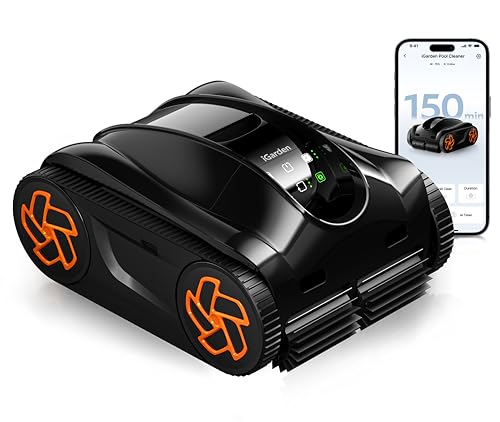
iGarden Robotic Pool Cleaner K Series, Cordless Pool Vacuum Robot for Inground & Above Ground Pools, Smart Navigation, Touchscreen, Self-Parking, Cleans Floor, Wall & Waterline, 150 Min
Robust Cleaning Capability: Engineered with a turbine-grade impeller, an optimized flow system, and 3 brushless motors, the cordless...
As an affiliate, we earn on qualifying purchases.
Frequently Asked Questions
What Are the Best Low-Light Large Plants for Apartments?
Looking for low-light large plants for your apartment? You’ll want to contemplate indoor plant lighting and large plant care tips that suit shaded spots. Plants like ZZ plants, snake plants, and pothos thrive in low light and grow big without much fuss. These options are perfect for small spaces, and with minimal watering and indirect light, you’ll keep them healthy and vibrant, adding lushness to your apartment effortlessly.
How Often Should I Water Large Indoor Plants?
When it comes to your large indoor plants, you should establish a consistent watering schedule to maintain proper plant hydration. Typically, water when the top inch of soil feels dry, which might be once a week or every ten days, depending on your environment. Always check your plant’s specific needs, as overwatering can cause root rot. Adjust your watering routine based on factors like light, humidity, and season for ideal health.
Can Large Plants Improve Indoor Air Quality?
Think of large plants as the lungs of your home, breathing in toxins and releasing fresh air. They substantially improve indoor air quality through air purification, filtering pollutants like formaldehyde and benzene. When you care for plant health by watering properly and providing adequate light, these green giants thrive and work efficiently. So yes, large plants can be powerful allies in creating a healthier, more breathable living space.
What Are Common Pests for Big Indoor Plants?
Large indoor plants can attract pests like spider mites, aphids, and mealybugs. To prevent these issues, you should practice pest prevention by regularly inspecting your plants and keeping leaves clean. If pests appear, try natural remedies like neem oil or insecticidal soap. Consistent care and early intervention help keep your big plants healthy and pest-free, ensuring they thrive in your space.
How Do I Repot Large Plants in Small Spaces?
Imagine your large plant struggling in tight quarters, roots pressing against the pot’s edges. You carefully lift it, checking for roots that need trimming. When repotting, choose the right plant support and select soil that drains well yet retains moisture. Gently loosen roots, place the plant in a slightly larger pot, and fill with fresh soil. This careful step guarantees your plant thrives, even in small spaces.

(2026 Upgrade) WYBOT C1 Cordless Robotic Pool Vacuum for Inground Pools, Above Ground Pool Cleaner 4-in-1 Wall & Waterline Cleaning Up to 1,614sq.ft, 150mins Smart Navigation, App Support
Powerful Suction with Dual Brushes: Built with an upgraded independent water pump motor delivering up to 3,038 GPH...
As an affiliate, we earn on qualifying purchases.
Conclusion
Remember, a little goes a long way. With some thoughtful plant choices and a bit of care, your small space can bloom into a lush, green haven. An apartment arboretum proves that big things come in small packages—so don’t be afraid to experiment and grow. When you nurture your plants, you nurture your soul. After all, a garden is a mirror of your heart—beautiful, vibrant, and full of life.

(2026 Upgraded) WYBOT C2 Cordless Robotic Pool Cleaner, Dual Filtration, Wall Climbing & Waterline Cleaning, App Scheduling, Smart Navigation, Pool Vacuum for Inground/Above Ground Pools-2152 Sq.ft
Dual Filtration System Captures Fine Debris: Featuring dual-layer filtration (180μm + 10μm), the pool cleaner robot efficiently traps...
As an affiliate, we earn on qualifying purchases.

WYBOT C1 Cordless Robotic Pool Vacuum for Inground Pools, Above Ground Pool Cleaner 4-in-1 Wall & Waterline Cleaning Up to 1,614sq.ft, 150mins Smart Navigation, App Support
Powerful Suction with Dual Brushes: Built with an upgraded independent water pump motor delivering up to 3,038 GPH...
As an affiliate, we earn on qualifying purchases.