To care for your Dracaena marginata indoors, make certain it gets bright, indirect light and avoid direct sun to prevent leaf scorch. Water thoroughly, letting the top inch of soil dry out between watering, and reduce watering frequency in winter. Prune regularly to encourage bushiness and remove dead or damaged leaves. Use balanced fertilizer during active growth and maintain proper drainage. Keep an eye on soil quality and overall environment to support a healthy, vibrant plant—more tips await you.
Key Takeaways
- Provide bright, indirect light and avoid direct sunlight to prevent leaf scorch.
- Water every few weeks, allowing the top inch of soil to dry out between watering.
- Regularly prune dead or overgrown stems to encourage bushiness and maintain size.
- Use balanced, water-soluble fertilizer monthly during active growth periods.
- Maintain proper drainage and monitor soil moisture to prevent root rot.
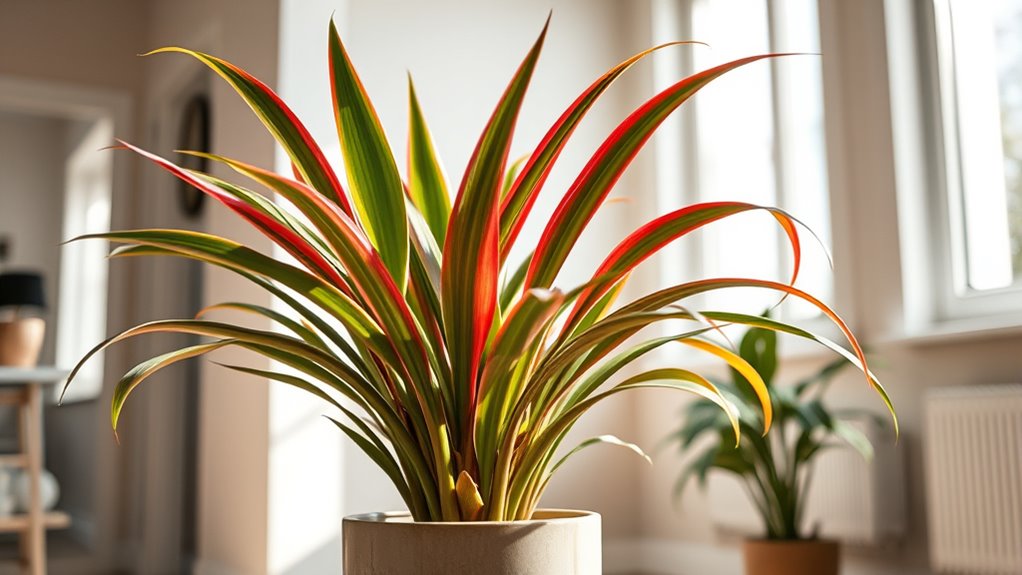
Have you ever wondered how to keep your Dragon Tree healthy and vibrant? One of the most important aspects is establishing a proper watering schedule. Dracaena marginata, or Dragon Tree, doesn’t like to sit in water, so it’s essential to let the top inch of soil dry out between waterings. When you do water, do so thoroughly, ensuring excess water drains away completely. Overwatering can lead to root rot, which is a common problem with indoor plants. During the growing season—spring and summer—you may need to water every couple of weeks, but in winter, reduce your watering frequency to once a month or less. Always check the soil moisture first, rather than sticking to a strict timetable, to prevent unnecessary moisture buildup. Regularly monitoring filtering and replacement of the soil and air environment can help maintain optimal plant health.
Pruning tips are equally indispensable to maintaining your Dragon Tree’s health and appearance. Regular pruning not only encourages bushiness and new growth but also removes any dead or yellowing leaves, which can otherwise attract pests or disease. When pruning, use sharp, clean scissors or pruning shears to make clean cuts just above a leaf node or healthy branch. You should prune back any leggy or overgrown stems to keep the plant looking full and balanced. If your Dragon Tree develops brown tips or damaged leaves, trim these off to improve its overall look and prevent potential issues. Be cautious not to remove more than a third of the plant at once, as this could stress the plant unnecessarily. Also, pruning helps to manage the plant’s size, especially if it’s growing in a limited space indoors.
Alongside watering and pruning, remember that the Dragon Tree thrives best with indirect, bright light. While it tolerates lower light levels, providing it with ample, filtered sunlight will promote healthier, more vibrant foliage. Avoid placing it in direct sunlight, which can scorch its leaves. Additionally, dust the leaves occasionally to keep them clean and maximize photosynthesis. Fertilize your Dragon Tree during the active growing months with a balanced, water-soluble fertilizer every month or so, following the product instructions. This will give it the nutrients needed for robust growth.
Top picks for "dragon tree care"
Open Amazon search results for this keyword.
As an affiliate, we earn on qualifying purchases.
Frequently Asked Questions
How Often Should I Repot My Dracaena Marginata?
You should repot your Dracaena Marginata every 2 to 3 years to prevent root crowding and guarantee healthy growth. Keep in mind container size considerations; choose a slightly larger pot with good drainage when repotting. If you notice roots growing out of the drainage holes or the plant’s growth slowing, it’s time to repot. Regular repotting helps maintain peak health and vibrant foliage.
Can Dragon Trees Tolerate Low Humidity Environments?
Imagine your dragon tree as a resilient traveler; it can tolerate low humidity environments, but only just. While it’s adaptable to various indoor environments, its humidity tolerance isn’t unlimited. In dry air, it may struggle, leading to leaf tips browning. To guarantee it thrives, consider occasional misting or a humidifier. With some care, your indoor oasis can support its journey, even in less humid climates.
What Are Common Pests That Affect Indoor Dragon Trees?
You might notice pests like spider mites, mealybugs, or scale insects on your indoor dragon tree. To keep them at bay, focus on pest prevention by regularly inspecting your plant and maintaining proper humidity and cleanliness. If pests appear, try natural remedies such as wiping leaves with neem oil or insecticidal soap. Acting quickly helps protect your plant’s health and prevents infestations from spreading.
How Do I Prune My Dragon Tree Without Damaging It?
To prune your dragon tree, use clean, sharp scissors or pruning shears. Follow pruning techniques that involve cutting just above a leaf node to promote healthy growth and prevent damage. Regular pruning helps with growth regulation, keeping your plant looking tidy and healthy. Avoid removing too much at once, and always dispose of cuttings properly. This careful approach guarantees your dragon tree remains vibrant and well-shaped without harm.
Is It Safe to Keep Dragon Trees Around Pets?
Did you know over 600 plants are toxic to pets? Keeping dragon trees around pets isn’t entirely safe, as they’re considered toxic plants. While some animals might only experience mild symptoms, others could face serious health issues if they chew on the leaves. To guarantee pet safety, it’s best to place your dragon tree out of reach or opt for non-toxic plants. Always consult your vet if your pet shows signs of poisoning.
Conclusion
Now that you know how to care for your dracaena marginata indoors, imagine it thriving under your watchful eye, its slender leaves reaching toward the light, adding a touch of exotic elegance to your space. But beware—neglect can turn this vibrant beauty into a wilted shadow of itself. With just a little attention and love, you’ll see it flourish, transforming your home into a lush oasis. The secret to its beauty is now in your hands—will you rise to the challenge?