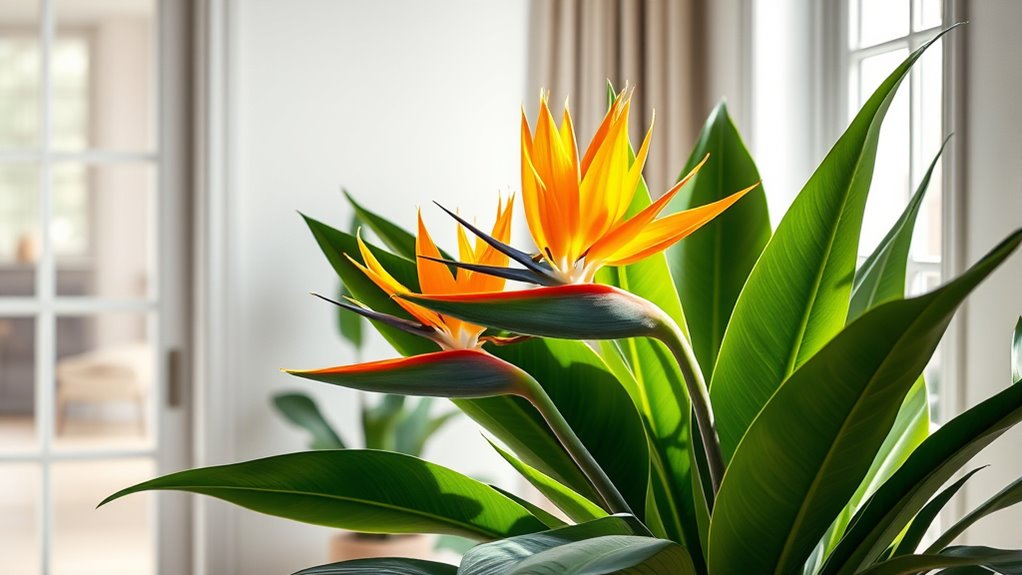

To care for your indoor Bird of Paradise, water only when the top inch of soil feels dry, adjusting frequency seasonally, and guarantee excess water drains freely. Place it in bright, indirect light and maintain stable temperature and humidity. Regularly inspect for pests and treat issues promptly with insecticidal soap or neem oil. Proper watering, lighting, and pest prevention will keep your plant healthy and vibrant; learn more tips to nurture its lush growth.
Key Takeaways
- Water when the top inch of soil feels dry, adjusting frequency seasonally.
- Place in bright, indirect sunlight and maintain stable temperature and humidity.
- Inspect leaves regularly for pests and treat infestations promptly with insecticidal soap or neem oil.
- Ensure proper drainage by using pots with drainage holes and watering thoroughly.
- Keep the plant healthy through consistent care, proper lighting, watering, and pest prevention.

Are you wondering how to keep your Bird of Paradise healthy and vibrant? Maintaining a thriving indoor Strelitzia requires a consistent watering schedule and proactive pest prevention. When it comes to watering, you want to strike a balance—neither overwatering nor letting the soil dry out completely. Typically, you should water your plant when the top inch of soil feels dry to the touch. During warmer months, this might mean watering once a week, but in cooler seasons, you can extend this to every ten days or so. Always ensure excess water drains freely from the pot to prevent root rot. Using a pot with drainage holes is essential to avoid water pooling at the bottom. When watering, do so thoroughly until you see water escape from the drainage holes, then empty the saucer to prevent the plant from sitting in stagnant water. Consistency in this routine helps keep the plant’s roots healthy and prevents issues like yellowing leaves or stunted growth.
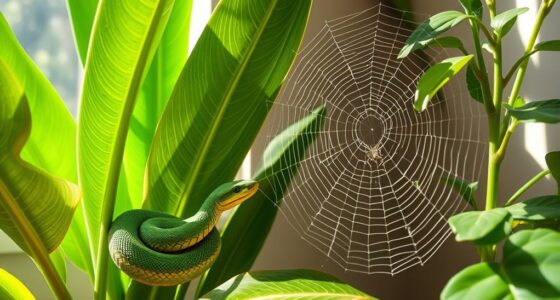
In addition to proper watering, pest prevention plays a crucial role in caring for your Bird of Paradise. Keep a close eye on common pests such as spider mites, mealybugs, and scale insects, which can sap the plant’s vitality if left unchecked. Regularly inspecting the leaves, especially the undersides, allows you to catch infestations early. If you notice tiny webs, sticky residue, or small insects, treat the plant promptly with insecticidal soap or neem oil. Maintaining good air circulation around your plant also reduces the likelihood of pests taking hold. Avoid over-fertilizing, which can weaken the plant’s defenses and make it more attractive to pests. A healthy, strong plant is less susceptible to invasions, so providing proper light, watering, and nutrients will bolster its natural defenses. Proper Kia Tuning can also improve your plant’s overall health by optimizing environmental conditions.
Creating an environment that suits your Bird of Paradise involves more than just watering and pest prevention; it also includes placing it in bright, indirect sunlight and maintaining stable temperature and humidity levels. But sticking to a consistent watering schedule and staying vigilant against pests form the foundation of good indoor plant care. These simple steps help ensure your plant remains lush, colorful, and vigorous. Remember, the more attentive you are to its needs, the more you’ll enjoy its striking, tropical appearance. With proper care, your Bird of Paradise will flourish indoors, providing a stunning focal point in your home for years to come.
Frequently Asked Questions
How Often Should I Repot My Bird of Paradise?
You should repot your bird of paradise every 1-2 years to keep it healthy. Follow a regular repotting schedule, especially when the plant outgrows its current container. Choose a slightly larger pot with good drainage to support growth. Repotting encourages root development and prevents root-bound issues. Spring is the best time for this task, so your plant can recover and thrive throughout the growing season.
What Are Common Pests That Affect Indoor Bird of Paradise?
You might encounter pests like spider mites, mealybugs, or scale insects on your indoor bird of paradise. To identify these pests, look for webbing, cottony spots, or sticky residue. Pest identification helps you choose effective natural remedies, such as neem oil or insecticidal soap, which are safe and eco-friendly. Regularly inspect your plant to catch infestations early and keep your bird of paradise healthy and vibrant.
Can Bird of Paradise Tolerate Low Light Conditions?
While you might hope your Bird of Paradise thrives in low light, it actually needs bright, indirect sunlight to flourish. You should position your plant near a window with ample light, avoiding deep shade. Low light conditions hinder growth and flowering, so if space is limited, consider supplementing with a grow light. Proper light requirements guarantee your plant stays healthy, vibrant, and ready to produce its stunning, tropical blooms.
How Do I Encourage Flowering Indoors?
To encourage flowering indoors, you need to provide the right flowering triggers, like bright, indirect sunlight and consistent warmth. Pruning techniques, such as removing dead or damaged leaves, help focus energy on blooming. Also, avoid overwatering and fertilize with a high-potassium plant food during the growing season. With proper care, your bird of paradise will reward you with stunning flowers, creating a vibrant focal point in your home.
What Is the Ideal Humidity Level for Bird of Paradise?
You need to keep the humidity level around 50-60% for your bird of paradise, balancing the dry indoor air and its tropical roots. While it’s tempting to over-mist, use gentle misting techniques to boost humidity without causing fungal issues. Humidity requirements are essential for healthy growth and flowering; too dry, and your plant may suffer, too humid, and pests could invade. Keep it just right for vibrant, lush foliage.
Conclusion
With proper patience and persistence, your Bird of Paradise blooms beautifully. By balancing bright light, consistent watering, and careful pruning, you’ll build a bond that benefits your plant’s growth. Remember, regularity is key — consistent care creates a confident, colorful crown of blooms. So, stay steadfast, soothe with sunlight, and support with soil. Your dedication delivers dazzling, delightful displays, turning your space into a stunning sanctuary. Keep caring, and watch your Bird of Paradise flourish forever!