Vanishing edge pools create a seamless water surface that appears to extend into the horizon, perfect for scenic, luxury settings, but they require complex construction and higher maintenance. Perimeter overflow pools feature a visible overflow edge with water spilling into a gutter system, offering a sleek, modern look that’s easier and cheaper to maintain. Understanding these key differences helps you choose the right design for your space—there’s more to contemplate if you want to find the perfect fit.
Key Takeaways
- Vanishing edge pools create a seamless water surface that visually merges with the horizon, while perimeter overflow pools have a visible spill around the edge.
- Vanishing edges require complex engineering and higher costs, whereas perimeter overflow pools are simpler and more budget-friendly to construct.
- Vanishing edge designs rely on water flowing over the edge into a catch basin, unlike perimeter overflow pools that use a gutter or spillway for excess water.
- Maintenance for vanishing edge pools is more intensive due to debris accumulation in catch basins and delicate structural components.
- Vanishing edges are ideal for scenic, luxury settings, while perimeter overflow pools suit modern, urban, or enclosed environments.
Definition and Basic Concept
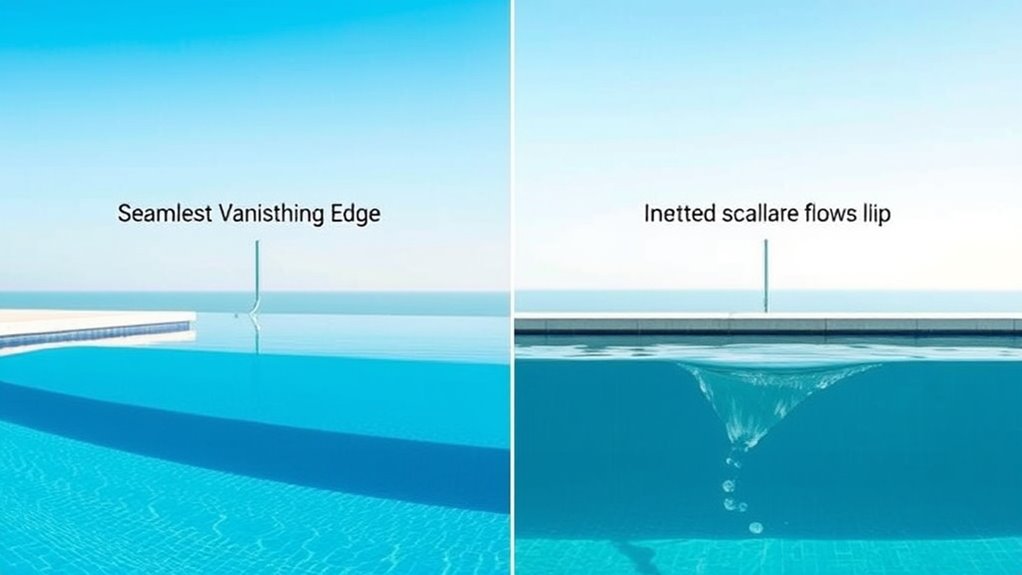
A vanishing edge, also known as an infinity pool, creates the illusion that the water extends seamlessly to the horizon, giving a sense of limitless space. This effect is achieved by designing the pool so that one or more edges are built at the same level as the surrounding deck. Water flows over this edge into a catch basin below, then recirculates, maintaining a smooth, uninterrupted water surface. The key idea is to eliminate visual boundaries between the pool and the landscape beyond, making the pool appear to merge with the sky or scenery. This design emphasizes aesthetic appeal and creates a striking visual impact, making it a popular choice for luxury settings and scenic locations. The focus is on seamless integration with the environment. Additionally, selecting the right projector technology and proper lighting can enhance the overall visual experience in such stunning surroundings.
Visual Impact and Aesthetic Appeal

The visual impact of vanishing edges is truly striking, transforming ordinary pools into breathtaking focal points. With their seamless design, these edges create the illusion that the water extends endlessly into the horizon, enhancing the sense of space and serenity. This sleek, minimalist look appeals to modern aesthetics, making your pool stand out as a luxurious centerpiece. The clean lines and smooth progression emphasize openness and sophistication, often blending the pool seamlessly with natural surroundings or architectural features. Additionally, self-watering plant pots exemplify how thoughtful design can promote sustainability and ease of maintenance, paralleling how vanishing edges simplify pool upkeep. Overall, vanishing edges deliver a dramatic, elegant appearance that elevates your outdoor space’s visual appeal.
Water Containment and Overflow Mechanics

Vanishing edge pools rely on a carefully designed system that continuously recycles water to maintain a seamless appearance. Water flows over the edge into a catch basin, creating the illusion of the pool merging with the horizon. Overflow is managed through precise drainage, guaranteeing the water level stays consistent. In contrast, perimeter overflow pools have a slight gap around the edge, where excess water spills into a gutter system, keeping the surface calm and uniform. To visualize, think of these mechanics like this:
| Vanishing Edge | Perimeter Overflow | Both Systems |
|---|---|---|
| Water spills over edge | Water gently overflows gutter | Controlled, continuous flow |
| Recirculation system | Spillway captures excess | Maintains water level |
| Seamless visual effect | Overflow perimeter visible | Ensures safety and clarity |
These mechanics shape the pool’s functionality and aesthetic. Additionally, understanding the refrigeration cycle can help in designing more efficient water circulation systems for pools.
Structural Design and Construction Requirements
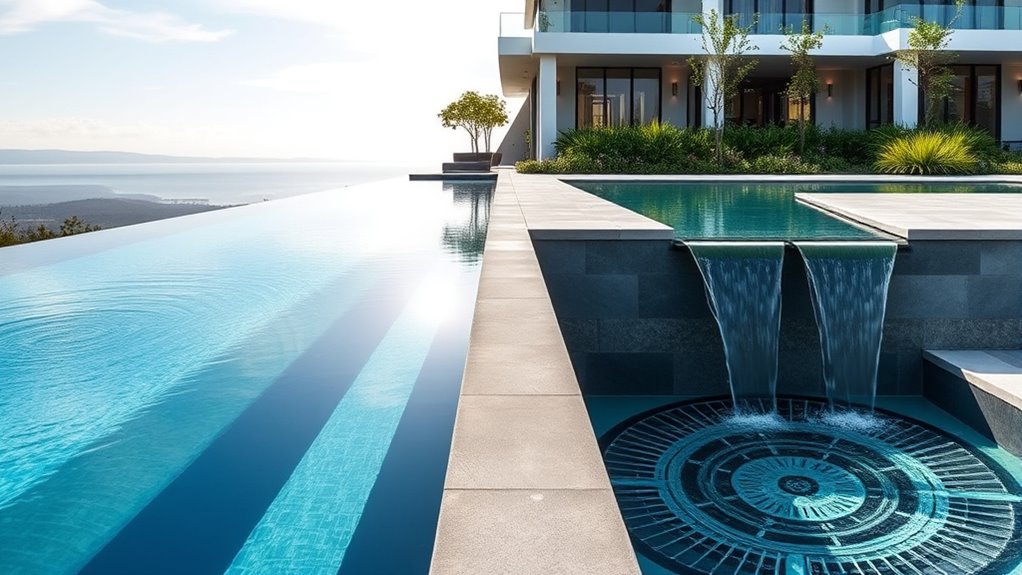
You need to guarantee your pool’s walls are properly reinforced to handle the water pressure, especially near the edge. The drainage system must be designed to quickly remove overflow and prevent pooling, while supporting the overall structure. Consider the structural load to avoid stress points that could compromise the integrity of your vanishing edge or perimeter overflow design. Additionally, ensure that the construction process accounts for potential cheating behaviors that could undermine structural safety or maintenance routines.
Wall Reinforcement Needs
Ensuring proper wall reinforcement is essential to maintaining the structural integrity of vanishing edge and perimeter overflow pools. You need to select the right materials, such as steel rebar or mesh, based on the pool’s size and design. Reinforcement must be embedded within the walls to withstand the water pressure and prevent cracking or collapse. For vanishing edges, you’ll often require additional reinforcement at the edge to support the thin coping slab and resist chipping. Perimeter overflow pools demand reinforcement that accommodates the continuous water flow along the perimeter, ensuring stability. Proper reinforcement also involves adequate thickness and spacing of the reinforcement bars. Neglecting these needs can compromise safety, cause costly repairs, and reduce the pool’s lifespan. Accurate planning and skilled installation are key to effective wall reinforcement. Additionally, understanding juice cleansing benefits can help inform decisions about maintaining overall wellness, which supports the physical durability of construction projects like pools.
Drainage System Requirements
A well-designed drainage system is essential for maintaining the structural integrity of vanishing edge and perimeter overflow pools. Proper drainage prevents water buildup, reduces hydrostatic pressure, and avoids structural damage. When designing your drainage system, keep these key requirements in mind:
- Ensure adequate capacity to handle maximum inflow and stormwater runoff.
- Use durable, corrosion-resistant materials suitable for constant water exposure.
- Incorporate easy access points for maintenance and inspection to prevent clogging.
Structural Load Considerations
Because vanishing edge and perimeter overflow pools are subject to dynamic water forces and structural stresses, careful attention to load distribution is essential during design and construction. You need to guarantee the structure can handle the weight of water, especially during heavy usage or environmental factors like wind and temperature changes. Reinforce the pool’s foundation and walls to prevent shifts or cracks. Use high-quality materials that resist cracking, shifting, and water pressure. Properly engineered support systems are vital for maintaining the pool’s integrity over time. You should also consider the weight of additional features, such as lighting or decking, that may add load. Additionally, understanding the properties of the eye patch benefits can be analogous to ensuring the materials used are nourishing and resilient, contributing to the longevity of the structure. By addressing these factors early, you’ll create a safe, durable pool that withstands structural stresses without compromising its aesthetic appeal.
Maintenance and Cleaning Considerations

Maintaining and cleaning a vanishing edge or perimeter overflow pool requires regular attention to keep the water clear and the system functioning properly. Proper upkeep prevents issues like algae buildup, debris clogging, and water imbalance. To effectively manage your pool, focus on these key tasks:
Regular maintenance keeps vanishing edge pools clear and functioning flawlessly.
- Clean the catch basin and skimmer baskets weekly to remove debris that could block water flow.
- Regularly check and clean the overflow channels to prevent clogs and ensure smooth water movement.
- Maintain proper water chemistry, including pH and sanitizer levels, to prevent algae growth and keep water sparkling.
- Be aware of the types of cookies that can track visitor interactions, which may help optimize your pool maintenance website or app.
Consistent cleaning not only preserves the pool’s aesthetic appeal but also extends the lifespan of the system components, saving you time and money in the long run.
Cost Implications and Budgeting
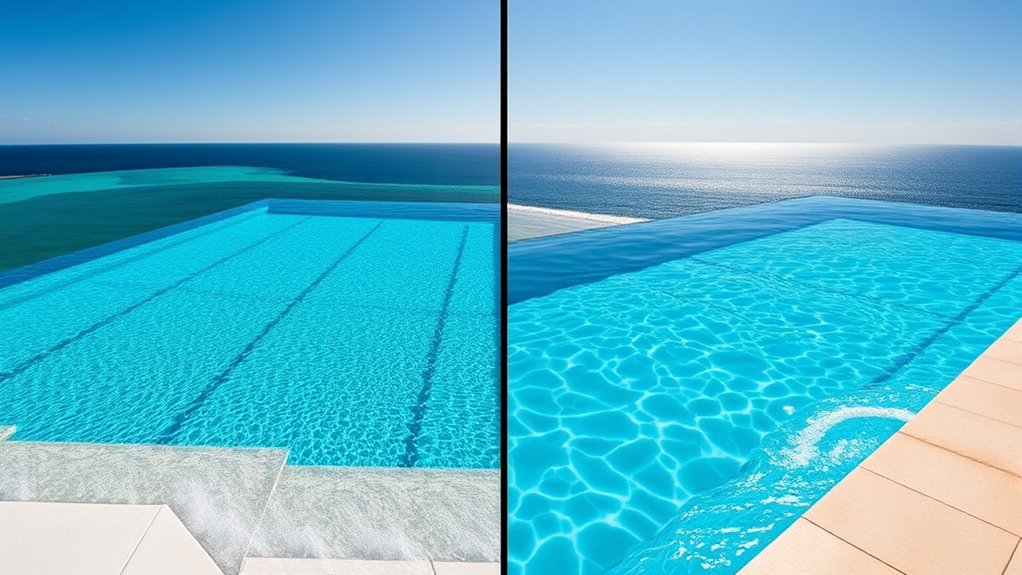
When comparing vanishing edge and perimeter overflow systems, you’ll notice significant differences in installation costs. Vanishing edges often require more specialized work, leading to higher upfront expenses, while perimeter overflow setups tend to be more straightforward and budget-friendly. Additionally, ongoing maintenance costs can vary, influencing your long-term budget considerations. Incorporating system efficiency into your planning can help maximize performance and reduce operational costs over time.
Installation Expenses Comparison
Installing vanishing edge pools generally incurs higher upfront costs compared to perimeter overflow designs, primarily due to more complex construction requirements and specialized materials. You’ll find that the need for precise structural engineering, custom glass or acrylic panels, and reinforced support systems increases labor and material expenses. This design demands meticulous installation to guarantee seamless water flow and aesthetic appeal. Consider these key factors: 1. Engineering Complexity: Vanishing edges require advanced structural planning, increasing labor costs. 2. Material Costs: Specialized materials like tempered glass or acrylic considerably add to expenses. 3. Construction Time: Longer installation periods mean higher labor charges and potential scheduling delays. Additionally, the integration of natural materials such as stone or wood can further elevate costs, especially when sourcing authentic fixtures.
Maintenance Cost Differences
Because vanishing edge pools often feature complex glass panels and intricate structural elements, their ongoing maintenance costs tend to be higher than those of perimeter overflow designs. You’ll spend more on cleaning, inspecting, and repairing the glass panels to keep the sleek appearance intact. The structural components require regular checks to prevent leaks or damage that could compromise the pool’s integrity. Trendy fashion for dogs during the holiday season Perimeter overflow pools generally have fewer delicate parts, making upkeep simpler and less costly. Additionally, the need for specialized cleaning equipment and professional service can add to your expenses with vanishing edges. Planning your budget should account for these continuous costs, as they can markedly impact long-term affordability. Overall, while vanishing edges offer visual appeal, they demand more investment in maintenance over time.
Suitability for Different Environments

Choosing between vanishing edge and perimeter overflow pools depends heavily on the environment where you plan to install them. Vanishing edge pools work best in scenic locations with natural views, like mountains or oceans, because their design creates a seamless visual connection with the surroundings. Perimeter overflow pools suit more controlled environments, such as urban settings or enclosed yards, where water level consistency is essential. Consider these factors:
- View and Landscape: Vanishing edges highlight natural scenery, while overflow pools blend into structured landscapes.
- Climate: Vanishing edges require stable weather to prevent water spillovers, whereas overflow pools can handle fluctuations better.
- Space and Safety: Overflow pools often need more space and safety measures due to water movement and splashing.
Match your environment with these considerations to choose the right pool type.
Common Applications and Usage Scenarios
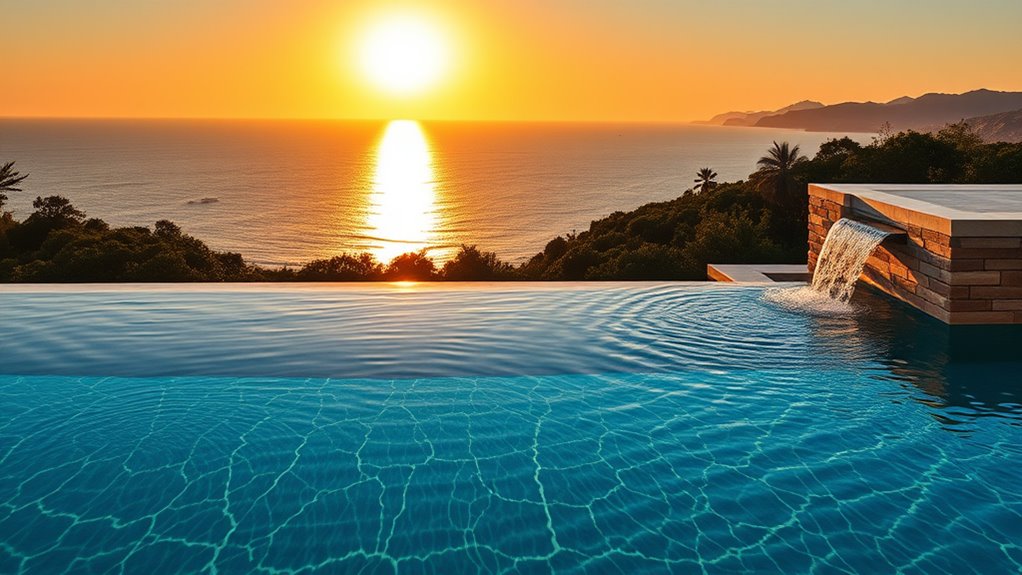
Vanishing edge pools are often chosen for luxury resorts and private estates where the goal is to create a stunning visual effect that blends seamlessly with natural surroundings. You’ll find these pools enhancing scenic oceanfront properties, mountain retreats, and upscale urban landscapes. They’re ideal when you want to maximize views and produce an illusion of water extending to the horizon. Perimeter overflow pools, by contrast, are frequently used in commercial settings like hotel lobbies, spas, and high-end homes that emphasize sleek design and precise water control. They’re perfect for creating a modern, minimalist aesthetic with clear water features. Both options serve different purposes: vanishing edges prioritize breathtaking vistas, while perimeter overflows focus on sophisticated, controlled water presentation. Choose based on your environment and desired visual impact.
Frequently Asked Questions
Which Option Is More Energy-Efficient?
Perimeter overflow pools are generally more energy-efficient because they require less pump power to circulate water, thanks to their simpler design. Vanishing edge pools often need more energy to operate the pumps and filtration systems due to their advanced features and larger water features. If energy savings are your priority, you’ll likely find perimeter overflow options more cost-effective and easier to maintain over time.
Can These Designs Be Combined in One Pool?
Like a master chef blending flavors, you can combine vanishing edge and perimeter overflow designs in one pool for a stunning effect. It’s technically feasible, but it requires careful planning and customization to guarantee both features work seamlessly together. You’ll need a skilled designer and builder to balance the aesthetic and functional aspects, making your pool a true masterpiece that captures the elegance of both styles while maintaining practicality.
How Do Climate Conditions Affect Performance?
Climate conditions considerably influence the performance of vanishing edge and perimeter overflow pools. In hot, sunny climates, you might see increased evaporation, leading to higher water levels and more frequent refilling. Cold climates can cause freezing, which risks damaging the pool structure if not properly insulated. Heavy rainfall may overfill the overflow system, requiring adjustments. Regular maintenance and climate-specific features help guarantee your pool functions effectively year-round.
Are There Any Safety Concerns With Each Design?
While both designs are generally safe when properly installed, you should be mindful of potential concerns. Vanishing edges may pose a slight risk of unnoticed falls if not well-illuminated, especially at night. Perimeter overflows require secure drainage to prevent slippery surfaces. Regular upkeep and safety features like barriers or lighting can mitigate these risks, letting you enjoy your pool’s beauty without worry.
What Maintenance Challenges Are Unique to Each System?
You need to regularly check and clean the vanishing edge system’s glass or acrylic panels to prevent buildup that could affect water flow. For perimeter overflow pools, you’ll need to monitor and clear the overflow channels and grates to prevent blockages. Both systems require routine inspections of pumps and filtration components to guarantee proper operation. Maintaining these elements helps prevent costly repairs and keeps your pool looking pristine.
Conclusion
As you stand before your pool, imagine the sleek, endless horizon of a vanishing edge blending seamlessly into the sky, or the gentle overflow of a perimeter overflow creating a calming water curtain. Understanding these differences helps you choose the perfect design that transforms your space into a tranquil oasis. Whether you seek a stunning visual or practical function, selecting the right edge type lets you enjoy the serene beauty of water flowing effortlessly, elevating your environment to a luxurious retreat.