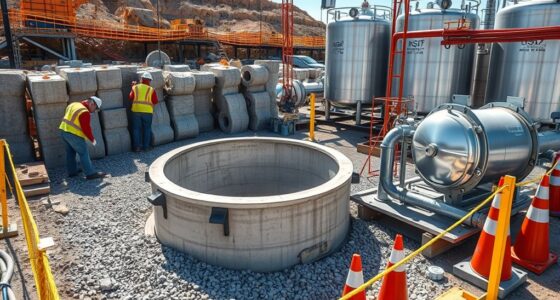
To guarantee your rooftop infinity pool is safe and durable, you need a strong waterproofing system that prevents leaks and can flex with structural shifts. Proper load management is also essential to handle water weight and additional stresses from users and equipment. Combining resilient membranes with reinforced support structures guarantees long-lasting performance and safety. Keep exploring, and you’ll discover how expert installation and material choices make all the difference.
Key Takeaways
- Waterproofing materials must be resilient, flexible, and properly installed to prevent leaks and accommodate structural movement.
- Reinforcement with steel rebar ensures the structural integrity to support the weight of water and pool users.
- Proper waterproofing and reinforcement create a seamless, visually appealing edge while preventing leaks and structural issues.
- The waterproofing system must withstand constant water exposure, temperature changes, and structural shifts for long-term durability.
- Adequate load calculations and reinforcement are essential to safely support the weight of water, equipment, and safety barriers on rooftops.

Have you ever wondered what it feels like to swim with a view that seems to stretch endlessly? If you’re lucky enough to experience a rooftop infinity pool, you’ll realize it’s not just about the stunning scenery—it’s about the engineering that makes it possible. One of the most critical aspects of constructing such a luxurious feature is ensuring proper waterproofing and structural reinforcement. These elements work together to create a safe, durable, and visually seamless experience that feels almost magical.
When designing a rooftop infinity pool, you need to pay close attention to waterproofing. The pool’s surface is constantly exposed to water, and without a reliable waterproof membrane, you risk leaks that can cause significant damage to the building structure below. A high-quality waterproof membrane acts as a barrier, preventing water from seeping into the concrete or the building’s framework. It’s essential to select materials that are not only durable but also flexible enough to accommodate the natural movement of the structure and temperature fluctuations. Proper waterproofing also involves meticulous installation, ensuring there are no gaps or weak points where water could escape. This layer is the foundation of the pool’s longevity and safety, keeping maintenance costs down and providing peace of mind. Additionally, selecting waterproofing materials with proven resilience under constant exposure enhances the pool’s durability.
Proper waterproofing is essential for rooftop infinity pools to prevent leaks and ensure longevity.
Beyond waterproofing, structural reinforcement is indispensable to support the weight of the water and the people who use the pool. Water is incredibly heavy—about 8.34 pounds per gallon—and when pooled on a rooftop, the load can be substantial. You must reinforce the underlying structure with steel rebar or other strengthening elements to handle this weight. This reinforcement ensures the building’s integrity isn’t compromised and that the pool remains safe over time. It’s also essential to consider the additional load of equipment, decking, and safety barriers, all of which contribute to the overall load the structure must support.
Balancing waterproofing and structural reinforcement isn’t just about safety—it’s about creating a seamless visual experience. When these systems work together flawlessly, the infinity edge appears to blend into the horizon, with no visible barriers or leaks. This harmony between engineering and design allows you to enjoy the pool’s stunning aesthetics without worrying about structural issues or water damage. With proper waterproof membranes and robust reinforcement, you can indulge in your rooftop infinity pool, knowing it’s built to last and designed for your enjoyment.

Muzata Waterproofing Membrane for Shower 3.8x33feet (125 Sq Ft) 23.6 Mil Thick Uncoupling Polyethylene Fabric Tile Underlayment Waterproof Shower Membrane for Sauna Bathroom Kitchen M034
Fewer Seams, Faster Install: The waterproofing membrane measures 3.77 ft X 33 ft. The Total spread area is…
As an affiliate, we earn on qualifying purchases.
As an affiliate, we earn on qualifying purchases.
Frequently Asked Questions
What Are the Best Waterproofing Materials for Rooftop Infinity Pools?
You should choose a high-quality waterproof membrane, like PVC or EPDM, for your rooftop infinity pool. These materials offer excellent durability and flexibility. Make certain the sealant you select is compatible with your waterproof membrane to prevent leaks and damage over time. Proper application is vital; work with professionals to guarantee the waterproofing system withstands water pressure and structural load, keeping your pool safe and long-lasting.
How Does Wind Affect the Structural Load of Rooftop Pools?
You might think wind pressure isn’t a big deal, but it considerably impacts your rooftop pool’s structural stability. Strong gusts exert lateral forces that can increase the overall load, stressing the structure. To ensure safety, you should design with wind pressure in mind, reinforcing support beams and walls accordingly. Ignoring wind effects risks structural failure, so proper engineering is essential to maintain stability and protect your investment.
What Maintenance Is Required for Waterproofing in Rooftop Pools?
You need to regularly inspect your rooftop pool’s waterproofing, focusing on pool surface maintenance and drainage system upkeep. Check for cracks, blisters, or leaks and repair them promptly to prevent water damage. Clean and clear the drainage system to ensure proper water flow and prevent pooling. These routine checks help preserve waterproof integrity, extend the lifespan of the pool, and avoid costly repairs down the line.
How Do Load Considerations Influence Pool Design and Placement?
You need to consider load when designing and placing your rooftop pool by focusing on structural reinforcement and load distribution. Ensuring the building can handle the added weight prevents structural failure. Proper load distribution spreads the weight evenly across the supporting surfaces, reducing stress points. This careful planning allows your pool to be safe, durable, and well-integrated into your rooftop space without compromising the building’s integrity.
Are There Specific Building Codes for Rooftop Infinity Pools?
Did you know that over 50% of rooftop pool accidents involve non-conformance with building codes? Building code compliance and safety regulations are essential for rooftop infinity pools. You must adhere to local codes that specify structural support, waterproofing, and safety barriers. Always consult with local authorities and licensed professionals to verify your design meets all regulations, preventing legal issues and ensuring the safety of everyone using the pool.

Highlighted and Tabbed – Placing Reinforcing Bars 10th Edition – for Pool Contractors – from Exam Books
As an affiliate, we earn on qualifying purchases.
As an affiliate, we earn on qualifying purchases.
Conclusion
So, as you marvel at your rooftop infinity pool’s breathtaking view, remember that waterproofing and load considerations are the real hidden luxuries. After all, nothing says opulence like risking a splash of water—or worse, a structural mishap—just to impress guests. It’s amusing how the true feat isn’t the stunning edge but ensuring your paradise stays afloat and dry. Cheers to your elevated taste, and perhaps, a little bit of over-engineered irony.
Muzata Waterproofing Membrane for Shower 3.8x33feet (125 Sq Ft) 23.6 Mil Thick Uncoupling Polyethylene Fabric Tile Underlayment Waterproof Shower Membrane for Sauna Bathroom Kitchen M034
Fewer Seams, Faster Install: The waterproofing membrane measures 3.77 ft X 33 ft. The Total spread area is…
As an affiliate, we earn on qualifying purchases.
As an affiliate, we earn on qualifying purchases.

Swimline Widemouth HT/Oly Pool Skimmer Support Brace , White
The support Brace helps to hold your Swimline hydro tools or Olympic wide mouth pool skimmer level and…
As an affiliate, we earn on qualifying purchases.
As an affiliate, we earn on qualifying purchases.