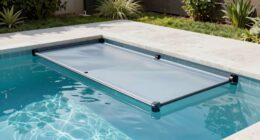

Solar heating is an eco-friendly way to extend your infinity pool season and save on energy costs. By using solar collectors on your roof or nearby surfaces, you can efficiently heat the water even on cloudy days. Modern systems are durable, efficient, and designed to minimize heat loss. With proper setup and controls, solar heating is a smart investment that benefits both your wallet and the environment. If you want to explore more options, keep exploring further.
Key Takeaways
- Solar heating extends the swimming season and reduces energy costs by harnessing free sunlight.
- Modern solar systems are highly efficient, using durable panels and advanced circulation controls.
- Proper system design, insulation, and placement maximize sunlight absorption and heat transfer.
- Initial investment costs are offset over time through savings and potential regional incentives.
- Solar heating is environmentally friendly, supporting sustainable pool operation with minimal ecological impact.
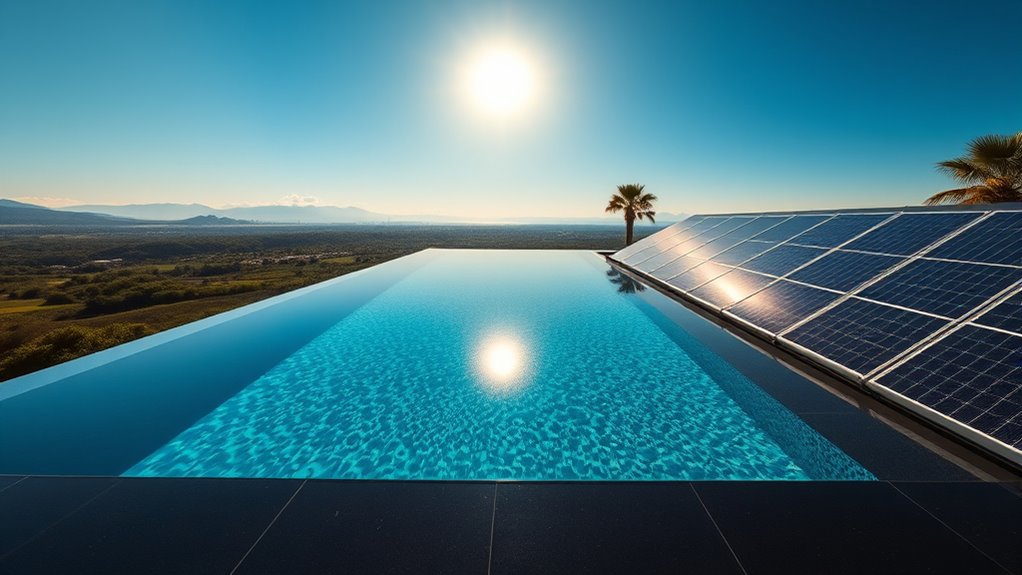
If you want to extend your infinity pool season while reducing energy costs, solar heating offers an excellent solution. By harnessing the sun’s energy, you can enjoy your pool longer, even during cooler months, without dramatically increasing your electricity bills. Solar heating systems are designed to maximize energy efficiency, meaning they convert sunlight into heat with minimal waste, helping you get the most out of every sunbeam. This not only makes your pool more comfortable but also ensures you’re making a responsible choice for the environment.
One of the primary benefits of solar heating is cost savings. Unlike traditional electric or gas heaters, solar systems have low operating costs because sunlight is free. After the initial investment in equipment and installation, your ongoing expenses drop markedly. You’ll see a noticeable decrease in energy bills, especially if you rely on your pool frequently. Over time, the money you save can offset the upfront costs, making solar heating a smart financial decision. Plus, many regions offer incentives or rebates for installing solar systems, further reducing your initial investment.
Energy efficiency is at the core of solar pool heating. Modern solar collectors are designed to absorb maximum sunlight, even on cloudy days, and transfer that energy to your pool water efficiently. They typically consist of durable panels installed on your roof or a nearby surface, capturing solar radiation throughout the day. The heated water then circulates back into your pool, maintaining a comfortable temperature with minimal energy input. This process requires a well-designed system with proper insulation and circulation controls to guarantee optimal performance. When set up correctly, solar heating can reliably extend your swimming season without the need for auxiliary heating methods. Additionally, advancements in solar collector technology continue to improve efficiency and durability, making modern systems more effective and longer-lasting.

GoFloats V2 Inflatable Solar Pool Heaters for Affordable Pool Heating and Insulation – 3 Pack
NEW UPGRADED DESIGN: Rings inflate faster & lay perfectly flat every time; Heaters trap the sun's energy to…
As an affiliate, we earn on qualifying purchases.
As an affiliate, we earn on qualifying purchases.
Frequently Asked Questions
How Long Does Solar Heating Typically Last Before Needing Repairs?
Solar heating systems typically last around 10 to 15 years, but their durability lifespan can vary based on installation quality and maintenance. You might need repairs more frequently if you ignore regular upkeep or face harsh weather conditions. To maximize system longevity, guarantee proper maintenance and inspections. With good care, your solar heater can serve efficiently for over a decade, minimizing repair frequency and keeping your infinity pool comfortably warm.
Can Solar Heaters Be Used During Cloudy or Rainy Days?
Yes, you can use solar heaters during cloudy days and rainy weather, but their efficiency drops markedly. Sunlight is essential for solar heating, so on overcast or rainy days, your pool might take longer to warm up or may not heat at all. To guarantee consistent warmth, consider installing a backup heating system or using a thermal cover, especially during periods of frequent cloudy or rainy weather.
What Is the Average Cost of Installing Solar Heating for an Infinity Pool?
You can expect to spend around $3,000 to $8,000 for installing solar heating on your infinity pool. Notably, solar heaters typically pay for themselves in 5 to 10 years through energy savings. When considering cost considerations, remember that installation process varies based on pool size and location. Investing in a solar heater reduces ongoing energy bills and eco-impact, making it a smart choice for sustainable pool heating.
Are Solar Heating Systems Compatible With Existing Pool Heating Equipment?
Yes, solar heating systems are compatible with existing pool equipment, but you need to check solar compatibility first. Many solar systems can integrate seamlessly, especially if your current pool setup has adaptable components. You might need to add a solar controller or valve, but overall, upgrading is straightforward. Consulting a professional ensures your solar setup works efficiently with your pool equipment, maximizing energy savings and maintaining ideal water temperature.
How Much Maintenance Is Required for Solar Pool Heating Systems?
You might think solar pool heating needs constant fixing, but it actually requires minimal maintenance. Regularly inspecting system component durability is key, and you should clean the solar panels to optimize efficiency. Typically, you’ll only need to do periodic solar panel cleaning and check for debris or damage. This keeps your system running smoothly, saving you time and money while ensuring your infinity pool stays warm and inviting.

Highest Performing Design – Universal Solar Pool Heater Panel Replacement – 15-20 Year Life Expectancy (4' X 12' / 2" I.D. Header)
HIGHEST PERFORMING DESIGN – SwimEasy solar panels are among the highest performing panels on the market! The perfect…
As an affiliate, we earn on qualifying purchases.
As an affiliate, we earn on qualifying purchases.
Conclusion
Harnessing solar heating for your infinity pool is a smart, eco-friendly choice that saves you money and extends your swim season. With modern technology, you can enjoy warm waters even in the chill of winter, much like a Victorian explorer discovering new horizons. Just remember to maintain your system and consider your pool’s size and location. Embrace solar energy now, and let your pool be a timeless oasis—no need to wait for the future to enjoy endless summer.

Smart Pool S601 Inground Pool Solar Heating System, Includes Two 2’ x 20’ Panels (80 sq. ft.) – Made of Durable Polypropylene, Raises Temperature Up to 15°F – S601P, Pack of 1, Black
Keep your pool warm with a polypropylene heat collector. Direct Flow System – One Header Hole for Each…
As an affiliate, we earn on qualifying purchases.
As an affiliate, we earn on qualifying purchases.

vidaXL Black Floating Rectangular PE Solar Pool Film – Heat-Boosting, Evaporation Preventing Safety Cover | Customizable Size | Lightweight Design | Eco-Friendly Pool Heating Solution
【Spectacular Black】: Our solar pool film comes in a sleek black colour that gives an added aesthetic impact…
As an affiliate, we earn on qualifying purchases.
As an affiliate, we earn on qualifying purchases.