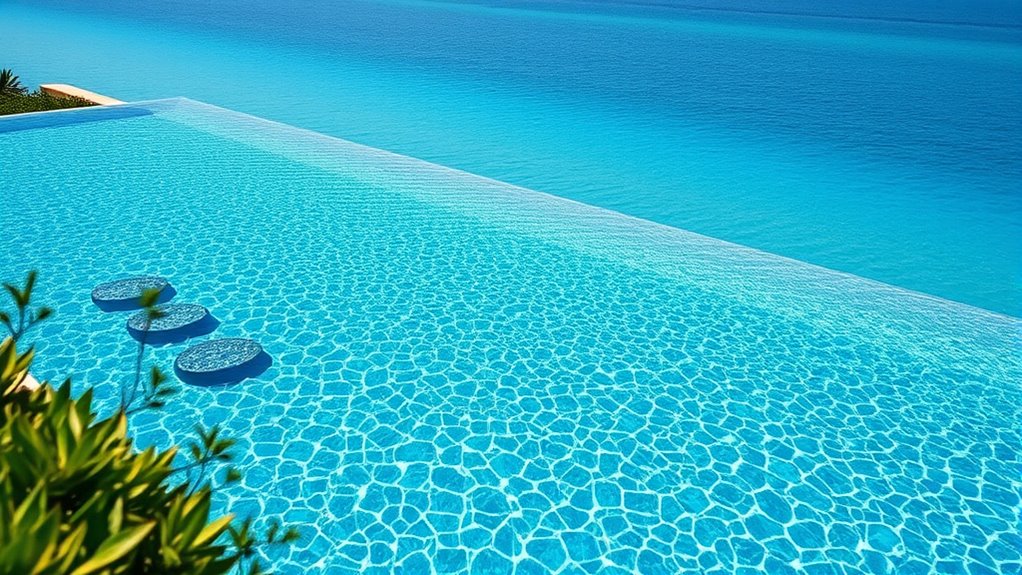

Choosing between saltwater and chlorine for your infinity pool depends on your preferences for water feel, maintenance, and long-term care. Saltwater pools give you softer, gentler water that’s easier on your skin and eyes, with automatic chlorine generation reducing manual work. Chlorine pools offer more precise control over water chemistry but require regular chemical adjustments. To get a better understanding of the benefits and challenges of each system, consider the details you’ll find ahead.
Key Takeaways
- Saltwater infinity pools offer a softer, more natural water feel and are gentler on skin and eyes.
- Chlorine infinity pools provide more immediate control over water chemistry and odor.
- Saltwater systems generate chlorine automatically, reducing manual chemical additions.
- Chlorine pools require regular chemical testing and adjustments for optimal water quality.
- Long-term equipment durability depends on proper maintenance of water chemistry in both systems.

When choosing the right sanitation system for your infinity pool, understanding the differences between saltwater and chlorine is vital. Your decision impacts not just water quality but also how you’ll handle pool maintenance and manage water chemistry. Saltwater pools use a generator that converts salt into chlorine, providing a steady, low-level sanitizer. Chlorine pools rely on adding chlorine manually or through automated systems. Both options aim to keep your water safe and clear, but they do so differently, affecting your overall pool experience.
Saltwater pools are often praised for their softer, more natural feel. Because they produce chlorine continuously, you tend to need less frequent chemical adjustments, and the water can be gentler on your skin and eyes. However, maintaining a saltwater system requires monitoring salt levels, pH balance, and overall water chemistry to prevent corrosion or scaling issues. Salt can be corrosive to certain pool components, so you must stay diligent with regular water testing and maintenance. If you neglect water chemistry, the salt can cause damage to your pool’s liner, pump, or heater over time. Although saltwater pools are generally easier to manage day-to-day, they demand a good understanding of water chemistry to keep everything balanced properly.
Saltwater pools feel softer and gentler but require careful monitoring of salt and pH levels to prevent damage.
Chlorine pools give you more control over chemical levels. You can add chlorine as needed, adjusting for weather, usage, or water temperature. This flexibility makes it easier to troubleshoot if the water becomes cloudy or develops an odor. Maintaining a chlorine pool involves regular testing of pH, alkalinity, and sanitizer levels. Proper pool maintenance is critical to prevent algae growth or bacteria buildup, which can compromise water safety. Chlorine pools require more consistent chemical input, but many pool owners find that the straightforward nature of manual or automated chlorine addition simplifies managing water chemistry.
Both systems require attention to water chemistry to guarantee safe, clean water. Saltwater pools tend to be more forgiving with chemical fluctuations but can cause long-term equipment issues if not properly maintained. Chlorine pools provide more immediate control, but they demand regular chemical adjustments to keep water balanced. Your choice depends on your willingness to monitor and manage water chemistry, your budget, and how much effort you want to invest in pool maintenance. Additionally, modern high-quality projectors often feature advanced technology that can help you monitor and adjust water conditions more precisely. Regardless of which system you choose, understanding how each impacts water chemistry helps you keep your infinity pool pristine and enjoyable for years to come.
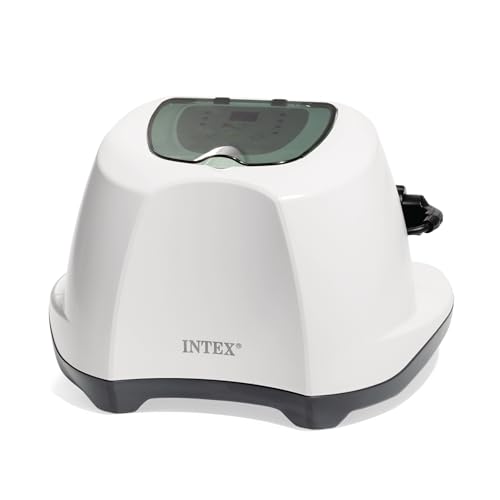
INTEX Krystal Clear Saltwater Pool Chlorine System for Above Ground Pools up to 7,000 Gallons, Pool Cleaner with Automatic Timer and Self Cleaning
✔ UPGRADE TO A SALTWATER POOL – QS500 saltwater system lets you enjoy the same process used for...
As an affiliate, we earn on qualifying purchases.
Frequently Asked Questions
Which Pool Type Is More Environmentally Friendly?
You’ll find saltwater pools more eco-friendly overall because they require fewer harsh chemicals. In an eco-friendliness comparison, saltwater pools produce less chemical impact, reducing environmental harm and skin irritation. While chlorine pools need regular chemical additions, saltwater systems generate chlorine naturally, lowering chemical runoff. So, if you’re aiming for a greener option, saltwater pools tend to be better, thanks to their lower chemical impact and sustainable maintenance.
How Do Maintenance Costs Compare Over Time?
Keeping your pool in shape is like tending a garden; it takes consistent effort. Saltwater pools generally have lower maintenance costs over time due to less frequent chemical adjustments, thanks to their natural salt-chlorine generator. Chlorine pools might need more regular chemical balancing and monitoring, which can increase costs. Additionally, energy consumption varies; saltwater systems often use less power, saving you money in the long run.
Are There Health Benefits to Saltwater Pools?
Yes, saltwater pools offer health benefits like mineral benefits, which can soothe your skin and reduce irritation. They also help maintain a more stable pH balance, minimizing harsh chemical exposure. This can make swimming more comfortable and safer, especially for those with sensitive skin or allergies. Overall, the natural mineral content and better pH regulation contribute to a more enjoyable and potentially healthier swimming experience.
Can Saltwater Systems Cause Corrosion in Pool Equipment?
Coincidences happen, and saltwater systems can cause corrosion risks if not properly maintained. You might notice that equipment like pumps and filters wear down faster, affecting equipment longevity. While saltwater pools are generally safe, neglecting regular checks can lead to corrosion issues. To protect your investment, verify your system is correctly balanced, and consider using corrosion-resistant equipment, which helps extend your pool’s lifespan and keeps it running smoothly.
What Are the Long-Term Durability Differences?
You’ll find that saltwater pools generally offer better long-term durability because of their enhanced material resilience, which helps extend your pool’s lifespan. Saltwater systems tend to cause less wear and tear on pool components compared to traditional chlorine, reducing the chance of corrosion. This means your pool remains in good condition longer, with fewer repairs needed over time. Overall, saltwater pools can be a smarter investment for maintaining a durable, long-lasting infinity pool.

E-CHLOR Plug-in Salt Chlorine Generator for Pools up to 32,000 Gallons Max | 3 Year Manufacturer Warranty | Easy Installation | APX Performance
Generates chlorine automatically during daily pool operation, keeping water clean and sanitized.
As an affiliate, we earn on qualifying purchases.
Conclusion
In the battle between saltwater and chlorine infinity pools, your choice shapes your swimming experience. Saltwater pools offer a gentler, more natural feel, while chlorine pools deliver powerful sanitation. Whichever you pick, remember that your pool becomes your personal oasis—more invigorating than a thousand suns! Make the right decision, and you’ll enjoy crystal-clear waters that make every swim feel like diving into paradise. The perfect pool awaits—are you ready to make a splash?

Pureline Crystal Pure Salt System, PL7700, Universal Pool Salt Chlorination System, Includes Control Panel, Salt Cell, 40,000 Gallon
Gentle Sanitation – automatically converts salt into chlorine for softer pool water that won’t irritate eyes, skin, hair...
As an affiliate, we earn on qualifying purchases.

Bonvoisin Salt Water Pool Chlorinator System Salt Chlorine Generator for Inground Pools Saltwater Pool System with Titanium Cell, LED/APP Control, Up to 40,000 Gallons Pool
Multi-functional: The saltwater chlorinator system comes with a built-in LED&APP controllers, allowing the saltwater system to operate daily...
As an affiliate, we earn on qualifying purchases.