

Constructing an infinity pool takes several months, starting with planning and design where you establish your vision and obtain permits. Next, site preparation and excavation create a solid foundation. Then, the shell is built with waterproofing, followed by installing plumbing, electrical, and mechanical systems. Finishing touches like tiling and landscaping complete the project, and after filling and testing the pool, a final inspection guarantees everything’s perfect. Keep exploring to uncover detailed steps for a successful build.
Key Takeaways
- The process begins with detailed planning, design, permitting, and securing necessary approvals.
- Site preparation involves excavation, foundation pouring, and structural reinforcement for stability.
- The pool shell is constructed with waterproofing layers and reinforced concrete to ensure durability.
- Mechanical, plumbing, and electrical systems are installed and tested for proper operation.
- Final finishing, filling, leak testing, and safety inspections prepare the pool for use.
Initial Planning and Design Phase
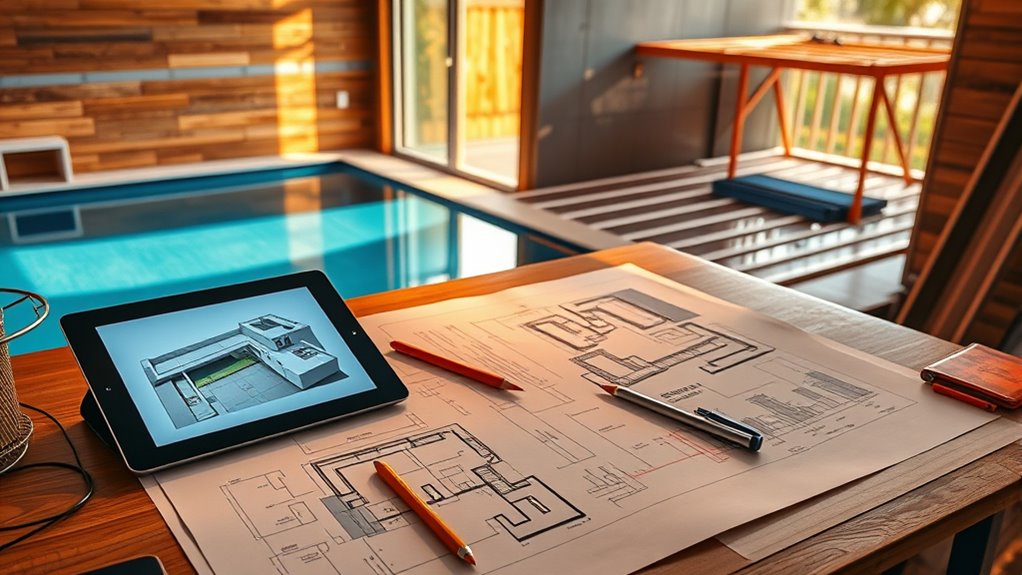
Have you ever wondered how an infinity pool begins to take shape? It all starts with thorough planning and design. You’ll work closely with architects and designers to visualize your dream pool, considering factors like size, shape, and location. You’ll decide on materials, water features, and the overall aesthetic to match your space. During this phase, you’ll create detailed drawings and 3D models, helping you see exactly how your pool will look. It’s essential to plan for structural integrity and safety from the start. You’ll also establish a budget and timeline, ensuring the project stays on track. This initial phase lays the foundation for a successful build, turning your vision into a concrete plan.
Securing Permits and Approvals
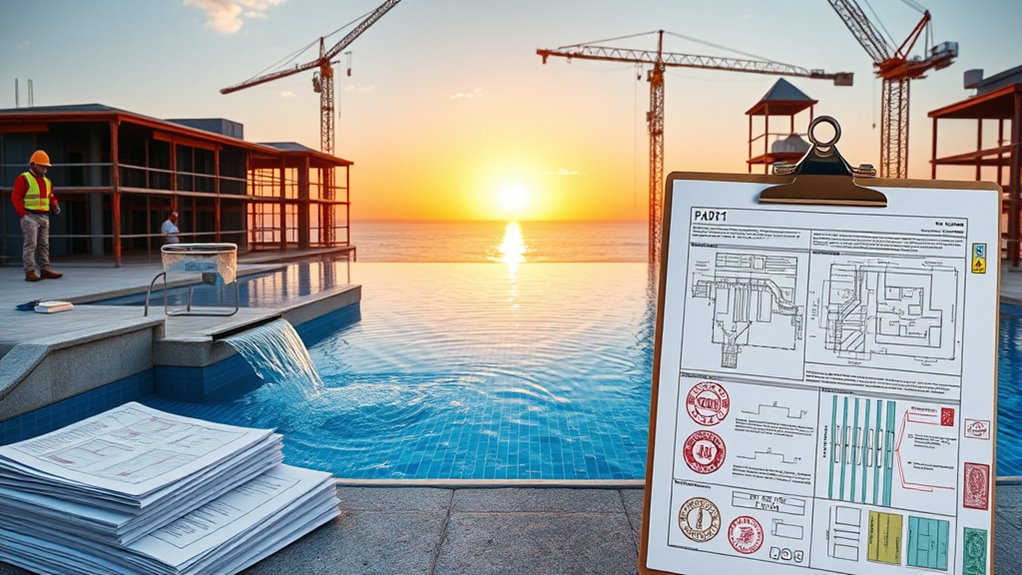
After finalizing your design, the next step is obtaining the necessary permits and approvals. You’ll need to submit detailed plans to local building authorities, ensuring they meet safety and zoning regulations. This process often involves filling out applications, paying fees, and providing documentation like structural calculations and site plans. Be prepared for inspections and possible revisions to your plans based on feedback. Securing these permits is essential, as it keeps your project legal and helps prevent delays or fines later on. Reach out to your city or county offices early to understand specific requirements. Working closely with officials and staying organized speeds up approval. Additionally, understanding building code compliance requirements related to safety standards can facilitate smoother approval processes. Once you have all permits in hand, you can confidently move forward with site preparation and construction.
Site Preparation and Excavation
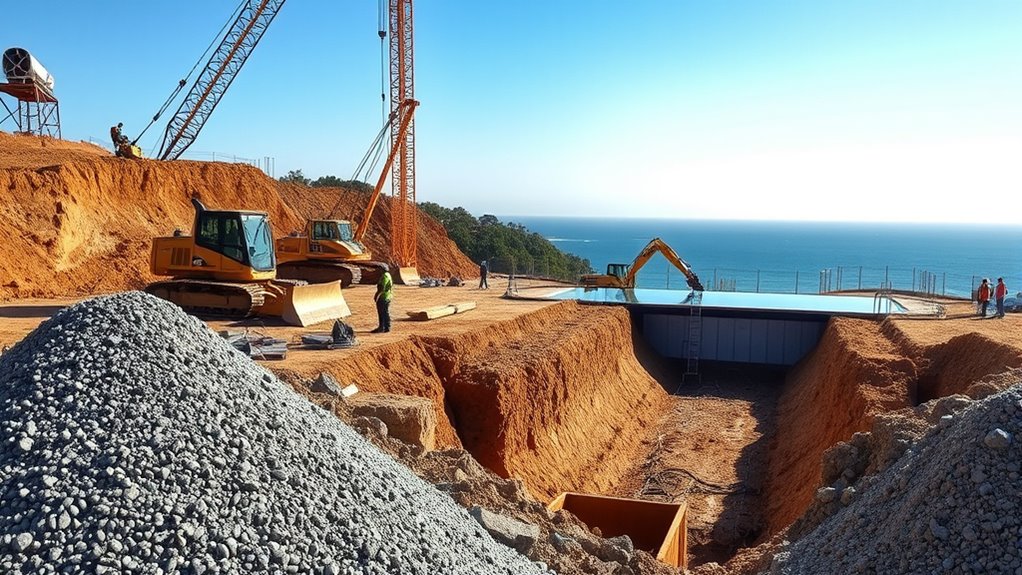
Before pouring the foundation for your infinity pool, you need to thoroughly prepare the site. Start by clearing away all vegetation, debris, and obstacles. Level the ground to create a stable, even surface, ensuring proper drainage. Excavation involves digging out the area where the pool will sit, removing soil to the specified depth, and shaping the site according to your design. This step is critical for preventing future settling or shifting. Use stakes and string to outline the excavation boundaries, double-check measurements, and confirm the slope for proper water runoff. Make sure the excavation is deep enough to accommodate the pool’s structure and surrounding features. Proper site preparation lays the groundwork for a safe, durable, and visually stunning infinity pool. Additionally, understanding the importance of proper drainage can help you avoid water accumulation issues that may compromise the pool’s integrity over time.
Foundation and Structural Framework
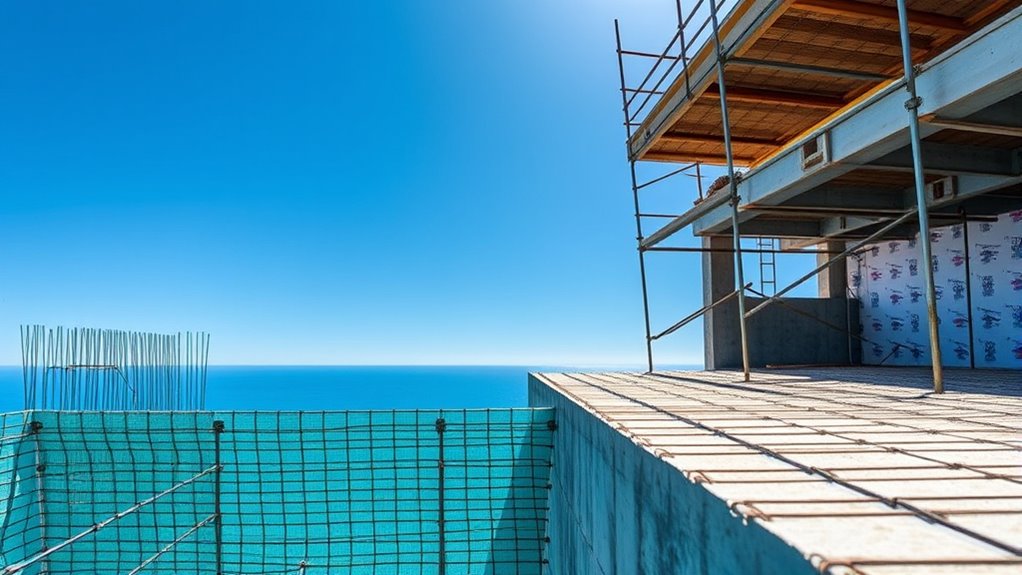
Once the site is properly prepared, you can begin laying the foundation and assembling the structural framework for your infinity pool. This phase is vital for ensuring stability and durability. First, you’ll pour a reinforced concrete slab that acts as the base, providing a solid surface. Next, you’ll install steel rebar or mesh within the concrete to reinforce the structure and prevent cracking. Finally, you’ll assemble the framework using steel or reinforced concrete walls that define the pool’s shape and support the edges. These steps set the stage for the finishing touches and waterproofing. Proper execution during this stage guarantees the pool’s longevity and safety, forming the backbone of your luxurious infinity feature. Inspiration can be drawn from the importance of a strong foundation, much like the profound impact fathers have in shaping character.
Plumbing, Electrical, and Mechanical Installations
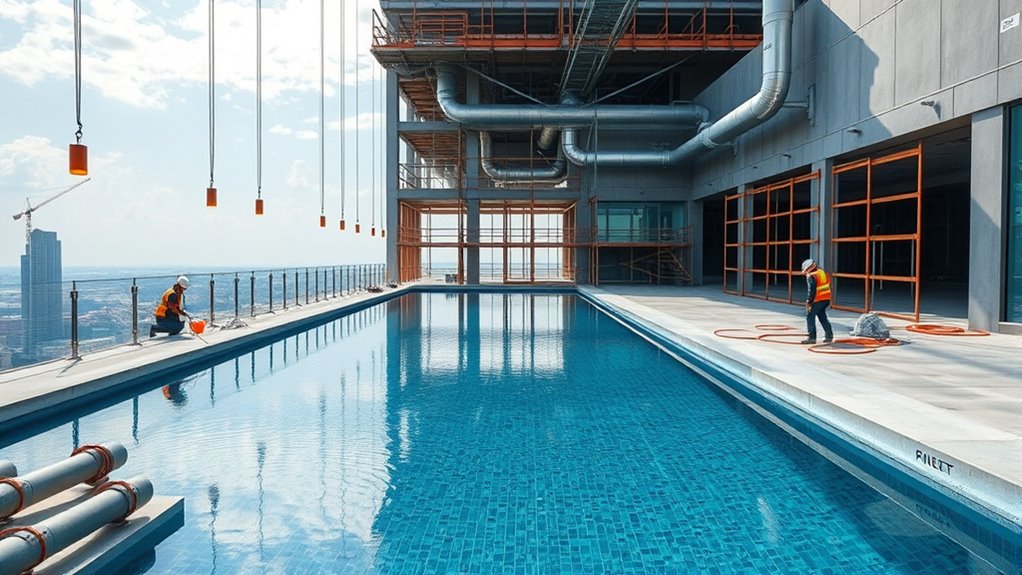
Now, you’ll focus on installing the plumbing, electrical wiring, and mechanical equipment essential for your infinity pool. Proper integration guarantees everything functions smoothly and safely. This step sets the foundation for reliable operation and future maintenance. Ensuring that electrical components are installed with safety features like auto shut-off minimizes risks and promotes secure usage.
Plumbing System Integration
Integrating the plumbing, electrical, and mechanical systems is a crucial step that guarantees all essential functions operate seamlessly within the infinity pool structure. You need to confirm these systems are properly coordinated to prevent future issues. First, verify the placement of pipes and conduits to optimize water flow and avoid conflicts. Second, test the mechanical components—such as pumps and filters—to confirm they perform efficiently and are accessible for maintenance. Third, coordinate with other trades to ensure electrical connections support the mechanical systems without interference. Proper integration minimizes leaks, electrical hazards, and mechanical failures, ensuring the pool functions smoothly. Additionally, referencing Hyundai Tuning principles, careful calibration of these systems can enhance overall performance and longevity of the pool infrastructure. This careful planning and execution lay the foundation for a reliable, maintenance-friendly infinity pool that performs beautifully for years to come.
Electrical Wiring Setup
Before installing the final electrical wiring, you must carefully plan and set up the electrical system to support the pool’s mechanical and plumbing components. This step assures safety, efficiency, and proper operation of features like lighting, pumps, and heaters. You’ll need to determine power sources, circuit loads, and wiring routes. Use a detailed layout to avoid future electrical issues. Proper planning guarantees your infinity pool functions seamlessly and safely. Additionally, understanding home security systems can help protect your property during construction.
Mechanical Equipment Placement
Proper placement of mechanical equipment is crucial to guarantee your infinity pool functions efficiently and safely. You need to carefully plan where to install essential components, such as pumps, filters, and electrical panels, to optimize performance and accessibility. Consider these key steps:
- Locate equipment close to the pool to minimize plumbing length, reducing energy losses and maintenance issues.
- Ensure proper ventilation and drainage for mechanical rooms to prevent overheating and water damage.
- Position electrical components away from water sources, following safety codes, to avoid hazards and facilitate inspections.
Pool Shell Construction and Waterproofing
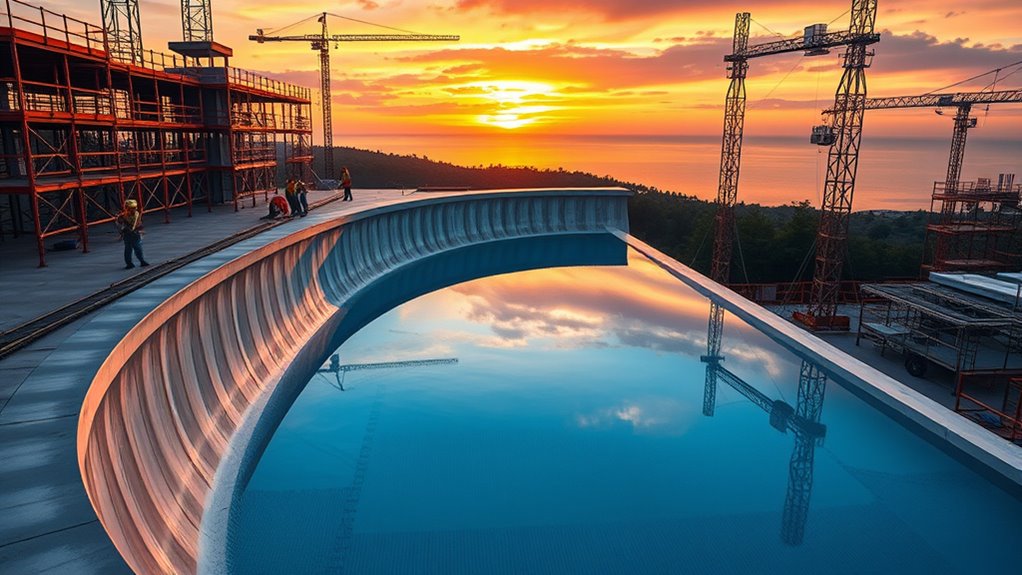
Have you ever wondered how the pool shell is formed and made waterproof? First, a sturdy framework is built, usually from reinforced steel. Then, concrete is poured to create the shell’s shape, ensuring it’s strong enough to support the structure. Once the shell cures, waterproofing begins. You’ll apply a waterproof membrane or a special coating to prevent leaks and damage over time. This layer is essential, especially for infinity pools, where water constantly flows over the edge. The process involves careful surface preparation, multiple coats, and thorough inspection. Here’s a quick overview:
| Step | Material/Method | Purpose |
|---|---|---|
| Structural Framework | Reinforced steel | Support and shape of the shell |
| Concrete Pouring | Shotcrete or gunite | Form the pool shell |
| Waterproof Coating | Membranes or coatings | Seal against leaks |
| Inspection & Curing | Visual and structural checks | Ensure durability and waterproofing |
Additionally, proper waterproofing techniques are crucial to ensure the longevity of the pool and prevent costly repairs in the future.
Finishing Touches and Landscaping
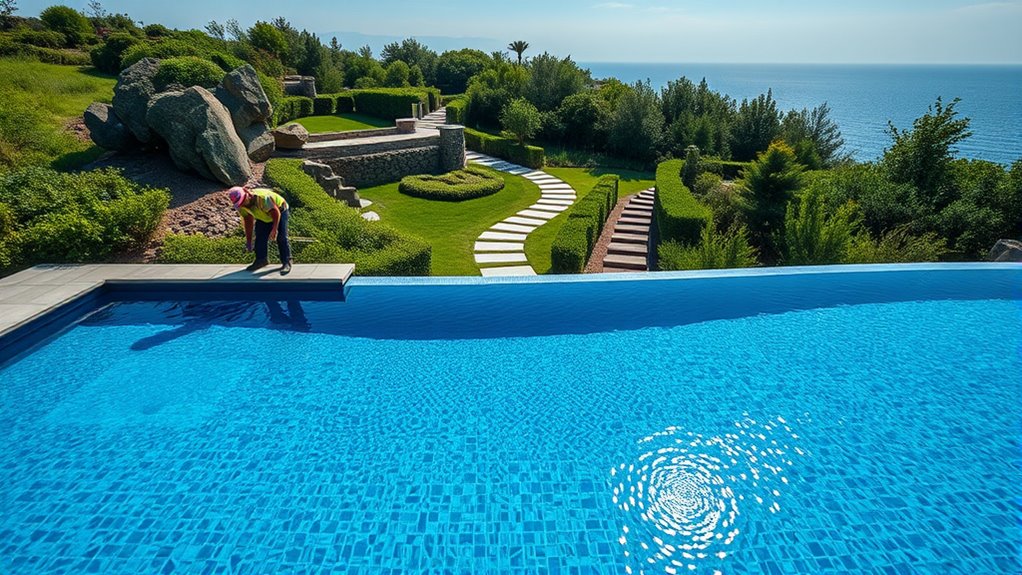
Once the main construction is complete, it’s time to add the finishing touches and landscape your pool area. You’ll focus on final surface detailing to make sure everything looks polished and inviting. Enhancing the surroundings will transform your space into a stunning, cohesive outdoor retreat. Incorporating eye patch benefits into your overall landscape design can also help highlight the beauty of your outdoor space.
Final Surface Detailing
As the main construction phases conclude, attention shifts to the final surface detailing, where finishing touches and landscaping transform the pool into a stunning focal point. This stage involves meticulous work to guarantee a flawless appearance and seamless integration with your surroundings. You’ll focus on:
- Applying the final surface coating, such as plaster or tile, to achieve a smooth, durable finish.
- Adding decorative elements like mosaics or accent tiles to enhance visual appeal.
- Landscaping around the pool, including planting, lighting, and installing features that complement the pool’s design.
- Consulting cost‑of‑ownership considerations to ensure your investment in finishing and landscaping remains sustainable over time.
These details elevate the overall aesthetic and ensure your infinity pool becomes a mesmerizing centerpiece. Precision at this stage guarantees longevity, beauty, and a truly luxurious experience.
Enhancing Surroundings
After completing the final surface detailing, turning your attention to the surroundings helps transform your infinity pool into a cohesive outdoor oasis. Start by selecting landscaping that complements your pool’s design and enhances its visual appeal. Plant trees, shrubs, and flowers to add color, texture, and privacy. Incorporate features like lounge areas, fire pits, or water features to create inviting spaces. Consider lighting options to highlight the pool at night and add ambiance. Use natural materials such as stone, wood, or gravel for pathways and borders that blend seamlessly with the landscape. Additionally, choosing proper storage solutions for your landscaping tools and pool accessories ensures your outdoor space remains tidy and inviting. Finally, guarantee your landscaping is practical, requiring minimal maintenance while maximizing beauty and comfort. These finishing touches will elevate your infinity pool into a stunning, functional outdoor retreat.
Filling, Testing, and Final Inspection
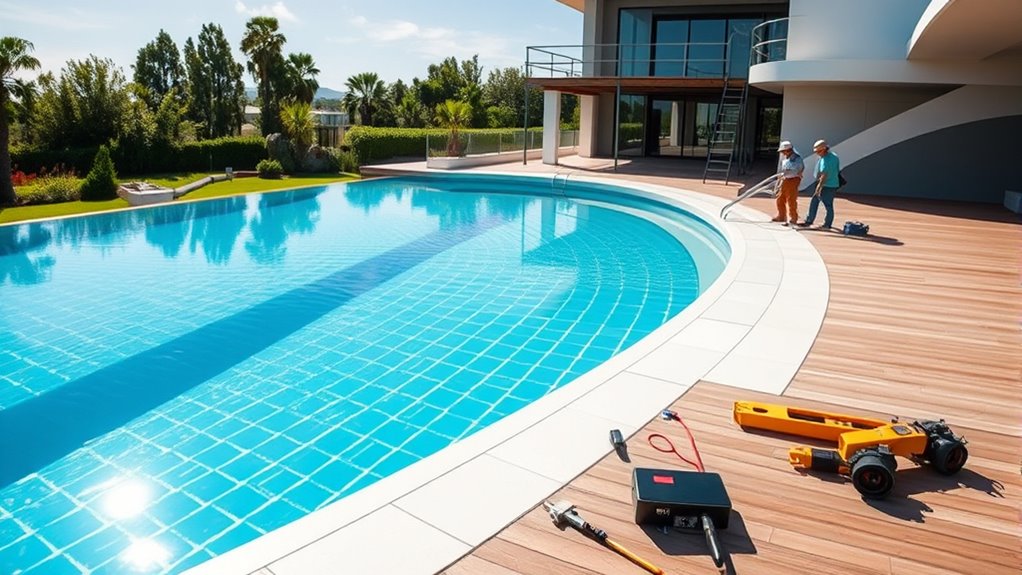
Filling the infinity pool is a crucial step that guarantees the structure is properly sealed and ready for testing. Once filled, you’ll proceed with a series of tests to ensure everything functions correctly. Start by checking for leaks, which involves monitoring water levels and inspecting the seals. Next, test the circulation system to confirm water flows smoothly and filters operate efficiently. Finally, verify the overflow mechanism and water level controls to ensure they respond accurately. During the final inspection, professionals will evaluate the overall build, electrical systems, and safety features. This phase confirms your pool is safe, functional, and ready for use. Properly completing these steps ensures longevity and peak performance of your stunning infinity pool.
Frequently Asked Questions
How Long Does Each Phase Typically Take?
You’ll typically spend about 4-6 weeks on design and planning, ensuring your ideas are clear. Construction usually takes 3-6 months, depending on size and complexity. The installation phase might last a few weeks, with finishing touches like landscaping taking another 2-4 weeks. Overall, expect around 4 to 8 months from start to swimming. Keep in mind, delays can happen, so plan for some flexibility.
What Are Common Delays During Construction?
Common delays during construction include permitting issues, which can stall progress if approvals take longer than expected. Unexpected site conditions, like hidden underground obstacles or poor soil quality, often cause setbacks. Weather also plays a significant role, especially during rainy or stormy seasons, delaying work. Supply chain disruptions can slow down material delivery, and contractor availability might lead to scheduling conflicts, all of which extend your project’s timeline.
How Much Does an Infinity Pool Cost Overall?
An infinity pool typically costs between $50,000 and $150,000, depending on size, materials, and location. You’ll spend more if you opt for custom features like lighting, heating, or advanced automation. Keep in mind, installation costs include excavation, foundation, waterproofing, and finishing. Budget for permits and potential delays. Overall, your total investment varies based on design complexity and site conditions, so plan accordingly to get the best value.
Can the Design Be Customized After Construction Begins?
Yes, you can customize the design after construction begins, but it’s more challenging and costly. Changes may require additional planning, permits, and adjustments to the existing structure. To minimize issues, communicate your desired modifications early in the process. Keep in mind, significant changes might delay the project and increase expenses, so it’s best to finalize your design during the initial planning stages for smoother customization.
What Maintenance Is Required Post-Completion?
After your infinity pool is built, you’ll need to perform regular maintenance to keep it pristine. This includes cleaning the water and filters, checking and adjusting chemical levels, inspecting for leaks or cracks, and maintaining the pool’s mechanical systems. You should also regularly clean the tiles and surrounding area. Scheduling seasonal deep cleanings and professional inspections helps prevent issues and extends your pool’s lifespan, ensuring it stays beautiful and functional.
Conclusion
From the initial planning to the final inspection, your infinity pool journey involves careful design, diligent preparation, precise construction, and detailed finishing. Each step builds upon the last, shaping your dream into reality. As you navigate permits, excavation, and installation, stay focused and attentive. Because with every phase completed, your vision becomes clearer, your space more stunning, and your experience more exhilarating. Embrace each moment, knowing your infinity pool will soon be a breathtaking oasis to enjoy, relax, and impress.