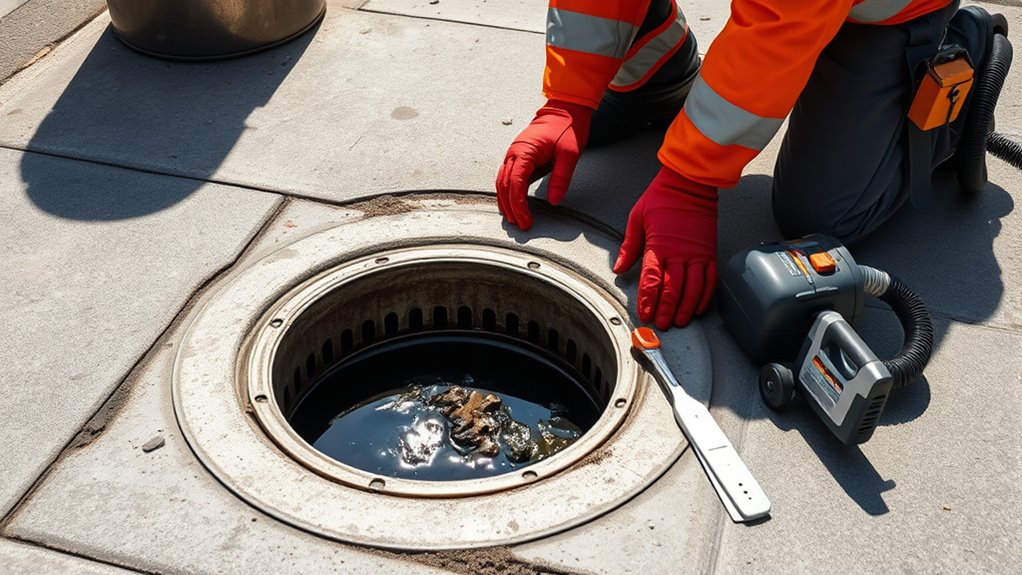

Routine maintenance for your catch basin involves regularly inspecting and cleaning to prevent blockages and water backups. Check it at least every few months and after heavy storms for debris, sediment, or damage. Remove leaves, trash, and dirt promptly using appropriate tools, and make certain the inlet remains clear. Look for cracks or corrosion and repair them immediately. Keeping the area clear and maintained helps your drainage system work effectively, and more tips lie ahead.
Key Takeaways
- Conduct regular visual inspections to identify debris buildup, sediment, and structural damage.
- Remove leaves, trash, and dirt promptly using appropriate tools, and dispose of debris properly.
- Check for cracks, corrosion, and obstructions; repair damage immediately to maintain system integrity.
- Ensure the inlet remains clear and surrounding area is free of vegetation and obstructions.
- Schedule inspections before and after heavy storms to prevent flooding and ensure effective stormwater flow.
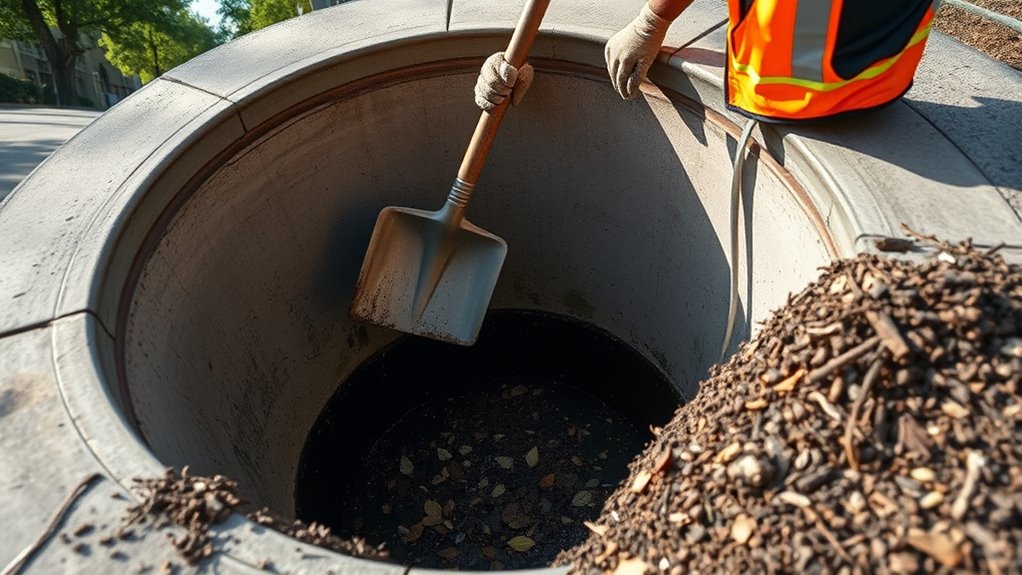
Regularly maintaining your catch basin is essential to keep stormwater flowing smoothly and prevent flooding or backups. When you stay on top of this task, you support effective stormwater management and reduce the risk of water pooling on streets or property. A catch basin acts as a preliminary filter, capturing debris, leaves, and sediments that could otherwise block drainage systems. If debris accumulates, it hampers water flow, leading to potential flooding during heavy rains. That’s why routine inspection and debris removal are crucial components of maintenance.
Regular catch basin maintenance prevents flooding and ensures effective stormwater flow.
You should start by visually inspecting the catch basin at least once every few months, especially before and after heavy storms. Look for signs of debris buildup, sediment accumulation, or any damage to the structure. If you notice leaves, trash, or dirt clogging the grate or inlet, remove them promptly. This simple act ensures that stormwater can enter the basin freely and flow toward the drainage system without obstruction. Remember, the goal is to keep the inlet clear so water can drain quickly, minimizing the risk of backups and property damage.
When removing debris, use appropriate tools like a shovel, rake, or hand-held scoop to avoid injury and make the process more efficient. Wear gloves to protect yourself from sharp objects or contaminants. Avoid flushing debris or sediments down the drain, as they can settle in pipes further downstream, causing blockages that are harder to address later. Instead, dispose of debris properly in trash receptacles, ensuring the environment stays clean and drains remain unblocked.
In addition to debris removal, check the condition of the catch basin itself. Look for cracks, corrosion, or signs of structural wear that might compromise its effectiveness. Repair any damage immediately to keep the system functioning correctly. Also, ensure the surrounding area is clear of overgrown vegetation or obstructions that could hinder access or contribute additional debris. Regular maintenance not only improves stormwater management but also extends the lifespan of your drainage infrastructure. By taking a proactive approach, you prevent costly repairs, protect your property, and help safeguard the community from flooding. Make it a habit to inspect and clean your catch basin regularly—especially before the rainy season—to keep the water flowing freely and avoid unnecessary issues down the line. Consistent debris removal and upkeep are simple yet vital steps in maintaining an efficient drainage system that serves your needs effectively. Additionally, understanding the importance of proper drainage capacity can help you plan more effective preventative maintenance strategies.
Frequently Asked Questions
How Often Should Catch Basins Be Inspected for Optimal Performance?
You should inspect your catch basin at least twice a year to guarantee peak performance. Regular inspection frequency helps identify any debris buildup or blockages early, allowing you to schedule maintenance promptly. During inspections, check for standing water, sediment, and damage. Staying consistent with your maintenance scheduling prevents backups and flooding, keeping your drainage system working efficiently. Don’t wait for problems to escalate—make routine inspections a priority.
What Are the Signs Indicating a Catch Basin Needs Urgent Cleaning?
If you notice foul odors or see standing water, your catch basin likely needs urgent cleaning. An estimated 70% of clogged drains are caused by debris buildup, leading to poor drainage and potential flooding. Signs include persistent foul smells, slow draining water, or debris overflowing. Addressing these issues promptly prevents backups and foul odors from spreading, ensuring your drainage system functions efficiently and avoids costly repairs.
Can Routine Maintenance Prevent Flooding During Heavy Rains?
Yes, routine maintenance helps prevent flooding during heavy rains by ensuring your catch basin functions properly. It improves stormwater management by removing debris and sediment that could block water flow. When your catch basin is clean, it reduces the risk of urban flooding, protecting nearby properties and infrastructure. Regular inspections and cleaning keep the drainage system efficient, so you’re better prepared for heavy rainfall and can avoid costly flood damage.
Are There Environmentally Friendly Methods for Cleaning Catch Basins?
Yes, you can use environmentally friendly methods to clean catch basins. Opt for biodegradable cleaning agents that break down naturally, reducing chemical impact on the environment. Additionally, implement eco-friendly debris removal techniques, like manual extraction or vacuum systems that minimize water contamination. These practices help keep your catch basin clean while protecting local ecosystems, ensuring effective maintenance without harming wildlife or water quality.
What Tools Are Recommended for DIY Catch Basin Maintenance?
For DIY catch basin maintenance, you should have a tools checklist that includes a sturdy shovel, a rake, a bucket, and a garden hose for flushing. Don’t forget safety gear like gloves, goggles, and a mask to protect yourself from debris and harmful substances. These tools and safety equipment make cleaning easier and safer, helping you maintain the catch basin effectively while minimizing environmental impact.
Conclusion
Regularly maintaining your catch basin might seem like a hassle, but it’s a simple task that prevents bigger problems down the line. Don’t wait until overflowing or flooding occurs—staying on top of it keeps your property safe and your drains flowing smoothly. Plus, a quick cleanup now saves you time and money later. So, grab your gloves and check that basin—you’ll be glad you did when rainstorms hit!