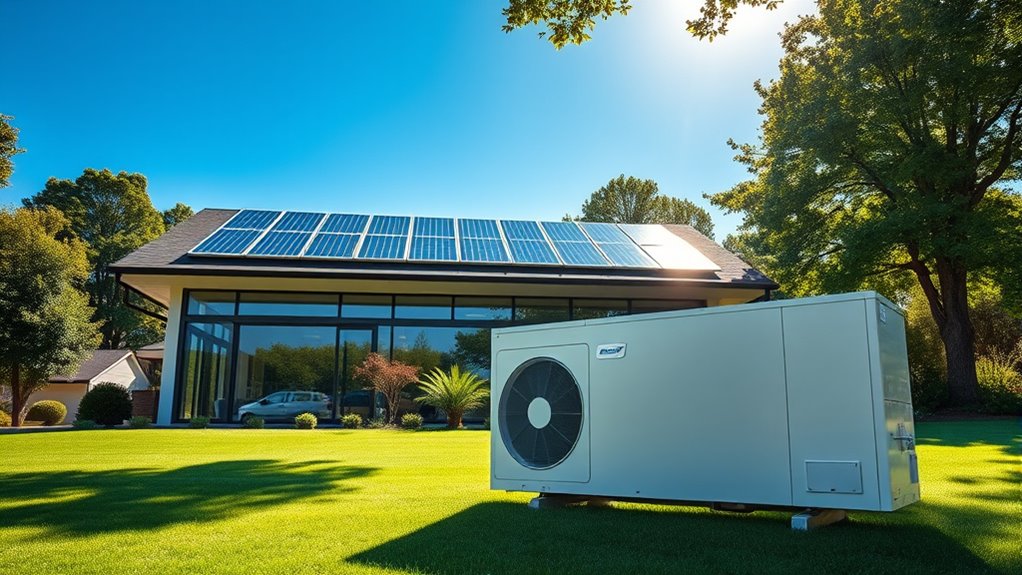

To improve your home’s energy efficiency with solar and heat pump systems, you should understand how each works. Solar heating captures sunlight to warm fluids for hot water and space heating, while heat pumps move heat from outside air or ground into your home, saving energy. Each has benefits and costs to evaluate, depending on your climate and home size. Keep exploring these options to find the most effective solution for your needs and maximize your savings.
Key Takeaways
- Solar heating systems harness sunlight to provide renewable, cost-effective hot water and space heating, reducing reliance on traditional energy sources.
- Heat pumps transfer ambient heat from outside air, ground, or water into your home, offering high efficiency especially in moderate climates.
- Both systems offer long-term savings: solar reduces ongoing fuel costs, while heat pumps cut electricity bills through efficient operation.
- Choosing between systems depends on climate, home size, initial investment, and compatibility with existing infrastructure.
- Maximize energy efficiency by regular maintenance, sealing leaks, using programmable thermostats, and proper insulation.
How Solar Heating Systems Work
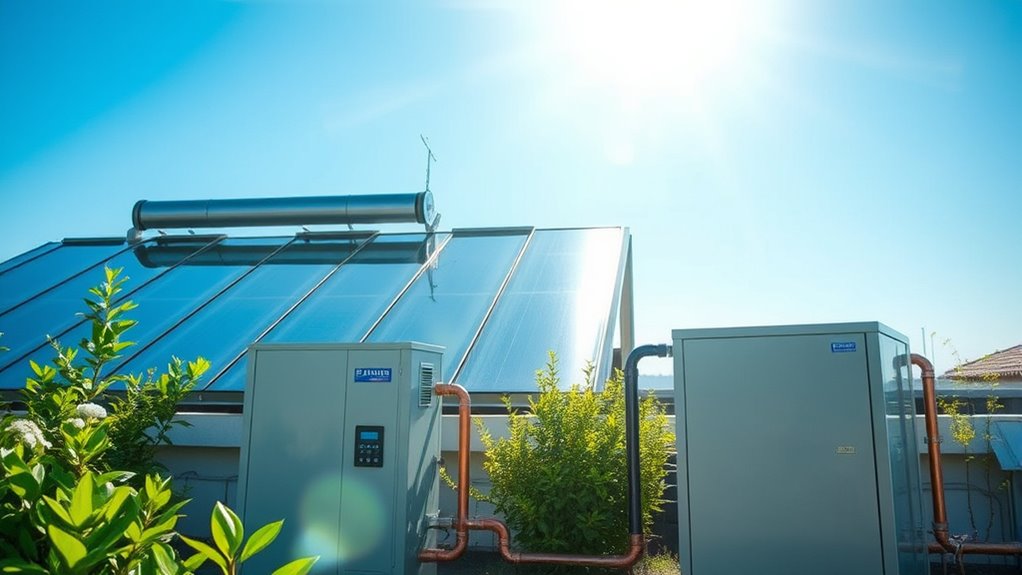
Solar heating systems capture sunlight through solar collectors, which then convert the energy into heat. When sunlight hits the collectors, usually made of glazed glass or plastic, it warms the fluid inside—either water or a heat-transfer fluid. This heated fluid flows through a network of pipes, carrying thermal energy to a storage tank or directly to your heating system. The system often includes a controller that monitors temperatures and adjusts flow accordingly, ensuring efficiency. Because solar collectors are designed to absorb maximum sunlight, they work best on clear, sunny days. The stored heat can be used for space heating, hot water, or both, reducing your reliance on traditional energy sources. This process harnesses renewable energy, making it a sustainable choice for heating your home. Additionally, proper system design can enhance overall energy efficiency and maximize heat capture.
How Heat Pump Systems Operate
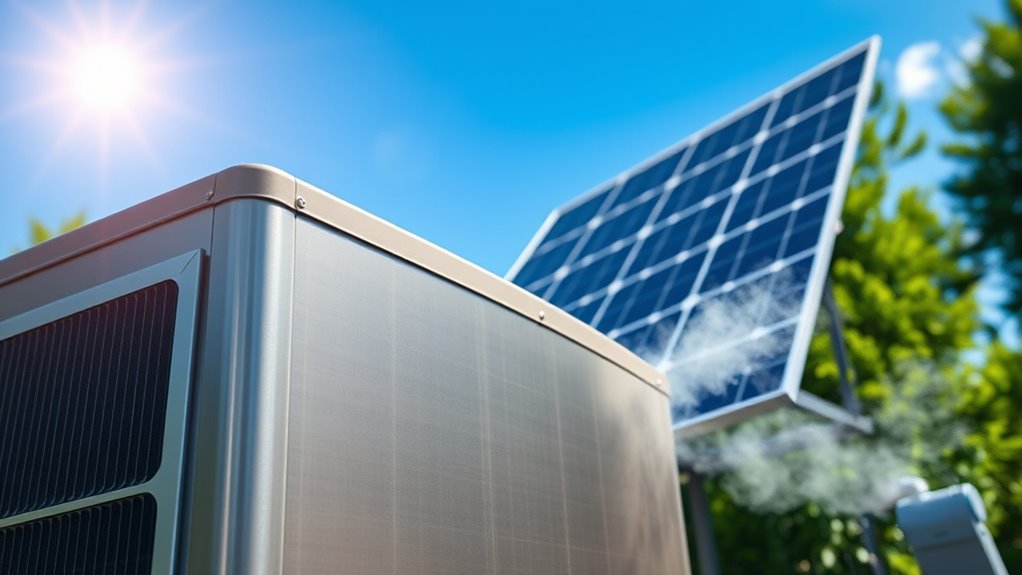
Heat pump systems operate by transferring heat from the outside air, ground, or water into your home, even in cold weather. They use a refrigerant cycle, where a compressor pumps refrigerant through a series of coils. In heating mode, the refrigerant absorbs heat from the outside source and becomes a high-pressure gas. The compressor then increases its temperature further. This hot gas moves to the indoor coil, releasing heat into your home as it condenses back into a liquid. The refrigerant cycle repeats, continuously supplying warm air. Because heat pumps move heat rather than generate it, they use less energy than traditional heating systems. This process makes them highly efficient, especially in moderate climates, providing consistent warmth while reducing energy consumption. Vetted
Comparing Benefits and Costs

While heat pump systems offer significant energy savings, it’s important to weigh their benefits against the initial costs. Installing a heat pump can require a substantial upfront investment compared to traditional heating methods. However, over time, you’ll likely save money on energy bills thanks to their high efficiency. Maintenance costs are generally lower, and many systems qualify for rebates or incentives, reducing your overall expense. Solar heating, while also costly initially, offers the advantage of renewable energy, potentially eliminating ongoing fuel costs. When comparing these options, consider both the long-term savings and the financial barriers of installation. Your decision should balance your budget with your desire for sustainable, energy-efficient heating. Additionally, understanding the initial investment involved can help you make an informed choice that aligns with your financial situation and environmental goals. Ultimately, understanding these costs helps guarantee you choose a system that fits your needs and finances.
Factors to Consider When Choosing a System
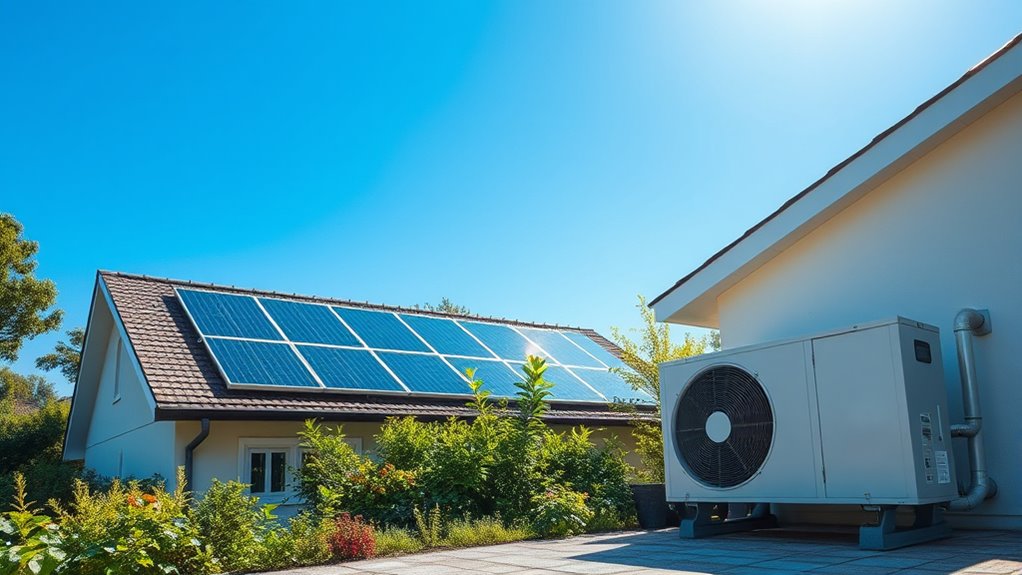
What factors should you consider when choosing a heating system? First, evaluate your home’s size and insulation to determine the capacity needed. Think about your local climate—solar systems work well in sunny areas, while heat pumps excel in moderate temperatures. Cost is vital; compare upfront expenses and long-term savings. Maintenance requirements also matter; some systems may need more frequent service. Compatibility with existing infrastructure can influence installation complexity. Finally, consider future energy prices and environmental impact to guarantee your choice remains sustainable. Additionally, assessing the system’s energy efficiency can help reduce long-term operating costs and environmental footprint.
Tips for Maximizing Energy Efficiency

To get the most energy savings from your heating system, focus on simple, effective strategies that make a difference. First, set your thermostat to the lowest comfortable temperature; every degree lower reduces energy use. Regularly maintain your system by cleaning filters and scheduling professional check-ups to ensure peak performance. Seal leaks around doors and windows to prevent heat loss. Use programmable thermostats to automatically lower temperatures when you’re asleep or away. Insulate your walls, attic, and pipes to keep heat in. Consider curtains or blinds to retain warmth at night and open them during sunny days. Finally, stay vigilant for drafts or drafts and address them promptly. Incorporating high-quality projectors into your home cinema setup can further enhance your viewing experience while maintaining energy efficiency. These small steps can substantially boost your system’s efficiency and save you money.
Frequently Asked Questions
What Maintenance Is Required for Solar and Heat Pump Systems?
You should regularly inspect your solar and heat pump systems to guarantee peak performance. Clean solar panels to remove dirt and debris, and check for shading that could reduce efficiency. For heat pumps, change filters monthly and keep outdoor units clear of debris like leaves or snow. Schedule professional maintenance annually to check refrigerant levels, electrical components, and overall system health, helping prolong lifespan and maintain energy efficiency.
How Long Is the Typical Lifespan of These Systems?
Your solar and heat pump systems typically last between 15 to 25 years, which is almost like having a reliable, eco-friendly friend for decades. With proper maintenance, like regular inspections and cleaning, you can extend their lifespan even further. Imagine enjoying consistent, energy-efficient warmth or cooling for nearly a quarter-century, making your investment truly worthwhile. So, treat them well, and they’ll keep serving you for many years to come!
Are Solar and Heat Pump Systems Suitable for All Climates?
Solar and heat pump systems work well in many climates, but their effectiveness varies. If you live in a sunny area, solar panels can generate plenty of energy year-round. Heat pumps are great in moderate temperatures but might struggle in extremely cold or hot climates. You should consider local climate conditions and consult with a professional to determine if these systems suit your specific environment.
Can These Systems Be Integrated With Existing Heating Setups?
Yes, you can integrate solar and heat pump systems with your existing heating setups. You’ll need to assess compatibility and possibly upgrade some components, but the process is generally straightforward. By combining these systems, you can enhance efficiency and reduce energy costs. Consult with a professional to guarantee proper integration, and you’ll benefit from a more sustainable and cost-effective heating solution without replacing your entire system.
What Incentives or Rebates Are Available for Installing These Systems?
You can often access incentives or rebates when installing solar or heat pump systems. Check local, state, or federal programs that support renewable energy upgrades; these may include tax credits, rebates, or grants. Utility companies might also offer special incentives. To maximize benefits, consult with installers or energy agencies who can help you navigate available programs and guarantee you qualify for the financial incentives that make these upgrades more affordable.
Conclusion
Choosing between solar heating and heat pumps depends on your home’s needs and your energy goals. Both options offer eco-friendly, cost-effective warmth, helping you save money and reduce your carbon footprint—like a true modern-day alchemist. Carefully consider factors like climate, installation costs, and maintenance. With the right system, you’ll stay cozy while embracing the future of energy efficiency. So, make your choice wisely, and enjoy the warm benefits of these innovative technologies.