TL;DR

Get garden gear delivered free — and shop member deals
- Fast, free delivery on millions of items
- Access to Prime Big Deal Days deals on October 6–7
- Prime Video, Amazon Music and more included
Spooky outdoor string lights work best when you match the type (purple/orange LEDs, flame-effect, novelty shapes) to your power source and hang them with outdoor-rated gear. LEDs use about 75% less energy than incandescent, stay cool to the touch near flammable decorations, and last 25,000–50,000 hours. Buy by late September before stock sells out, and look for IP44–IP65 waterproof ratings for genuine outdoor durability.
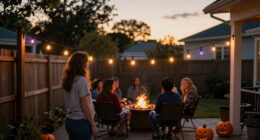
Your neighbor’s house glows like a haunted mansion every October. Yours has one sad strand of icicle lights left over from Christmas. The difference isn’t budget — it’s strategy.
Spooky outdoor string lights are the fastest way to transform a porch, fence, or front yard into something genuinely eerie. But the category is bigger than it looks: purple LEDs, flickering flame effects, ghost-shaped bulb covers, solar strands, app-controlled smart lights. Picking wrong means dim bulbs, dead sections, or worse — a fire hazard near dry straw decorations.
This guide walks you through the types of spooky lights worth buying, how to power them, how to hang them safely, and the styling tricks that make people slow down and stare. Let’s make your house the one on the block that gets photographed.
Layer purple and orange LED strands for visual depth — a single color always looks flatter than two layered together.
Check for an IP44–IP65 waterproof rating and a UL/ETL outdoor listing before buying; indoor lights used outside are a genuine hazard.
Solar lights need 6–8 hours of direct sunlight — choose plug-in if your yard is shaded or your climate is cloudy.
Use clips, hooks, and zip ties to hang lights; nails and staples pierce insulation and create shock risks.
Buy by late September before stock sells out, and grab spares during post-Halloween sales in early November.
7 Types of Spooky Outdoor String Lights (and What Each Does Best)
Spooky outdoor string lights come in seven main styles, each creating a different mood: purple and orange LEDs for classic Halloween color, novelty shapes for whimsy, flame-effect bulbs for candlelit dread, and Edison cage bulbs for a haunted mansion aesthetic. Choosing the right type is half the battle.
The classic combo is purple and orange LED string lights — layered together, they create depth that a single color can’t match. Add a strand of green for a witchy or zombie accent and your color story is complete.
- Purple and orange LEDs – the foundation of most Halloween displays
- Novelty shapes – ghost, pumpkin, bat, and skull bulb covers; great for kids and photo ops
- Flame-effect lights – flicker like candles or torches without any actual fire
- Twinkle and multi-function strands – flashing, chasing, and fade modes for movement
- Amber Edison cage bulbs – moody, vintage haunted-mansion glow
- Green lights – witch and zombie themes, or toxic-slime vibes
- Laser projectors – not string lights, but often paired with them for full-yard coverage
Real-world example: a plain white fence becomes a spine when you weave a spooky outdoor string of purple LEDs through artificial spider webs, then anchor the ends with orange flame-effect bulbs. Total cost: about $35.
Budget-wise, cheap novelty strands run $10–20; reliable and smart-compatible sets run $25–60+. The cheap ones are fine for one season — just don’t expect them to survive a second October.
Why the price gap matters: budget strands usually skimp on waterproofing and wire gauge, which is why they dim, corrode, or die after a few rainy nights. Think of it like the difference between a costume-store witch hat and one you actually store and reuse — the second costs more but survives three Halloweens instead of one.
Solar vs. Plug-In vs. Battery: Which Power Source Wins for Your Yard?
Plug-in lights are the brightest and most reliable option, solar lights are the easiest to install with zero cords, and battery-powered lights win for spots far from any outlet. Your yard’s layout decides the winner.
| Power Source | Best For | Watch Out For |
|---|---|---|
| Plug-in (AC) | Rooflines, porches near outlets; brightest, steadiest output | Cords and extension cords needed; must be outdoor-rated |
| Solar | Fences, trees, freestanding areas; no wiring at all | Needs 6–8 hours of direct sun; dimmer in shade or cloudy regions |
| Battery | Remote spots — mailbox posts, deep garden beds | Battery swaps; run times vary widely |
| USB-rechargeable | Small accent displays | A growing category with improving run times |
Here’s the honest tradeoff: solar spooky lights have improved a lot, but they still underdeliver in shaded yards or cloudy climates. The reason is physics — a small solar panel that gets two hours of weak October sun simply can’t store enough charge to run six hours of full-brightness light. Solar isn’t a worse technology; it’s a technology with a non-negotiable requirement: direct sunlight. If your porch faces north or sits under big maple trees, the strand that looks vibrant in the product photo will glow like dying embers by 8 p.m. Go plug-in and don’t look back.
Battery power has its own hidden cost: labor. A mailbox post wrapped in battery lights sounds effortless until you’re swapping AA batteries in the cold every four nights. Run times range from roughly 20 hours (fresh alkaline, steady mode) to 6–8 hours (twinkle mode, which works the LEDs harder). Practical compromise: use battery strands where nothing else reaches, and buy rechargeables so swaps cost pennies, not $6 a pop.
Consider a real scenario: a corner-lot house with an outlet on the porch, a shaded side fence, and a mailbox at the curb. The winning setup is plug-in purple LEDs on the porch roofline (bright focal point), one solar strand on the sun-exposed front fence (no cords crossing the lawn), and a battery flame-effect strand on the mailbox. Mixing power sources isn’t a compromise — it’s the correct answer for most yards.
According to the U.S. Department of Energy, LEDs use about 75% less energy than incandescent bulbs and last far longer [1] — so even a big plug-in LED display costs pennies per night to run. To put that in context: a 300-bulb incandescent display running 6 hours a night through October might add $10–15 to your bill; the same LED display adds about $2–3. The energy savings effectively pay for the upgrade within a season or two.
How to Hang Spooky Lights Without Damaging Your House (5 Steps)
Hanging spooky outdoor string lights safely takes five steps: measure your space, choose the right attachment method, keep everything outdoor-rated, protect the cords, and set a timer. Skip a step and you’ll be re-hanging strands after the first windstorm.
- Measure your linear feet. Strands typically run 16–48 feet of lighted length. Measure your roofline or railing, then buy with 10–15% extra to spare. Why the slack: a strand strung taut has no droop, and no droop means constant tension on every clip — the number one reason strands tear loose in wind.
- Use clips, hooks, or zip ties — never nails or staples. Metal fasteners pierce insulation and create shock hazards. Plastic clips grip gutters and railings without damage. The implication matters beyond safety: a staple through the wrong wire can short an entire strand, turning a 30-second shortcut into a $40 replacement.
- Check every rating tag. Only use lights marked for outdoor use with a UL or ETL listing. Indoor lights outside are a genuine safety risk, not a technicality.
- Use outdoor-rated extension cords and don’t overload circuits. One heavy-duty cord on a dedicated outlet beats three daisy-chained cheap ones.
- Add a timer. Lights on from dusk to 10 p.m. save energy, extend bulb life, and keep neighbors happy.
One more thing: LEDs stay cool to the touch, which makes them far safer than incandescent near dry leaves, straw bales, and paper decorations. If your display involves anything flammable, LED isn’t optional — it’s the rule.
Never run indoor-rated lights or extension cords outdoors, even under a covered porch. Moisture doesn’t care about your roofline.
Placement Ideas That Make People Stop and Stare
The best placements for spooky string lights are fences, porch railings, rooflines, and tree trunks — anywhere that creates lines of light the eye can follow. Layering two colors in the same space is what separates a good display from a great one.
Wrap tree trunks and shrubs in purple LEDs for an eerie uplight effect. Drape orange strands along the porch railing. Weave lights through artificial webs — the web catches and diffuses the glow in a way bare wire never does.
- Drape along fences, railings, gutters, and rooflines for structure
- Wrap around trees, shrubs, and columns for organic shapes
- Weave through artificial spider webs for maximum spook per dollar
- Layer purple plus orange for depth; add green sparingly as an accent
- Pair with fog machines, inflatables, or a laser projector for full effect
Photography tip: shoot your display during blue hour — the 20 minutes after sunset when the sky is deep blue but not black. The lights pop, the sky glows, and your house looks like a movie set.
And don’t take everything down November 1st. Swap the purple strands for warm amber LED string lights and your display transitions cleanly into a harvest-autumn theme through Thanksgiving.
Smart Lights and Waterproof Ratings: What Actually Matters in 2025
Modern spooky light displays increasingly use app-controlled LED string lights compatible with Alexa and Google Home, letting you change colors, schedule effects, and even sync flashes to music from your phone. The other spec that matters: waterproof rating.
Look for IP44 to IP65 ratings. Here’s what those numbers actually mean and why the difference matters: IP44 blocks objects larger than 1mm and splashing water from any direction — it survives rain, but not a directed hose spray. IP65 is fully dust-tight and resists water jets, meaning you can rinse cobwebs off the strand after taking it down. The practical implication: IP44 is fine for rooflines and covered porches; IP65 is worth paying extra for strands draped near sprinklers, low on fences where rain splashes off the ground, or in storm-prone regions. Anything unrated is a gamble in October weather — it may work until the first driving rain, then short out mid-season when replacements are sold out.
Smart lights trade convenience for complexity in one specific way worth knowing upfront: they connect over 2.4GHz Wi-Fi, which has shorter range than 5GHz. If your router lives in a back office, the smart strand on your front fence may drop off the network — the fix is a $25 Wi-Fi extender near a front window, not a return to dumb lights.
Music-syncing lights deserve a special mention. Set them to flash along with a spooky playlist and your front yard becomes an attraction, not a decoration. One homeowner in my neighborhood runs a two-minute light-and-sound show synced to ‘Monster Mash’ and ‘Thriller’ every Halloween night — it draws a bigger crowd than the haunted house two streets over, with roughly a $50 strand and a $15 Bluetooth speaker doing all the work.
Battery technology has also improved, with longer run times making cordless strands genuinely practical for the first time. And many retailers now sell projector-and-light combo kits that cover an entire facade out of one box — a good option if you want full-wall coverage (say, a purple web pattern across your whole garage door) without hanging 200 feet of strands.
Buy by late September. Popular colors sell out by early October, and the post-Halloween sales in early November are the best time to stock up cheaply for next year.
Keeping Kids, Pets, and Your House Safe Around Halloween Lights
LED string lights are the safest choice for households with children and pets because they stay cool to the touch and use low voltage. The real risks are cords — tripping and chewing hazards — plus overloaded circuits and indoor-rated lights used outside.
Why the cord risk is bigger than people assume: a low-voltage LED strand can’t shock a dog who chews through it, but a punctured cord can still short, spark, or fail — and puppies chew precisely because dangling cords look like toys. The fix is routing, not vigilance. Secure every cord along walls or fences with zip ties, keeping them off walkways, and run cords high or inside protective split-loom tubing if you have a chewer. Example: a mailbox-strand cord that would normally snake across the driveway gets zip-tied along the fence line instead — same lights, zero trip hazard.
Watch small novelty bulbs, too. Detached ghost and pumpkin covers can be choking hazards for toddlers, so place those strands above reach — think 5 feet up on the porch railing rather than at toddler-eye level along a ground-level garden bed. The rule of thumb: anything a bulb cover could fall off of should be above the reach of your smallest visitor, since trick-or-treat night means kids you don’t know wandering your walkway.
And take your display down seasonally — UV exposure degrades cord insulation over time, so year-round outdoor lights age far faster than seasonal ones. The tradeoff is real: leaving lights up saves an hour of work in October but silently eats years of lifespan.
The math explains why: a strand that’s rated 25,000–50,000 hours in theory can fail in two seasons if it bakes in summer sun, because UV doesn’t burn hours off the rating — it degrades the plastic insulation and connectors until moisture creeps in and kills the circuit. Store lights coiled loosely in a dry bin (tight kinks also stress wire insulation) and they’ll greet you fresh every October.
Frequently Asked Questions
Are solar spooky lights bright enough for a good Halloween display?
Solar lights have improved considerably, but they need 6–8 hours of direct sunlight per day to hit full brightness. In shaded yards or cloudy regions, expect noticeably dimmer results. For rooflines and focal displays, plug-in LEDs remain the brighter, more reliable choice.
How many strands do I need for my porch or roofline?
Measure your linear feet, then check the lighted length per strand — most run 16 to 48 feet. Buy 10–15% more than your measurement so you have slack for draping and sag. It’s cheaper than making a second emergency trip in October when everything’s sold out.
Can I use indoor string lights outside for Halloween?
Generally no. Only use lights with an explicit outdoor rating and a UL or ETL listing. Indoor lights lack the moisture-resistant insulation needed outdoors, and using them outside risks shock, shorts, and failed strands after the first rain.
Why did a whole section of my strand go out, and can I fix it?
Usually one failed LED or a loose bulb breaks the circuit. Some strands have replaceable bulbs — swap the suspect and the section often comes back. If the strand isn’t repairable, note that LED strands are typically wired in series sections, so one bad bulb can darken half the string.
What colors look best together for a spooky display?
Purple plus orange is the classic Halloween combination and creates the most visual depth. Add green sparingly as a witchy or toxic accent. For a haunted-mansion mood instead, go all amber Edison bulbs with a few flame-effect strands mixed in.
Conclusion
Here’s the one thing to remember: match your lights to your yard, not to the packaging. A cheap purple LED strand clipped properly to a sunlit fence beats a $60 smart set strung through shade on a stapled cord. Get the power source right, keep every rating outdoor-grade, and layer two colors everywhere you can.
Start with one corner — the porch railing or a single tree — and build outward each year. By the time blue hour hits on Halloween night, your house will be the one people stop to photograph.
Fall yard work Picks
leaf blowers
As an affiliate, we earn on qualifying purchases.