TL;DR
Country Living tested cayenne pepper solution, vinegar, dog hair and Irish Spring soap shavings on pumpkins over 12 days, alongside an untreated control. Cayenne was the report’s top pick: its pumpkin remained untouched through day 11 while the solution was reapplied, but squirrels began eating it on day 12. The small test does not establish that any method will work reliably in other yards.
Country Living’s 12-day test of four pumpkin deterrents found that a cayenne pepper solution kept squirrels from eating a treated pumpkin through day 11 when reapplied regularly. Squirrels began chewing it on day 12, so the result identifies the best-performing method in this small trial, not a guaranteed way to protect porch decorations.

Get garden gear delivered free with Prime
- Fast, free delivery on millions of items
- Prime Video, Amazon Music and more included
- Member-only deals all year
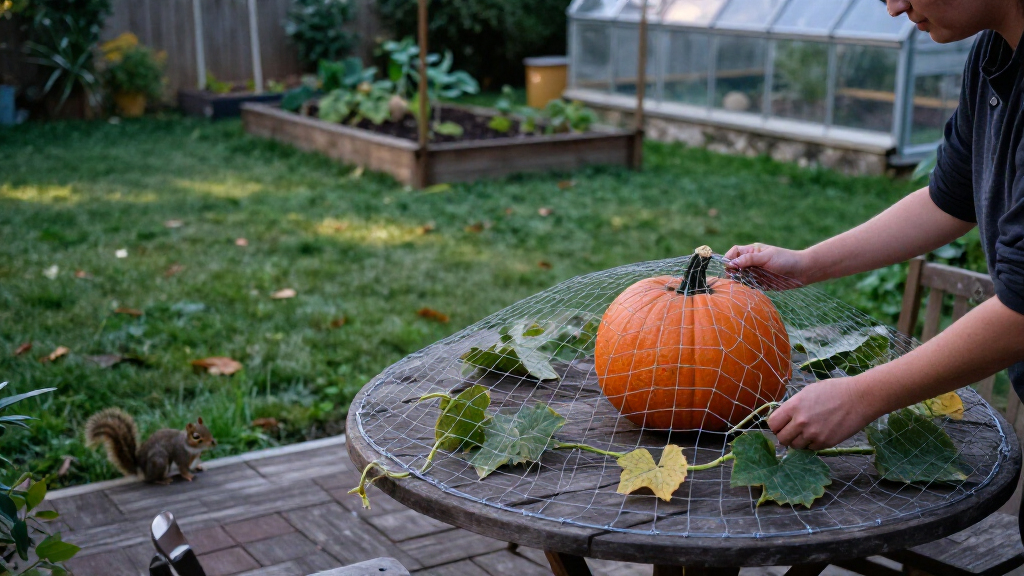
The test took place in a neighbor’s yard with permission, where squirrels had repeatedly eaten holiday pumpkins. The editors set out four treated pumpkins and one untreated control, testing fresh dog hair, white vinegar, a cayenne pepper-and-water solution, and Irish Spring soap shavings. The report does not describe the trial as a controlled scientific study, and its findings are specific to the setup and observation period.
For the cayenne treatment, the testers mixed 2 tablespoons of powdered cayenne with 16 ounces of water. The mixture clogged the spray bottle, so they poured it over the pumpkin instead. They reapplied it every other day or after rain, with the final application on day 7. The pumpkin remained untouched through day 11, then showed signs of squirrel feeding on day 12.
Vinegar placed second: a squirrel apparently took a small nibble around day 4 or 5, but the pumpkin remained largely intact through day 12 after repeat applications. The dog-hair pumpkin was heavily eaten by day 5 and decayed by day 12. The soap-shavings pumpkin stayed untouched for more than 10 days, but the testers started it later and it sat alone for five days after the other pumpkins were gone; squirrels ate it on day 11. The untreated pumpkin was gnawed within hours, scooped out by day 3 and gone by day 5.
How the Remedies Compared
For people displaying pumpkins outdoors, the trial offers a direct comparison of several low-cost household approaches rather than a promise of squirrel-proofing. Under the report’s conditions, cayenne gave the strongest combination of protection and appearance: it did not visibly alter the pumpkin and held off feeding longer than the other methods during the period when the pumpkins were together.
The results also show the practical trade-offs. Cayenne needed repeat applications after rain and every other day; vinegar also required reapplication. Soap shavings appeared to delay feeding, but the editors disliked their bright green appearance and the cleanup. Dog hair did not prevent substantial damage in this test. Readers should treat the rankings as observations from one yard, not proof that the same remedy will produce the same outcome elsewhere.
Products Worth Considering

Philips Hue Amarant Outdoor Smart Light Bar, Black

Sonos One (Gen 2) Voice-Controlled Smart Speaker, White

Ring Alarm 5-Piece Home Security Kit
As an affiliate, we earn on qualifying purchases.
The Control Pumpkin’s Early Damage
The untreated control was eaten quickly: squirrels left gnaw marks within hours, had scooped it out by day 3 and finished it by day 5. That pumpkin provided a comparison point, but it may also have influenced how squirrels approached the treated displays. The dog-hair pumpkin began to be eaten on day 5, when the control was gone.
Country Living said it was possible that the control gave squirrels an easier food source and delayed damage to other pumpkins, but the test cannot establish whether that happened. The soap test also differed in timing: it began later and was left alone after the other pumpkins had disappeared. These details make direct comparisons less certain, particularly for soap and dog hair.
““The pumpkin remained untouched through day 11. By day 12, squirrels had started eating it.””
— Country Living test report
What One Yard Cannot Show
The report describes a single yard and a short test, with one pumpkin per treatment. It does not establish whether weather, local squirrel behavior, pumpkin condition or the presence of an untreated control changed the results. The exact timing and extent of the vinegar nibble are also reported as an apparent observation, not a confirmed measurement.
It is also unclear how well the remedies would work when used on pumpkins in separate locations or over a longer period. The editors did not report a test of a decoy pumpkin placed away from a porch display. The findings should not be read as evidence that cayenne, vinegar, dog hair or soap will reliably keep squirrels away in every setting.
A Decoy Pumpkin Is Planned
Country Living said its next planned experiment is to place a decoy pumpkin in a far corner of the yard and see whether it protects display pumpkins in busier spots, such as a porch or sidewalk. The report did not provide a date or results for that test. Until then, its editors said they would keep cayenne on hand, while the trial’s day-12 damage shows that even the leading method did not prevent feeding indefinitely.
Key Questions
Which method performed best in the test?
Cayenne pepper solution ranked first. The treated pumpkin remained untouched through day 11 with regular reapplication, but squirrels began eating it on day 12.
How was the cayenne solution prepared?
The testers mixed 2 tablespoons of powdered cayenne with 16 ounces of water. Because the mixture clogged the spray bottle, they poured it over the pumpkin and reapplied it every other day or after rain.
Did vinegar keep squirrels away?
Vinegar ranked second. The report says a squirrel apparently took a small nibble around day 4 or 5, after which the pumpkin remained largely untouched through day 12. The editors reapplied vinegar every other day or after rain through day 7.
Why was Irish Spring soap not the winner?
The soap-shavings pumpkin stayed untouched for more than 10 days, but the test began later than the others and the pumpkin sat alone after the other test pumpkins were gone. The editors also cited the bright green shavings and difficult cleanup; squirrels ate it on day 11.
Does the test prove a decoy pumpkin will protect porch displays?
No. Country Living said that a decoy pumpkin placed away from display pumpkins would be the subject of a future experiment. The existing test did not determine whether the untreated control diverted squirrels from the other pumpkins.
Source: countryliving.com