TL;DR

Get garden gear delivered free with Prime
- Fast, free delivery on millions of items
- Prime Video, Amazon Music and more included
- Member-only deals all year
Homes & Gardens advises gardeners planting spring bulbs in October to record where they put them, using plant labels, natural markers or a garden map. The report says tracking bulb locations can help prevent accidental disturbance and help gardeners find bulbs later for care or lifting.
Homes & Gardens recommends marking spring bulb locations as gardeners plant them in October, using plant labels, natural markers or a garden map. The advice addresses a common practical problem: bulbs can be difficult to find after planting, particularly in mixed or layered displays, increasing the chance they will be disturbed during later garden work.
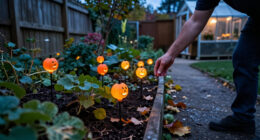
The report says the simplest option is to place a plant label beside each planting area and write down the bulb type or variety. Labels can be purchased or made at home from materials such as popsicle sticks, rocks or wood. Reusing information from bulb packets may help gardeners record specific varieties rather than just broad categories such as tulips or daffodils.
For gardeners who do not want visible labels in a flower bed, the report suggests natural markers and fixed landmarks. A distinctive rock can mark a planting spot, or a gardener can record its position relative to a fence. It also describes painting symbols on rocks to distinguish bulb types; the source says the rocks should be heavy enough to stay in place through winter weather.
A garden map is presented as an option for larger areas, broad drifts or layered planting. It can be drawn in a garden journal or stored digitally, with different colors used for different bulbs. The report also suggests taking photographs to accompany a map. For bulbs planted in a container using a layered method, a cross-section drawing can record which bulbs are in each layer.
Why Bulb Locations Matter
Remembering where bulbs are planted can help gardeners avoid digging into them when adding other plants or tending beds. According to the Homes & Gardens report, losing track of their positions may also make it harder to provide winter protection or to locate bulbs that need to be lifted after flowering. These are practical risks described by the report, not guarantees that unmarked bulbs will be damaged.
The advice is especially relevant to mixed plantings and layered displays, where different varieties may be scattered across a bed or planted at different depths. A record made at planting time gives gardeners a reference when the ground is bare or the bulbs are not yet visible. It may also help them plan where to add other plants without disturbing the bulbs.
Each method suits a different garden. Labels make information easy to read on site; natural markers are less conspicuous; and maps can document a larger or more complex layout. Gardeners can combine methods, such as keeping a map and placing a few markers at the edges of a planting area.
As an affiliate, we earn on qualifying purchases.
October Planting, Spring Growth
Spring bulbs are planted in fall so they can grow and flower in a later season. The source frames October as part of the bulb-planting period and notes that gardeners may be working through several types at once. It does not set out a universal planting calendar, which can vary by bulb and local conditions.
The report also warns readers to avoid common planting errors, including incorrect planting depth, overcrowding and unsuitable soil. It does not provide specific depth or spacing figures in the supplied material, so those details should be checked against the guidance for each bulb variety. Marking locations is one part of the process: the label or map should record the planting accurately, rather than replace care instructions on the bulb packet.
“Marking your planted spring bulbs is essential.”
— Homes & Gardens
What the Advice Does Not Specify
The source is a practical gardening report, not a study comparing the effectiveness of labels, rocks and maps. It provides no measurements on how often bulbs are accidentally disturbed, or on whether one method performs better over time. It also does not give location-specific planting dates, bulb-by-bulb planting depths or detailed winter-protection instructions.
Conditions vary by garden, including weather, soil and the layout of a planting area. The report does not establish that markers will remain in place in every garden; it specifically advises choosing rocks with enough weight to resist wind and adverse weather. Readers should follow the instructions supplied for their bulbs and adapt the record-keeping method to their own site.
Record Each Planting as You Go
Gardeners planting bulbs this October can choose a tracking method before or while they work: label each spot, place a recognizable marker, or add the planting to a paper or digital map. Recording the bulb name and location immediately can reduce reliance on memory later. For large or layered displays, photographs paired with a map can provide an additional reference.
After planting, gardeners can consult their records when adding plants, tending the bed or checking which bulbs may need attention after flowering. The Homes & Gardens report offers no follow-up timetable or new research findings; its practical recommendation is to document the planting now and use the relevant bulb-specific care instructions through the season.
Key Questions
What is the simplest way to remember where spring bulbs are planted?
Use plant labels beside each planting area and write the bulb type or variety on them. The Homes & Gardens report also suggests making labels from materials such as popsicle sticks, rocks or wood.
What can I use if I do not want visible labels?
The report suggests natural markers, such as a distinctive rock, or recording a planting spot by its distance from a fixed landmark like a fence. Painted symbols on rocks can help distinguish different bulb types.
When is a garden map useful?
A map may be helpful for large beds, broad bulb drifts or layered plantings. It can be kept in a garden journal or digitally, and the report suggests using colors or photographs to make locations easier to identify.
What other bulb-planting details should I check?
The source flags planting at the wrong depth, placing bulbs too close together and using unsuitable soil as potential mistakes. It does not give universal measurements; follow the instructions for the specific bulb variety.
Source: rss
Fall yard work Picks
leaf blowers
As an affiliate, we earn on qualifying purchases.