TL;DR
Grow Organic’s guide advises gardeners to treat blood meal as a concentrated nitrogen source and apply it only when crop needs and product directions support its use. Overapplication can damage roots, while yellow leaves alone do not confirm nitrogen deficiency.
Grow Organic has published a beginner guide to using blood meal fertilizer while limiting the risk of plant damage from overapplication. The guidance recommends checking crop needs and previous feeding, measuring according to the product label, and keeping concentrated fertilizer away from stems and exposed roots.

Get garden gear delivered free with Prime
- Fast, free delivery on millions of items
- Prime Video, Amazon Music and more included
- Member-only deals all year
Blood meal is dried, processed animal blood used as an organic nitrogen source. Grow Organic says products often contain about 12% to 13% nitrogen, though the guaranteed analysis varies by product. Soil organisms break down the material and release nutrients; warmth and moisture affect that process, so results can vary and are not immediate.
The guide recommends checking soil information and accounting for nutrients already supplied by compost and other fertilizers before application. It advises gardeners to follow the product’s labeled rate for the crop and location, measure the area being treated, and avoid estimating. A rate listed for 100 square feet, for example, should be halved for a 50-square-foot bed.
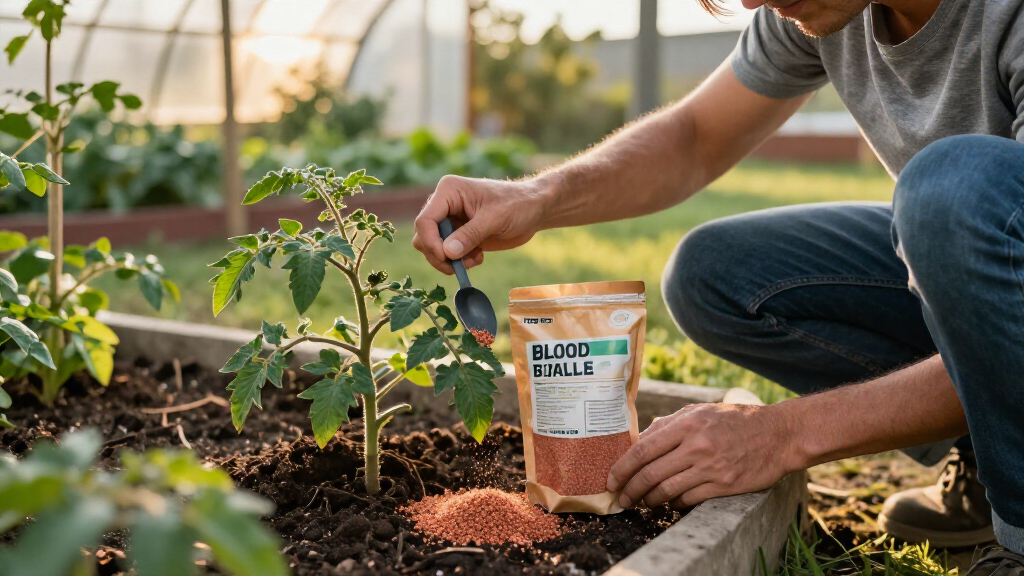
For application, the source advises spreading the measured amount as directed, incorporating it gently only if the label says to do so, and watering according to label instructions and soil conditions. Gardeners should keep fertilizer away from stems and exposed roots. The source also cautions that garden-bed rates may not be suitable for containers, which require container-specific directions.
Why Application Rates Matter
Blood meal can supply nitrogen where a crop needs it, but its concentration makes accurate measuring and placement important. Grow Organic warns that overapplication can burn roots. Excess nitrogen may also encourage leafy growth at the expense of fruit, so repeated feeding without evidence of need can work against a gardener’s goals.
The guide says yellow leaves alone do not establish that a plant needs nitrogen. Water stress, root damage and other problems can produce similar symptoms. Diagnosing the cause before adding fertilizer can help gardeners avoid compounding an existing problem with nutrients the plant does not need.
Products Worth Considering

Levoit Core 600S-P Smart Air Purifier for Large Rooms

iRobot Roomba Max 875 Robot Vacuum and Mop

Blueair Blue Signature SP4i Air Purifier for Large Rooms
As an affiliate, we earn on qualifying purchases.
Blood Meal’s Role in Garden Soil
Blood meal is not interchangeable with every other soil amendment. The source contrasts it with bone meal, which mainly supplies phosphorus and calcium, and feather meal, whose nitrogen is released through decomposition and often more slowly. Choosing among them depends on the nutrients needed, not simply on a general desire to fertilize.
Grow Organic recommends using soil-test results and crop guidance when available. It notes that routine tests may not include nitrogen because available nitrogen changes quickly, and suggests asking a local Extension office how to interpret results alongside crop recommendations. Its central advice is to match need, rate, placement and timing, rather than feeding automatically when growth slows.
“More fertilizer does not always mean better growth.”
— Grow Organic, in its blood meal gardening guide
Rates Depend on Local Conditions
The source does not provide one universal application rate or a single amount per plant. Appropriate rates depend on the product analysis, crop, soil volume and growing conditions, and the label directions. The material supplied also does not identify the guide’s publication date, give region-specific recommendations, or establish how quickly a particular product will release nitrogen.
Soil tests may not show available nitrogen, according to the guide, and plant symptoms can have more than one cause. Readers should not treat yellow leaves as proof of nitrogen deficiency or assume that a fertilizer rate for an outdoor bed is safe for a container. Any product-specific directions and local crop recommendations remain necessary.
Check Labels Before Feeding
Before applying blood meal, gardeners should check the guaranteed nutrient analysis and label rate, consider prior fertilizer and compost applications, and consult soil-test recommendations or a local Extension office where needed. They should then measure the area, apply only as directed, and keep a record of applications rather than repeating treatment automatically.
If a plant is struggling, the guide’s advice is to identify the likely cause before adding nutrients. The source provides no announced follow-up study or product change; its practical next step for readers is to use the label and crop-specific guidance for each application.
Key Questions
Can blood meal burn plants?
Yes. Grow Organic says overapplication can burn roots. Follow the product label, measure carefully, and keep concentrated material away from exposed roots and stems.
How much blood meal should I use per plant?
The source gives no universal amount per plant. The appropriate rate depends on the product’s analysis, crop needs and soil volume, so use the label’s directions rather than a general spoonful.
Do yellow leaves mean a plant needs blood meal?
Not necessarily. Yellowing can result from water stress, root damage or other problems, as well as nutrient issues. Diagnose the cause before feeding.
Can I use a garden-bed rate for container plants?
Do not assume the same rate is safe. Grow Organic recommends following container-specific directions, since garden rates may not transfer safely to pots.
How is blood meal different from bone meal?
Blood meal is primarily a nitrogen source; bone meal mainly supplies phosphorus and calcium. Choose based on crop needs, soil information and each product’s nutrient analysis.
Source: groworganic.com