TL;DR
Outdoor string lights add soft light to patios, decks, gardens, and balconies, but they work best as a supplement to task or security lighting. Choose LED or incandescent bulbs, solar or plug-in power, and a product rated for the conditions where you plan to use it. Measure your route, support the string properly, and follow the manufacturer’s instructions for installation and weather exposure.
A few warm bulbs can turn a dark patio into the place where dinner stretches past sunset. But the same string can look awkward, run out of power, or create a safety problem if you buy before measuring and planning where it will hang.

Get garden gear delivered free with Prime
- Fast, free delivery on millions of items
- Prime Video, Amazon Music and more included
- Member-only deals all year
Outdoor string lights are decorative lights designed for patios, decks, gardens, balconies, and other exterior spaces. They can provide ambient light, define a seating area, or mark pathways or garden edges. They usually supplement brighter security and task lighting rather than replace it.
This guide helps you choose the right bulbs and power source, read weather protection claims, plan a layout, and hang the lights with suitable support. For example, a sunny balcony with no outlet calls for a different setup than a covered dining deck where you want steady light for a long dinner.
Choose LEDs for lower energy use and longer life in general; check whether bulbs are replaceable or integrated.
Pick solar only where the panel can charge adequately, and check run time and battery details.
Treat an IP rating as a specific test result, not a promise that lights can handle every weather condition.
Measure the full route, including drape, turns, and distance to power, before buying.
Use suitable mounting points and follow installation instructions so the electrical cord is not strained.
Choose a bulb that suits the mood and the job
Outdoor string lights work best when their bulb type and brightness match what you do outside. LED bulbs generally use less energy and last longer than incandescent bulbs, which can reduce operating costs and the effort of replacing bulbs on a high or awkward span. Incandescent bulbs give you a familiar warm glow, but use more power and need more frequent replacement. Check whether bulbs are replaceable or built into the string: replaceable bulbs are easier to service, while integrated designs can mean replacing the whole string if a component fails.
For a quiet evening on a small balcony, warm white bulbs can cast a soft, golden pool across a bistro table. For a larger dining area, compare the listed lumens, which measure light output, and think about whether you need brighter fixtures nearby for serving food or reading. Lumens help you compare output, but the spacing and direction of the bulbs also affect how evenly light reaches the table. A string that looks charming in a product photo may not be bright enough to light a whole meal, so treating it as ambient light can prevent both dim work areas and the glare of trying to make one string do everything.
Color temperature describes whether light looks warmer or cooler. Warm white often feels relaxed; cooler white may make details easier to see, but can feel sharper against wood and greenery. The choice affects how the space feels as well as how colors appear, so consider nearby materials and how you use the patio. If your patio switches from dinner to a birthday party, a dimmable string or selectable white tones can give you more flexibility.
Features vary, so check the current product details instead of assuming a dimmer or smart control will work with every string. For instance, if you already use a smart plug, confirm it is suitable for outdoor use and compatible with the lights. Compatibility matters because a mismatched control may not dim properly or may cause the lights to flicker. Treat the string as atmosphere, then use a separate fixture where you need focused light.
Products Worth Considering

Bose Smart Dolby Atmos Soundbar with Alexa, Voice Control, and Bluetooth

eufy Security eufyCam C37 4-Camera Kit with 360° Pan and Tilt, Auto Tracking, 2K Video, and Solar Panels

Shark Pet Cordless Stick Vacuum, Up to 40-Minute Runtime, Lightweight, Ocean Blue, IX141
As an affiliate, we earn on qualifying purchases.
Pick the power source that fits your space
Outdoor string lights get their power from an outlet, a solar panel, or batteries, and each choice suits a different setup. Plug-in lights deliver steady power, which helps when you want long evenings or consistent brightness. They need a suitable outdoor outlet and a safe route for the cord; that route can limit where you hang the string, so check the distance before choosing a layout.
Solar lights avoid an outlet, but their brightness and run time depend on sunlight, battery capacity, shade, season, and weather. A panel tucked behind a tall fence may not charge well, even if the bulbs hang in a lovely spot. Less charging can mean shorter or dimmer evening light, so the panel’s position is a practical constraint, not just a detail. Before buying, check whether you can position the panel where it gets enough sun and whether the cable reaches the string’s location.
Battery-powered strings offer more freedom for a small table, rental balcony, or temporary gathering. That freedom comes with a chore: you need to recharge or replace the batteries. Picture hosting a late summer dinner and finding the string dim halfway through; battery capacity and advertised run time matter as much as the initial glow. Real runtime may also depend on brightness settings and temperature, so leave a margin if the lights need to last through an event.
Match the option to how you use the space. If you want light from dusk until bedtime, plug-in may be more dependable, though it ties your layout to outlet access. If an outlet is far away and the panel gets sun, solar may suit you well, with seasonal variation in output to consider. Batteries are useful when portability matters more than frequent maintenance. Check product specifications for output, runtime, charging needs, and compatible controls before choosing.
Read the weather rating before leaving lights outside
An outdoor-use rating tells you a product is designed for particular exterior conditions, but it does not promise protection from every kind of weather. IP ratings describe tested protection against dust and water under specified conditions. The rating helps you compare products, but its meaning depends on the exact code and test conditions. Check the exact rating and the manufacturer’s instructions; do not treat “outdoor-rated” as permission to submerge a product or leave it exposed to anything.
Connections need attention too. Follow the instructions for protecting plugs and joining points, especially where rain can collect or water can run down a cord. A string may be rated for outdoor use while a particular plug or connection still needs shelter, so check each part of the setup. On a covered porch, a connection may stay dry most of the time, but wind-driven rain can still reach it. The string’s location and mounting affect how it fares.
When you shop, read the product information for weather exposure, temperature limits, and storage guidance. An IP label is useful, but it is one piece of the picture, not a blanket guarantee. If your area sees strong storms or harsh winter weather, check whether the manufacturer recommends taking the lights down during those conditions. Following that guidance can reduce wear and prevent you from relying on a rating outside the conditions for which it was tested.
Inspect the string from time to time. Look for cracked sockets, damaged insulation, loose bulbs, and connectors that no longer fit securely. These can let moisture reach parts that should remain protected or make an electrical connection unreliable. If you spot damage, stop using the product and follow the manufacturer’s guidance for replacement or disposal. A quick check before a backyard gathering is easier than discovering a fault after the lights are already strung overhead.
Measure your route before you buy a string
The right length depends on the path the cord will follow, including turns, support points, and the distance to power. Measure the route instead of guessing from the width of your patio. Decide whether you want a taut line, a gentle drape, or several spans crossing the space, then allow extra length for bends and reaching the outlet. Measuring this way helps avoid a string that is too short to connect safely or so long that it needs an awkward extra span.
Imagine a 12-foot run across a small deck. If you want a soft swoop between two posts, the straight-line distance will come up short because the string needs extra length to dip and rise. Bulb spacing matters too: bulbs placed close together create a denser look, while wider spacing leaves more dark space between each pool of light. That spacing affects both the appearance and how much usable light reaches the table, so compare it with the activities below the string.
Use this simple planning sequence before you order:
- Sketch the layout, including the outlet, posts, walls, trees, or other mounting points.
- Measure each span along the intended route, including the drape you want.
- Add the power connection distance and enough slack for turns without stretching the cord tight.
- Check bulb spacing and product length against your sketch.
- Confirm the support plan and the product’s connection limits before installing.
A quick sketch can save you from a frustrating half-finished job. For a garden party, measure the route over the table and a separate line along the walkway; those two runs may need different lengths and bulb spacing. Planning them separately also makes it easier to keep decorative light over the seating area and clearer guidance along the path.
Hang lights securely without straining the cord
Safe installation starts with mounting points and hardware that can support the string as directed by its manufacturer. Do not make the electrical cord carry the string’s weight if the installation guidance calls for separate support. A support wire may be needed for some layouts, especially for longer spans, so follow the product instructions for your setup. Supporting the load separately reduces pulling on sockets and connections, where strain can loosen parts or damage the cord.
Choose attachment points suited to the surface. A sturdy post may take a different fastener than brick, siding, or a tree. For example, a renter with a balcony might use an approved railing attachment, while a homeowner may mount hooks to posts. The right fastener helps keep the line in place without damaging the surface or creating a weak point. Avoid pulling the string tight, and don’t wrap it around a branch or surface in a way that could damage the cord.
Plan the cord route before hanging anything. Keep it out of walkways where someone could trip, and use only the connection method and mounting hardware recommended by the manufacturer. If you connect multiple strings, first confirm that the lights are designed for end-to-end connection and stay within their stated electrical limits. Those limits help prevent overloading the string or its power connection.
For a small patio, you might run the lights between two secure posts above the seating area and use another fixture to light the steps. That gives the bulbs a clear purpose without asking one string to do every job. If you’re unsure whether a mounting point or setup is suitable, consult the product guidance or a qualified professional.
Make the light useful beyond a pretty glow
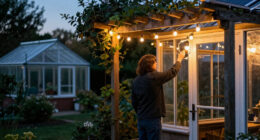
Outdoor string lights can shape a space as well as brighten it. A line above a dining table tells guests where to gather, while lower brightness along a garden edge can help define the route between the patio and a gate. They are decorative lights designed for atmosphere and gentle guidance, so pair them with other fixtures where you need clearer visibility. The distinction matters because an attractive glow can make a space feel inviting without putting enough light exactly where someone needs to see a step or handle a task.
Think about how you move through the space after dark. If guests cross a lawn from the driveway, a string near the seating area won’t necessarily make the path easy to see. You could place separate pathway lighting along the route and keep the string lights above the table. That way, people can see where to step while the patio keeps its warm, welcoming feel.
Use timers, dimmers, or app-based settings only when they are compatible with the lights and suitable for the location. Smart features can be handy when you want the patio lights to switch on before you come home, but not every string works with every controller. Check specifications first. For example, a dimmer designed for incandescent bulbs may not suit a particular LED string, and a timer is useful only if it is rated for the outdoor conditions where it will sit.
Keep the scene simple. A warm string over the table, a low light on the steps, and a bright fixture by the door can each do a different job. The bulbs set the mood; a practical lamp handles the grill or the lock. That mix makes a patio easier to use without flooding it in glare.
Keep your lights working with simple checkups
Regular checks help you spot wear before a loose socket or damaged cord becomes a bigger problem. Inspect the cord, sockets, bulbs, and connections periodically, and follow the manufacturer’s instructions for storage and maintenance. Outdoor exposure can gradually loosen fittings or degrade materials, so catching a problem early helps you avoid using a damaged string. Replace damaged products rather than continuing to use them.
After a windy weekend, for example, look to see whether a mounting point loosened or the cord is rubbing against a rough edge. For solar lights, check the panel for dust or leaves and consult the manual about battery care. If the lights turn off early, poor charging conditions, shade, aging batteries, or cold temperatures may be contributing. These checks can help distinguish a charging issue from a failing component.
How often you should take lights down depends on their product guidance, installation, and local weather. Some products may suit year-round use in certain locations; others may need seasonal storage or protection from specific conditions. Check the instructions rather than guessing from the label alone. A sheltered balcony and an exposed garden pergola face different wind and rain, so the same product may need different care in those locations.
Before storing a string, switch it off and follow the recommended cleaning and packing instructions. Keep bulbs and connectors from being crushed or tangled if the manufacturer allows indoor storage. Careful storage protects the parts most likely to break and means next season’s setup is less likely to begin with a hunt for a broken bulb or a cord that won’t uncoil cleanly.
Frequently Asked Questions
Can I leave outdoor string lights up year-round?
It depends on the product’s rating, how you installed it, and your local weather. Follow the manufacturer’s guidance and inspect the lights regularly. A sheltered porch and an exposed pergola face different conditions.
Should I choose solar or plug-in string lights?
Solar suits places where the panel gets enough sun and an outlet is inconvenient. Plug-in lights are often a better fit when you want steady output or longer operating time, provided you have a suitable outdoor outlet and safe cord routing.
How much length do I need?
Measure the route the string will follow, including bends, the distance to power, and any gentle drape. Then compare your measurements with the product’s cord length and bulb spacing. A 12-foot straight span may need more than 12 feet of cord to create a swoop.
What does an IP rating tell me?
An IP rating describes tested protection against dust and water under specified conditions. Check the exact rating and the product instructions; the label does not mean the lights can be submerged or left out in every kind of weather.
Can I connect several strings together?
Only connect strings that the manufacturer designed for end-to-end use, and stay within the stated limits. Check the instructions and electrical ratings before plugging them together. Don’t assume two similar-looking products are compatible.
Why do my solar string lights turn off early?
Common causes include shade, too little charging time, a dirty panel, an aging battery, or low temperatures. Check the manual for panel care and battery replacement guidance, and make sure the panel gets adequate sunlight during the day.
Conclusion
Choose outdoor string lights by working backward from your space: decide what you want illuminated, check the power source and weather guidance, then measure the route and plan secure support. A warm glow above the table can make an ordinary Tuesday dinner feel special, while a separate light keeps the steps visible.
Plan the route before you buy, and let each fixture do its job. When dusk settles over the garden, the best setup makes the space feel ready to use.