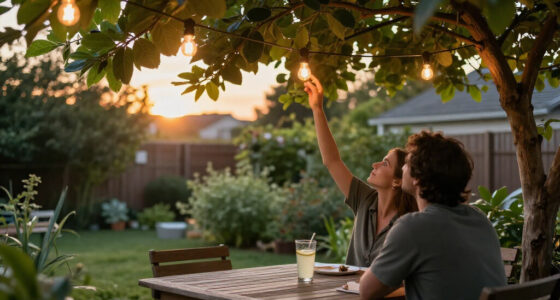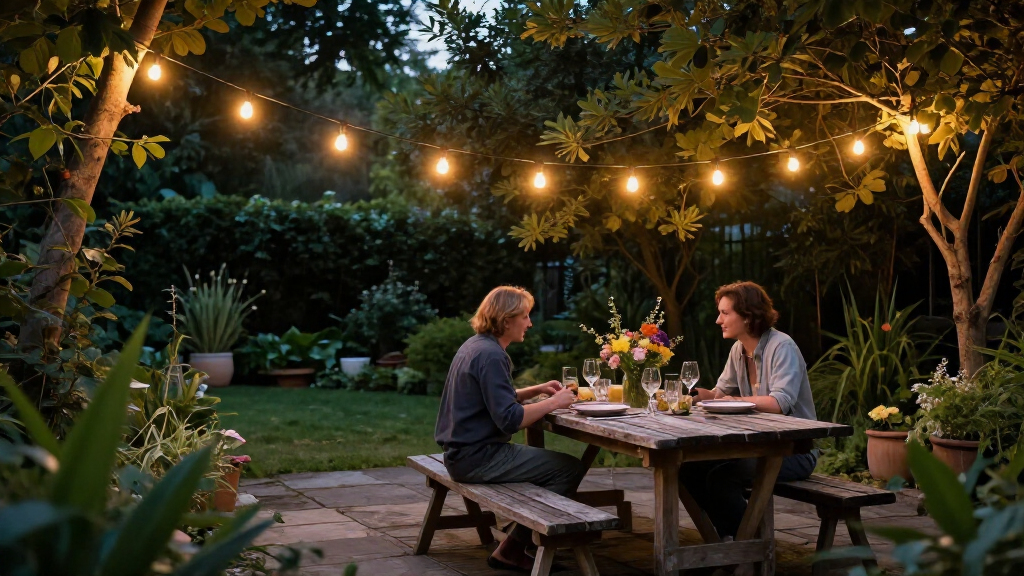

Choosing garden string lights comes down to a practical tradeoff: solar models are easier to place without running a cable to an outlet, while plug-in models are less dependent on the weather and how much sun the panels receive. Both can add ambient light to a patio, pergola or seating area, but they do not perform equally in every garden.

Get garden gear delivered free with Prime
- Fast, free delivery on millions of items
- Prime Video, Amazon Music and more included
- Member-only deals all year

addlon 100 ft Outdoor ST38 LED String Lights with Remote
- ✔ String length: 100 ft
- ✔ Bulb type: ST38 LED
- ✔ Bulb material: Shatter-resistant plastic

100 ft Outdoor LED String Lights with 37 ST38 Bulbs
- ✔ Length: 100 ft (30 m)
- ✔ Bulbs: 37 ST38 bulbs and 2 spare bulbs
- ✔ Bulb base: E12

55 ft Outdoor G40 LED String Lights, 25 Bulbs, IP65 Waterproof
- ✔ Length: 55 ft
- ✔ Bulbs: 25 G40 LED bulbs
- ✔ Bulb spacing: 2 ft
Solar-powered outdoor string lights suit locations with good daytime sun and modest evening lighting needs. Plug-in outdoor string lights are a stronger choice when consistent brightness, longer operating hours or more powerful illumination matters. The comparisons below focus on the factors that change everyday use: brightness, runtime, installation, weather, controls, maintenance and value.
At a Glance
| Criteria | Solar-powered outdoor string lights | Plug-in outdoor string lights | Winner |
|---|---|---|---|
| Brightness and consistency | Usually softer; output can vary with charge | Typically steadier and available in brighter versions | B |
| Runtime | Depends on sunlight, battery capacity and settings | Runs while connected to power | B |
| Installation | Simple where a panel can be placed in sunlight | Needs a suitable outdoor outlet and safe cable routing | A |
| Placement flexibility | No outlet needed, though the panel needs sun | Limited by outlet access and cable reach | Depends |
| Weather and seasonal reliability | Cloudy days and winter can reduce performance | Reliable power in varied seasons if the connection is protected | B |
| Controls and features | Often basic; features vary by model | May offer timers, dimming or smart controls, depending on model | Depends |
| Upkeep and value | No electricity use, but rechargeable batteries may need replacement | Uses electricity; no solar battery to recharge or replace | Depends |
addlon 100 ft Outdoor ST38 LED String Lights with Remote
For a garden where one run needs to reach across a pergola, fence line, or broad seating area, the 100 ft length gives this set an immediate advantage over the 55 ft G40 option. Addlon also lists strands as connectable, with up to four strands supported and a stated maximum connected length of 200 ft. That makes it the most adaptable pick here for extending a garden layout, though buyers should treat the stated maximum length as the practical limit rather than assume four full 100 ft sets can all be joined.The remote control handles brightness, lighting modes, and a timer, reducing the need to reach a plug or socket to make adjustments. Its stated range is up to 50 ft, so control is convenient from many garden seating areas but may be less dependable when the receiver is far away or separated by obstacles. Compared with the other 100 ft option, addlon is less specific about the exact brightness steps and timer durations in the supplied details. The competing set spells out four brightness levels, two timer settings, and spare bulbs, making it easier to know what is included.Shatter-resistant plastic bulbs and a weather-resistant design suit outdoor use, but the available details do not specify an IP rating for this model. We should check installation guidance and protect connections as directed, especially in exposed garden locations. Replacement bulbs and accessories are sold separately, which is a practical drawback if a bulb or component needs replacing. For most buyers who want broad coverage with convenient controls and room to connect additional strands, that balance still makes this the strongest all-around garden choice.
Pros:
- 100 ft strand covers a broad garden area
- Remote controls brightness, modes, and timer
- Up to four strands can be connected, within the stated maximum connected length
- Shatter-resistant bulbs and weather-resistant construction
Cons:
- Remote range is limited to up to 50 ft
- Replacement bulbs and accessories are sold separately
- Supplied specifications do not give an IP rating or exact dimming steps
Best for: Garden owners lighting a long pergola, fence, or large patio who want remote adjustments and the option to extend the layout.
Not ideal for: Buyers who need a stated IP65 rating, a precisely specified brightness range, or replacement bulbs included.
Bottom line: We recommend addlon for the most flexible large-garden setup, provided its stated connection limit and replacement-parts arrangement suit our plan.
“We recommend addlon for the most flexible large-garden setup, provided its stated connection limit and replacement-parts arrangement suit our plan.”
100 ft Outdoor LED String Lights with 37 ST38 Bulbs
This set is the better match when we want predictable adjustments without buying a separate dimmer. Its remote provides four brightness levels—25%, 50%, 75%, and 100%—plus three lighting modes and two timer settings. That level of detail makes it easier to choose softer illumination for a quiet garden dinner or brighter light for gathering, while the 3- and 5-hour timers offer straightforward automatic shutoff choices. By comparison, addlon also offers remote control and a timer, but its supplied specifications do not detail the steps or durations.Coverage is comparable to addlon at 100 ft, and the package lists 37 warm-white ST38 bulbs plus two spares. The 2700K color temperature gives us a clear expectation of a warm tone, and spare bulbs provide a useful backup for an outdoor strand. The bulbs are impact-resistant PET and carry an IP65 rating, giving this model the most explicit weather-protection specification in the group. That matters when choosing garden lights for exposed installation, though the rating should not be taken as permission to ignore the manufacturer’s mounting and connection instructions.There are tradeoffs. This uses an E12 bulb base, so any replacement needs to be compatible; buyers should verify replacement availability before relying on a specific bulb style long term. The product information also provides no independent performance details, and it does not state how many strands can be connected. Compared with the 55 ft G40 set, this one gives us substantially more length and built-in dimming, but less documented expansion flexibility. We rank it second because its included controls and IP65 rating are strong, while addlon presents a more clearly expandable system for large layouts.
Pros:
- Four remote-controlled brightness levels
- Three lighting modes and 3- or 5-hour timers
- IP65-rated, impact-resistant PET bulbs
- Includes two spare bulbs
Cons:
- Replacement bulbs must use an E12 base
- Expansion or connectability limits are not specified
- No independent performance details are provided
Best for: Buyers who want a long garden strand with specified brightness levels, automatic timers, warm-white light, and spare bulbs included.
Not ideal for: Gardeners planning to connect multiple strands or those who want to avoid checking E12 replacement-bulb compatibility.
Bottom line: We would choose this set when clear dimming steps, a stated IP65 rating, and included spares matter more than documented expandability.
“We would choose this set when clear dimming steps, a stated IP65 rating, and included spares matter more than documented expandability.”
55 ft Outdoor G40 LED String Lights, 25 Bulbs, IP65 Waterproof
At 55 ft, this G40 string is the natural fit for a smaller garden: it can trace a patio edge, short pergola, or intimate seating zone without leaving a large coil of spare cable to manage. The 25 bulbs are spaced two feet apart, giving the strand a more open rhythm than a densely filled run. That spacing can work well over a table or along a fence, but it means the light points are spread out rather than forming a closely packed canopy. The two 100 ft ST38 choices make more sense when coverage across a wider garden is the priority.Its strongest advantage is future layout flexibility. The product is described as connectable end to end with up to 14 strings, and each bulb operates independently. If one bulb fails, the rest are designed to keep working, reducing the chance that a single fault leaves the whole garden dark. Each socket has hanging hooks, which can make attachment to garden wire or suitable supports more direct. The shatterproof plastic bulbs and IP65 waterproof description are useful for outdoor placement, while the stated 30,000-hour LED lifespan indicates the bulbs are designed for extended use.Customization is where this set asks more from us. It is dimmable only with a compatible dimmer sold separately, whereas both 100 ft sets include remote-based control. Its bulbs are plastic rather than glass, a durability-minded choice that may not suit buyers who prefer a glass appearance. We also should confirm the power and connection guidance before using many strings together; the stated ability to connect up to 14 does not replace checking the manufacturer’s installation limits. We rank it third overall because its shorter run and external dimmer requirement narrow its out-of-box appeal, although for compact gardens with planned expansion it may be the most practical fit.
Pros:
- 55 ft length suits compact garden layouts
- Can connect end to end with up to 14 strings
- Each bulb operates independently
- IP65 waterproof design and hanging hooks on each socket
Cons:
- Compatible dimmer is not included
- Bulbs are plastic rather than glass
- Shorter coverage than either 100 ft option
Best for: Owners of compact gardens who want a shorter initial strand, socket hooks, independent bulbs, and the option to connect more strings later.
Not ideal for: Anyone seeking a 100 ft run or remote-controlled dimming and timer functions included in the set.
Bottom line: We favor this G40 set for compact gardens that may expand, as long as separate dimming equipment is acceptable.
“We favor this G40 set for compact gardens that may expand, as long as separate dimming equipment is acceptable.”
As an Amazon Associate we earn from qualifying purchases.
Key Differences
The largest gap is consistency. Plug-in lights can draw power directly while they are switched on, so their brightness is less tied to the previous day’s weather. Solar lights store energy during daylight, which makes their evening output and runtime depend on panel exposure, battery condition and selected settings. For decorative glow, that variability may be acceptable. For lighting that needs to last through a gathering, it can be frustrating.
Installation reverses the advantage. Solar lights need no powered cable across the garden, but the panel must receive enough sun and may need to sit apart from the bulbs. Plug-in lights need an outdoor outlet and a sensible route for the lead, yet they avoid panel positioning and charging. Paying more for a plug-in model makes sense when reliable output or advanced controls will be used often; it buys little if a soft glow in a sunny spot is all that is needed.
Detailed Comparison
Brightness and consistency (Plug-in outdoor string lights wins — major)
Plug-in models win for steady output and are more likely to offer brighter configurations. Solar lights are well suited to atmosphere, but low charge can dim them or shorten their useful evening hours. This is a moderate difference for decorative use and a major one if the lights need to illuminate a dining or work area. Choose plug-in for dependable visibility; choose solar for a gentle accent.
Runtime (Plug-in outdoor string lights wins — major)
Plug-in lights run while they have power, so an evening schedule does not depend on how sunny the day was. Solar runtime varies with charging conditions, battery capacity and brightness settings. The gap is major for late-night events or long winter evenings, but less important when lights are used briefly in summer. Solar wins on energy independence; plug-in wins on predictable duration.
Installation (Solar-powered outdoor string lights wins — moderate)
Solar lights are simpler when there is no convenient outdoor socket: hang the strand and position its panel in a sunny place. Plug-in lights need a suitable outlet and a safe cable path that will not create a trip hazard or expose an indoor-rated connection to moisture. This is a moderate advantage for solar in outlet-poor gardens. Where an outdoor socket is already close, installation is straightforward for either.
Placement flexibility (moderate difference)
Neither type can be placed without constraints. Solar strands can reach seating areas away from sockets, but their panel still needs adequate sunlight and may need an unobstructed position. Plug-in strands can go wherever their lead can reach safely. The result depends on the garden: solar suits sunny, remote corners; plug-in suits shaded areas near power. Check the panel lead and strand length before buying.
Weather and seasonal reliability (Plug-in outdoor string lights wins — moderate)
Plug-in lights offer more dependable seasonal operation because daylight does not determine whether they can turn on. Solar performance often falls during cloudy stretches and shorter winter days, especially where trees or buildings shade the panel. Outdoor suitability still depends on the product’s weather rating and correct installation. This is a moderate to major difference for year-round use; solar is a better fit for sunnier seasons.
Controls and features (minor difference)
Both options may include timers, dimming or remote controls, but these depend on the specific model rather than the power source alone. Plug-in products are more likely to support features that need continuous power or connect to home controls; some solar models keep things simpler with automatic dusk activation. Compare the actual controls you will use. There is no universal winner, and paying extra for unused features adds little value.
Upkeep and value (moderate difference)
Solar lights use no electricity from a household outlet, but their panels need exposure and occasional cleaning, and their rechargeable batteries can eventually lose capacity. Plug-in lights add a small electricity cost and require attention to the cable and connections, but avoid battery replacement. The better value depends on how often the lights run, local electricity costs and the lifespan of the solar battery. Neither type is automatically cheaper over time.
Solar-powered outdoor string lights: Pros and Cons
Pros:
- No outdoor socket or powered cable needed
- Easy to use in distant parts of a sunny garden
- Uses stored solar energy rather than household electricity
Cons:
- Brightness and runtime depend on charging conditions
- Shaded gardens and short winter days can limit performance
- Rechargeable batteries may need replacement over time
Plug-in outdoor string lights: Pros and Cons
Pros:
- Steadier brightness while connected to power
- Runtime does not depend on sunlight
- Often available with more lighting and control options
Cons:
- Needs a suitable outdoor outlet
- Cable routing can restrict placement and require care
- Uses electricity during operation
Who Should Choose What
Choose Solar-powered outdoor string lights if:
- You want a simple setup without running a power lead across the garden.
- The panel can receive several hours of useful daylight.
- Soft decorative lighting is enough and shorter runtime is acceptable.
Choose Plug-in outdoor string lights if:
- You need reliable brightness for dinners, gatherings or regular evening use.
- Your garden is shaded or you want to use the lights through winter.
- You have a suitable outdoor outlet and can route the cable safely.
Skip both if: Skip both if you need strong, task-level lighting over a large area; choose dedicated outdoor fixtures designed to illuminate that space.
Value for Money
Solar can be the better value when avoiding electrical work or outlet access matters, and when the lights will be used casually in a sunny garden. Its running cost is low, but savings can be offset if the battery needs replacing or the product does not last. Plug-in lights can justify a higher upfront price for frequent use, steadier brightness and longer operating hours. Pay more for plug-in only if those advantages solve a real need; for occasional ambience, a well-positioned solar strand is often sufficient.
Final Verdict
For most people who use garden lights regularly or need predictable brightness, choose plug-in outdoor string lights if a safe outdoor outlet is available. Their dependable runtime is the clearest practical advantage. Choose solar-powered lights for a sunny garden, a location far from power or occasional decorative use where effortless placement matters more than consistent output. The deciding factor is simple: prioritize reliability and choose plug-in; prioritize cord-free setup in a sunny spot and choose solar.
Frequently Asked Questions
Are solar or plug-in garden string lights brighter?
Plug-in models are generally the safer choice when brightness and consistency matter. Solar lights can provide a pleasant decorative glow, but their output depends on stored charge and the specific product.
Do solar string lights work in winter?
They can work, but shorter days, cloudy weather and shade can reduce charging and runtime. For reliable winter use, plug-in lights are usually the better fit.
Are plug-in outdoor string lights safe in rain?
Use products rated for outdoor conditions and follow their installation instructions. Keep plugs, sockets and connections protected as directed; an outdoor label on the bulbs does not automatically mean every connection can be left exposed.
Is solar cheaper than plug-in over time?
Solar avoids electricity use from the outlet, while plug-in lights consume power whenever they run. The total cost depends on usage, electricity rates, product lifespan and whether a solar battery needs replacement, so neither is always cheaper.
Halloween Picks
halloween
As an affiliate, we earn on qualifying purchases.