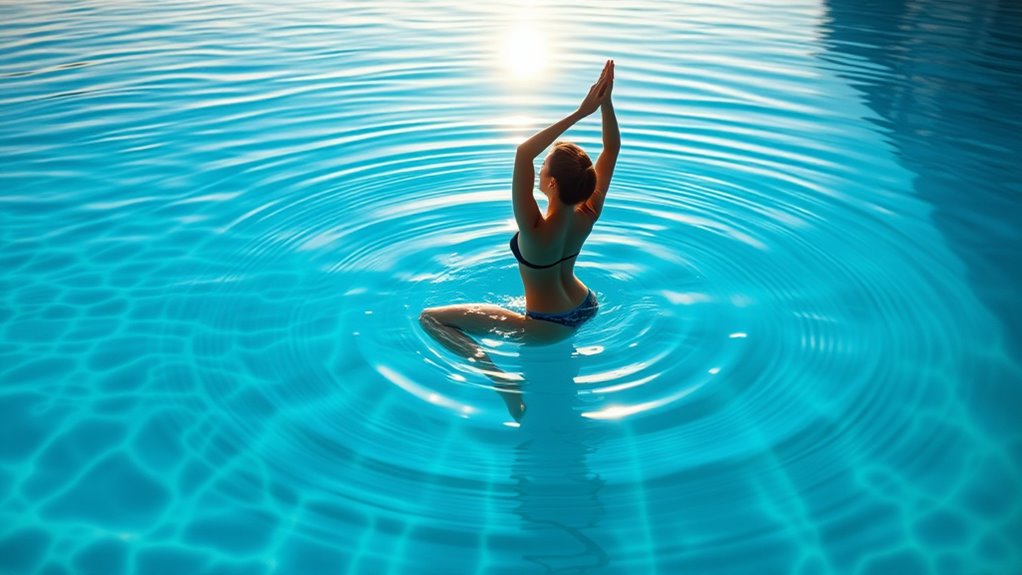

In an endless pool, water yoga and stretching routines enhance flexibility and strength while reducing joint stress thanks to buoyancy and water resistance. You’ll want to prepare the space with safety in mind, warm up with gentle movements, and focus on mindful breathing. Incorporating gentle stretches, adaptive yoga poses, and mindfulness techniques can deepen your practice. To discover effective sequences and tips for safe, effective water yoga in an endless pool, explore the details ahead.
Key Takeaways
- Use water buoyancy and resistance to perform gentle yoga poses and stretches, enhancing flexibility and stability in an endless pool.
- Prepare the pool area with non-slip mats, maintain water temperature, and gather waterproof gear for safe water yoga practice.
- Incorporate warm-up routines like arm circles, torso twists, and breathing exercises to relax muscles and prevent injury.
- Adapt yoga poses such as Water Warrior and Floating Tree to utilize buoyancy, supporting proper alignment and safety.
- Conclude with slow stretches and mindful breathing to cool down, deepen relaxation, and improve overall flexibility.
Benefits of Water-Based Exercise in an Endless Pool
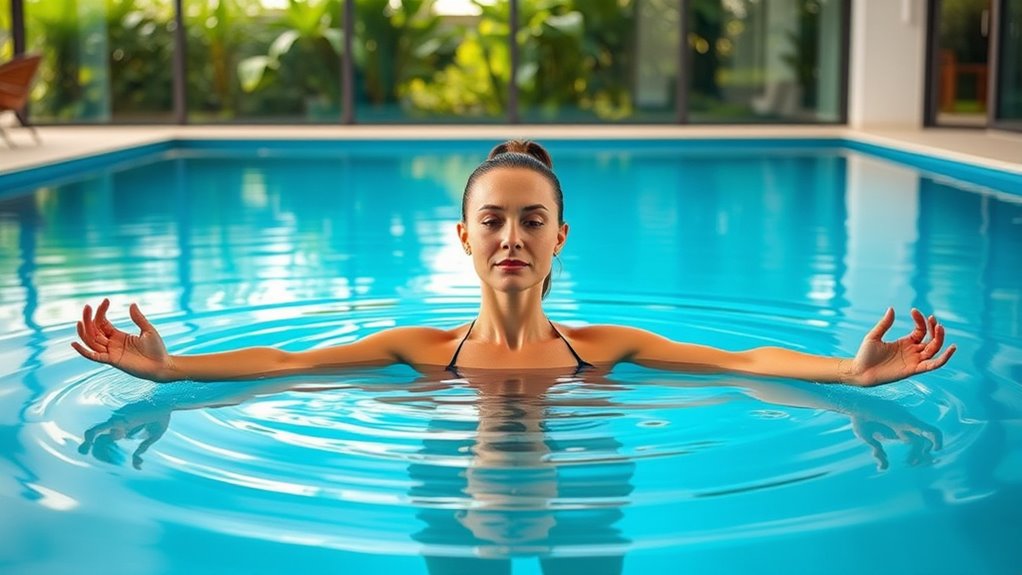
Water-based exercise in an endless pool offers numerous advantages that can enhance your fitness routine. The buoyancy reduces impact on your joints, making it ideal for low-impact workouts and injury recovery. The resistance of water challenges your muscles more effectively than air, helping you build strength and endurance. Because you’re working against water, you burn more calories in less time, boosting your overall fitness. The consistent temperature of an endless pool creates a comfortable environment, allowing you to focus solely on your movements without distraction. Plus, exercising in water lowers your body temperature, preventing overheating during intense sessions. Additionally, water exercise can improve flexibility and mobility, making it suitable for individuals of various fitness levels. Whether you’re aiming for rehabilitation, weight loss, or improved flexibility, water exercise in an endless pool provides a versatile, safe, and efficient way to reach your goals.
Preparing Your Space and Equipment for Water Yoga
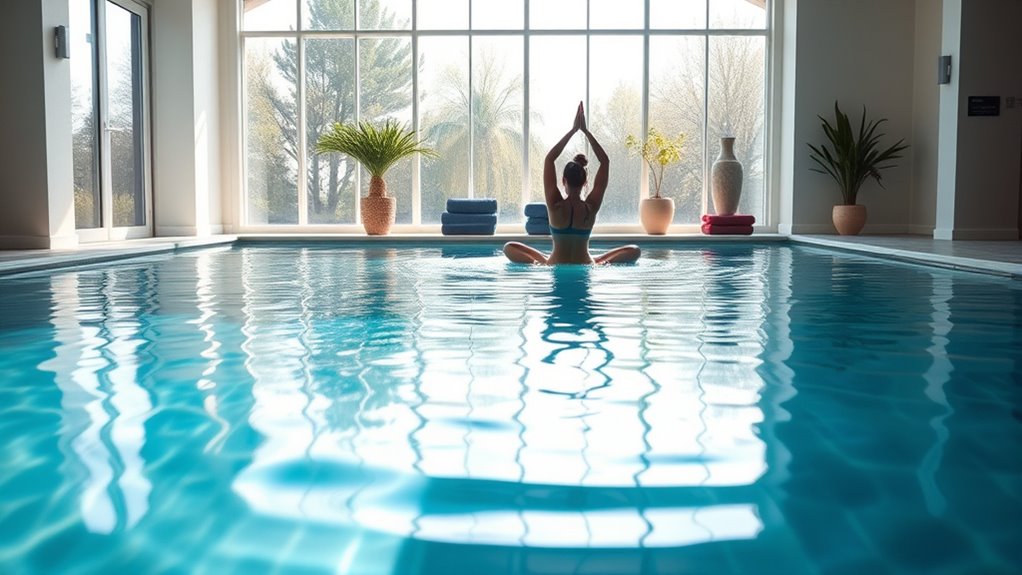
Setting up your space and equipment properly guarantees your water yoga practice is safe and enjoyable. Start by ensuring the area around your Endless Pool is clear of obstacles to prevent accidents. Keep a non-slip mat or surface nearby for easy entry and exit. Check that your pool’s water temperature is comfortable, typically between 83-89°F, to support flexibility and relaxation. Gather essential accessories like waterproof yoga mats, resistance bands, or aquatic-safe towels. Make sure your water level is appropriate for your exercises, and that the pool’s filtration system is functioning well to keep the water clear. Adequate lighting is also important—bright enough to see your movements clearly. Proper preparation helps you focus on your routine without distractions or safety concerns. Additionally, understanding the importance of projector specifications can enhance your experience by ensuring optimal visibility and safety during your routines.
Essential Safety Tips for Water Yoga Practice
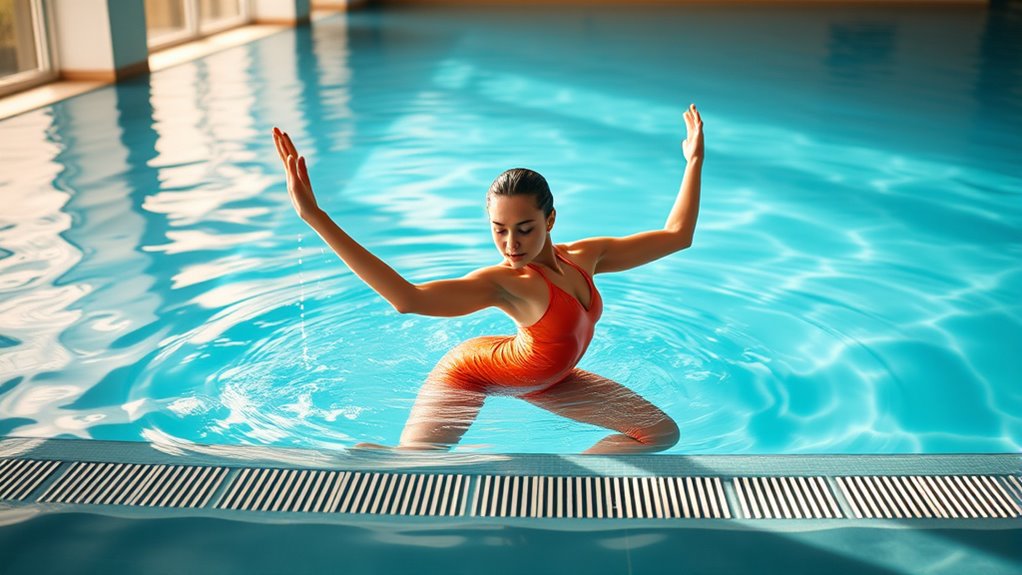
To stay safe during water yoga, you need to use your equipment properly and follow water safety rules. Make sure your gear is secure and suited for water exercises to prevent accidents. Always stay aware of your surroundings and practice within your skill level to avoid unnecessary risks.
Proper Equipment Use
Using the proper equipment is essential to guarantee your safety and maximize the benefits of water yoga in an Endless Pool. Select a non-slip yoga mat designed for water use to prevent slips during poses. Wear a well-fitting, supportive swimsuit that stays in place, so you’re not distracted or adjusting constantly. Consider using water-resistant goggles to protect your eyes and improve visibility. Foam noodles or aquatic resistance bands can enhance your stretching routine and provide stability. Always check that your equipment is in good condition before each session. Proper gear not only helps you maintain balance and form but also reduces the risk of accidents. Investing in quality, water-specific equipment ensures a safer, more effective water yoga practice. Additionally, choosing appropriate safety gear can further help prevent slips and injuries during your routine.
Water Safety Measures
Ensuring your safety during water yoga in an Endless Pool is essential for an enjoyable and injury-free experience. To stay safe, follow these key safety measures:
- Always practice within your skill level and avoid risky poses that could cause slipping or falling.
- Never practice alone; have a friend or instructor nearby in case you need assistance.
- Keep the pool area clear of obstacles, and ensure the water temperature is comfortable to prevent overheating or chills.
- Be aware of dog names that may be nearby, as animals can sometimes unexpectedly enter the pool area, creating potential distractions or hazards.
Additionally, wear appropriate water-resistant gear and avoid sudden, jerky movements. Be mindful of your limits, especially if you’re new to water yoga. Prioritize safety over intensity, and you’ll enjoy the many benefits of water yoga while minimizing risks.
Warm-Up Routines to Start Your Water Yoga Session

Start your water yoga session with gentle water movements to loosen up your muscles and get comfortable in the pool. Focus on breathing exercises to center yourself and enhance your focus. Incorporate dynamic stretching to prepare your body for deeper poses and prevent injury. Engaging in mindfulness techniques during warm-up can further improve your body awareness and relaxation, setting a peaceful tone for your practice.
Gentle Water Movements
Before diving into more intense stretches, gently introduce your body to the water with slow, flowing movements. These gentle water movements help relax your muscles and increase circulation. Start by standing upright, moving your arms in wide circles to warm up the shoulders. Then, glide your hands along the water’s surface with smooth, sweeping motions to activate your upper body. Finally, perform gentle torso twists, shifting your weight side to side to loosen your core. To maintain a calming rhythm, focus on steady, controlled movements. Here are three key movements to include:
- Wide arm circles
- Smooth hand sweeps
- Gentle torso twists
These simple actions prepare your body for deeper stretches and ensure a safe, relaxing start to your water yoga session.
Breathing Exercises Focus
Incorporating breathing exercises into your warm-up helps you center your mind and prepare your body for water yoga. Focus on deep, slow inhales through your nose, allowing your lungs to fill completely, then exhale fully through your mouth or nose. This steady breathing calms your nervous system, reducing tension and increasing focus. As you breathe, pay attention to how the water supports your movements, enhancing your sense of balance and relaxation. Try to synchronize your breath with gentle movements or stretches, fostering mindfulness. Consistent breathing exercises during your warm-up set a calm tone for your entire session, helping you stay present and engaged while improving your lung capacity and overall mental clarity. Additionally, practicing controlled breathing is a fundamental aspect of best anime movies, which often emphasize the importance of mindfulness and emotional expression through visual storytelling.
Dynamic Stretching Warm-up
Building on your breathing exercises, incorporating dynamic stretching into your warm-up energizes your muscles and prepares your body for water yoga. Dynamic stretches involve active movements that mimic your upcoming poses, increasing blood flow and flexibility. To get started:
- Perform arm circles to loosen shoulder joints and improve circulation.
- Do leg swings forward and side to side to activate hip muscles.
- Incorporate torso twists to warm up your core and spinal mobility.
- Remember that emotional alignment is essential for enhancing your overall practice and experiencing the full benefits of water yoga.
These exercises should be gentle yet deliberate, gradually increasing in intensity. Moving actively helps prevent injuries and enhances your range of motion. Keep your movements controlled and fluid, syncing them with your breath. This warm-up primes your muscles, making your water yoga session more effective and enjoyable.
Gentle Water-Based Stretching Techniques
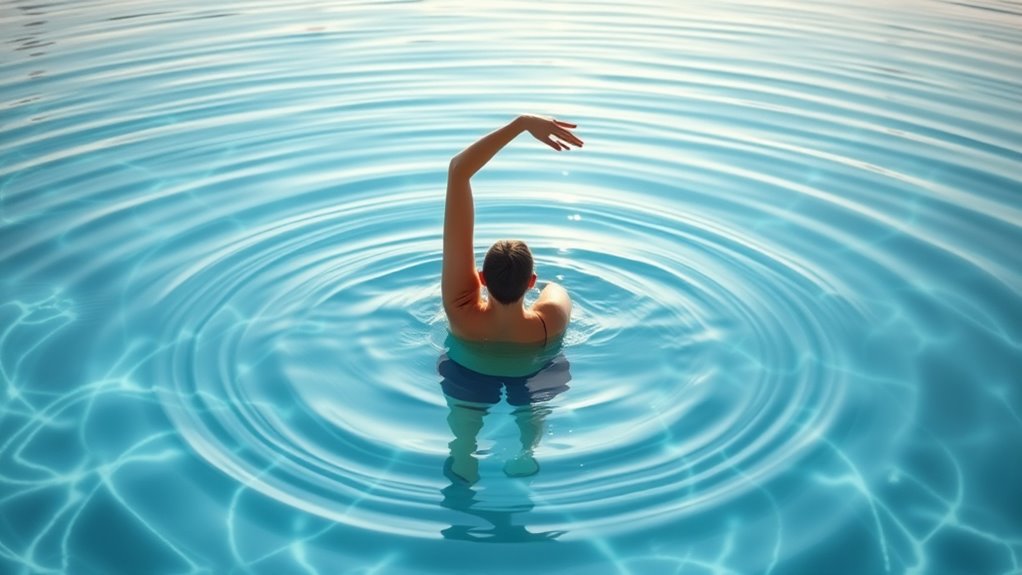
Water-based stretching techniques offer a gentle way to increase flexibility and reduce muscle tension, especially when performed in an Endless Pool. The buoyancy supports your body, reducing joint stress and making stretches easier to hold. Start by standing in waist-deep water and slowly reaching your arms overhead to stretch your shoulders and sides. You can also perform gentle hamstring stretches by lifting one leg onto the pool edge and leaning forward. Focus on smooth, controlled movements and deep breathing to maximize relaxation. The water’s resistance helps engage muscles without overexertion, making it ideal for recovery or gentle flexibility work. Incorporating these stretches regularly can enhance your overall mobility while enjoying the calming sensation of water.
Yoga Poses Adapted for Water Practice

Water makes yoga poses feel different, so you’ll need to adapt your movements accordingly. Buoyancy affects your alignment, making some poses easier or more challenging. Keep safety in mind with tips that help you practice confidently and avoid injury. Incorporating natural materials can also enhance your water practice environment, creating a more calming and authentic atmosphere.
Water-Adapted Yoga Poses
Adapting yoga poses for water practice allows you to experience the benefits of flexibility, balance, and relaxation in a supportive environment. Water’s resistance and buoyancy help deepen stretches and improve stability. Incorporating proper ventilation considerations ensures a comfortable and safe practice space, whether in a pool or dedicated area.
Here are some water-adapted yoga poses to try:
- Water Warrior – Engage your legs and arms while maintaining balance, using water’s support to deepen your stance.
- Floating Tree – Stand on one leg, letting water assist your balance, and stretch your arms upward.
- Reclining Spine Twist – Lie back in the water, gently twisting your spine for enhanced relaxation without strain.
These poses leverage water’s properties to enhance your practice, making each movement more accessible and soothing.
Buoyancy’s Impact on Alignment
Because of buoyancy, your body experiences a natural support system that alters your usual alignment during yoga poses, making proper posture both easier and more challenging at the same time. Buoyancy reduces the effects of gravity, allowing you to hold poses with less effort and joint strain. However, this support can also make it harder to find and maintain stability, as your body may feel less anchored. You’ll need to focus more on engaging your muscles to counteract the floating sensation and keep proper form. In water, small misalignments can go unnoticed, so it’s important to be mindful of your posture. Adjustments may be necessary to ensure that your spine stays aligned and that your muscles provide enough support despite the buoyant environment.
Safe Practice Tips
To practice yoga safely in an aquatic environment, it’s essential to start with poses specifically adapted for water. These modifications help prevent injury and maximize benefits.
- Focus on stability: Use the pool’s edge or a floatation device for balance, especially during standing poses.
- Move slowly: Shift between poses gently to avoid sudden slips or strains caused by water resistance.
- Listen to your body: Pay attention to any discomfort or fatigue, and avoid pushing beyond your limits.
Always warm up before starting, stay hydrated, and use non-slip mats if available. Remember, water yoga is about gentle movement and mindfulness, so prioritize safety and enjoy the flow.
Incorporating Breathwork and Mindfulness in Water Yoga

Incorporating breathwork and mindfulness into water yoga enhances both your practice and overall well-being. Focus on your breath, inhaling deeply through your nose and exhaling slowly through your mouth or nose. Let your breath guide your movements, helping you stay present in each pose. As you flow through stretches, pay attention to how your body feels and the sensation of the water supporting you. Use mindfulness techniques like body scans or visualization to deepen your awareness. This approach reduces stress, improves concentration, and promotes relaxation. Remember, water naturally calms the nervous system, making it easier to connect with your breath and stay centered. Regularly integrating these practices transforms your water yoga into a truly restorative experience.
Advanced Water Stretching and Strengthening Exercises
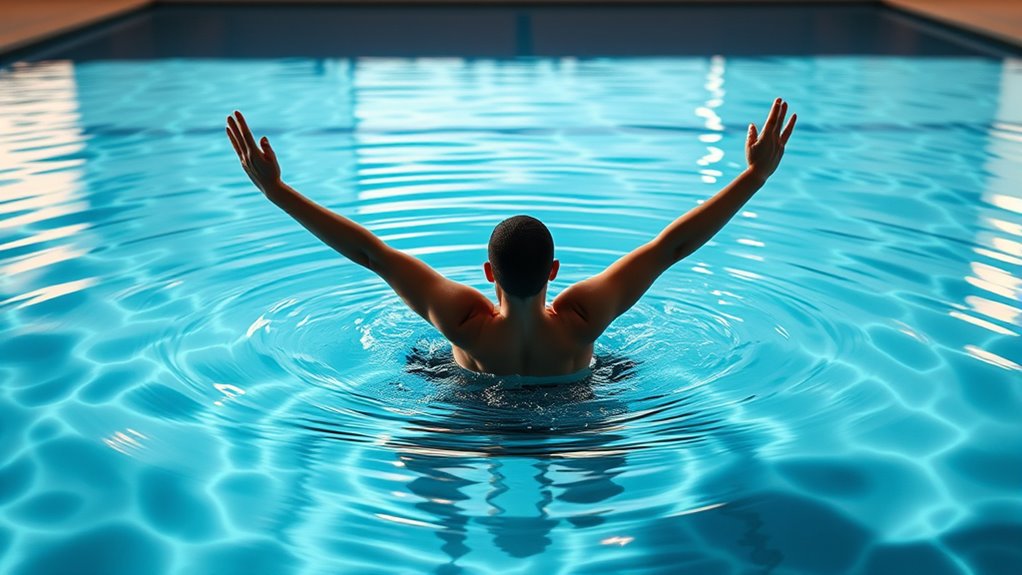
Building on foundational water yoga practices, advanced stretching and strengthening exercises challenge your muscles and improve flexibility in the unique environment of an Endless Pool. These routines push your limits and target deeper muscle groups.
- Dynamic Leg Extensions: Stand near the pool edge and lift one leg, extending it forward and backward in controlled motions to activate your hip flexors and quadriceps.
- Arm Resistance Flows: Use water resistance to perform slow, deliberate arm circles and punches, increasing upper body strength and stability.
- Core Twists: While holding onto the pool edge, rotate your torso side to side, engaging your obliques and enhancing spinal flexibility.
Incorporate these exercises regularly to elevate your water workout, building strength and flexibility efficiently.
Cooling Down and Relaxation Strategies in the Pool

After pushing your muscles with advanced water stretching and strengthening exercises, it’s important to gradually ease your body back into a state of relaxation. Start by slowing down your movements and taking deep, steady breaths. Allow your heart rate to decrease as you gently float or stand in the pool, letting the water support your body. Focus on releasing tension in your shoulders, neck, and back through slow, mindful stretches. Consider practicing calming techniques like visualizing peaceful scenes or listening to soothing sounds. Keep your movements fluid and deliberate, avoiding sudden or jerky motions. This helps your muscles relax fully and prevents dizziness or fatigue. Taking a few minutes for this cooling-down phase enhances recovery and leaves you feeling refreshed and centered.
Tips for Maintaining Consistency and Progress in Water Yoga
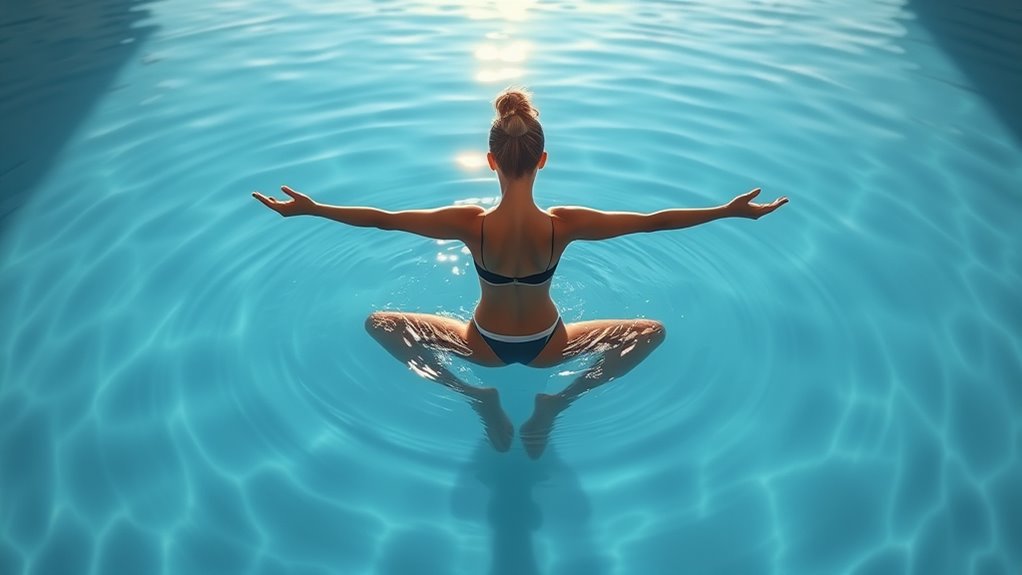
To maintain consistency and see steady progress in your water yoga practice, setting clear, achievable goals and creating a regular schedule are essential. Without structure, it’s easy to lose motivation or fall behind. Focus on small, measurable milestones to keep yourself motivated.
Here are three tips to help you stay on track:
- Schedule practice sessions at consistent times each week to build a routine.
- Track your progress by journaling or noting improvements in flexibility and strength.
- Adjust your goals as you advance, ensuring they remain challenging yet attainable.
Sticking to these habits keeps you engaged and helps you notice progress, making water yoga a sustainable part of your routine.
Frequently Asked Questions
Can I Practice Water Yoga With Existing Injuries?
Yes, you can practice water yoga with existing injuries, but you should do so carefully. Always consult your healthcare provider before starting any new exercise, especially with injuries. Water’s buoyancy reduces impact, making movements gentler on your body. Focus on gentle stretches and avoid any positions that cause pain or discomfort. Listen to your body, and stop if you experience any soreness or strain.
What Are the Best Times of Day for Water Yoga?
You should practice water yoga in the morning or late afternoon when you’re most relaxed and energized. Mornings can boost your mood and set a positive tone for the day, while evenings help you unwind and de-stress. Avoid practicing during the hottest part of the day to prevent fatigue and dehydration. Listen to your body and choose a time that fits your schedule and energy levels for the best experience.
How Do I Adapt Poses for Different Water Depths?
You can adapt poses for different water depths by adjusting your stance and the amount of movement required. In deeper water, use buoyancy to support your body, focusing on gentle movements and balance. For shallower areas, increase stability by grounding your feet firmly or modifying poses to maintain proper alignment. Always listen to your body, and don’t be afraid to modify or skip poses that feel uncomfortable or unsafe.
Is Water Yoga Suitable for All Age Groups?
Yes, water yoga is suitable for all age groups because it offers low-impact exercise that’s gentle on joints and muscles. You can modify poses to match your strength and flexibility, making it accessible whether you’re a beginner or more advanced. Plus, the water provides resistance and support, helping you stay safe and comfortable. So, regardless of your age, you can enjoy the benefits of water yoga and improve your well-being.
What Accessories or Props Enhance Water Yoga Practice?
Think of water yoga accessories like your trusty paddle in a calm lake—they help you glide smoothly. You’ll find that foam noodles, waterproof mats, and hand weights boost stability and support. I once tried a waterproof yoga belt, and it deepened my stretches effortlessly. These props make your practice more comfortable and effective, ensuring you stay balanced and secure, no matter your skill level or age.
Conclusion
Think of your water yoga journey as sailing across a calm, endless sea. With each stretch and breath, you navigate toward greater strength and serenity. The pool becomes your vessel, guiding you through peaceful waters where your mind and body find harmony. Keep charting this course regularly, and watch as your confidence and flexibility grow, turning every session into an expedition of renewal. Embrace the voyage—your peaceful, powerful ocean awaits.