To stay active safely in an endless pool, try water walking for balance, gentle yoga poses to boost flexibility, and light jogging to support cardiovascular health. Incorporate seated leg extensions and standing side leg raises to strengthen muscles and improve hip mobility. Use water bikes for low-impact endurance, and add stretching routines to enhance flexibility and relaxation. Keep up with these exercises, and you’ll discover even more effective ways to enjoy pool workouts tailored for seniors.
Key Takeaways
- Gentle water walking and treading improve balance, endurance, and cardiovascular health with minimal joint stress.
- Seated leg extensions and side leg raises enhance leg strength and hip mobility safely in pool.
- Water-based yoga and light jogging boost flexibility, joint mobility, and confidence through gentle, low-impact movements.
- Water biking with stationary pedals supports leg strength, endurance, and mental well-being without joint strain.
- Stretching routines and safety tips ensure flexibility, injury prevention, and safe exercise practices for seniors in the pool.
Gentle Water Walking for Balance and Endurance
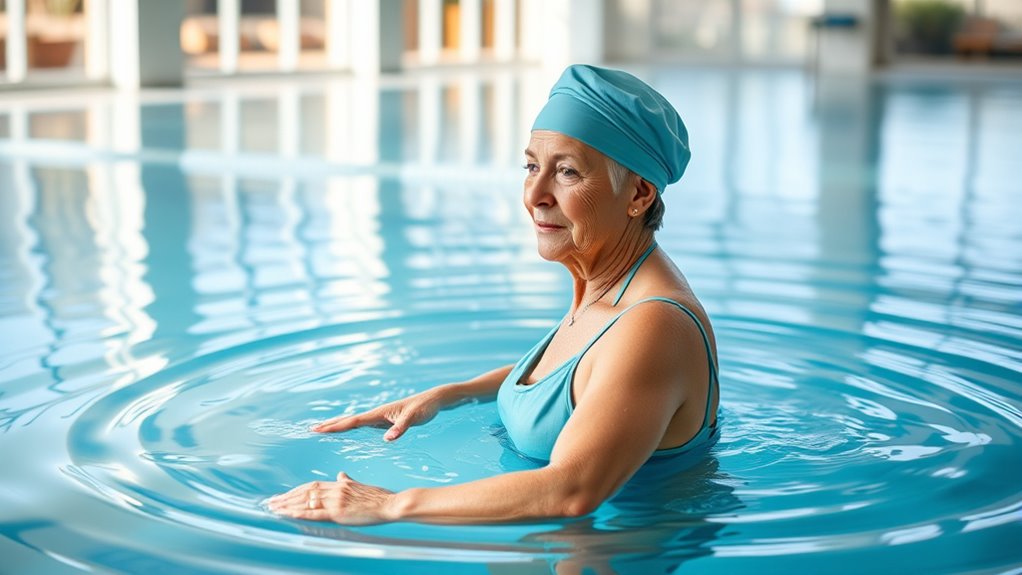
Gentle water walking is an excellent way for seniors to improve both balance and endurance. When you walk slowly in the pool, the water provides natural resistance, helping you strengthen your muscles without strain. This low-impact activity reduces joint stress, making it ideal if you’re dealing with arthritis or joint pain. As you walk, focus on maintaining proper posture—stand tall and engage your core. The buoyancy supports your body, making it easier to stay upright and steady. Regular water walking can boost your cardiovascular health while enhancing your stability. Over time, you’ll notice improved coordination and confidence in your movements. It’s simple, effective, and adaptable to your fitness level, making it a perfect addition to your routine. Incorporating proper technique ensures you maximize benefits and minimize the risk of injury during water walking.
Seated Leg Extensions to Strengthen Muscles
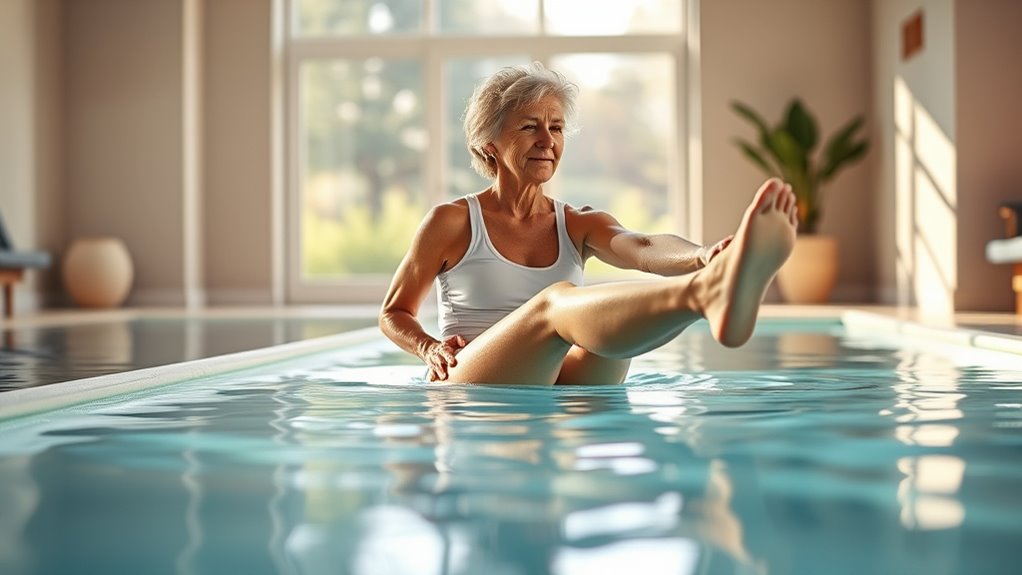
Seated leg extensions are a simple yet effective way to strengthen your thigh muscles without putting stress on your joints. By performing this exercise in the pool, you add gentle resistance and support, making it safe and low-impact. To do this exercise:
Seated pool leg extensions strengthen thighs safely with gentle resistance and support.
- Sit upright on a pool chair or bench with your feet flat on the pool floor.
- Slowly extend one leg straight out in front of you, engaging your thigh muscles.
- Lower your leg back down with control and repeat on the other side.
- Incorporating proper breathing techniques can enhance relaxation and effectiveness during your workout.
This movement improves muscle tone, enhances leg strength, and supports mobility. Keep the motion smooth and controlled, avoiding any jerking or sudden movements. Regular practice can help maintain your independence and reduce fall risk.
Water Treading for Cardio and Stability
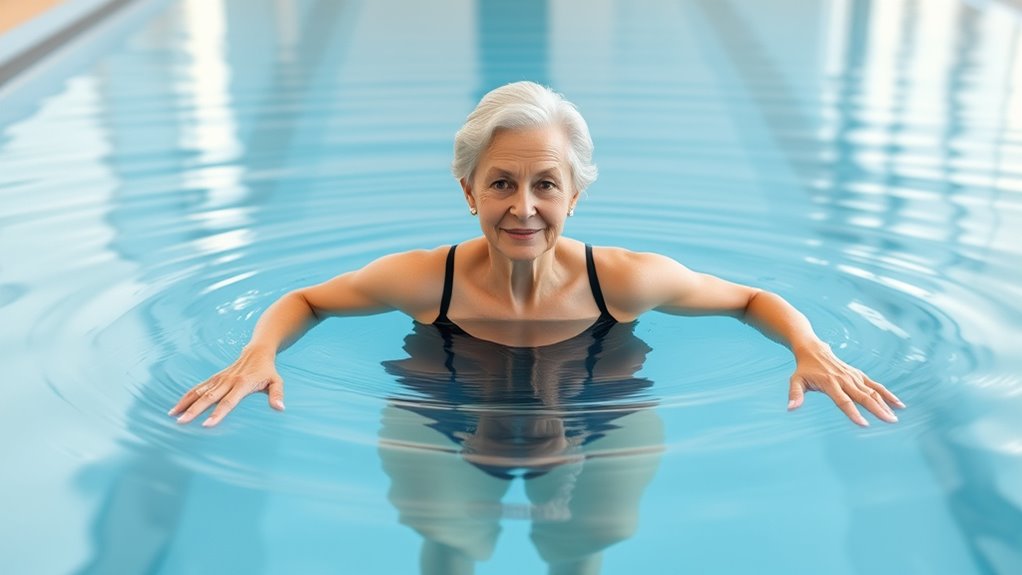
Water treading boosts your cardiovascular health by getting your heart pumping without impact. It also helps improve your balance and stability, making everyday movements easier. Incorporating this exercise can strengthen your core and reduce fall risks. Practicing mindful movement during water activities can enhance overall organization and space management in your routine.
Enhances Cardiovascular Health
Because it provides low-impact cardiovascular exercise, water treading is highly effective for seniors looking to improve heart health and build stability. This activity elevates your heart rate safely, reducing strain on joints while enhancing circulation. To maximize benefits, focus on:
- Maintaining a steady pace to keep your heart engaged without overexertion.
- Gradually increasing duration as your endurance improves.
- Incorporating breathing techniques to optimize oxygen intake and reduce fatigue.
- Monitoring your blood sugar levels to ensure safe practice, especially for those with diabetes or insulin sensitivity.
Water treading stimulates your cardiovascular system, helping lower blood pressure and improve overall heart function. It also encourages consistent movement, which can prevent cardiovascular issues. By regularly practicing, you support your heart health while enjoying a gentle, effective workout that’s easy on your joints.
Improves Balance and Stability
While water treading offers excellent cardiovascular benefits, it also considerably enhances your balance and stability. Moving your legs and maintaining an upright posture in the water challenges your core muscles, helping to improve coordination. As you shift weight and adjust your movements, you strengthen the stabilizing muscles around your hips, knees, and ankles. Water’s resistance gives you a gentle yet effective way to practice balance without risking falls or injuries. Regular water treading encourages proprioception, making you more aware of your body’s position. Over time, this boosts your confidence in everyday activities, reducing the risk of falls. Plus, the supportive environment of the pool allows you to focus on steady, controlled movements that build overall stability.
Arm Circles and Resistance Movements

Arm circles and resistance movements are effective exercises you can do in the Endless Pool to improve strength and mobility. These moves target your shoulder and arm muscles, helping you maintain independence. To get started, follow these tips:
- Keep your movements slow and controlled to avoid strain.
- Gradually increase the size of your arm circles as your strength improves.
- Use resistance bands or water weights for added challenge without risking joint stress.
- Proper wall organization can help keep your exercise area safe and clutter-free.
Performing these exercises regularly can enhance your upper body strength, improve circulation, and support better posture. They’re gentle enough for seniors and can be easily adapted to your comfort level. Incorporate arm circles and resistance movements into your routine for a simple, low-impact way to stay active and healthy in the pool.
Water-Based Yoga Poses for Flexibility

Building on the strength benefits of arm circles and resistance movements, incorporating water-based yoga poses can further enhance your flexibility and range of motion. These gentle stretches in the pool help loosen tight muscles and improve joint mobility. You’ll feel more agile and confident in daily activities, reducing stiffness and discomfort. Water’s supportive environment makes challenging poses easier and safer, encouraging consistent practice. Imagine reaching for the sky or twisting easily without pain. As you progress, your body becomes more limber and balanced. Here’s what you might feel:
| Emotional Benefits | Physical Benefits |
|---|---|
| Increased confidence | Greater joint mobility |
| Reduced stiffness | Enhanced muscle flexibility |
| Calmness and relaxation | Improved posture |
| Joy in movement | Less risk of injury |
Additionally, practicing these poses can support the recovery process from other physical activities, promoting overall health and well-being.
Light Jogging in the Pool for Cardiovascular Health
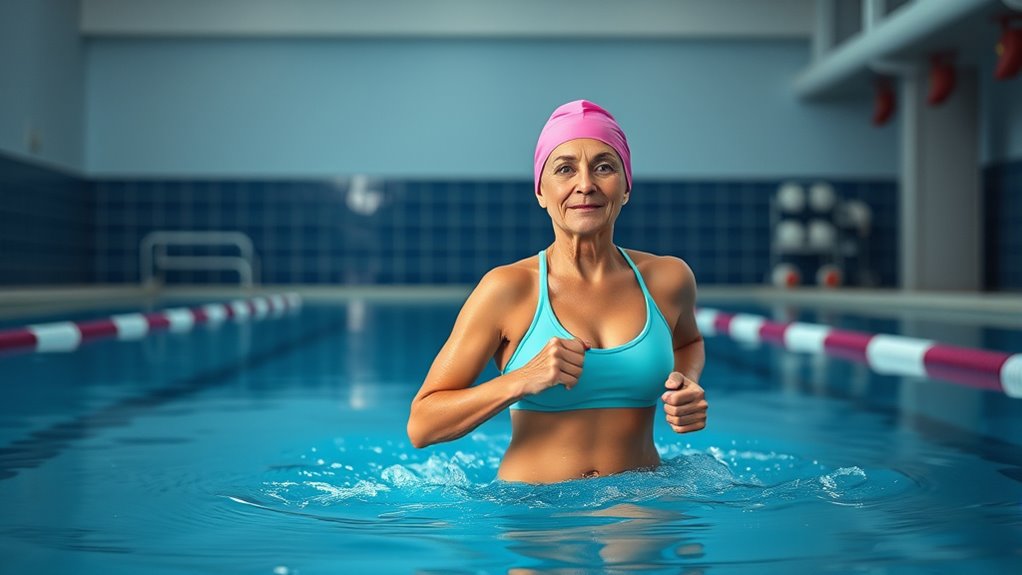
Engaging in light jogging in the pool is an effective way to boost your cardiovascular health without putting stress on your joints. The buoyancy of water reduces impact, making it ideal for seniors. To get the most benefits, focus on these key points:
- Maintain an upright posture to engage core muscles.
- Keep your movements controlled to prevent fatigue.
- Aim for consistent pacing, about 10-15 minutes, to elevate your heart rate safely.
- Incorporate organic techniques such as cover crops and organic fertilizers to support overall health and vitality, which can translate to better endurance during exercise.
Start by walking briskly, then gently shift into jogging. Use the pool’s edge or a floatation device for balance if needed. Remember, the goal is to increase your heart rate gradually while minimizing joint strain, making this exercise both effective and safe.
Standing Side Leg Raises for Hip Mobility

After completing your light jogging, try standing side leg raises to improve hip mobility and strength. Stand near the pool wall or edge for support if needed. Keep your core engaged and shoulders relaxed. Slowly lift one leg out to the side, keeping it straight and controlled. Avoid leaning to the opposite side or twisting your torso. Hold briefly at the top, then lower your leg with control. Repeat for 10-15 reps on each leg. This exercise targets your hip abductors, helping increase stability and range of motion. It’s gentle on your joints and easy to modify based on your comfort level. Incorporating this move into your routine can help improve balance, prevent falls, and support everyday activities requiring hip mobility. Additionally, selecting a suitable dog name can motivate you to stay consistent with your exercise routine.
Water Biking With a Stationary Pedal System
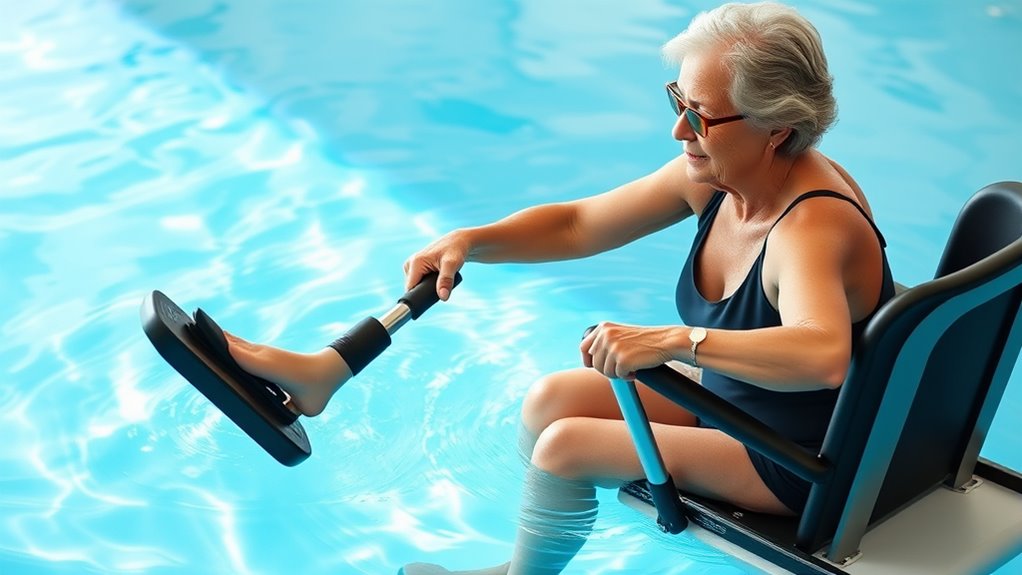
Water biking with a stationary pedal system offers a low-impact way to improve your cardiovascular health and strengthen leg muscles. It’s important to use proper pedal technique to maximize benefits and prevent strain. Always follow safety tips to guarantee a safe and enjoyable workout in the pool.
Benefits of Water Biking
Have you ever considered how water biking with a stationary pedal system can boost your overall health? This low-impact exercise offers numerous benefits. First, it strengthens your leg muscles without putting stress on your joints. Second, it improves cardiovascular fitness, helping you stay active longer. Third, it boosts your mental well-being by releasing endorphins and reducing stress. Water biking also supports weight management by burning calories efficiently. Because the water provides resistance, your muscles work harder without extra strain. Plus, the buoyancy reduces impact, making it ideal for seniors with joint concerns. Incorporating home safety measures can help you enjoy these exercises confidently and securely. Overall, water biking promotes strength, endurance, and mental clarity—all while being gentle on your body. It’s a safe, effective way to stay active and improve your quality of life.
Proper Pedal Technique
To get the most benefit from your water biking session, mastering proper pedal technique is essential. Keep your feet centered on the pedals, applying even pressure throughout each revolution. Start with a comfortable cadence, avoiding rapid pedaling that can cause fatigue. Focus on smooth, controlled movements to engage your muscles effectively and prevent strain. Maintain a slight bend in your knees, avoiding overextension, to reduce joint stress. Use your core muscles to stabilize your body and improve efficiency. Remember to breathe steadily and avoid gripping the handlebars too tightly, which can lead to tension. Consistent, correct pedal technique maximizes workout benefits while minimizing the risk of injury, helping you build strength and endurance safely.
Safety Tips for Seniors
Ensuring safety while using a stationary pedal system in water biking helps you enjoy an effective workout without unnecessary risks. First, always warm up before starting to loosen your muscles and prevent strains. Second, stay hydrated; even water workouts can cause dehydration. Third, listen to your body—stop if you feel dizzy, pain, or discomfort. Additionally, verify the water level is appropriate for your height, and check that the equipment is secure and in good condition. Avoid sudden movements or overexertion, especially if you’re new to water exercise. Incorporating predictive analytics can help tailor your workout intensity based on your progress and physical responses. Using these safety tips helps you maintain control, reduce injury risk, and maximize the benefits of your water biking session. Your safety is key to enjoying a consistent and safe exercise routine.
Stretching Routines to Enhance Flexibility and Relaxation
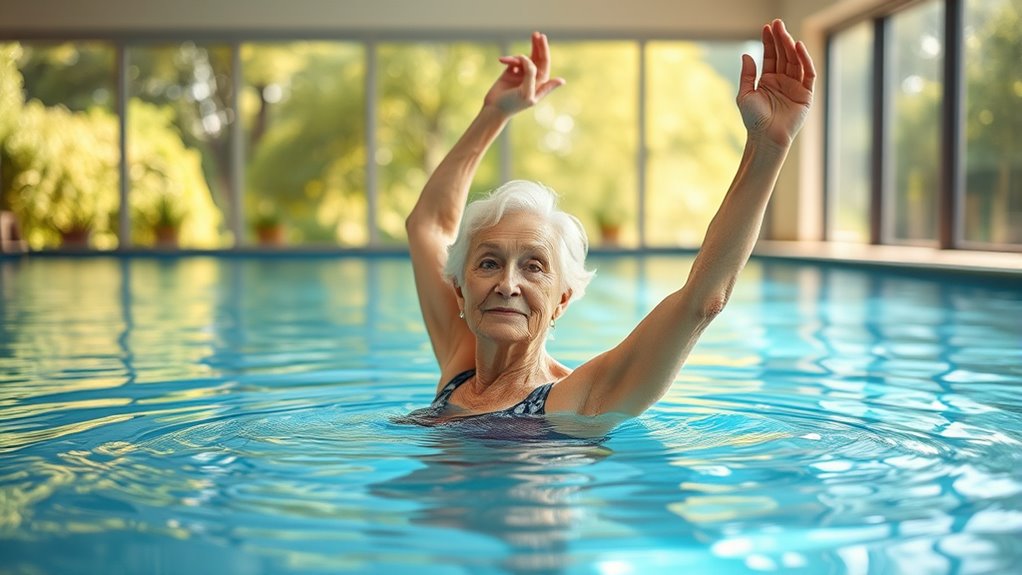
Incorporating regular stretching routines into your endless pool exercises can substantially improve your flexibility and promote relaxation. Focus on gentle stretches that target major muscle groups like your hamstrings, calves, shoulders, and back. Move slowly and hold each stretch for 15-30 seconds without bouncing. For example, try reaching your arms overhead or gently pulling your ankle toward your glutes to stretch your thighs. These routines help reduce muscle tension and improve circulation, making daily movements easier. Remember to breathe deeply and stay relaxed throughout each stretch. Consistency is key; aim to stretch after your pool workouts or during any quiet moment. Over time, you’ll notice increased mobility, less stiffness, and a greater sense of calm.
Frequently Asked Questions
How Often Should Seniors Perform These Pool Exercises for Optimal Benefits?
You should aim to do these pool exercises at least three to five times a week for ideal benefits. Consistency helps improve strength, flexibility, and cardiovascular health while minimizing joint stress. Start with 20-30 minute sessions, gradually increasing duration as your fitness improves. Listen to your body, and if you experience pain or discomfort, adjust your routine or consult a healthcare professional to guarantee safe and effective exercise.
Are Any of These Exercises Suitable for Individuals With Joint Pain or Arthritis?
Yes, many of these exercises are suitable for individuals with joint pain or arthritis. You should focus on gentle movements like water walking, light leg lifts, and arm stretches, which reduce stress on your joints. Always start slow, listen to your body, and avoid any exercise that causes discomfort. Consulting your healthcare provider before beginning any new routine guarantees safety and helps tailor exercises to your specific needs.
What Safety Precautions Should Seniors Take When Exercising in the Pool?
A stitch in time saves nine, so you should always prioritize safety. When exercising in the pool, wear a well-fitting life jacket if needed, stay close to the edge, and avoid sudden movements. Warm up before starting, stay hydrated, and listen to your body. Never push through pain, and have a companion nearby for support. These precautions help guarantee your workout remains safe and enjoyable.
Can These Exercises Be Modified for Seniors With Limited Mobility?
Yes, you can modify exercises for limited mobility by reducing range of motion, using supportive equipment like pool noodles or chairs, and focusing on gentle movements. Start slowly, listen to your body, and avoid overexertion. Consult your healthcare provider or a trained instructor to tailor exercises to your needs. These adaptations make pool workouts safer and more comfortable while helping you stay active and improve mobility.
How Do I Prevent Slipping or Falling During Pool Exercises?
To prevent slipping or falling during pool exercises, always wear non-slip shoes or grips designed for wet surfaces. Use sturdy handrails or pool bars for support, especially when entering and exiting the pool. Keep the pool area dry and free of obstacles. Start slowly and focus on maintaining your balance. If needed, perform exercises near the edge for extra stability. Listening to your body helps avoid overexertion and reduces fall risk.
Conclusion
These low-impact pool exercises are like gentle waves, making your fitness journey smooth and enjoyable. They help you build strength, improve balance, and boost your mood without putting stress on your joints. By incorporating these routines into your routine, you’ll feel more energized and confident every day. So immerse yourself and embrace these relaxing, effective movements—you’ll be amazed at how fun and invigorating staying active can be!