
To keep your endless pool clean and safe, you need to balance chemicals properly. Test your water regularly for pH, alkalinity, and sanitizer levels using reliable kits or meters. Adjust pH to 7.2-7.8 gradually, maintain alkalinity between 80-120 ppm, and keep sanitizer levels within recommended ranges. Use stabilizers, shock treatments, and algaecides as needed to prevent algae and cloudiness. Mastering these basics guarantees crystal-clear water and prevents issues—continue to learn how to optimize your pool’s chemistry effectively.
Key Takeaways
- Maintain pH levels between 7.2 and 7.8 for optimal sanitizer effectiveness and water comfort.
- Regularly test and adjust alkalinity (80-120 ppm) to stabilize pH and prevent fluctuations.
- Monitor and control calcium hardness (200-400 ppm) to prevent scale buildup and equipment damage.
- Use chlorine or bromine within recommended ranges for effective disinfection and algae prevention.
- Add stabilizers like cyanuric acid gradually to protect chlorine from sunlight degradation.
Understanding Water Chemistry Fundamentals

Understanding water chemistry fundamentals is essential for effective water treatment. When you know how water’s chemistry works, you can better maintain your endless pool’s clarity and safety. You need to understand pH, which measures how acidic or alkaline the water is, and how it affects chemical effectiveness. Maintaining the right pH ensures sanitizers work properly and prevents corrosion or scaling. Total alkalinity controls the water’s buffering capacity, helping to stabilize pH levels. Dissolved solids, like minerals and salts, influence water quality and equipment longevity. Recognizing how these components interact helps you adjust chemical levels accurately. Dog names can also be a fun way to personalize your pool accessories or pets. By grasping these basics, you can prevent problems before they start, keeping your pool balanced, clean, and safe for regular use.
The Importance of Proper Water Testing

Why is proper water testing crucial for maintaining a safe and healthy pool? Accurate testing ensures you know the exact chemical balance of your water, helping prevent issues like algae growth, cloudiness, or skin irritation. When you test regularly, you can catch imbalances early and make quick adjustments, saving you time and money. Proper testing also reduces the risk of overusing chemicals, which can be harmful and wasteful. Using reliable test kits or meters gives you precise readings of pH, sanitizer levels, and other essential parameters. This accuracy helps you maintain ideal conditions, ensuring your pool stays clean, safe, and inviting. Additionally, consistent testing supports AI safety by enabling early detection of potential issues before they escalate, contributing to overall pool health and safety. Remember, consistent testing is the foundation for effective water management, keeping your Endless Pool enjoyable and healthy year-round.
Essential Chemicals for Endless Pool Maintenance
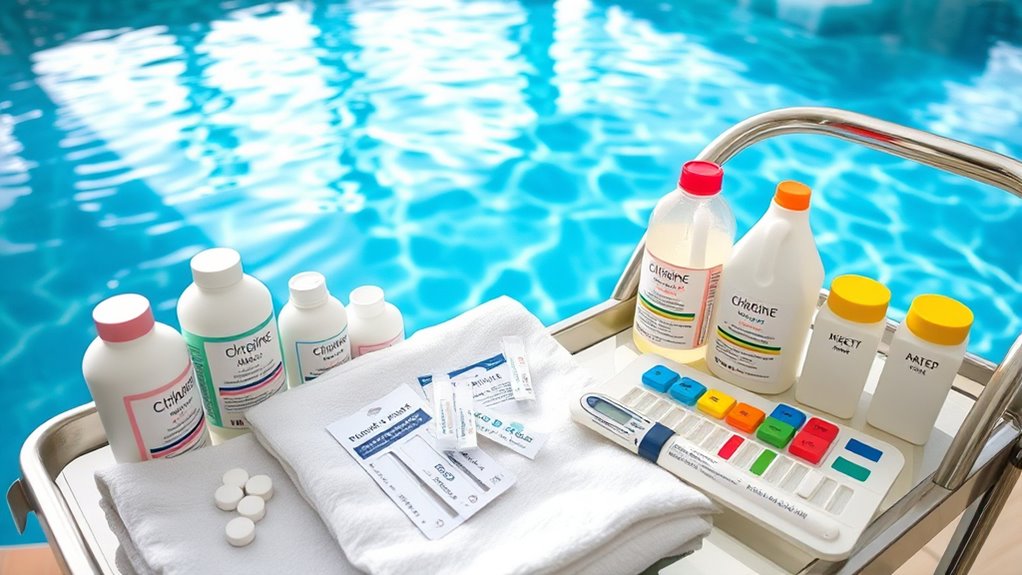
Maintaining the right chemical balance in your Endless Pool is key to keeping the water clean, safe, and inviting. The essential chemicals you need include chlorine or bromine, which disinfect the water and eliminate bacteria. You’ll also need pH adjusters—like pH increasers or decreasers—to keep the pH level within the ideal range of 7.2 to 7.8. Alkalinity increasers help stabilize pH and prevent fluctuations, while stabilizers such as cyanuric acid protect chlorine from sunlight degradation. Additionally, maintaining proper water hardness with calcium hardness increasers prevents corrosion or scaling. Regularly adding and monitoring these chemicals guarantees your pool remains hygienic and comfortable. Keep a clear schedule for testing and adjusting chemicals to avoid issues and enjoy your pool all year round. Regular testing is essential to ensure the chemical levels stay balanced and your water remains in optimal condition.
How to Balance Ph Levels Effectively

To keep your water balanced, you need to test the pH regularly and monitor its levels closely. When adjustments are needed, make them with precision to avoid overcorrecting. Consistent testing and careful chemical adjustments guarantee your water stays within the ideal pH range. Incorporating color accuracy considerations in your testing process can help ensure accurate readings and optimal water quality.
Test Water Regularly
Regular water testing is essential for maintaining proper pH levels in your water supply. Consistent testing helps you catch imbalances early, preventing damage and ensuring safe, clear water. Use test strips or a liquid test kit to check pH regularly—at least once a week. Keep a record to track changes over time. Here’s a quick overview:
| Test Method | Frequency |
|---|---|
| Test Strips | Weekly |
| Liquid Kit | Every 2-3 days |
| Digital Meter | Weekly or after heavy use |
| Visual Checks | Daily (color, clarity) |
Monitoring water quality regularly is crucial for optimal water treatment and maintaining a healthy swimming environment.
Adjust Chemicals Precisely
Once you’ve identified pH imbalances through regular testing, it’s important to adjust your chemicals accurately to restore proper levels. Precise adjustments prevent damage to your pool and ensure safe, clean water. First, always add chemicals gradually—start with small doses to avoid overshooting your target pH. Second, mix chemicals thoroughly before adding them to the water to ensure even distribution. Third, re-test the water after each adjustment to monitor progress. If your pH is too low, add a pH increaser, such as sodium carbonate. If it’s too high, use a pH reducer like muriatic acid. Remember, patience is key—making incremental changes helps you achieve balanced water without causing swings that could harm your pool or swimmers. Additionally, understanding the importance of proper air quality can help in maintaining a healthy environment around your pool area.
Managing Alkalinity and Calcium Hardness
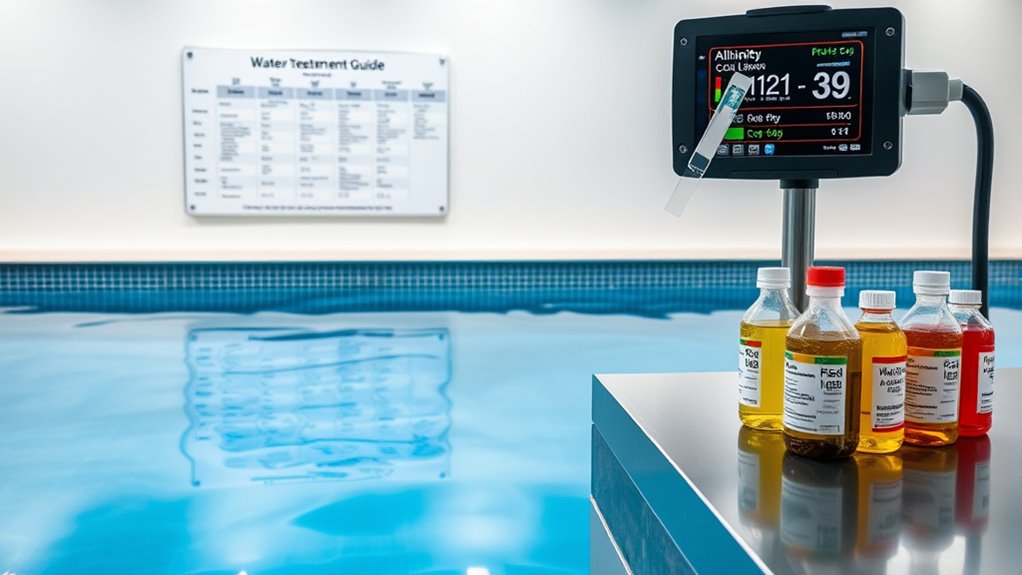
To keep your water quality in check, you need to monitor alkalinity levels regularly. Adjusting calcium hardness helps prevent scale buildup and keeps your equipment running smoothly. By managing these factors, you can effectively prevent issues caused by mineral imbalances. Proper water balance is essential for maintaining optimal water chemistry in your pool.
Monitoring Alkalinity Levels
How can you guarantee your water maintains proper alkalinity levels? Regular testing is key. Use reliable test kits or digital meters to check alkalinity at least once a week. This helps you catch fluctuations early and avoid issues like scaling or corrosion. To keep alkalinity in check:
- Test your water consistently with accurate tools.
- Record results to track trends over time.
- Adjust alkalinity levels gradually with appropriate chemicals if needed.
- Understanding water chemistry can help you make more informed adjustments.
Maintaining proper alkalinity supports pH stability and protects your pool’s equipment. Remember, sudden changes can cause damage, so always make small adjustments. By monitoring regularly, you ensure your Endless Pool stays balanced, clear, and safe for enjoyment.
Adjusting Calcium Hardness
Balancing calcium hardness is essential to prevent problems like scaling or corrosion in your pool. If your calcium levels are too low, your water can become corrosive, damaging pool surfaces and equipment. Conversely, if calcium levels are too high, it can lead to scale buildup on surfaces and inside plumbing. To adjust calcium hardness, test your water using a reliable kit. If levels are low, add a calcium hardness increaser, following the product instructions carefully. If levels are high, you may need to dilute your pool water with fresh, softened water or use a sequestering agent to prevent scale formation. Always aim for the recommended calcium hardness range, typically between 200-400 ppm, to maintain a balanced, healthy pool environment. Monitoring water chemistry regularly helps ensure proper calcium levels and overall water balance.
Preventing Scale Formation
Maintaining proper alkalinity and calcium hardness levels helps prevent scale buildup in your pool. When these levels are too high, minerals can precipitate and form deposits on your pool surfaces and equipment. To avoid this, regularly test your water and keep parameters within recommended ranges. Here are three key tips:
- Monitor regularly to catch fluctuations early.
- Adjust alkalinity and calcium hardness using appropriate chemicals if levels are high.
- Maintain proper pH to prevent calcium carbonate from precipitating.
- Implement vertical storage solutions to organize your pool chemicals and tools, making maintenance more efficient and reducing clutter.
Chlorine and Bromine: Disinfectants for Safe Water
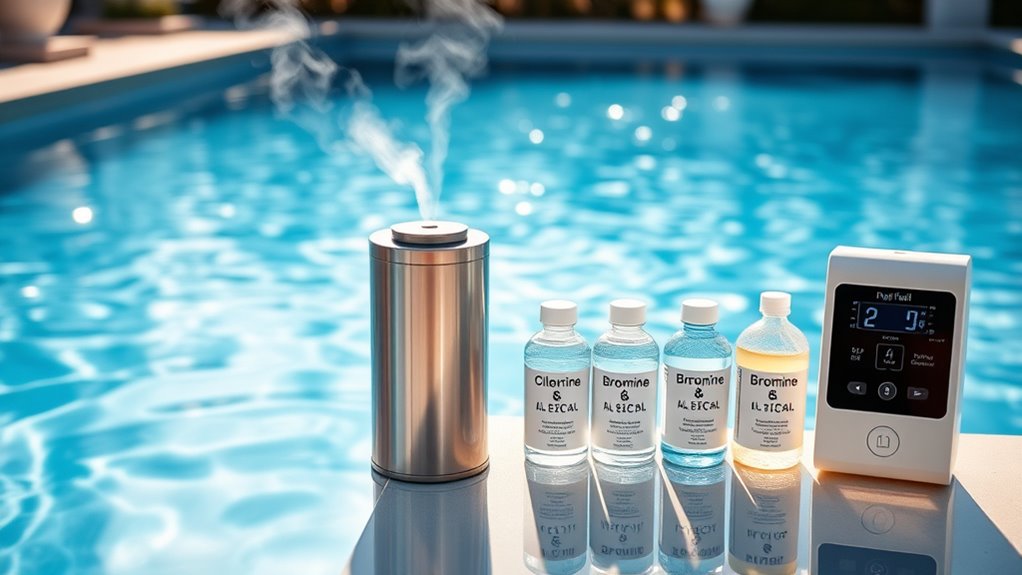
Have you ever wondered what keeps your water safe to drink? Chlorine and bromine are your primary disinfectants for ensuring safe water in your pool. Chlorine is widely used because it kills bacteria and viruses efficiently, providing quick sanitation. Bromine works similarly but is often preferred in hot water environments because it’s more stable at higher temperatures. Both chemicals release active agents that attack contaminants, maintaining water clarity and safety. You need to monitor their levels regularly to prevent over- or under-dosing, which can lead to skin irritation or ineffective disinfection. Proper use of chlorine or bromine keeps your pool free of harmful microorganisms, ensuring a safe, enjoyable swimming experience. Remember, consistent testing and adjustment are key to effective water sanitation.
Using Stabilizers and Shock Treatments

Stabilizers and shock treatments play a crucial role in keeping your pool water clean and safe. Stabilizers, like cyanuric acid, protect your chlorine from sunlight degradation, ensuring continuous disinfection. Shock treatments quickly eliminate organic contaminants and bacteria, restoring water clarity and hygiene. To maximize their effectiveness, follow these tips:
Stabilizers and shock treatments keep your pool water safe and crystal clear.
- Test your water regularly to determine the right stabilizer and shock levels.
- Add stabilizer gradually, avoiding overuse that can lead to imbalanced water.
- Shock your pool after heavy use or heavy sun exposure to maintain water quality.
Preventing and Controlling Algae Growth

To keep algae growth in check, you should implement effective prevention techniques like proper filtration and regular cleaning. When algae does appear, using targeted treatments can quickly eliminate it without harming your water quality. Staying proactive helps guarantee your water remains clear and healthy.
Algae Prevention Techniques
Wondering how to keep algae from taking over your water system? The key is to prevent algae growth before it starts. Here are three effective techniques:
- Maintain proper water circulation and filtration to reduce stagnant areas where algae thrive.
- Keep the water’s pH levels balanced, ideally between 7.2 and 7.6, to inhibit algae development.
- Limit sunlight exposure by using covers or positioning your pool in shaded areas, as algae need light to grow.
Regularly cleaning your pool and removing debris also helps prevent algae spores from settling. By focusing on these preventative steps, you can keep your water clear and algae-free without relying solely on chemical treatments. Consistency is vital for long-term algae control.
Effective Algae Treatments
What’s the most effective way to combat algae once it starts to appear? The key is to act quickly with targeted treatments. Shock the water with a high dose of chlorine or a non-chlorine shock to kill existing algae and prevent its spread. Follow this by adding an algaecide formulated for pools, which helps to inhibit algae growth and clear up minor infestations. Regular brushing of the pool’s surfaces dislodges algae and improves chemical contact. Maintain proper filtration and circulation to remove dead algae and debris. Testing and balancing your water’s pH and sanitizer levels regularly ensures the algae won’t have a chance to thrive again. Consistent maintenance and timely treatment keep your pool clean, clear, and algae-free.
Tips for Regular Water Monitoring and Adjustments

Regular water monitoring is essential to guarantee your treatment system remains effective and safe. To keep your pool water balanced, check key parameters consistently. First, test the pH level weekly and keep it between 7.2 and 7.6. Second, measure sanitizer levels, such as chlorine or bromine, and maintain them within recommended ranges to prevent bacteria growth. Third, monitor total alkalinity and adjust it to stay between 80-120 ppm, avoiding sudden shifts in pH. Use reliable test strips or kits for accurate readings. Regular checks help you catch issues early, ensuring water stays clear, safe, and comfortable. Make adjustments promptly based on your test results. Staying proactive with water monitoring reduces the need for extensive chemical treatments later.
Troubleshooting Common Water Balance Issues

Are you noticing cloudy water, fluctuating pH levels, or algae growth? These issues indicate your water balance needs attention. First, test your water’s pH, alkalinity, and sanitizer levels. If the water is cloudy, it might mean your filtration isn’t enough, or there’s an imbalance of minerals. Adjust the pH with pH increaser or decreaser, and use clarifiers if needed. For algae growth, increase sanitizer levels and consider adding algaecide. Fluctuating pH suggests inconsistent chemical levels or contamination. Keep a regular testing schedule and make small adjustments to avoid overcorrecting. Proper filtration, consistent chemical balance, and regular cleaning are your best tools to prevent and fix water balance issues. Stay vigilant, and your pool will stay crystal clear.
Frequently Asked Questions
How Often Should I Perform Water Testing in My Endless Pool?
You should test your endless pool’s water at least 2-3 times a week to maintain proper chemical balance. If you use it daily or have heavy use, increase testing to every other day. Regular testing helps you catch imbalances early, preventing issues like cloudy water or algae growth. Always follow your pool’s specific recommendations and adjust testing frequency based on usage and environmental factors.
What Are the Signs of Imbalanced Water Chemistry?
Imagine your pool turns into a bubbling, chemical storm! If your water looks murky or cloudy, it’s a clear sign of imbalance. Sharp smells, like rotten eggs or chlorine fumes, warn you of dangerous levels. Skim the surface and see if the water’s overly foamy or slimy—those are signs of trouble. Also, if your pH swings wildly or algae bloom appears, it’s time to fix your water chemistry before chaos erupts.
Can Natural Products Replace Chemical Treatments?
Natural products can help maintain water quality, but they shouldn’t fully replace chemical treatments. You might use enzymes or mineral systems to reduce chemical reliance, but these often work best alongside traditional chemicals. Relying solely on natural options could lead to imbalanced water chemistry, cloudy water, or algae growth. For safe, clear water, it’s best to combine natural products with proper chemical treatments and regular testing.
How Do Weather Changes Affect Water Chemistry?
Weather changes can dramatically impact your pool’s water chemistry, almost like a roller coaster ride. When it gets hot, your water evaporates faster, leaving behind concentrated chemicals that can throw off the balance. Cold weather can slow chemical reactions, making treatments less effective. Rain dilutes your water and washes in contaminants. You need to regularly test and adjust your chemicals to keep your pool safe and clear, no matter the weather.
Are There Eco-Friendly Chemical Options Available?
Yes, eco-friendly chemical options are available for your pool. You can use mineral sanitizers, which reduce the need for harsh chemicals, or enzyme treatments that break down organic matter naturally. Boric acid-based products are also gentler on the environment. Always choose biodegradable, non-toxic chemicals, and follow the manufacturer’s instructions to keep your pool safe and eco-friendly. Regular maintenance and proper balancing help minimize chemical use overall.
Conclusion
By mastering water chemistry, you’re the guardian of your endless pool’s clarity and safety. Regular testing and proper chemical balance act as your shield against algae, cloudiness, and scale buildup. Think of it as tending a delicate garden—the right care keeps everything thriving. Remember, neglect is the silent enemy that turns pristine water into a murky mess. Stay vigilant, and your pool will reward you with endless, sparkling enjoyment—an oasis you control.