
To keep your small exercise pool safe and inviting, you need to maintain proper water chemistry by regularly testing and balancing pH levels between 7.2 and 7.6 and keeping sanitizer levels between 1 and 3 ppm. Proper chemistry prevents issues like algae, bacteria growth, and skin irritation. Consistent adjustment and monitoring ensure clear, healthy water and longer equipment life. If you want to know more about fine-tuning your pool’s chemistry, there’s more to explore here.
Key Takeaways
- Maintain pH levels between 7.2 and 7.6 for optimal comfort and equipment longevity.
- Regularly test and adjust sanitizer levels to 1-3 ppm to prevent bacteria and algae growth.
- Use appropriate chemicals to correct pH imbalances promptly, avoiding corrosion or cloudiness.
- Implement frequent testing, especially during heavy use or weather changes, to ensure water stability.
- Keep proper filtration and circulation to support water clarity and reduce chemical imbalances.
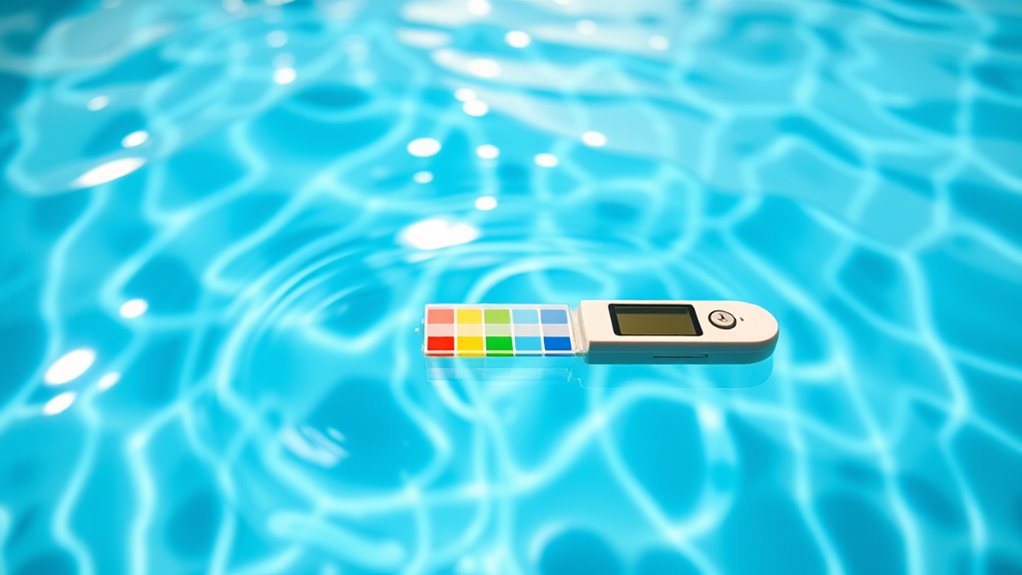
Maintaining proper water chemistry is essential for keeping your small exercise pool safe, clean, and inviting. One of the most important aspects of water chemistry is ensuring the pH level stays balanced. pH adjustment isn’t a one-and-done task; it requires regular testing and adjustments to keep the water within the ideal range of 7.2 to 7.6. When the pH is too low, the water becomes acidic, which can lead to corrosion of pool surfaces and equipment, as well as skin and eye irritation. Conversely, if the pH gets too high, the water becomes alkaline, leading to cloudy water and reduced effectiveness of sanitizers. To maintain the right pH, you’ll need to use pH increasers or decreasers, depending on your test results. Proper pH adjustment keeps your pool water comfortable for swimming and prolongs the lifespan of your pool’s components. Regular testing of water chemistry is crucial because proper filtration technology can enhance water clarity and quality. Alongside pH adjustment, maintaining proper sanitizer levels is critical for controlling bacteria, algae, and other contaminants. Sanitizer levels, often measured as free chlorine or bromine, should be checked regularly to ensure they’re within the recommended range—typically 1 to 3 ppm for chlorine in small pools. When sanitizer levels are too low, bacteria and algae can flourish, making the water unsafe and causing unpleasant odors or discoloration. On the other hand, excessive sanitizer can cause skin and eye irritation, as well as damage to pool surfaces. Balancing sanitizer levels involves adding the appropriate chemicals to raise or lower the disinfectant concentration as needed. Using test strips or a reliable test kit makes it easy to monitor these levels consistently. Keeping sanitizer levels in check not only ensures safe swimming conditions but also helps prevent costly algae blooms and bacterial growth. Both pH adjustment and sanitizer level management go hand in hand. When you test your water regularly, you’ll be able to react quickly to fluctuations and keep your pool’s chemistry balanced. This proactive approach reduces the chances of problems developing, saving you time and money in the long run. Remember, the key is consistency—checking your water at least once a week during regular use and more frequently if the pool sees heavy use or if weather conditions change. Proper water chemistry isn’t just about safety; it’s about creating a pleasant, inviting environment where you can enjoy your workout without worrying about water quality issues. By staying vigilant with pH adjustments and sanitizer levels, you’ll keep your small exercise pool in top shape all season long.
Frequently Asked Questions
How Often Should I Test My Small Pool’s Water Chemistry?
You should test your small pool’s water chemistry at least twice a week to maintain chemical stability. Regular testing helps you catch imbalances early and keep the water safe and clean. During heavy use or after a storm, test more often. Proper testing frequency guarantees your pool’s chemicals stay balanced, preventing issues like algae growth or cloudy water. Consistent checks make your swimming experience safe and enjoyable.
What Are the Signs of Chemical Imbalance in My Pool?
You’ll notice chemical imbalance through pH fluctuations, which cause cloudy water, skin irritation, or equipment issues. Watch for algae growth, appearing as green or slimy patches on pool surfaces. If you see these signs, test and adjust your chemicals promptly. Regular testing helps prevent imbalances, keeping your pool safe and inviting. Address issues early to avoid costly repairs and enjoy clean, clear water every time you swim.
Can I Use Household Chemicals to Balance Pool Water?
You can’t use household chemicals to balance your pool water safely. Did you know that improper chemical use causes over 10,000 accidents annually? Household chemicals aren’t designed for pools and can be dangerous if mishandled. Always prioritize pool chemical safety and store chemicals properly to avoid dangerous reactions. Stick to pool-specific products to maintain safe, balanced water and prevent accidents or damage to your small exercise pool.
How Does Temperature Affect Water Chemistry in Small Pools?
Temperature impacts your small pool’s water chemistry by causing pH fluctuations and affecting alkalinity stability. As water gets warmer, pH levels can rise, making the water more alkaline, while cooler temperatures can lower pH. These changes can destabilize alkalinity, leading to cloudy water or irritation. To maintain balanced chemistry, regularly test your pool’s water, adjust chemical levels accordingly, and keep the temperature stable to prevent these issues.
What Safety Precautions Should I Take When Adjusting Pool Chemicals?
Think of adjusting pool chemicals like walking a tightrope—you need balance and focus. Always wear protective gear and handle chemicals with care, avoiding spills and splashes. Make certain your pool cover is secure to prevent accidents, especially when chemicals are involved. Follow manufacturer instructions precisely, and never mix chemicals unless directed. By staying vigilant and cautious, you turn a potentially risky task into a safe, smooth dance with your pool’s chemistry.
Conclusion
So, next time you plunge into your tiny exercise pool, remember: perfect water chemistry isn’t just a suggestion, it’s your secret weapon. Keep those chemicals balanced, and you’ll enjoy a pristine, safe swim—without turning your backyard oasis into a science experiment. After all, nobody wants to become a chemistry major just to stay afloat. So, stay vigilant, keep it simple, and let your pool’s sparkle do all the talking—because clean water is the real workout winner.