
When planning a home pool, you need to guarantee your foundation can support the combined weight of the water, equipment, and people. Properly evaluating your soil’s bearing capacity is essential to prevent settling or cracking. A solid base with reinforced concrete slabs or piers helps distribute the load evenly. Paying attention to both static and dynamic forces keeps your pool stable over time. Keep exploring to find out how professional assessments can optimize your pool’s safety and longevity.
Key Takeaways
- Evaluate soil bearing capacity to ensure the foundation can support the pool’s static and dynamic loads.
- Design a reinforced foundation, such as concrete slabs or piers, to evenly distribute the pool’s weight.
- Consider the total weight from water, equipment, and users when determining structural load requirements.
- Incorporate durable, load-bearing decking materials to support pool edges and foot traffic safely.
- Consult a professional engineer to ensure compliance with local building codes and optimal structural integrity.

When installing a home pool, understanding the floor load and structural requirements is essential to guarantee safety and longevity. Your pool’s weight, combined with the water, people, and equipment, exerts significant pressure on the ground beneath it. This means you need a solid foundation that can handle this load without shifting or cracking over time. Properly evaluating the soil’s bearing capacity is the first step. If the soil isn’t strong enough, you might need to reinforce it with a concrete slab or piers to distribute the weight evenly. This foundation must be designed to prevent settling or uneven movement, which could compromise the pool’s structure. Additionally, considering the dynamic load of moving equipment or people is crucial for long-term stability.
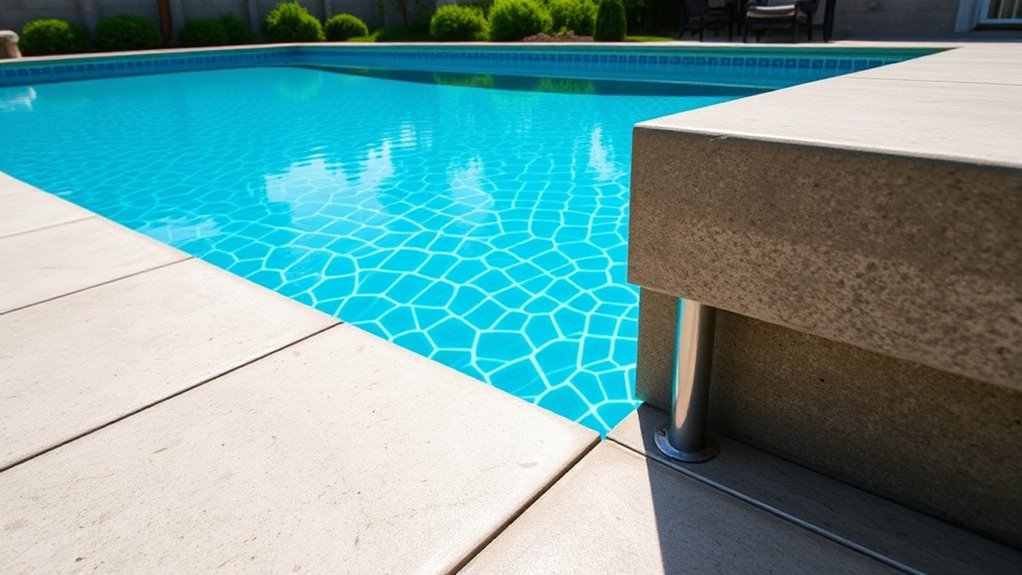
Next, consider the importance of pool decking. It’s not just about aesthetics; it plays a critical role in supporting the pool’s edges and providing a safe, non-slip surface around the water. When selecting pool decking materials, you should prioritize durability and load-bearing capacity. A well-constructed deck will absorb some of the stress from foot traffic and prevent the pool shell from shifting or cracking. Additionally, the decking should be properly integrated with the waterproofing membranes underneath. Waterproofing membranes are essential to protect the underlying structure from water infiltration, which can cause soil erosion, wood rot, or corrosion of metal components. These membranes act as a barrier, ensuring that any water that leaks through the decking or pool shell doesn’t reach the foundation, thereby reducing long-term maintenance issues.
When applying waterproofing membranes, make sure they are compatible with your chosen decking material and are installed correctly to create a seamless, leak-proof layer. This prevents water from seeping into cracks or joints, which could weaken the base or cause mold and structural damage. Your pool’s design should include a detailed plan for both the waterproofing and the deck’s load capacity, especially if you plan to add features like a hot tub, outdoor furniture, or planters on the deck. All these elements add weight and impact the overall load on the structure.
Lastly, don’t forget to consult with a structural engineer or a professional pool installer. They can evaluate your specific site conditions, soil type, and local building codes to recommend the appropriate foundation, decking, and waterproofing solutions. Proper planning and attention to detail in these areas will guarantee your home pool remains safe, durable, and enjoyable for years to come.

CrackStitch 15pk Concrete Crack Repair Kit|DIY Foundation Crack Repair|Basements, Garages, Pools, Floors, Wall & Block|Carbon Fiber/Kevlar Concrete Reinforcement
- Industrial-Strength Crack Repair: Over 3 tons of strength tested
- Multi-Surface Compatibility: Works on concrete, cement, stucco
- Simple 5-Step DIY Process: Easy installation with basic tools
As an affiliate, we earn on qualifying purchases.
As an affiliate, we earn on qualifying purchases.
Frequently Asked Questions
How Does Soil Type Affect Pool Foundation Requirements?
Soil type directly impacts your pool’s foundation requirements because soil stability varies. If your soil is loose or clayey, you’ll need extra foundation reinforcement to prevent shifting or settling. On the other hand, stable sandy or rocky soils might need less reinforcement. You should evaluate your soil type early on, so you can design a foundation that provides the necessary support and ensures your pool stays safe and secure.
Can Existing Home Structures Support a Freestyle or Custom Pool?
You see your backyard, imagining a sprawling custom pool. Most existing home structures can support a freestyle or custom pool with proper pool reinforcement and deck support. You’ll want a structural engineer to evaluate your foundation’s strength and possibly add reinforcements or supports. This guarantees your pool stays secure, and your deck remains stable, creating a safe, enjoyable oasis in your backyard without risking structural damage or safety hazards.
What Are the Signs of Insufficient Floor Load Capacity?
If your pool decking shows signs of sagging or cracking, it’s a clear indicator of insufficient floor load capacity. You might also notice uneven surfaces or shifting tiles around your pool area. Water weight considerations can cause these issues, especially if the structure isn’t designed to support the extra load. Keep an eye on these signs, and consult a professional to prevent potential damage or safety hazards.
How Do Climate Conditions Influence Pool Structural Needs?
Climate conditions are like a weather vane, guiding your pool’s structural needs. Hot, humid climates can cause expansion, affecting pool decking and water chemistry, while freezing temperatures may require extra reinforcement to prevent cracking. You should consider these factors when designing your pool, ensuring proper insulation and drainage. Regularly monitoring water chemistry also helps maintain balance and protect the structure, especially in extreme weather conditions.
Are There Specific Permits Required for Residential Pool Construction?
You’ll likely need local permits for residential pool construction, so check with your city or county regulations first. These permits guarantee your pool meets safety standards and zoning laws. Once approved, prioritize pool safety by installing proper fencing and alarms. Regular maintenance tips, like cleaning filters and checking chemical levels, help keep your pool safe and enjoyable. Always follow local rules and safety guidelines to prevent accidents and ensure smooth construction.
Conclusion
When planning your perfect pool, prioritize proper planning and precise personal precautions. By understanding your floor’s load limits and reinforcing your foundation, you guarantee safety and satisfaction. Take the time to test, tweak, and trust your techniques. A solid surface supports your splashy, sizzling summer days and assures your pool’s permanence. Protect your project, prevent potential problems, and enjoy worry-free water wonderment—because a well-worried, well-constructed pool promises a perfect, pleasurable poolside paradise.