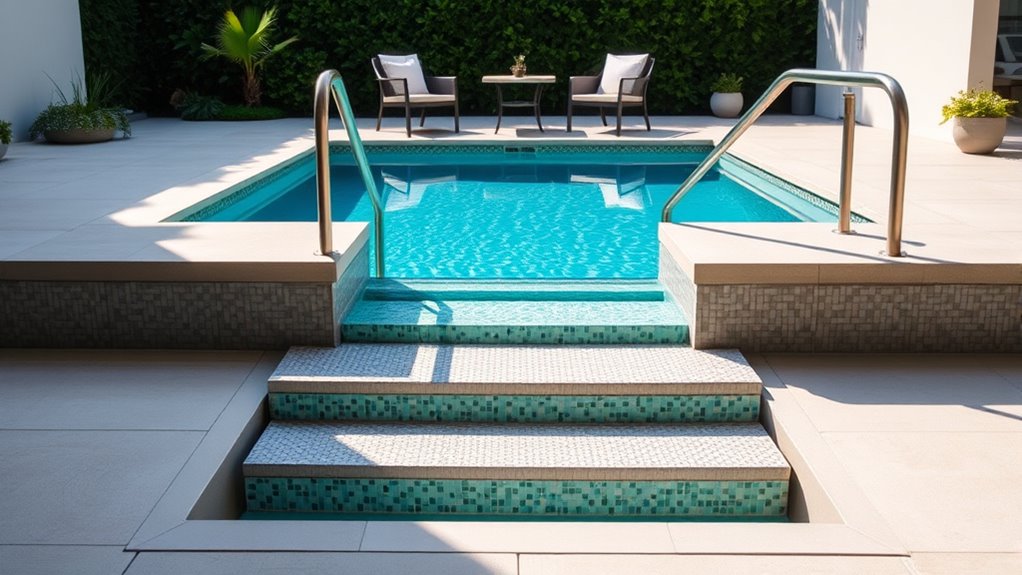

To guarantee your compact pool is accessible, install wide, gentle steps with sturdy handrails and slip-resistant surfaces. Keep pathways clear and unobstructed to allow easy access, accommodating mobility aids like wheelchairs or walkers. Consider adding ramps for added flexibility and convenience. Regularly inspect and maintain safety features like barriers and signage to prevent accidents. If you keep exploring, you’ll discover even more practical tips to make your pool both safe and user-friendly.
Key Takeaways
- Install wide, gentle steps with handrails for easy, secure access.
- Use slip-resistant surfaces around the pool for safety.
- Ensure pathways are unobstructed and wide enough for mobility aids.
- Incorporate ramps and accessible ladders to accommodate all users.
- Install clear safety signage and maintain safety features regularly.
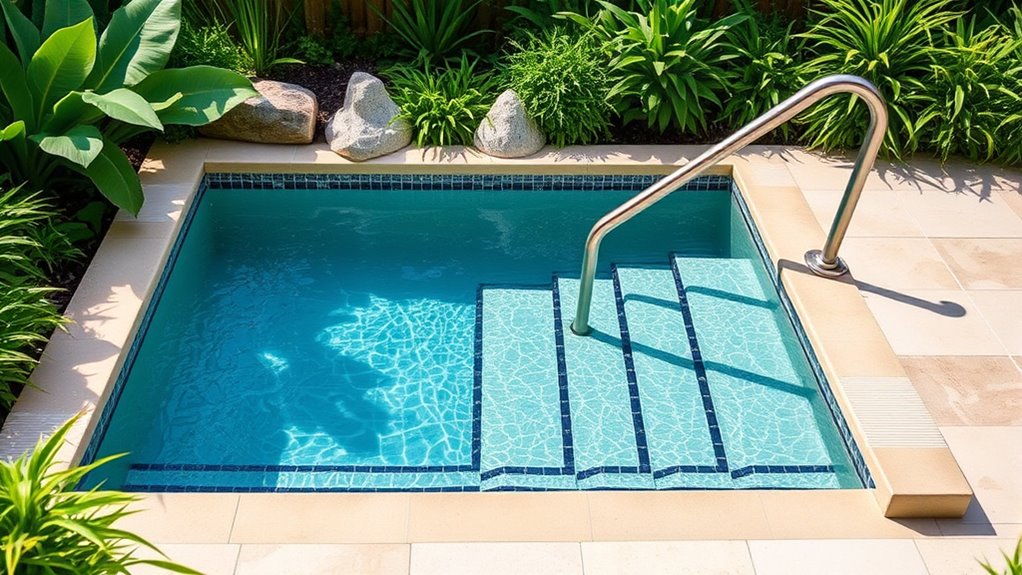
Compact pools offer a convenient way to enjoy swimming in smaller spaces, but ensuring they are accessible for everyone is essential. When designing or installing a compact pool, prioritizing pool safety is vital to prevent accidents and create a secure environment for all users. Proper safety measures include installing non-slip surfaces around the pool area, ensuring the pool’s edges are smooth to prevent cuts, and adding adequate fencing or barriers to restrict access, especially for children or pets. These steps help minimize risks and promote safe use of the pool.
Prioritize safety with non-slip surfaces, smooth edges, and secure barriers for accessible, secure compact pools.
Installation guidelines play a significant role in guaranteeing accessibility. You need to carefully assess the space where you plan to set up your pool, making sure it’s level and stable. Following manufacturer instructions and local regulations guarantees that the pool is installed correctly and safely. When considering steps for your compact pool, choose designs that are easy to use and accessible for everyone, including those with mobility challenges. Wide, gentle steps or even a ladder with handrails can make entering and exiting the pool safer and more comfortable. Ensure the steps are securely anchored and have slip-resistant surfaces to prevent falls.
Accessibility isn’t just about the physical steps; it also involves thoughtful planning of the surrounding area. You should provide clear, unobstructed pathways leading to the pool, with enough space for mobility aids like walkers or wheelchairs if needed. Installing handrails along the steps and around the pool perimeter enhances safety and offers additional support. If space allows, consider adding a ramp instead of or alongside steps, which can greatly improve accessibility for individuals with limited mobility.
Communicating pool safety rules clearly is another key aspect of accessible design. Use visible signage to remind users of safety guidelines, such as no running around the pool, no diving in shallow areas, and supervision requirements for children. Regular maintenance of the pool and its safety features also plays a role in guaranteeing ongoing safety and accessibility. Check that all steps, handrails, and safety barriers are in good condition and repair any damages immediately. Additionally, incorporating sound cues or visual indicators can help alert users to potential hazards and improve overall safety for diverse visitors.
Frequently Asked Questions
Are Compact Pools Suitable for Elderly Users?
Yes, compact pools can be suitable for elderly users if you prioritize elderly safety and guarantee proper mobility access. You should opt for models with low steps, wide entry points, and non-slip surfaces to reduce fall risks. Installing handrails and considering shallow areas also enhance safety. By making these adjustments, you can create an accessible and enjoyable swimming experience tailored to elderly needs.
Can Compact Pools Be Installed Indoors?
Yes, you can install compact pools indoors. They’re designed to fit into smaller spaces, making indoor installation feasible if you have enough space for proper clearance and ventilation. You’ll need to take into account space requirements carefully to ensure safety and accessibility. Make sure your indoor area can support the pool’s weight and moisture, and consult professionals to optimize setup and prevent any damage to your home.
What Safety Features Are Recommended for Compact Pools?
You should prioritize safety by installing proper pool lighting and reliable water filtration. Bright, well-placed pool lights prevent accidents during evening swims, while efficient filtration keeps water clean and safe. Imagine enjoying your compact pool, knowing every corner is illuminated and water quality is maintained. These features create a safer environment, giving you peace of mind and transforming your pool into a relaxing, worry-free oasis for you and your loved ones.
How Long Does It Take to Install a Compact Pool?
Installing a compact pool typically takes about 1 to 3 days, depending on the installation timeline and site conditions. The pool setup process involves preparing the site, assembling the pool components, and filling it with water. If you hire professionals, they usually complete the installation quickly and efficiently, ensuring your pool is ready for use in just a few days. Keep in mind that additional time may be needed for permits or site prep.
Are There Specific Maintenance Requirements for Accessibility?
Yes, there are specific maintenance requirements for accessibility. You should regularly perform pool cleaning to keep the area safe and hygienic, making certain pathways are clear and non-slip surfaces are in good condition. Additionally, maintaining proper chemical balance is essential to prevent hazards and ensure safe access. Regularly check and adjust chemicals, and keep the accessibility features well-maintained for safe, easy entry and exit.
Conclusion
Making your compact pool accessible is like opening a welcoming door to endless summer fun. By adding thoughtful steps, handrails, and clear pathways, you’ll create a safe oasis everyone can enjoy. Think of your pool as a friendly bridge, inviting all to cross into relaxation and joy. With a little planning, you turn a small space into a big splash of accessibility, ensuring everyone can leap in and make lasting memories.