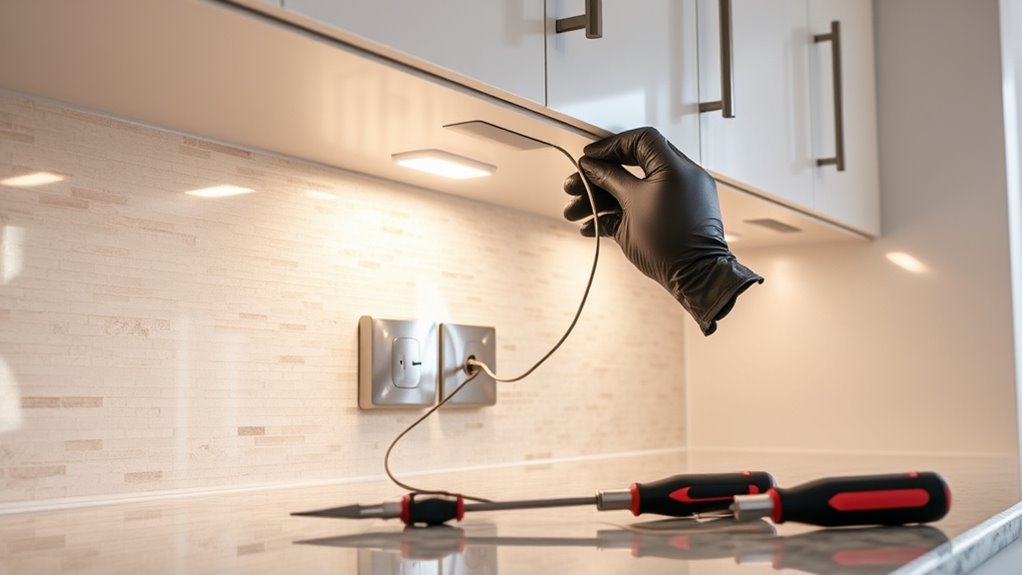

To install dimmable under-cabinet lights safely, turn off the power at the breaker and use a voltage tester to confirm the circuit is dead. Use high-quality, properly gauged wire and confirm all wiring connections are secure and insulated with wire nuts. Verify fixture compatibility with your dimmer switch and electrical system. Always follow manufacturer instructions, double-check connections, and test the system before restoring power. Continuing will give you detailed steps to ensure a secure, long-lasting setup.
Key Takeaways
- Turn off power at the circuit breaker and use a voltage tester to confirm the circuit is dead before wiring.
- Use high-quality, appropriately gauged insulated wiring compatible with the fixture and switch specifications.
- Follow manufacturer instructions carefully to ensure secure, insulated connections and proper fixture wiring.
- Verify dimmer switch compatibility with your under-cabinet lights to prevent flickering or buzzing issues.
- After installation, restore power and test the lights at various dimming levels to confirm proper, safe operation.
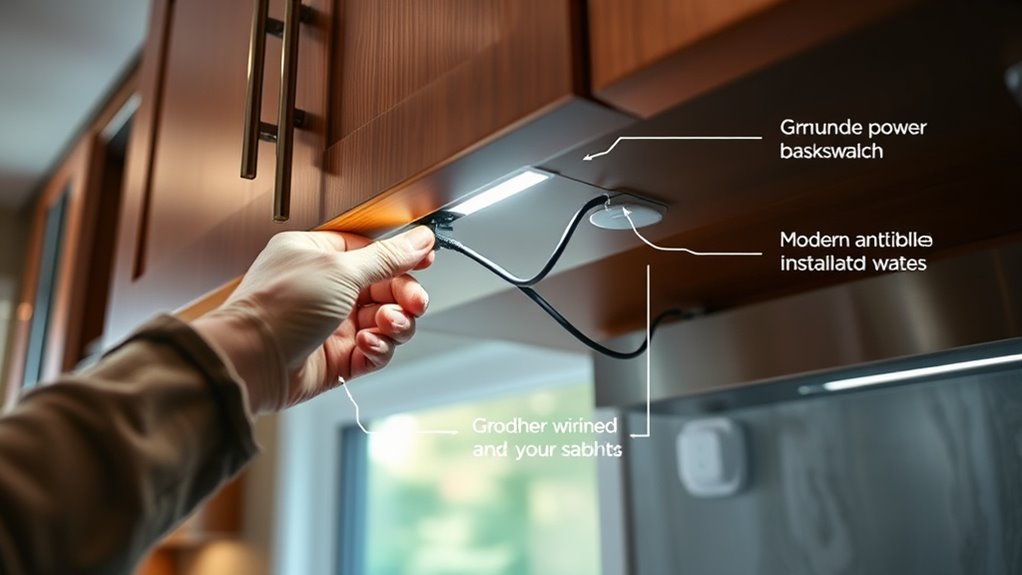
Installing dimmable under-cabinet lights can enhance your kitchen’s ambiance and functionality, but it’s vital to prioritize safety throughout the process. One of the most critical aspects of a safe installation is paying close attention to wiring safety. Before you begin, make sure you turn off the power at your circuit breaker to prevent any accidental shocks. Use a voltage tester to double-check that the circuit is dead before handling any wiring. When working with electrical wires, avoid rushing; follow proper wiring procedures, and make certain all connections are secure and insulated with wire nuts or connectors. Poor wiring safety can lead to shorts, fires, or electrical shock, so take your time and double-check each connection before proceeding.
Another key consideration is fixture compatibility. Not all under-cabinet lights are created equal, and selecting the right fixtures is vital for a safe and effective installation. Check the specifications of your dimmable lights to confirm they’re compatible with your existing electrical system and dimmer switch. Dimmable fixtures require compatible dimmer switches; using incompatible dimmers can cause flickering, buzzing, or damage to the lights. Always match the fixture’s voltage and wattage ratings with your power source and dimmer switch. If you’re unsure, consult the manufacturer’s instructions or seek advice from a professional. Ensuring fixture compatibility helps prevent electrical issues and guarantees that your lights will dim smoothly and safely.
When wiring your under-cabinet lights, pay attention to the type of wiring you’re using. For most residential installations, 14/2 or 12/2 gauge wire is standard, but verify the requirements of your fixtures. Use high-quality, insulated wire to minimize risk. If your installation involves connecting to an existing circuit, check that the circuit can handle the additional load. Overloading circuits can cause breakers to trip or, worse, create fire hazards. If you’re uncertain about the electrical capacity or how to connect the wires properly, it’s wise to consult an electrician. Proper wiring safety and fixture compatibility aren’t just about following safety rules—they guarantee your under-cabinet lighting functions reliably and looks great for years to come.
Finally, take your time during installation. Rushing can lead to loose connections or accidental damage. Use appropriate tools, follow the manufacturer’s instructions, and double-check your work at every step. When finished, restore power and test your lights at various dimming levels to confirm everything works correctly. If you notice any flickering or irregular behavior, switch off the power and revisit your wiring and fixture connections. Prioritizing wiring safety and fixture compatibility will make your under-cabinet lighting upgrade both safe and satisfying, giving you beautiful, functional light in your kitchen without unnecessary risks.

AQUASTRONG Inverter Swimming Pool Heat Pump,Pool Heater for Above Ground and Inground Pool Heating and Cooling Pool Heater, Smart WiFi Control Pools Up to, 9000 Gallons
Extend Your Swim Season: The pool heat pump features a dual-mode heating and cooling system that maintains optimal...
As an affiliate, we earn on qualifying purchases.
Frequently Asked Questions
Can I Install Dimmable Under-Cabinet Lights Without Professional Help?
Yes, you can do a DIY installation of dimmable under-cabinet lights, but you must prioritize electrical safety. Make sure you have basic electrical knowledge, turn off the power before starting, and follow the manufacturer’s instructions carefully. Use the right tools and compatible wiring. If you’re unsure about any step, it’s safest to consult a professional. Proper precautions guarantee your installation is safe and effective.
What Are the Energy Consumption Differences Between LED and Halogen Options?
You’ll notice significant energy savings with LED bulbs compared to halogen options. LEDs use about 75% less energy, helping you cut electricity costs. Plus, they have a much longer bulb lifespan—often lasting 25,000 hours or more—reducing replacement frequency. Halogens consume more power and burn out faster, so switching to LEDs maximizes energy efficiency and saves you money over time.
How Do I Troubleshoot Flickering or Inconsistent Dimming?
Did you know that over 60% of flickering issues stem from incompatible bulbs? To troubleshoot, first check your bulb compatibility—ensure your dimmer and bulbs work together. Next, inspect wiring connections for loose or faulty wiring, which often causes inconsistent dimming. Tighten any loose connections and replace incompatible bulbs with ones recommended by the manufacturer. These steps should help you achieve smooth, flicker-free dimming.
Are There Specific Safety Codes for Under-Cabinet Lighting Installations?
Yes, there are specific safety codes for under-cabinet lighting installations. You need to follow local building codes and make certain your electrical wiring complies with the National Electrical Code (NEC). These codes specify proper wiring methods, circuit requirements, and safety measures to prevent hazards. Always check with your local authorities before installation, and consider hiring a licensed electrician to ensure your setup meets all safety standards.
Can I Install Under-Cabinet Lights Over a Backsplash or Tile?
Yes, you can install under-cabinet lights over a backsplash or tile, but you need to take into account backsplash compatibility and tile installation considerations. Make sure the lights are rated for use in wet or damp environments if your backsplash gets splashed. Use appropriate mounting hardware, and avoid drilling into delicate tiles that might crack. Always follow manufacturer instructions and local electrical codes to ensure a safe and secure installation.

SURAIELEC WiFi Pool Timer, Outdoor Indoor Smart Switch, 40 AMP, 2HP, 120, 240, 277 VAC, Heavy Duty Pool Controller Light Timer Box for Pool Pump, Water Heater, Spa, Powerful Electrical Appliances
Heavy Duty 40 AMP Pool Timer Switch: 1HP, 120 VAC; 2HP, 240VAC; Control high-power devices like pool filter...
As an affiliate, we earn on qualifying purchases.
Conclusion
By following these safety tips, you’ll light up your space without risking a spark. Think of your installation as a dance—each step needs to be steady and confident. Always prioritize safety, turn off power before working, and double-check connections. When you do, your new dimmable under-cabinet lights will shine brightly and safely, transforming your kitchen into a warm, inviting space. With care and attention, your project will flow smoothly, like a well-choreographed routine.
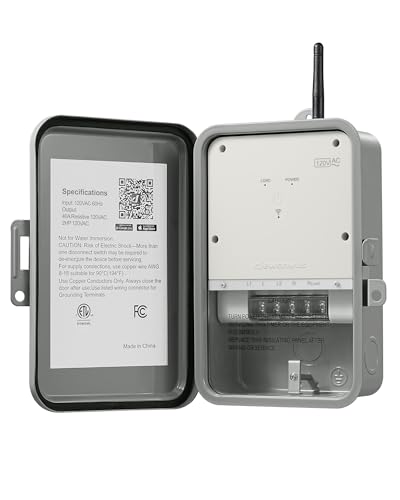
DEWENWILS Pool Pump Timer, Outdoor Smart WiFi Box, Heavy Duty 40A 120VAC 2HP Wireless Controller Timer for Pool, Water Heater, Compatible with Smart Phone, Alexa, Google Assistant, ETL Listed
[Versatile Timer Function] This WiFi pool pump timer can turn your devices on/off automatically at scheduled times with...
As an affiliate, we earn on qualifying purchases.
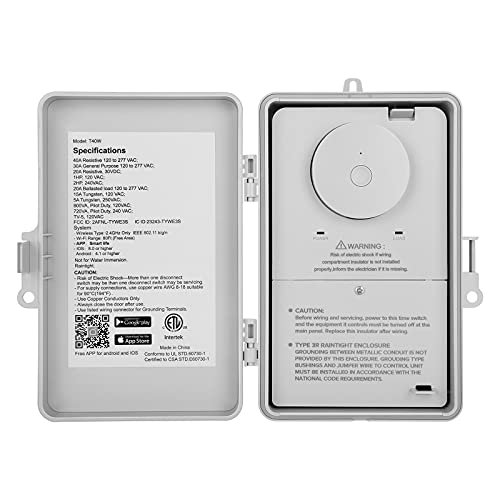
SURAIELEC WiFi Pool Timer, 40 AMP, 1HP 120V, 2HP 240V, Outdoor Indoor Smart Switch, Heavy Duty Pool Controller Light Timer Box for Pump, Water Heater, Spa, Powerful Electrical Appliances
Heavy Duty 40 AMP Pool Timer Switch: 1HP, 120 VAC; 2HP, 240VAC; Control high-power devices like pool filter...
As an affiliate, we earn on qualifying purchases.