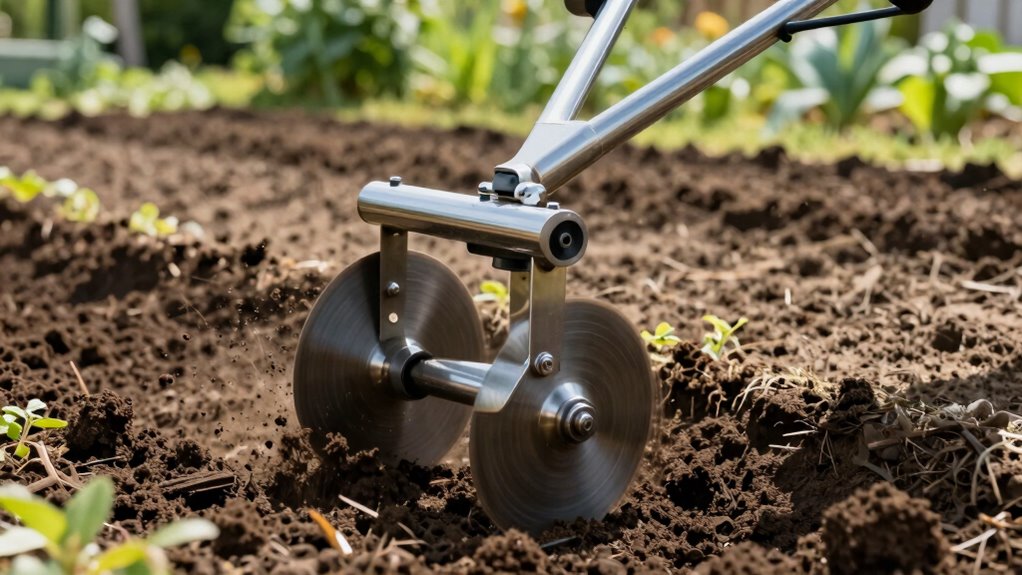

Garden tillers help you prepare a new bed quickly by breaking up compacted and heavy soil, making it easier to work with. They mix organic matter and compost evenly into the ground, improving soil structure and aeration. Tilling also disrupts weed roots and buries seeds, reducing weed growth later. This creates a loose, nutrient-rich seedbed for healthy plants. If you want to learn more about maximizing your garden’s potential, keep exploring this topic.

Get garden gear delivered free with Prime
- Fast, free delivery on millions of items
- Prime Video, Amazon Music and more included
- Member-only deals all year
Key Takeaways
- Breaks up compacted soil for easier planting and improved root growth.
- Mixes organic matter and compost evenly into the soil for nutrient-rich beds.
- Aerates the soil to enhance air, water, and nutrient penetration.
- Disrupts weed roots and buries weed seeds to prevent future growth.
- Speeds up bed preparation, creating a loose, even seedbed quickly.
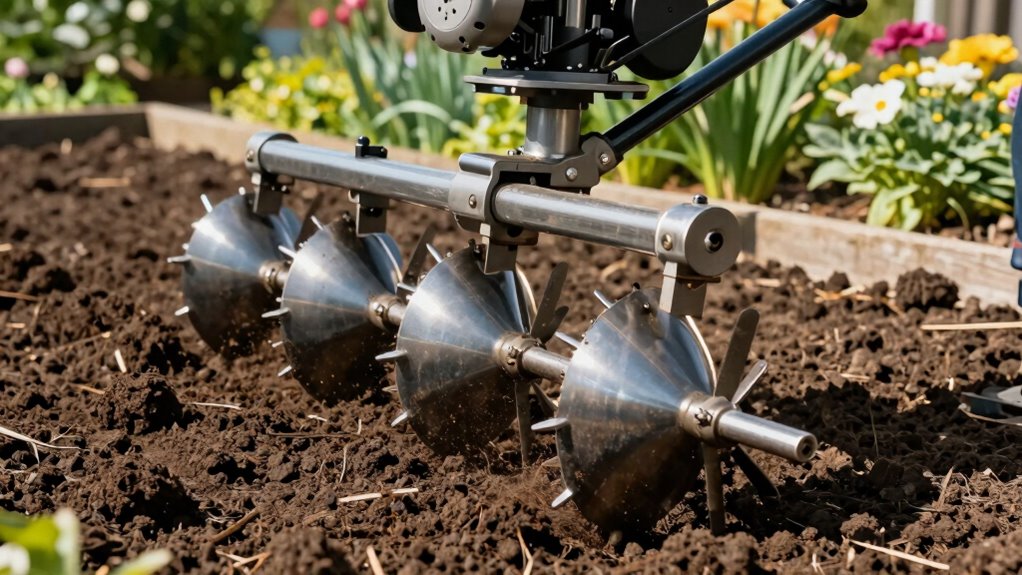
Are you tired of struggling with hard, compacted soil when preparing your garden beds? If so, a garden tiller can be your best friend. These machines make the process of turning and loosening soil much easier, saving you time and effort. When you use a tiller, you break up the dense soil, promoting better soil aeration. This improved aeration allows air, water, and nutrients to penetrate deeper into the ground, creating a healthier environment for your plants to thrive. It also helps prevent soil compaction over time, which can hinder root growth and plant development.
A garden tiller breaks up dense soil, enhances aeration, and prevents compaction for healthier plant growth.
A garden tiller helps you prepare the bed more thoroughly than manual tools alone. It efficiently lifts and fractures the soil, eliminating the need for extensive digging. This means you can transform even the most stubborn, clay-heavy ground into a soft, workable surface. As you operate the tiller, it mixes organic matter and compost into the soil, enriching its nutrient content. This blending process ensures your garden bed is primed for planting, giving your seedlings the best start possible. Proper soil management is essential for maintaining healthy and productive garden beds.
In addition to improving soil structure, tilling plays a key role in weed control. When you break up the soil, you disrupt the root systems of many weeds, making it easier to remove them before they establish themselves. Tilling also buries weed seeds beneath the soil surface, preventing them from germinating and sprouting. Regular tilling in the early stages of bed preparation can substantially reduce weed growth throughout the growing season. Plus, a well-tilled bed is less hospitable to weed establishment because the disturbed soil makes it harder for weeds to find stable footing and nutrients.
Using a garden tiller is particularly advantageous when creating new beds, as it allows you to work efficiently over large areas. You can quickly turn over the soil, incorporate amendments, and ensure an even, loose bed ready for planting. This not only speeds up the process but also results in a more uniform seedbed, which is vital for consistent germination and growth. Furthermore, tilling helps loosen compacted layers that might have been caused by previous use or natural soil formation, giving your plants the best chance to develop strong roots from the start.
Additionally, choosing the right soil aeration techniques can enhance the benefits of tilling and maintain healthy soil structure over time.
electric garden tiller for soil preparation
As an affiliate, we earn on qualifying purchases.
As an affiliate, we earn on qualifying purchases.
Frequently Asked Questions
What Is the Best Time of Year to Use a Garden Tiller?
You should use a garden tiller in early spring or fall, when soil is moist but not waterlogged. Tilling during these times improves soil aeration, helping roots grow stronger, and can disrupt pests and their eggs, aiding pest control. Avoid tilling in extreme heat or cold, as it can harm plants and soil structure. Timing guarantees your garden bed is prepared for healthy planting and pest management.
How Deep Should a Garden Bed Be Tilled?
You should till your garden bed to a depth of about 6 to 8 inches. Notably, tilling this deep improves soil aeration, which boosts plant roots’ oxygen intake. It also helps with weed control by disrupting weed seeds in the soil. Going too deep can damage beneficial soil organisms, so sticking to 6-8 inches ensures healthy soil and better plant growth.
Can a Garden Tiller Be Used on Rocky Soil?
Yes, a garden tiller can be used on rocky soil, but you need to be cautious. Rocky soil can damage the tines and strain the motor, so regular tiller maintenance is essential to keep it functioning properly. Use a tiller with sturdy, hardened tines designed for rocky terrains, and work slowly to avoid damaging your equipment. Clearing rocks periodically as you till helps prevent unnecessary wear and tear.
Are Gas or Electric Tillers More Effective?
You’ll find gas tillers more effective for tackling tough, large-scale jobs, thanks to their robust power and longer run times. They often have better fuel efficiency for extended use, but they can be noisier and heavier. Electric tillers, on the other hand, are quieter and easier to maneuver, making them ideal for smaller beds. Consider your project size and environment to choose the best option for your garden needs.
How Often Should I Till My Garden Bed?
You should till your garden bed once or twice a season, typically in early spring and after harvest. This helps improve soil aeration, promoting healthier root growth, and can disrupt pest habitats, aiding pest control. Tilling too often might damage soil structure, so avoid overdoing it. Focus on tilling just enough to loosen the soil and incorporate organic matter, which boosts plant health and yields.
Conclusion
As you stand in your freshly tilled garden bed, it’s incredible to realize how that trusty tiller made everything easier—almost like a coincidence, but really just your smart choice. With each turn of the blades, you’ve set the stage for a bountiful season ahead. Sometimes, the smallest tools create the biggest magic, turning effort into joy. Now, all that’s left is to nurture your new bed and watch your garden flourish—proof that good planning truly pays off.
Fall yard work Picks
leaf blowers
As an affiliate, we earn on qualifying purchases.