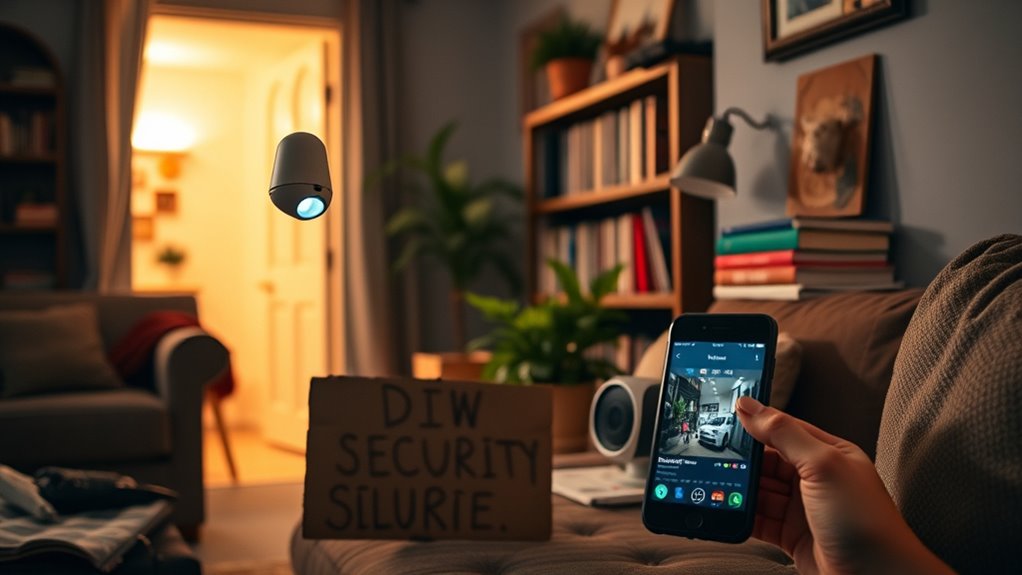

To secure your home on a budget, start with affordable security cameras connected to your smartphone for remote monitoring. Use DIY window alarms and door sensors that beep when triggered, and place visible stickers or signs to deter intruders. Fine-tune motion sensors to reduce false alarms and regularly check your equipment’s batteries and feeds. Layer these cost-effective tricks for a stronger defense—keep going to discover even more simple ways to protect your home without overspending.
Key Takeaways
- Install affordable wireless cameras at entry points and monitor remotely via smartphone apps.
- Adjust sensor sensitivity and use pet-friendly detectors to reduce false alarms cost-effectively.
- Use DIY window alarms and door sensors that beep when triggered as inexpensive deterrents.
- Place security signs or stickers visibly to deter intruders without extra expense.
- Regularly check and maintain existing equipment, like batteries and camera feeds, to ensure reliable security on a budget.
Home security doesn’t have to be expensive or complicated; with a few simple DIY tricks, you can effectively protect your property. One of the most practical upgrades you can make is setting up remote monitoring. Nowadays, many affordable security cameras connect directly to your smartphone, allowing you to keep an eye on your home from anywhere. Install these cameras at key entry points like doors and windows, and use their apps to receive instant alerts when motion is detected. This way, you can quickly verify if an alarm trigger is a real threat or just a false alarm caused by pets, passing cars, or tree branches. By monitoring remotely, you avoid unnecessary dispatches of emergency services, saving money and reducing stress.
To minimize false alarms, it’s vital to fine-tune your sensors and alerts. For example, if your motion detectors are overly sensitive, they might go off every time the wind blows or a stray animal walks by. Adjust the sensitivity settings on your sensors to match your environment, and consider installing pet-friendly motion detectors if you have pets. These are designed to ignore small animals, reducing the chances of false alarms. Also, clearly label your alarm zones and inform family members or roommates about the system’s operation, so they don’t accidentally trigger alarms during everyday activities. False alarms not only lead to unnecessary panic but can also result in fines from local authorities if they happen too often, so prevention is key. Additionally, using high-quality projectors with reliable components can enhance your home security setup by providing clear video feeds and consistent performance.
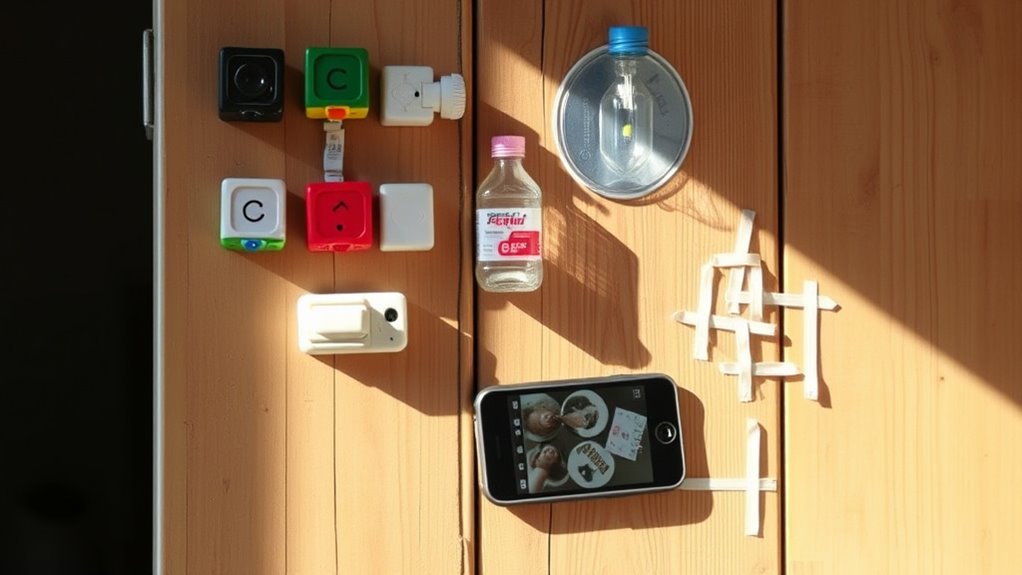
Another smart DIY trick is using a combination of visible and hidden deterrents. For example, installing DIY window alarms or door sensors that beep loudly when triggered can alert you immediately of an intrusion. Placing security signs or stickers in visible areas can also act as a deterrent to potential intruders, making them think twice before attempting to break in. Combining these physical alerts with remote monitoring creates a layered defense that’s both cost-effective and easy to manage on a budget. Remember to check your system regularly—ensure batteries are charged, sensors are clean, and camera feeds are functioning properly. Regular maintenance helps prevent false alarms and guarantees your remote monitoring setup remains dependable.

Camuitry 1080P HD WiFi Hidden Spy Camera – Wireless Security Camera with Night Vision & Motion Detection, App-Controlled, for Home Baby Pet Monitoring (Smartphone Compatible)
CRYSTAL CLEAR 1080P HD VIDEO – Professional-grade recording captures every detail with stunning clarity, ensuring you never miss…
As an affiliate, we earn on qualifying purchases.
As an affiliate, we earn on qualifying purchases.
Frequently Asked Questions
How Effective Are DIY Alarms Compared to Professional Systems?
DIY alarms can be effective, but their alarm system reliability fluctuates. You might find them sufficient for basic security, yet they often lack advanced features of professional systems. False alarm prevention can be a challenge, especially if sensors aren’t properly installed or maintained. While DIY options are budget-friendly, you should consider your home’s unique needs and potential limitations to guarantee adequate protection and minimize false alarms.
Can DIY Alarms Be Integrated With Smart Home Devices?
You can definitely integrate DIY alarms with your smart home devices, thanks to wireless compatibility. Many DIY systems are designed for easy device customization, letting you connect sensors, cameras, and alarms seamlessly. This flexibility means you can tailor your security setup to fit your needs, control everything via your smartphone, and enhance your home’s safety without expensive professional installs. Just guarantee your DIY alarm system supports the devices you want to add.
What Are Common Mistakes to Avoid When Installing DIY Alarms?
Installing a DIY alarm is like walking a tightrope—you need balance. Avoid common mistakes like ignoring false alarms, which waste your time and resources, or overlooking power failure issues, leaving your system vulnerable. Make certain sensors are correctly placed, and test regularly. Don’t forget to back up your system or disconnect it during power outages. By staying vigilant, you keep your home protected without costly errors.
How Often Should DIY Home Alarm Systems Be Maintained?
You should check your DIY home alarm system at least once a month to make certain it’s functioning properly. Regular maintenance includes alarm system calibration to keep sensors accurate and following a battery replacement schedule to prevent false alarms or system failure. Replace batteries every six months or as recommended by the manufacturer. Routine checks help catch issues early, keeping your system reliable and your home secure.
Are DIY Alarms Legally Permitted in All Neighborhoods?
Like a bird traversing through trees, you need to understand local regulations before installing a DIY alarm. Legally, DIY alarms are usually permitted, but neighborhood restrictions can vary. You should check with your local authorities or homeowners’ association to make certain compliance. Some communities have specific rules about alarm noise or equipment placement. Staying informed helps you avoid fines and guarantees your security setup is both effective and legal.

GE Personal Security Window and Door Alarm, 5 Pack, DIY Protection, Burglar Alert, Wireless Chime/Alarm, Easy Installation, Home Security, Ideal for Home, Garage, Apartment and More,White, 45987
Safe and Secure – Ward off would-be intruders with a 120-decibel alarm triggered by a high-quality magnetic sensor,…
As an affiliate, we earn on qualifying purchases.
As an affiliate, we earn on qualifying purchases.
Conclusion
Even with a tight budget, you can create a cozy, secure haven by trying these DIY alarm tricks. Think of it as adding a little extra charm and peace of mind to your home, without the hefty price tag. With a few simple tweaks, you’ll gently strengthen your defenses and keep unwanted guests at bay. Remember, sometimes the simplest touches make the biggest difference, turning your home into a welcoming and safe retreat you can truly enjoy.

CPVAN 125dB Loud Motion Sensor Alarm with 328ft Remote Control (40ft PIR Detector, Batteries), Indoor Wireless Infrared Security Motion Detector with Siren for Home Garage Van (CP2 Pro, Black)
Super Loud and Easy to Use👉 CPVAN Motion Sensor Alarm is designed with 125dB alert device and simple…
As an affiliate, we earn on qualifying purchases.
As an affiliate, we earn on qualifying purchases.
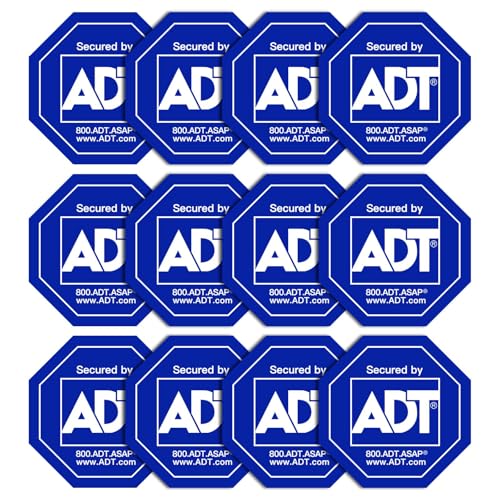
12 Pack ADT Security Stickers, ADT Safety Signs Waterproof Decals for Home Windows and Doors HD Printed
PACK CONTENTS: Set of 12 high-quality ADT security stickers designed for home windows and doors to enhance visual…
As an affiliate, we earn on qualifying purchases.
As an affiliate, we earn on qualifying purchases.