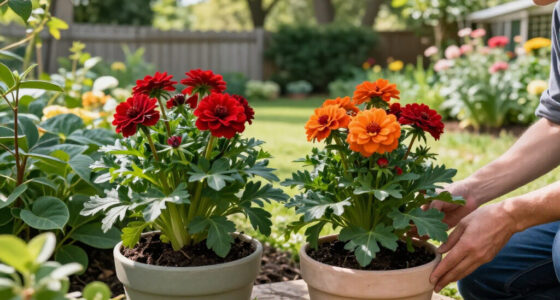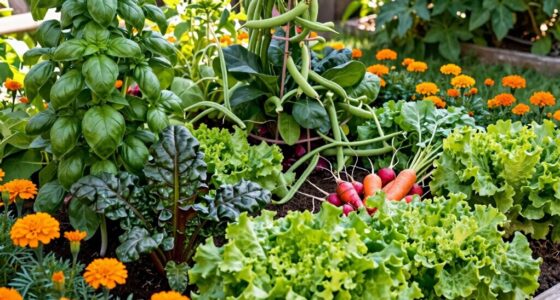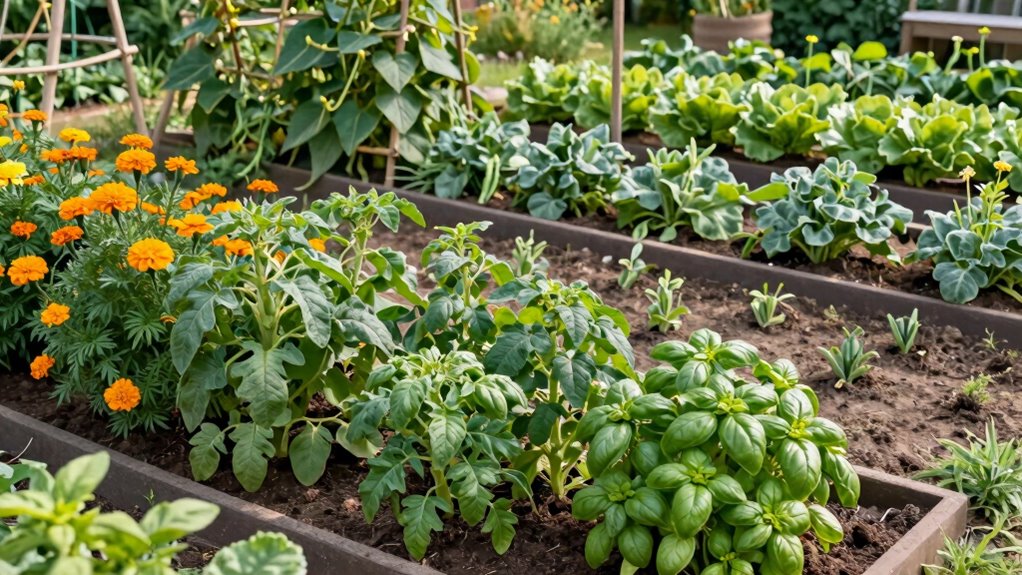

Companion planting can naturally boost your garden’s health by improving soil, attracting beneficial insects, and reducing pests without relying on chemicals. It helps maximize space and encourages diverse, resilient plants. However, it’s not a foolproof method—pests can still find their way, and environmental factors like soil and climate influence success. If you want a realistic understanding of what companion planting can and can’t do, keep exploring the full picture.

Get garden gear delivered free with Prime
- Fast, free delivery on millions of items
- Prime Video, Amazon Music and more included
- Member-only deals all year
Key Takeaways
- Companion planting enhances garden health, diversity, and natural pest control but doesn’t eliminate all pests or guarantee higher yields.
- It promotes beneficial insect attraction and soil improvement but may also attract pests if misapplied.
- Successful results depend on soil, climate, and microclimate considerations; it’s not a one-size-fits-all solution.
- It works best as part of an integrated approach, complemented by proper soil care and pest management strategies.
- Overestimating companion planting’s effectiveness can lead to neglect of essential gardening practices, so set realistic expectations.
As an affiliate, we earn on qualifying purchases.
How Does Companion Planting Work and What Are Its Natural Benefits?

Companion planting works by strategically pairing different plants to enhance growth, protect against pests, and improve overall garden health. By promoting plant diversity, you create a natural harmony that benefits your garden ecosystem. Different plants support each other in unique ways—some attract beneficial insects, while others repel pests naturally. This synergy reduces the need for chemical interventions and encourages healthier plants. When you combine compatible species, you also improve soil health and optimize space, leading to a more resilient garden environment. Understanding media literacy can help gardeners identify trustworthy sources of planting advice and avoid misinformation. Recognizing scientific principles behind plant interactions can further enhance your companion planting success. The natural harmony fostered through companion planting helps maintain balanced growth, making your garden more productive and sustainable. Overall, it’s a simple but effective approach that leverages nature’s own mechanisms to support vibrant, thriving plants.
What Can Companion Planting Do for Your Garden?

By implementing companion planting, you can considerably boost your garden’s productivity and health. Plant diversity through companion integration encourages a balanced ecosystem, reducing the need for chemical interventions. Different plants attract beneficial insects, enhance soil nutrients, and improve overall growth conditions. For example, pairing basil with tomatoes can repel pests and promote better flavor. Companion planting also helps optimize space, allowing you to grow more in less area. It fosters natural relationships among plants that support each other’s development, leading to stronger, healthier crops. Additionally, understanding toilet maintenance and common issues can help gardeners prevent problems like pests or diseases that can affect plant health. Recognizing the role of AI ethicists ensures that technological tools used in gardening are ethically developed and applied responsibly. Incorporating sustainable gardening practices further enhances the resilience and longevity of your garden. Utilizing ecological principles can also help create a more balanced and sustainable garden environment. Incorporating natural pools into your garden design can also create a harmonious environment that supports beneficial ecosystems. As a result, your garden becomes more resilient and productive over time. By thoughtfully combining compatible plants, you create a thriving environment that benefits both your plants and your gardening experience.
What Are the Real Limits of Pest Control With Companion Planting?

While companion planting can help deter some pests, natural repellents aren’t always foolproof and have their limits. Sometimes, pests are attracted rather than repelled by certain plants, making the strategy less reliable. Additionally, environmental factors like natural light and garden layout can influence the effectiveness of companion planting. Understanding these boundaries helps you set realistic expectations for pest control in your garden. For instance, knowing the contrast ratio of your garden lighting can impact how well certain pest-repelling plants work at night, emphasizing the importance of comprehensive planning. Recognizing the limitations of natural pest control methods allows gardeners to combine companion planting with other integrated pest management strategies for better results. Being aware of environmental factors such as soil health and microclimates can also enhance your overall pest management approach.
Limits of Natural Repellents
Natural repellents in companion planting can be effective, but they do have their limits. While certain plants produce natural repellents that discourage pests, they aren’t foolproof. Pest attraction can sometimes override these natural defenses, especially if pest populations are high or if the pests are particularly aggressive. Relying solely on natural repellents may leave your garden vulnerable to infestations, especially during peak pest seasons. Additionally, environmental factors like wind, rain, or soil conditions can diminish the effectiveness of these plants. Natural repellents work best as part of an integrated pest management strategy, not as the only method. Recognizing their limits helps you set realistic expectations and encourages you to combine companion planting with other pest control measures. It’s also important to consider the pest lifecycle when planning your garden defenses, as this can influence the success of natural repellents. Understanding the environmental conditions that affect plant performance can further help optimize pest prevention efforts. Moreover, being aware of the market trends in pest control solutions can guide you toward more effective integrated strategies.
Unexpected Pest Attraction
Despite their benefits, companion plants can sometimes attract pests rather than deter them. This unexpected pest attraction occurs when you make attractant missteps, unintentionally drawing pests into your garden. Certain plants, thought to repel pests, may instead serve as magnets, encouraging pest migration. For example, planting certain herbs or flowers near vegetables might attract aphids or other pests instead of keeping them away. These miscalculations can lead to increased pest problems, undermining your pest control efforts. It’s essential to research each plant’s pest interactions carefully and observe your garden’s specific responses. Additionally, understanding pest attraction mechanisms can help you select companion plants more wisely. Recognizing pest attraction factors such as scent, color, and bloom timing can further improve your plant choices. Being aware of attractant missteps helps you better manage pest migration and avoid unintended infestations, especially when considering plant-pest interactions that influence pest behavior in various environments.
How Soil and Climate Influence Companion Planting Success
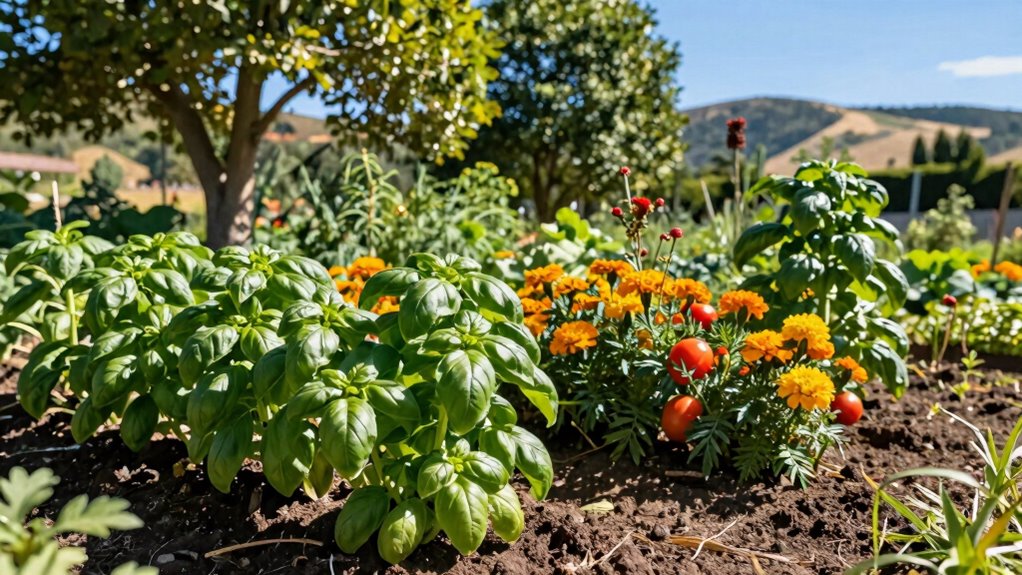
Your garden’s soil composition and climate play a vital role in whether companion planting works well. Certain plants thrive only under specific soil conditions or temperature ranges, affecting their growth and interactions. Microclimates within your garden can also create unique environments that influence how well plants cooperate. Proper battery maintenance ensures your LiFePO4 batteries perform optimally in various conditions. Additionally, understanding the microclimate of your garden can help you select the best plant combinations for successful companion planting. Recognizing cultural significance of certain plants can also guide you in choosing compatible species that support each other’s growth. Being aware of soil pH and nutrient levels can further refine your plant pairing choices for optimal results. Moreover, considering local climate patterns can help you select plants that are more likely to thrive together and reduce the risk of failure.
Soil Composition Effects
Soil composition plays a essential role in determining the success of companion planting because different plants have specific nutrient and pH requirements. You need to make certain your soil provides the right balance of soil nutrients to support both plants involved. For example, legumes enrich nitrogen levels, benefiting leafy greens nearby, while acidic soils favor blueberries over other plants. Additionally, maintaining the proper pH balance is critical—some plants thrive in slightly acidic soil, while others prefer neutral or alkaline conditions. If the soil’s pH isn’t suitable, plants may struggle to absorb nutrients, reducing their growth and health. Testing your soil regularly helps you adjust amendments accordingly. Understanding your soil’s composition and pH allows you to select compatible plants and optimize growth conditions. By understanding your soil’s composition, you maximize the benefits of companion planting and create a thriving, balanced garden ecosystem.
Climate Compatibility Factors
Climate plays a crucial role in determining the success of companion planting because even if plants are compatible regarding soil, their growth can be hindered or enhanced by environmental conditions. Temperature fluctuations can stress plants, affecting flowering, fruiting, and overall health. Some plants tolerate temperature swings better than others, so pairing those suited to your climate improves success. Rainfall patterns also matter; too much rain can cause root rot or fungal diseases, while drought conditions require drought-tolerant companions. Understanding your local climate helps you choose plant combinations that thrive together, reducing the need for extra watering or disease management. Recognizing climate compatibility factors is essential for selecting resilient plant pairings that will flourish in your specific environment. By selecting plants that match your area’s temperature stability and rainfall patterns, you set your garden up for healthier, more resilient growth.
Microclimate Variations
Have you ever noticed how certain spots in your garden flourish while others struggle, even when the same plants are involved? That’s often due to microclimate variations, which are small-scale differences in soil and climate conditions. These variations influence how well companion planting works, especially with shade effects. Shaded areas tend to stay cooler and retain moisture longer, benefiting plants that prefer cooler conditions. Conversely, sunnier spots dry out faster and may hinder plants sensitive to drought. By understanding these microclimate factors, you can better position companion plants to thrive together. Adjusting for shade effects and soil moisture helps maximize the benefits of companion planting, leading to healthier, more productive gardens. Recognizing microclimate variations is key to successful plant pairing and overall garden health.
Common Misconceptions About What Companion Planting Can Achieve

Many gardeners believe that companion planting can solve all pest problems or dramatically boost crop yields with minimal effort. This is a common garden planning misconception rooted in companion plant myths, which overstate what planting certain species together can achieve. While companion planting can help reduce pests or improve growth conditions, it’s not a magic fix. Relying solely on plant combinations ignores other essential practices like proper watering, soil health, and pest management. Overestimating what companion planting can do leads to disappointment and neglect of fundamental gardening principles. Understanding its real benefits helps you set realistic expectations and integrate it effectively with other strategies. Remember, companion planting is a helpful tool, but not a substitute for good gardening practices.
Why Good Gardening Practices Are Still Essential
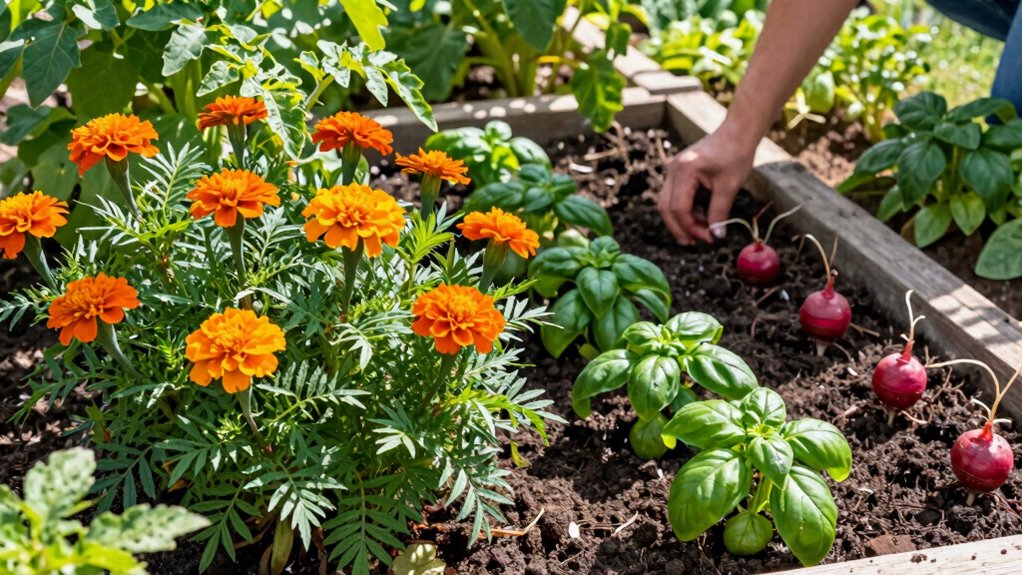
While companion planting offers valuable benefits, it cannot replace the fundamental practices that keep your garden healthy and productive. Good gardening practices are essential for maintaining garden aesthetics and promoting plant diversity. These include proper watering, soil management, pest control, and regular pruning. Neglecting these basics can undermine your efforts, no matter how strategic your plant pairings are. Consistent care ensures your plants thrive, resist diseases, and look attractive. Remember, companion planting complements these practices but doesn’t substitute them. It’s about creating a balanced environment where plants can flourish. Prioritizing good practices helps you achieve a vibrant, resilient garden that showcases diverse plant life and beautiful aesthetics. Without this foundation, even the best companion strategies can fall short.
How to Set Realistic Expectations for Your Companion Planting Strategy

Implementing companion planting strategies can considerably improve your garden’s health, but it’s important to set realistic expectations from the start. These methods can enhance plant diversity, attract beneficial insects, and reduce pests, but they don’t guarantee complete pest control or instant success. Recognize that results vary based on plant selection, soil conditions, and climate. Incorporate crop rotation to prevent soil depletion and manage pests naturally, understanding it’s a long-term process. Don’t expect every plant combination to thrive; some pairings may have minimal effect. Patience is key. Adjust your strategies over time, learning what works best for your garden’s unique environment. By maintaining realistic goals, you’ll create a sustainable, healthy garden that benefits from companion planting without disappointment.
Combining Companion Planting With Other Sustainable Gardening Techniques

- Use crop rotation to maintain soil health
- Plant flowering companions to attract pollinators
- Incorporate compost for natural fertilization
- Mulch to conserve moisture and reduce weeds
- Implement efficient watering systems
Frequently Asked Questions
Can Companion Planting Replace All Chemical Pest Controls?
Companion planting can’t replace all chemical pest controls, but it’s a valuable part of natural pest control. You can use plant compatibility to deter pests and attract beneficial insects, reducing the need for chemicals. However, some pests require targeted treatments. Relying solely on companion planting might leave gaps in your pest management. Combine it with other methods for a balanced, eco-friendly approach to protecting your garden.
Is Companion Planting Effective in Large-Scale Commercial Farms?
Companion planting can be surprisingly effective on large-scale farms, transforming vast fields into thriving ecosystems. By emphasizing crop diversity and improving soil health, you can naturally deter pests and boost yields without heavy chemicals. While it might not replace all pest controls, it markedly enhances sustainability and productivity. Embrace this method, and you’ll see your farm flourish like never before, proving that nature’s own strategies work even on massive scales.
How Long Does It Take to See Benefits From Companion Planting?
You can often see benefits from companion planting within a few weeks, especially if you choose native plants that thrive in your environment. As these plants grow, they improve garden aesthetics by attracting beneficial insects and reducing pests naturally. Keep in mind, patience is key—some advantages, like soil health and pest control, might take a season or two to fully develop, but early signs like healthier plants and fewer pests are usually noticeable quickly.
Are Certain Plant Combinations Harmful or Incompatible?
You might worry about plant compatibility, but most combinations are safe and beneficial. However, avoid toxic plant pairs like tomatoes and potatoes, which can share pests and diseases. Some plants may not grow well together due to differing soil or light needs, but outright harm is rare. Trust your instinct, research specific pairs, and you’ll create a thriving, harmonious garden without risking harmful plant conflicts.
Can Companion Planting Improve Crop Yields Significantly?
Yes, companion planting can improve crop yields considerably. By increasing interplant diversity, you create a healthier, more resilient garden environment. Certain plant combinations act as pest deterrent effects, reducing the need for chemical controls and boosting plant health. While it’s not a guaranteed method, strategic companion planting often leads to better growth, fewer pests, and higher yields, making your garden more productive and sustainable.
Conclusion
Remember, while companion planting can promote pest prevention and plant prosperity, it’s not a magical fix. Keep realistic expectations, respect nature’s nuances, and combine good gardening practices with your planting plans. Patience, persistence, and proper planning are your best allies. By balancing bold beliefs with practical patience, you’ll build a beautiful, balanced garden that flourishes naturally. Trust the process, stay persistent, and enjoy your garden’s growth—your green thumb’s greatest gift!
Fall yard work Picks
leaf blowers
As an affiliate, we earn on qualifying purchases.