To create a pollinator paradise, choose native flowers that bloom from early spring to late fall to attract bees and butterflies year-round. Incorporate a variety of shapes, sizes, and colors, with long-tubed flowers for hummingbirds and flat blooms for bees. Arrange plants in clusters in sunny spots and avoid chemicals. Adding habitat features like water sources and native shrubs boosts pollinator visits. Keep exploring to discover even more tips for a thriving pollinator-friendly garden.
Key Takeaways
- Incorporate a diverse mix of native, seasonal flowers with varying bloom times to attract bees and butterflies year-round.
- Select plants with different flower shapes and sizes, such as long-tubed blooms for hummingbirds and flat open flowers for bees.
- Cluster flowers together in sunny, warm areas to make it easier for pollinators to locate and access nectar.
- Avoid pesticides and use organic gardening practices to protect and encourage healthy pollinator populations.
- Include native grasses, shrubs, and shallow water sources to provide shelter, nesting sites, and hydration for pollinators.

Creating a pollinator paradise is one of the most effective ways to support the health of our ecosystems. When designing your garden to attract bees and butterflies, choosing the right native plants should be your top priority. Native plant selection is essential because these plants have evolved alongside local pollinators, providing the nectar and pollen they need to thrive. By planting species native to your region, you not only create a sustainable environment but also guarantee that pollinators find a reliable food source throughout the growing season. Incorporate a diverse mix of flowering plants that bloom at different times, giving pollinators continuous nourishment from early spring to late fall. Look for plants with a variety of flower shapes and sizes, as different pollinators prefer different structures—long-tubed flowers attract hummingbirds and butterflies, while open, flat blooms are favored by bees.
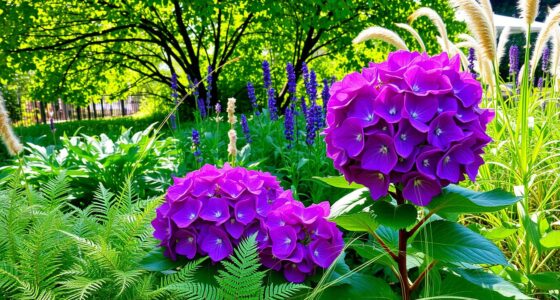
Create a pollinator-friendly garden with native plants that bloom year-round to support local ecosystems.
In addition to selecting the right plants, structuring your garden with thoughtful layout tips enhances its attractiveness to pollinators. Arrange your plantings in clusters rather than scattering them randomly; groups are easier for pollinators to locate and access efficiently. Position your flower clusters in sunny spots, as most pollinators prefer warm, bright environments for foraging. Avoid using pesticides or chemicals that can harm pollinators directly or diminish their food sources. Instead, opt for organic gardening practices that support a healthy, balanced ecosystem. Supporting native plants also promotes self-understanding of local ecological relationships, fostering a deeper appreciation for the environment.
Creating layered plantings also boosts your garden’s appeal to pollinators. Incorporate ground covers, mid-height flowering shrubs, and taller perennials to provide shelter and resting spots. This diversity in height mimics natural habitats and encourages a variety of pollinators to visit your garden regularly. Consider adding native grasses and shrubs that offer shelter and nesting sites, further enhancing the habitat you create.
Water sources are another essential element. A small shallow basin with clean water can entice pollinators to stay longer, especially during hot, dry periods. Keep the water fresh and change it regularly to prevent mosquito breeding.
Finally, maintain your garden with patience and observation. Notice which plants attract the most pollinators and consider adding more of those species. Keep your garden free of invasive plants that can outcompete native species, and stay committed to organic practices to support a thriving, balanced ecosystem. By thoughtfully selecting native plants and applying strategic garden layout tips, you’ll cultivate a vibrant, inviting space that sustains and attracts pollinators, ultimately helping to preserve the health of our environment.
Top picks for "pollinator paradise flower"
Open Amazon search results for this keyword.
As an affiliate, we earn on qualifying purchases.
Frequently Asked Questions
Which Native Flowers Are Best for Local Pollinators?
When choosing native flowers for your garden, focus on native plant selection to support local pollinators. Consider seasonal bloom timing so that food sources are available throughout the year. You’ll want a variety of plants that bloom at different times, ensuring bees and butterflies have nectar and pollen consistently. By planting native species suited to your region, you create a thriving habitat that benefits pollinators and enhances your garden’s beauty.
How Can I Create a Year-Round Pollinator-Friendly Garden?
Did you know that a diverse pollinator habitat can boost garden visits by 30%? To create a year-round pollinator-friendly garden, focus on seasonal bloom planning, selecting flowers that bloom at different times of the year. Incorporate native plants for better adaptation, and vary flower shapes and sizes to attract diverse pollinators. This strategy guarantees continuous food sources, supporting pollinator health and fostering a thriving, vibrant garden all year long.
Are There Specific Plants That Attract Both Bees and Butterflies Simultaneously?
You’re wondering if specific plants attract both bees and butterflies at once. Dual pollinator plants are perfect for this, especially when they have overlapping bloom times. Flowers like coneflowers, bee balm, and lavender draw in both pollinators, ensuring continuous visits. By choosing plants that bloom together, you create a vibrant, eco-friendly garden that supports both bees and butterflies simultaneously, enhancing your garden’s beauty and pollination success.
What Are Common Mistakes to Avoid When Planting for Pollinators?
You might think planting a single flower type attracts pollinators, but planting monocultures actually hinders them. Avoid overusing pesticides, which can harm bees and butterflies more than you realize. Instead, choose diverse, native plants to create a welcoming habitat. Don’t forget, a balanced approach encourages healthy pollinator populations. By mixing flowers and reducing chemical use, you’ll foster a thriving environment for these essential insects, making your garden truly pollinator paradise.
How Do I Maintain a Pest-Free Pollinator Garden Organically?
To keep your pollinator garden pest-free organically, start with organic pest control methods like neem oil or insecticidal soap. You should also practice companion planting, pairing plants that repel pests with those that attract pollinators. Regularly inspect your plants for early signs of pests, remove affected leaves, and encourage natural predators like ladybugs. These techniques help maintain a healthy, balanced garden without harmful chemicals, supporting thriving bees and butterflies.
Conclusion
By planting these vibrant flowers, you become a hero in the story of nature’s balance, much like the gardeners of myth who nurtured life from the earth. Your garden transforms into a pollinator paradise, supporting bees and butterflies that sustain our ecosystems. Remember, just as Pandora’s box held both hope and chaos, your choices can bring beauty and energy to your surroundings. Embrace this role, and let your garden flourish with pollinator magic.