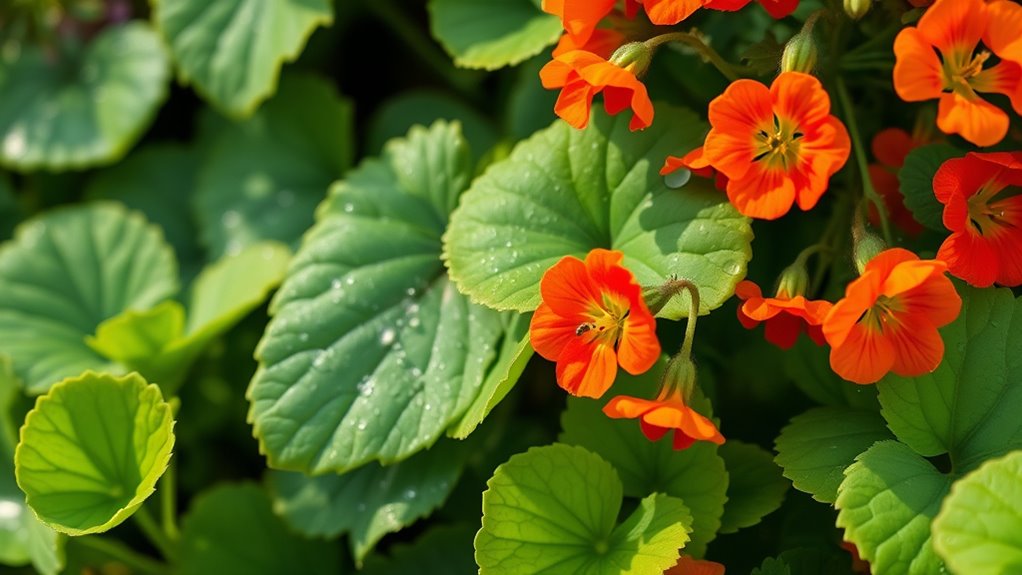
To use nasturtiums as aphid traps, plant them near vulnerable vegetables or herbs, placing them close enough to attract aphids away from main crops. Regularly inspect the nasturtiums for heavy infestations and remove any heavily infested plants to prevent spreading. Maintain healthy plants with proper watering and care, and monitor for aphid presence on both the nasturtiums and your vegetables. Keep an eye on how effectively they’re working—more tips to maximize their pest-fighting benefits await you.
Key Takeaways
- Plant nasturtiums near vulnerable vegetable or herb beds to attract and trap aphids naturally.
- Ensure proper placement for easy monitoring and removal of heavily infested nasturtiums.
- Regularly inspect nasturtiums for aphids and prune or remove infested plants promptly.
- Use healthy, well-maintained nasturtiums to maximize their pest-trapping effectiveness.
- Incorporate nasturtiums into your overall pest management plan to enhance natural aphid control.
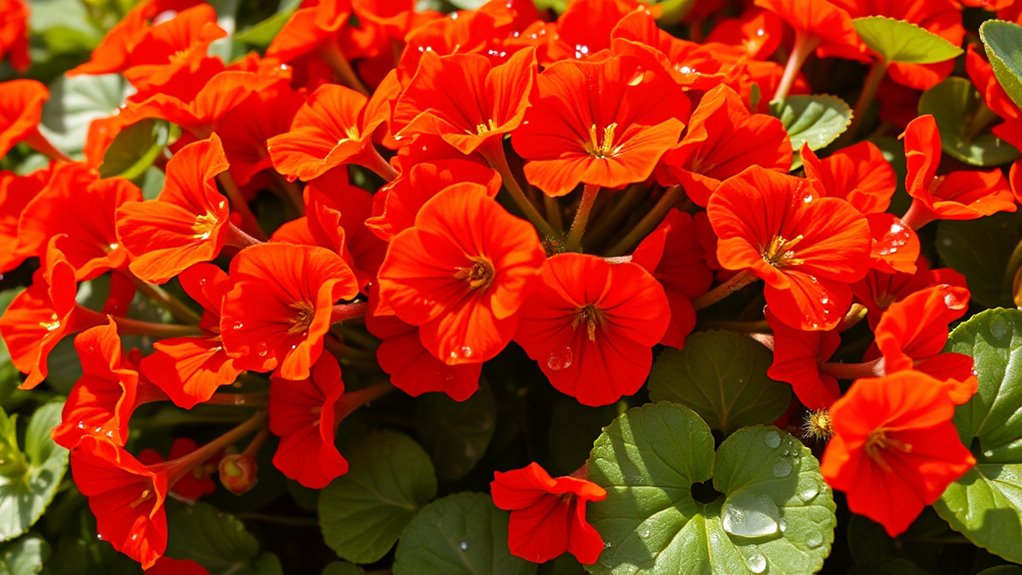
If you’re looking for an effective and natural way to control aphids in your garden, nasturtiums can be an excellent solution. These vibrant flowers do more than add color to your space—they serve as natural trap crops, making pest management easier and more eco-friendly. By planting nasturtiums near your vegetable or herb beds, you create a barrier that attracts aphids away from your prized plants. This is a classic example of companion planting, where one plant helps protect or benefit another. Nasturtiums act as a magnet for aphids, drawing them away from your main crops and reducing their infestation levels naturally. This method eliminates the need for chemical pesticides, which can harm beneficial insects and pollinators.
Nasturtiums attract aphids away, protecting your garden naturally and eco-friendly.
When using nasturtiums as aphid traps, placement is key. You want to position them close enough to your vulnerable plants so that aphids find them first, but not so close that they become a source of infestation for your main crops. Regularly inspecting your nasturtiums is important; as they attract aphids, you’ll need to check and remove heavily infested plants or prune affected areas. This proactive approach helps keep aphid populations manageable and prevents them from spreading to your vegetables or herbs. Additionally, choosing self-watering planters for your nasturtiums can help maintain consistent moisture levels, ensuring healthy growth and maximizing their pest-trapping efficiency.
Incorporating nasturtiums into your pest management plan is simple and sustainable. Not only do they lure aphids away, but they also attract beneficial insects like ladybugs and hoverflies, which feed on aphids and help keep pest numbers down naturally. This creates a balanced ecosystem in your garden where pests are controlled without the need for chemical interventions. Plus, nasturtiums are hardy and easy to grow, thriving in a variety of soil types and light conditions, making them a practical addition for most gardeners.
Planting nasturtiums as part of your companion planting strategy streamlines pest management and promotes a healthy garden environment. Their bright flowers act as visual cues for pests, drawing them in and making them easier to manage. Over time, you may notice a significant reduction in aphid populations on your main crops, thanks to this natural trap crop method. It’s an eco-friendly, cost-effective, and visually appealing way to keep pests in check, supporting the overall health and productivity of your garden. So, next time you see aphids attacking your plants, consider turning to nasturtiums—they’re a simple, effective tool in your pest management arsenal.
Frequently Asked Questions
Can Nasturtiums Attract Beneficial Insects Besides Aphids?
Yes, nasturtiums can attract beneficial insects beyond aphids. Their bright, colorful flowers draw pollinator attraction, including bees and butterflies, which help with pest control methods by pollinating your garden and reducing pest populations naturally. These flowers provide a food source for helpful insects, making nasturtiums an excellent companion plant. By planting nasturtiums, you support a healthier garden ecosystem and encourage beneficial insect activity.
How Long Does It Take for Nasturtiums to Trap Aphids Effectively?
You can expect nasturtiums to start trapping aphids within about one to two weeks after planting, depending on growing conditions. The trap effectiveness increases as the plants mature and produce more flowers, attracting more aphids. To optimize results, make sure your nasturtiums get enough sunlight and water. Regularly monitor and remove aphids to prevent infestations, and you’ll notice a decline in aphid numbers as the plants continue to attract and trap them.
Are There Specific Nasturtium Varieties Better for Aphid Trapping?
You should choose varieties like ‘Empress of India’ or ‘Jewel of Africa’ for effective aphid trapping, as they grow vigorously and attract pests. When planting, use well-draining soil and make certain of full sun exposure to promote healthy growth. Variety preferences matter because some nasturtiums produce more foliage and flowers, drawing in more aphids. Consistent planting tips, like regular watering and deadheading, help maintain their trap effectiveness.
Can Using Nasturtiums as Traps Harm Other Plants Nearby?
Using nasturtiums as traps generally won’t harm nearby plants if you consider plant compatibility and pest migration. They attract aphids away from other plants, reducing pest pressure without risking harm to your garden. Just make certain you space them properly and avoid planting them near sensitive plants that might be affected by increased pest activity. This method helps manage pests effectively while maintaining a healthy, balanced garden ecosystem.
How Often Should I Monitor and Replace Nasturtiums Used as Aphid Traps?
You should monitor your nasturtiums as aphid traps weekly to keep an eye on aphid buildup and plant health. Replacement timing depends on aphid infestation levels; replace the plants when they become heavily covered or start to decline. Regular monitoring helps you catch problems early, ensuring the traps remain effective without harming nearby plants. Stay vigilant, and you’ll optimize pest control while keeping your garden balanced.
Conclusion
Using nasturtiums as aphid traps is an easy, natural way to protect your garden. By planting these colorful flowers nearby, you can reduce aphid populations substantially—studies show that nasturtiums can attract up to 80% of aphids away from your main crops. This simple tactic not only keeps pests in check but also adds beauty to your garden. Give it a try, and enjoy healthier, pest-free plants with less effort.