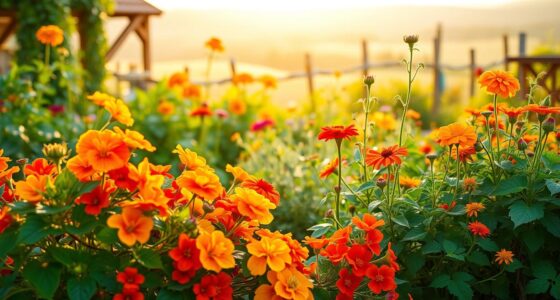
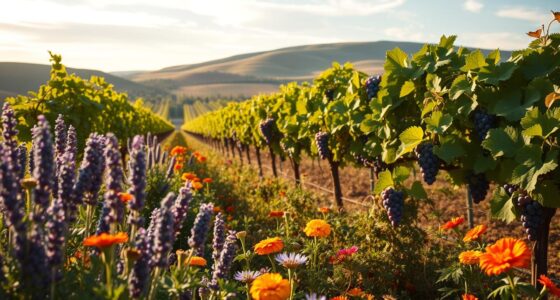
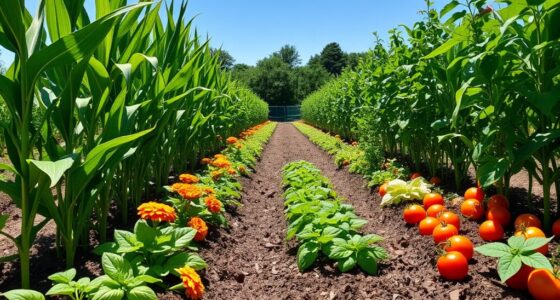
Plant nasturtiums under your fruit trees to boost their health naturally. They attract beneficial insects like pollinators and predatory bugs, help control pests such as aphids and beetles, and improve soil quality by adding organic matter. Their ground cover reduces weeds and conserves moisture, creating a healthier environment for your trees. With these advantages, you can enjoy a more vibrant and resilient orchard—continue to explore how these vibrant plants can transform your garden.
Key Takeaways
- Nasturtiums attract pollinators, boosting fruit tree pollination and fruit set.
- They act as trap crops, diverting pests like aphids away from fruit trees.
- Nasturtiums improve soil health and add organic matter as they decompose.
- Their ground cover suppresses weeds and conserves soil moisture around trees.
- They promote a balanced garden ecosystem, reducing the need for chemical pest controls.

Planting nasturtiums under fruit trees is a simple way to boost your garden’s productivity and health. These vibrant flowers are more than just pretty additions—they’re powerful allies in your garden’s ecosystem. When you incorporate nasturtiums as part of your companion planting strategy, you create a natural barrier that benefits your fruit trees without the need for chemical interventions. Companion planting with nasturtiums helps improve soil health, attract beneficial insects, and disrupt pest cycles, making your entire garden more resilient.
Plant nasturtiums under fruit trees to enhance health, attract beneficial insects, and naturally deter pests.
You’ll notice that nasturtiums act as a trap crop, drawing pests away from your fruit trees. Aphids, whiteflies, and beetles are particularly fond of nasturtiums, which means these pests are less likely to settle on your fruit trees. By planting nasturtiums nearby, you essentially redirect pest attention, giving your fruit trees a fighting chance to thrive without being overwhelmed. This form of pest control is organic and sustainable, reducing your reliance on pesticides and promoting a healthier garden environment.
Aside from pest control, nasturtiums also attract beneficial insects such as pollinators and predatory insects that help keep pest populations in check. When you plant nasturtiums under your fruit trees, you encourage a diverse ecosystem that naturally balances itself. Bees, hoverflies, and ladybugs are drawn to the nectar and pollen of nasturtiums, which in turn helps improve fruit set and yields. The presence of these helpful insects means fewer pests and healthier, more productive fruit trees.
In addition, nasturtiums can improve soil conditions around your fruit trees. Their sprawling growth covers the ground, reducing weed competition and conserving soil moisture. They also add organic matter to the soil as they decompose, enriching the nutrient profile and fostering a healthier root environment. This holistic approach to planting creates a more vigorous, disease-resistant orchard that requires fewer inputs from you.

Bonide Captain Jack's Fruit Tree Spray, 32 oz Concentrate, Insect & Disease Control Spray for Organic Gardening
Control diseases and insects in your garden with Captain Jack’s Fruit Tree Spray Concentrate! Use on a variety…
As an affiliate, we earn on qualifying purchases.
As an affiliate, we earn on qualifying purchases.
Frequently Asked Questions
Can Nasturtiums Grow Successfully in Shaded Areas?
Yes, nasturtiums can grow in shaded areas, but they prefer full sun for ideal shade tolerance and vibrant blooms. If you plant them in partial shade, they might still survive but won’t produce as many flowers. Keep in mind their light requirements, as too much shade can reduce growth and flowering. For the best results, give them some direct sunlight each day, but they can manage in lighter shaded spots.
How Often Should I Water Nasturtiums Under Fruit Trees?
Imagine your garden as a lush oasis, vibrant and alive. You should water nasturtiums under fruit trees about once a week, ensuring the soil moisture stays consistently damp but not soggy. During hot, dry spells, increase watering frequency. Keep an eye on the soil’s touch; if it feels dry a couple of inches down, it’s time to water. Proper watering keeps your plants healthy and flowering beautifully.
Are Nasturtiums Resistant to Common Pests and Diseases?
Yes, nasturtiums are resistant to many common pests and diseases, making them excellent for companion planting. They act as natural pest deterrents, protecting nearby plants like fruit trees from aphids and beetles. You’ll find that planting nasturtiums under fruit trees not only adds vibrant color but also helps reduce pest problems, promoting healthier growth for your entire garden. Their resilience makes them a smart, low-maintenance choice for pest management.
Do Nasturtiums Attract Beneficial Insects to Fruit Trees?
Yes, nasturtiums attract beneficial insects to fruit trees by boosting pollinator attraction and pest control. You’ll notice pollinators like bees drawn to the vibrant flowers, which helps improve fruit set. Additionally, nasturtiums attract predatory insects such as aphid-eating ladybugs, naturally reducing pest populations. Planting nasturtiums under your fruit trees creates a thriving ecosystem that supports healthy growth while minimizing the need for chemical pest control.
When Is the Best Time to Plant Nasturtiums Under Fruit Trees?
You should plant nasturtiums under fruit trees in early spring or late summer, aligning with favorable timing considerations for growth. Guarantee proper soil preparation by loosening the soil and adding compost to boost nutrients. This way, the nasturtiums establish quickly, attract beneficial insects, and help protect your fruit trees from pests. Timing and soil prep are key to successful planting and maximizing their benefits.

Seed Needs Nasturtium Seeds Jewel Mix Multicolored Edible Flowers | 1.5 Ounce 350+ Seeds Tropaeolum Nanum Annual Flower Seed Mix | Bulk Jewel Nasturtiums for The Garden
Variety: Jewel Mixed Nasturtium, scientifically known as Tropaeolum nanum, is a compact variety of nasturtium, ideal for small…
As an affiliate, we earn on qualifying purchases.
As an affiliate, we earn on qualifying purchases.
Conclusion
You might wonder if planting nasturtiums under fruit trees truly benefits your garden. The theory suggests they repel pests and attract beneficial insects, creating a natural balance. While some gardeners swear by this method, scientific evidence remains limited. Still, integrating nasturtiums is low-cost and eco-friendly, so why not give it a try? You could discover a beautiful, pest-resistant harmony beneath your trees—making your garden both vibrant and resilient.

1000 Pyrethrum Seeds – Natural Mosquito Repellent Plants, Multi-Color Blooming Potted Flowers for Gardens, Cold-Hardy & Low-Maintenance
Contains 1000 colorful pyrethrum seeds with multi-color blooms, combining ornamental and practical values;
As an affiliate, we earn on qualifying purchases.
As an affiliate, we earn on qualifying purchases.

HOME GROWN Aubrieta Rock Cress Purple, Flowering Ground Cover Seed Pack, Non GMO Perennial Cress Seeds for Planting Outdoor Lawn Gardens 300 Aubrieta deltoidea Flower Seeds
AWARD-WINNING GENEROUS QUANTITY: Get an abundant amount of high-quality American seeds to illustrate this award-winning variety in your…
As an affiliate, we earn on qualifying purchases.
As an affiliate, we earn on qualifying purchases.