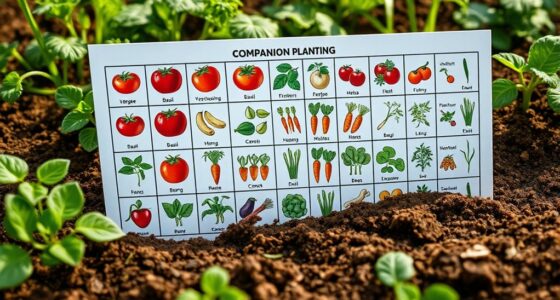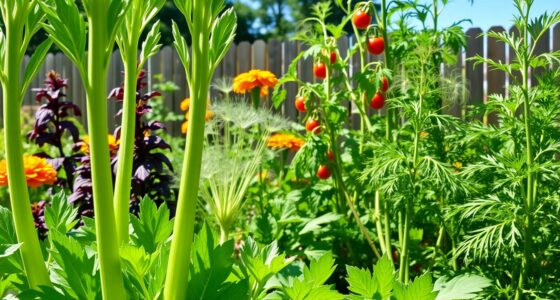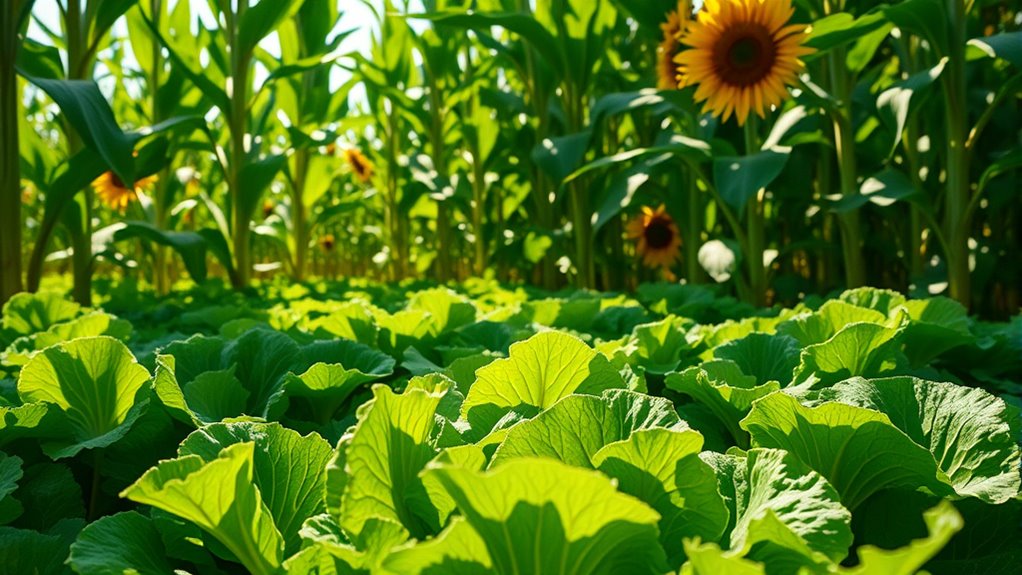

Plantting lettuce beneath taller crops is a smart way to provide shade, helping to keep it cool during summer heatwaves. The taller plants act like natural umbrellas, reducing heat stress and slowing evaporation, which keeps your lettuce crisper and longer-lasting. By managing the placement and timing of your crops, you can extend your harvests and maintain healthy growth. Keep exploring for more tips on optimizing shading and crop rotation.
Key Takeaways
- Taller crops create a cooler microclimate, shielding lettuce from intense summer heat and preventing bolting.
- Strategic placement of lettuce beneath taller plants maximizes shade while conserving garden space.
- Early planting of taller crops establishes a canopy that benefits lettuce growth during hot months.
- Regular monitoring ensures optimal soil moisture and prevents fungal issues in shaded lettuce areas.
- Crop rotation and pruning maintain effective shading and promote continuous, healthy lettuce production.
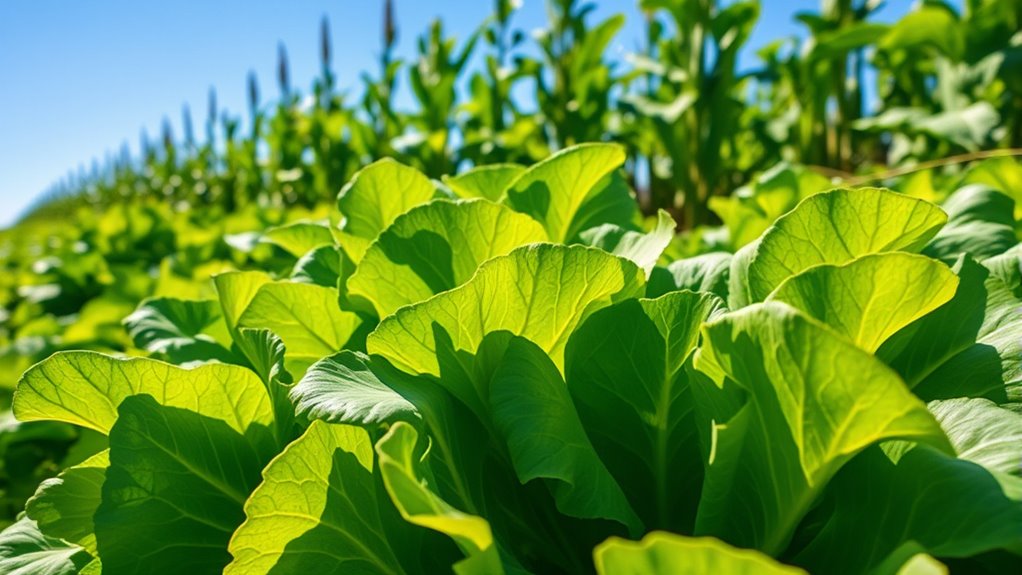
Planting lettuce under taller crops can be an effective way to maximize your garden space and improve overall yields. By utilizing plant shading, you create a cooler microclimate that benefits delicate crops like lettuce, especially during hot summer months. Taller crops such as corn, tomatoes, or beans serve as natural umbrellas, shielding the lettuce from intense sunlight and reducing heat stress. This strategy not only conserves space but also helps maintain consistent moisture levels, as the shade slows down evaporation from the soil. As a result, your lettuce stays crisper longer and grows more evenly.
Planting lettuce under taller crops creates a cooler, shaded microclimate that enhances growth and conserves space.
Incorporating crop succession into your planting plan further enhances the benefits of this method. Once the taller crop has matured and is ready for harvest, you can replace it with new crops or additional lettuce plantings. This continuous cycle ensures your garden remains productive throughout the season, maximizing every square foot. Crop succession also minimizes the risk of pest and disease buildup, as different plants attract different pests and have varying susceptibilities. By rotating crops and timing plantings carefully, you prevent pests from establishing a foothold and reduce the need for chemical interventions.
To set this up effectively, start by planting your taller crops early in the season, giving them enough time to develop a sturdy canopy. As they grow, position your lettuce seedlings underneath or nearby, making sure they’re shaded during the hottest parts of the day. Keep in mind that the height and spread of your taller crops will influence how much shade the lettuce receives. You may need to adjust your plant placement or prune the taller plants to optimize shading without overly competing for nutrients. Additionally, understanding the importance of microclimate management can help you tailor your shading strategy for better crop health.
Monitoring the microclimate is key. Check soil moisture frequently, especially during heatwaves, since shaded areas can sometimes retain more humidity, which may encourage fungal issues. Regularly inspect your lettuce for signs of pests or disease, and adjust your crop succession plan accordingly. When the lettuce reaches maturity or begins to bolt, remove it and plant new seedlings in the same shaded area or relocate them to other parts of your garden to keep the cycle going. This rotation not only maintains continuous production but also enriches your gardening routine with varied crops.
Amazon Product B0G43Y9QR1
As an affiliate, we earn on qualifying purchases.
Frequently Asked Questions
What Are the Best Taller Crops to Grow for Summer Shade?
You should grow tall crops like corn, sunflowers, or sorghum for summer shade. These crops work well in companion planting, providing effective shade for your lettuce and other cool-weather plants. Remember to practice crop rotation to keep your soil healthy and prevent pests. By choosing the right taller crops, you create a natural shelter that keeps your garden cooler and promotes healthy growth for all your plants.
How Do Taller Crops Affect Soil Nutrients for Lettuce?
Like a careful dance, taller crops compete with your lettuce for soil nutrients, especially nitrogen and phosphorus, which can limit growth if not managed properly. This soil nutrient competition may reduce lettuce yields unless you practice crop rotation benefits by planting different crops each season. Crop rotation helps replenish nutrients, breaks pest cycles, and maintains soil health, ensuring your lettuce gets the nourishment it needs while shading taller crops thrive.
Can Shade From Taller Crops Impact Lettuce Growth Negatively?
Yes, shade impact from taller crops can negatively affect lettuce growth. The reduced sunlight may lead to growth suppression, slowing down photosynthesis and resulting in smaller, less vigorous plants. While some shade can protect lettuce from heat stress, too much can hinder its development. You should monitor the amount of shade and guarantee lettuce still receives enough light to thrive, balancing protection with ideal growth conditions.
What Is the Optimal Distance Between Lettuce and Taller Crops?
You should space your lettuce about 12 to 18 inches apart from taller crops to optimize plant spacing and guarantee good airflow. This distance promotes crop compatibility, preventing overcrowding and reducing disease risk. Adjust spacing based on the type of taller crops and their growth habits. Maintaining proper distance helps lettuce thrive while providing summer shade, balancing growth needs and maximizing your garden’s productivity.
How Do I Protect Lettuce From Pests in This Planting Method?
You can protect your lettuce by choosing pest-resistant varieties and using natural pest deterrents like neem oil or companion planting. Regularly inspect your plants for pests and remove any that appear. Encourage beneficial insects, such as ladybugs and lacewings, to help keep pests in check. Cover your lettuce with row covers during peak pest activity to create a physical barrier, ensuring the plants stay healthy and productive.
Amazon Product B0C5RCB3KG
As an affiliate, we earn on qualifying purchases.
Conclusion
By planting lettuce under taller crops for summer shade, you protect your greens from scorching heat and extend your harvest. Some might worry it hampers growth, but with proper spacing and management, your lettuce will thrive alongside taller plants. This method not only saves space but also boosts your garden’s productivity. So go ahead, embrace this clever strategy—your summer salads will thank you for the cooler, healthier leaves.
Amazon Product B0FC2JLBT5
As an affiliate, we earn on qualifying purchases.
Amazon Product B0CF48K7FY
As an affiliate, we earn on qualifying purchases.