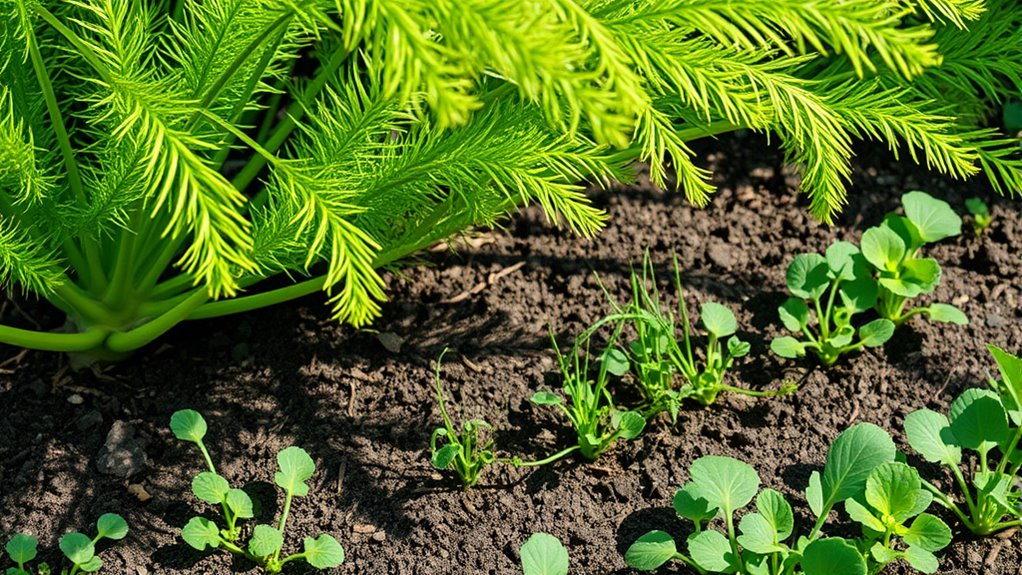

To avoid fennel’s allelopathic effects, plant it away from sensitive plants like carrots, dill, and tomatoes, as its chemicals can inhibit their growth and germination. Keep fennel in separate beds, containers, or at a distance from other vegetables to prevent chemical interference and shading issues. Proper placement helps maintain a healthy garden and ensures your plants thrive. If you want to learn expert tips for safe fennel planting, continue exploring this guide.
Key Takeaways
- Avoid planting fennel near carrots, dill, and tomatoes to prevent allelopathic chemical interference.
- Keep fennel separate from sensitive vegetables by using dedicated beds or containers.
- Do not grow fennel close to crops like beans, peas, lettuce, or spinach due to chemical suppression.
- Position fennel away from the main vegetable garden to minimize shading and allelopathic impacts.
- Use raised beds or containers to grow fennel isolated from other plants vulnerable to its chemicals.

Fennel is known not just for its aromatic flavor but also for its ability to influence nearby plants through a process called allelopathy. This means that fennel releases chemicals into the soil that can inhibit the growth of certain plants nearby. When you’re planning your garden, understanding fennel’s allelopathic effects is vital to successful companion planting and garden planning. If you ignore this, you might find that some of your favorite vegetables or herbs struggle to thrive when planted too close to fennel.
Fennel’s allelopathic properties are most potent when the plant is mature and actively growing. Its roots release compounds into the soil that can suppress the germination and growth of other plants, especially those in the carrot, dill, and tomato families. As a gardener, you need to be strategic. During garden planning, it’s best to keep fennel isolated from these sensitive plants. You might consider planting fennel in a separate bed or container, far from your main vegetable garden. This prevents the allelopathic chemicals from impacting your crops and guarantees healthier growth for all your plants.
Keep fennel isolated from carrots, dill, and tomatoes for healthier, more successful garden growth.
In terms of companion planting, fennel is often considered incompatible with many common garden vegetables. While it can attract beneficial insects like pollinators and predatory bugs, its allelopathic effects can outweigh these benefits if not managed carefully. When designing your garden layout, avoid placing fennel near beans, peas, lettuce, spinach, or other leafy greens. These plants are particularly susceptible to fennel’s chemical emissions, which can stunt their development or cause poor germination.
Garden planning with fennel also involves understanding its growth habits. Fennel tends to grow tall and broad, so it can cast significant shade over neighboring plants. This shade can further compound the allelopathic effects by creating a less hospitable environment for sun-loving plants. To minimize this, position fennel in a location where it won’t overshadow or interfere with other crops. Alternatively, grow it in containers or raised beds that you can place away from sensitive plants.
Ultimately, good garden planning recognizes fennel’s allelopathic tendencies and adjusts accordingly. By carefully selecting its location and considering companion planting principles, you can enjoy fennel’s unique flavor without risking the health of your entire garden. When you understand its effects, you can design a harmonious garden where fennel and your other plants coexist peacefully, each thriving in their proper spots.

LEETOLLA Elevate 32" Tall Raised Garden Bed Outdoor with Wheels & Shelf for Mobility, 400LBS Capacity, Anti-Rust Steel Planter Box for Vegetables/Herbs, Patio-Balcony-Backyard
【400LBS Heavy-Duty & Anti-Rust】 Made of powder-coated steel (not cheap wood!), withstands 400lbs without bending. 3x thicker coating…
As an affiliate, we earn on qualifying purchases.
As an affiliate, we earn on qualifying purchases.
Frequently Asked Questions
Can Fennel Be Safely Grown Near Edible Vegetables?
You can grow fennel near edible vegetables, but be cautious about garden compatibility. Fennel’s allelopathic properties can inhibit the growth of some plants, so it’s best to plant it away from delicate vegetables. Also, fennel attracts pests that might spread to nearby crops, increasing pest attraction risks. To guarantee healthy growth and avoid potential issues, consider planting fennel separately and monitor pest activity closely.
Does Fennel Affect Soil Health Long-Term?
Fennel can affect soil health long-term by causing soil depletion and microbial imbalance. When you plant fennel repeatedly in the same spot, it uses up nutrients, leading to poorer soil quality. Additionally, fennel’s allelopathic compounds may disrupt the balance of beneficial microbes, making it harder for other plants to thrive. To maintain soil health, rotate fennel with other crops and avoid continuous planting in one area.
Are There Specific Companion Plants for Fennel?
You should choose companion pairings like tomatoes, dill, and members of the onion family for fennel. These plants thrive together, enhancing growth and deterring pests. When planning your planting considerations, avoid planting fennel near carrots, dill, or cucumbers, as they can be negatively affected by fennel’s allelopathic effects. Properly selecting companions guarantees healthy growth and a balanced garden, making your fennel and its neighbors thrive.
How Quickly Does Fennel’s Allelopathic Effect Manifest?
Imagine a whisper in the garden breeze—fennel’s allelopathy can quietly influence nearby plants within a few weeks. The timing of allelopathy varies, but you might notice its immediate effects as early as two to three weeks after planting. This subtle yet persistent influence can hinder seed germination or stunt growth, so it’s best to give fennel space early on to avoid disrupting your other plants’ harmony.
Can Fennel Be Used as a Natural Weed Suppressant?
Yes, fennel can be used as a natural weed suppressant because its allelopathic compounds inhibit weed growth. When you plant fennel, these compounds are released into the soil, creating a natural barrier that suppresses weeds around it. Just keep in mind that fennel’s allelopathic effects can also impact nearby plants, so use it strategically to maximize weed suppression while protecting your desired plants.

Raised Bed and Container Gardening for Advanced Beginners and Beyond: Advanced Gardening Techniques and In-depth Garden Guides for Growing Your Own … for Beginner and Advanced Gardeners)
As an affiliate, we earn on qualifying purchases.
As an affiliate, we earn on qualifying purchases.
Conclusion
Knowing about fennel’s allelopathy helps you choose the right planting spots and avoid harming nearby plants. Did you know that fennel can suppress the growth of some vegetables up to 50%? By understanding its effects, you prevent wasted effort and ensure a thriving garden. So, next time you consider planting fennel, remember where not to put it. Keeping these tips in mind lets you enjoy a healthier, more productive garden.

Feitore Deer Fence Netting, 7 x 100 Feet Anti Bird Deer Protection Net Reusable Protective Garden Netting for Plants Fruit Trees Vegetables Against Birds and Other Animals
Size: Deer netting size 7 feet x 100 feet; garden netting mesh size 3/4"; color: black; Easy to…
As an affiliate, we earn on qualifying purchases.
As an affiliate, we earn on qualifying purchases.

10 X 33 FT Thicker Garden Mesh Netting Pest Barrier for Raised Beds, Black Fruit Tree Netting for Cicadas, Bird Insect Blueberry Bush Strawberry Netting Cover for Garden Protection, Shading Rate 30%
Thickened & Durable Materials: The garden netting is made of high-quality PE composite material, sturdy and durable. Most…
As an affiliate, we earn on qualifying purchases.
As an affiliate, we earn on qualifying purchases.