

Planting cucumbers with sunflowers offers a natural, effective vertical support that helps maximize your garden space. Sunflowers grow tall and sturdy, providing ideal structures for cucumber vines to climb, which keeps them off the ground and reduces pests and disease risk. You’ll want to plant sunflowers early so they develop fully before cucumbers sprawl. Maintaining proper watering and plant care will guarantee healthy growth. Keep exploring for tips on creating a thriving, vertically supported garden.
Key Takeaways
- Sunflowers serve as natural, sturdy vertical supports for climbing cucumber vines.
- Plant sunflowers early to allow them to grow tall before cucumbers sprawl.
- Gently tie cucumber tendrils to sunflower stalks for stable vertical growth.
- Using sunflowers as trellises maximizes garden space and improves air circulation.
- Elevated cucumbers reduce soil-borne pests and diseases, promoting healthier plants.
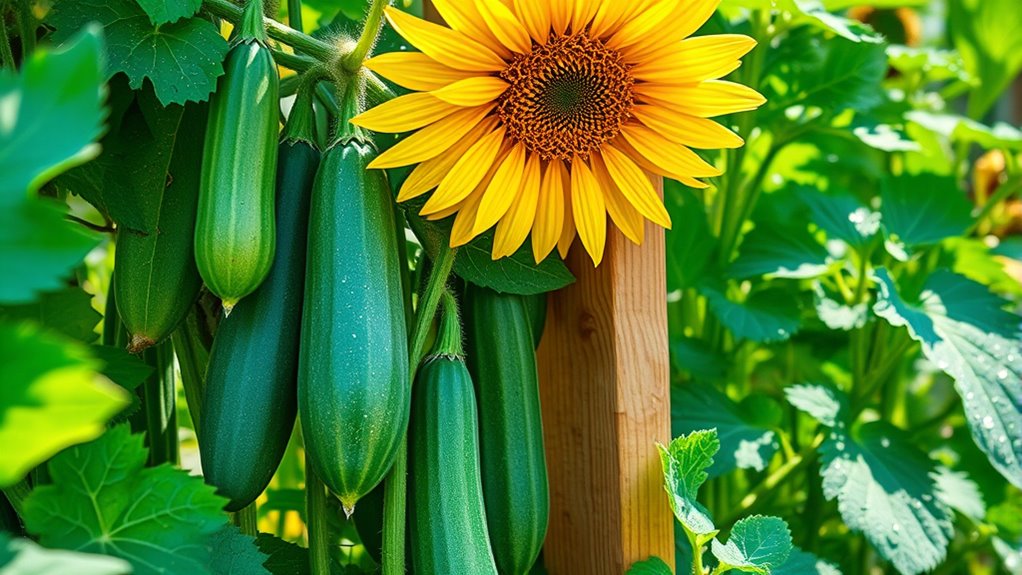
If you’re looking to create a vibrant garden, pairing cucumbers with sunflowers is a smart choice. Not only do they add visual appeal, but they also work well together in a natural setting. When it comes to supporting your cucumber plants, using sunflowers as natural vertical supports is a clever strategy. Sunflowers grow tall and sturdy, providing excellent climbing structures for sprawling cucumber vines. This method helps maximize space and keeps your garden organized. Plus, with the plants growing vertically, you’ll find it easier to manage pest prevention. By elevating your cucumbers off the ground, you reduce the risk of soil-borne diseases and pests that often attack low-lying plants.
To make this work, you’ll want to plant sunflowers early in the season, giving them ample time to grow tall before your cucumbers start sprawling. As the sunflower stems develop, guide the cucumber vines toward the sunflowers, gently tying or weaving the tendrils around the sturdy stalks. This creates a natural trellis that supports healthy growth. When supporting your plants this way, pay close attention to watering techniques. Cucumbers thrive with consistent, deep watering, and sunflowers need similar care. Keep the soil evenly moist but not waterlogged, which prevents stress and encourages strong growth. Watering in the early morning is ideal, as it allows excess moisture to evaporate during the day and reduces the likelihood of fungal issues. Mulching around the base of both plants can help retain soil moisture, regulate temperature, and further prevent pests that hide in dry, exposed soil.
Using sunflowers as vertical supports also simplifies pest prevention. When plants are elevated, common pests like aphids and beetles have a harder time reaching the cucumber leaves. Regular inspections and early intervention remain essential, but the height advantage gives you a natural barrier. Additionally, healthy, vigorous plants are better at resisting pests and diseases, which underscores the importance of proper watering techniques. Over or under-watering can weaken your plants, making them more vulnerable. Consistent watering encourages strong, resilient growth, reducing the chances of pest infestations and disease.

Modern Shade Tranquil Grove Wood Gazebo 10' x 10', Hardtop Gazebo Permanent with Galvanized Steel Roof, Cedar Outdoor Gazebo with Sturdy Hooks for Garden, Backyard, Patio and Deck
[Premium FSC-Certified Cedar Wood Gazebo] Crafted with ethically sourced premium cedar wood (FSC Certified), this all-weather hardtop gazebo...
As an affiliate, we earn on qualifying purchases.
Frequently Asked Questions
How Do I Start Sunflower Seeds for Support?
You start sunflower seeds for support by first preparing your soil—make sure it’s well-draining and rich in organic matter. Then, seed starting is simple: plant the seeds about 1 to 2 inches deep in small pots or directly in your garden. Keep the soil moist and place the containers in a sunny spot. Once seedlings are sturdy enough, you can transplant them to support your cucumbers effectively.
What Varieties of Cucumbers Are Best for Vertical Growth?
Thinking of turning your garden into a tangle of cucumber chaos? Opt for vining cucumber varieties like Armenian or English cucumbers—they’re naturals at climbing. Pair them with sunflower support options, such as tall sunflowers or trellises, to keep things tidy. These varieties thrive with vertical support, making harvesting easier and your garden neater. So, choose wisely, and watch your cucumber vines grow happily up those sunflower stakes without a fuss.
How Often Should I Water Cucumbers and Sunflowers Together?
You should water your cucumbers and sunflowers about once every 2-3 days, adjusting based on weather and soil moisture. Check the soil moisture regularly; it should be consistently moist but not waterlogged. During hot or dry periods, increase watering frequency. Make sure to water deeply to encourage strong roots, and avoid letting the soil dry out completely, which can stress both plants and hinder growth.
Can I Use Other Plants Besides Sunflowers for Support?
Yes, you can use other plants for support, like beans or peas, which also promote companion planting and help with pest control. These taller plants act as natural trellises, giving your cucumbers a sturdy structure to climb. Plus, they attract beneficial insects and repel pests, boosting your garden’s health. Just make certain the support plants are strong enough and positioned correctly to provide adequate vertical support for your cucumbers.
What Pests Commonly Affect Cucumbers and Sunflowers?
You should watch out for pests like aphids, cucumber beetles, and squash bugs that commonly affect both cucumbers and sunflowers. To prevent these pests, practice pest prevention by encouraging natural repellents such as marigolds or neem oil around your plants. Regularly check for signs of infestation, remove affected leaves, and promote healthy growth to keep pests at bay. Natural repellents and vigilant maintenance help protect your garden effectively.

PURPLE LEAF 10' x 13' Aluminum Outdoor Pergola Retractable Pergola with Double Sun Shade Canopy White Modern Grape Trellis Metal Pergola with Light for Patios Garden Deck Backyard, White
Enhance Your Outdoor Space: This retractable pergola includes 24 feet of decorative lighting with weatherproof, shatterproof LED bulbs,...
As an affiliate, we earn on qualifying purchases.
Conclusion
As you watch your cucumbers climb the sunflower’s sturdy stem, it’s like witnessing a green ballet against a golden backdrop. This partnership transforms your garden into a lively masterpiece, where vines and flowers dance in harmony. With patience and care, you’ll see your plants flourish, turning simple support into a symphony of growth. Keep nurturing this vibrant duet, and your garden will become a lush, sun-kissed paradise bursting with life and color.

AirWire 10'x12' Gazebo Hardtop Gazebo, Aluminum Frame Pergola with Double Galvanized Steel Roof, Permanent Outdoor Metal Canopy with Curtain & Netting for Patio, Backyard, Deck, Dark Grey
DOUBLE-TIER GALVANIZED ROOF: This hardtop gazebo features a double-layered, galvanized iron top that offers superior protection against fading...
As an affiliate, we earn on qualifying purchases.

BlueWish 10'x10’ Outdoor Pergola, Patio Cedar Wood Gazebo Outdoor Backyard Gazebo Pergola Kits with Slatted Roof Trellis & Stakes for Deck Grill Party Garden
Solid Cedar Frame - Crafted entirely from cedar, this pergola has a sturdy and corrosion resistant frame. Its...
As an affiliate, we earn on qualifying purchases.