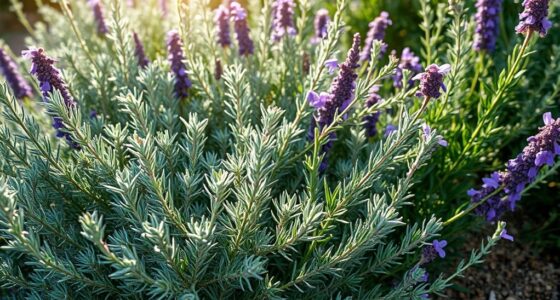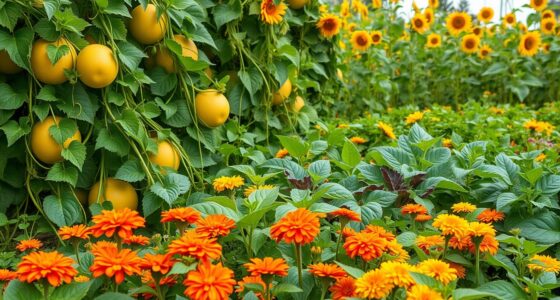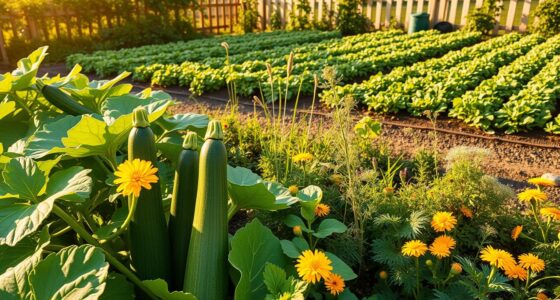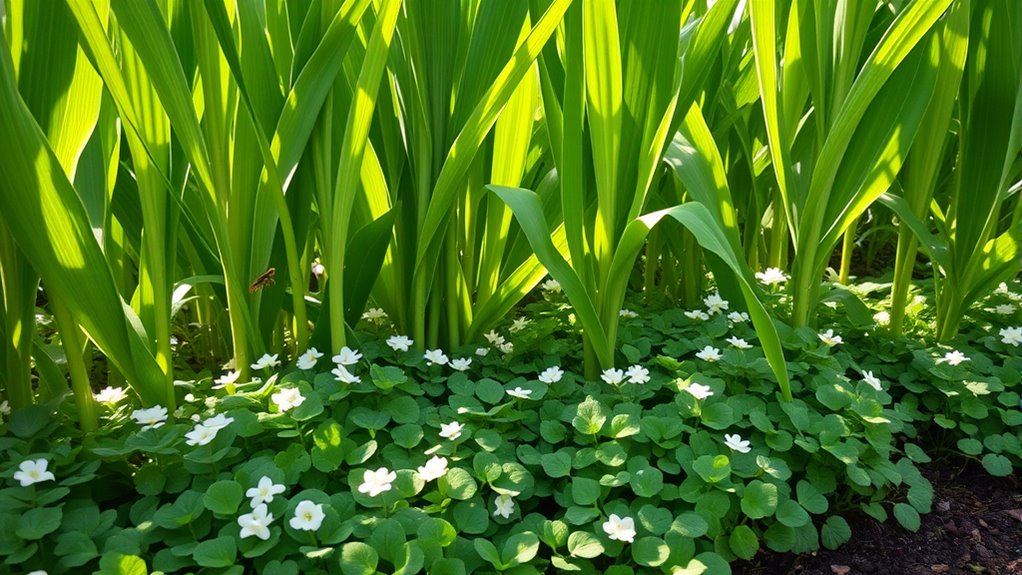

Intercropping corn with clover offers numerous benefits, including enhancing soil health, fixing nitrogen naturally, and improving overall crop productivity. The dense cover suppresses weeds and attracts beneficial insects that help manage pests. It also conserves soil moisture and improves water retention, making your farm more resilient. Combining traditional cover cropping with modern equipment streamlines planting and harvesting, promoting sustainable practices. Keep exploring to discover how these natural companions can transform your farming system even further.
Key Takeaways
- Intercropping corn with clover boosts soil fertility through nitrogen fixation and organic matter addition.
- Clover suppresses weeds and attracts beneficial insects, reducing herbicide use and pest pressure.
- The dense ground cover from clover conserves soil moisture and improves water retention for corn.
- Root systems of both plants enhance soil structure, aeration, and water infiltration.
- Combining corn and clover supports sustainable farming by integrating natural pest control and soil health benefits.
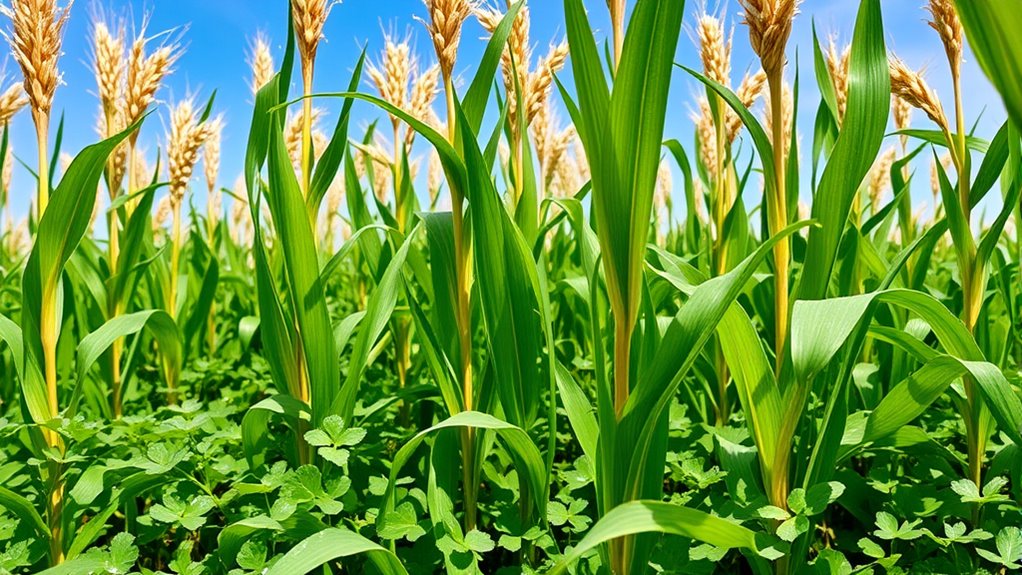
Cover crops are valuable allies in sustainable farming, acting as natural companions that enhance soil health and boost crop productivity. When you choose to plant corn alongside clover, you’re creating a dynamic system that leverages the unique strengths of each crop. Intercropping benefits become evident as these plants work together to improve soil fertility, suppress weeds, and create a more resilient agroecosystem. Clover, as a legume, fixes atmospheric nitrogen, naturally enriching the soil and reducing the need for synthetic fertilizers. This symbiotic relationship benefits your entire planting system and results in healthier, more vigorous corn crops.
Furthermore, intercropping with clover can serve as an effective pest management strategy. Clover attracts beneficial insects that prey on common pests attacking corn, helping to naturally regulate pest populations without relying heavily on chemical pesticides. You’ll notice a decrease in pest pressures, which translates into less crop damage and higher yields. Additionally, the dense ground cover provided by clover can act as a physical barrier, making it harder for weeds to establish themselves and compete with your corn plants. This weed suppression reduces the need for herbicides and minimizes the labor involved in weed management.
Mixing corn and clover also contributes to soil moisture retention by protecting the soil surface from direct sunlight and wind. This helps maintain consistent moisture levels, especially during dry periods, ensuring your crops stay healthy and minimizing stress. The cover crop’s root systems improve soil structure by creating channels that enhance water infiltration and aeration, which benefits the main crop’s roots and overall soil *vitality*. As the clover grows, it adds organic matter to the soil when it decomposes, further improving soil tilth and microbial activity—crucial elements for sustainable farming practices. Additionally, integrating cover crops with modern equipment can streamline planting and harvesting processes, making your farm more efficient.
![No-Till Cover Crop 13-Seed Mix (1 lb. Bag): [50% Clovers Plus Fenugreek, Vetch, Flax, Cowpeas, Buckwheat, Forage Peas, Millet, Lentils, Crimson Clover, Sweet Yellow, White Clover, Medium Red Clover]](https://m.media-amazon.com/images/I/61tz3UL4ZfL._SL500_.jpg)
No-Till Cover Crop 13-Seed Mix (1 lb. Bag): [50% Clovers Plus Fenugreek, Vetch, Flax, Cowpeas, Buckwheat, Forage Peas, Millet, Lentils, Crimson Clover, Sweet Yellow, White Clover, Medium Red Clover]
High-Quality, Nitro-Coated, All-Natural Seed Mix, From USA only
As an affiliate, we earn on qualifying purchases.
As an affiliate, we earn on qualifying purchases.
Frequently Asked Questions
How Do Cover Crops Affect Soil Ph Levels?
Cover crops can influence soil acidity and aid in pH adjustment. When you plant cover crops, they absorb nutrients and organic matter, which can either raise or lower soil pH depending on the species. Legumes, for example, often increase soil pH, reducing acidity, while others might do the opposite. Regularly using cover crops helps you manage soil pH levels naturally, enhancing soil health and crop productivity over time.
Can Cover Crops Be Used in Organic Farming Systems?
Did you know that organic farms often use cover crops twice as much as conventional farms? Yes, cover crops are perfect for organic systems because they improve soil health naturally. Your cover crop selection plays a crucial role, and careful crop rotation planning ensures you maximize benefits like nitrogen fixation and weed suppression. By choosing suitable cover crops, you support organic principles and boost your farm’s productivity sustainably.
What Are the Best Planting Times for Cover Crops?
You should consider planting timing carefully, taking seasonal considerations into account. In most regions, fall is ideal for planting cover crops before winter, allowing them to establish and protect the soil. Spring planting works well for quick-growing covers, especially if you want to improve soil fertility for the upcoming crop. Always check your local climate and growing season to optimize planting timing, ensuring your cover crops thrive and provide maximum benefits.
How Do Cover Crops Impact Local Biodiversity?
Cover crops positively impact local biodiversity by providing wildlife habitat and supporting pollinators. When you plant cover crops, you create a safe space for beneficial insects, birds, and small animals, enriching the ecosystem. They offer food sources and shelter, encouraging diverse species to thrive. By enhancing habitat and supporting pollinator activity, you help maintain a balanced environment, which benefits your entire farm or garden ecosystem.
Are There Any Pests Associated With Corn and Clover Cover Crops?
You might wonder if pests are linked to using corn and clover cover crops. While these plants can attract certain pests, proper pest management and crop rotation strategies help control issues. For example, rotating crops breaks pest cycles, reducing infestations. Regular monitoring and integrated pest management techniques make certain pests don’t become a problem, supporting healthy growth for your crops and maintaining sustainable farming practices.

Outsidepride Perennial Red Clover Seeds – 1/4 lbs. Self-Seeding, Nitrocoated, Inoculated Clover Seeds for Lawn, Yard, Forage, Pasture, Hay, Nitrogen Fixation, Soil Improvement & Crop Rotation Programs
PERENNIAL & VERSATILE APPLICATIONS: Our Trifolium Pratense (red clover seeds), lasting 3-5 years, are perfect for cover crops,…
As an affiliate, we earn on qualifying purchases.
As an affiliate, we earn on qualifying purchases.
Conclusion
By pairing proper plants like corn and clover, you’ll promote productivity, prevent pests, and provide valuable nutrients. When you plant them as partners, you’re planting a powerful partnership that promotes prosperity and pest protection. Embrace the benefits of blending bold, beneficial cover crops, and watch your crops thrive. With clever combinations, you create a resilient, rewarding domain of rich, revived soil. So, start sowing strategic, supportive, and sustainable solutions today for a bountiful, balanced future.

Field Tuff 3-Point Corn and Bean Planter
Quickly and effectively plant your field with Field Tuff’s 3-Point corn and Bean Planter for Tillers ; features…
As an affiliate, we earn on qualifying purchases.
As an affiliate, we earn on qualifying purchases.

Agrisel Bifenthrin Pro 7.9, Insect Control, Safe for Plants & Crops, Insecticide, Effective Against 125+ Insects, Includes 3-Pack of Agrisel Protective Gloves, 1 Gallon
BROAD-SPECTRUM CONTROL: From spiders and ants to fleas, mole crickets, and even stink bugs, our insecticide tackles a…
As an affiliate, we earn on qualifying purchases.
As an affiliate, we earn on qualifying purchases.