
For successful container gardens, pairing plants like tomatoes with basil benefits both by attracting helpful microbes and deterring pests. Marigolds serve as natural guards against nematodes and beetles, while herbs such as thyme and oregano boost soil health and suppress diseases. Incorporating space-efficient combinations like herbs with flowering plants creates a resilient ecosystem. Keep exploring these plant pairings to create a thriving, pest-resistant, and sustainable container garden that flourishes naturally.
Key Takeaways
- Pair tall, sun-loving vegetables like tomatoes with herbs such as basil to maximize space and mutual benefits.
- Use marigolds around vegetables to repel pests naturally and enhance soil health.
- Combine legumes like beans or peas with leafy greens to fix nitrogen and improve soil fertility.
- Incorporate aromatic herbs like thyme and oregano to suppress soil-borne diseases and attract beneficial microbes.
- Select compatible plants that create a balanced ecosystem, reducing the need for chemical interventions and promoting healthy growth.

Have you ever wondered how to make your container gardens thrive? The secret often lies beneath the surface. Healthy, thriving plants depend on beneficial soil microbes that naturally enhance nutrient absorption and bolster plant immunity. When you choose companion plants wisely, you foster a healthy microbiome in your container soil, which leads to more vigorous growth and fewer problems down the line. Incorporating pest repellent plants into your container garden is another smart strategy. These plants naturally deter pests, reducing the need for chemical interventions and keeping your garden vibrant and healthy. Herbs like basil and marigolds aren’t just beautiful—they also work to repel harmful insects, creating a protective barrier around your other plants.
Healthy container gardens thrive by nurturing beneficial soil microbes and planting pest-repellent herbs like basil and marigolds.
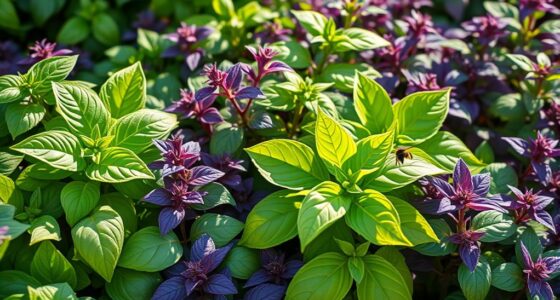
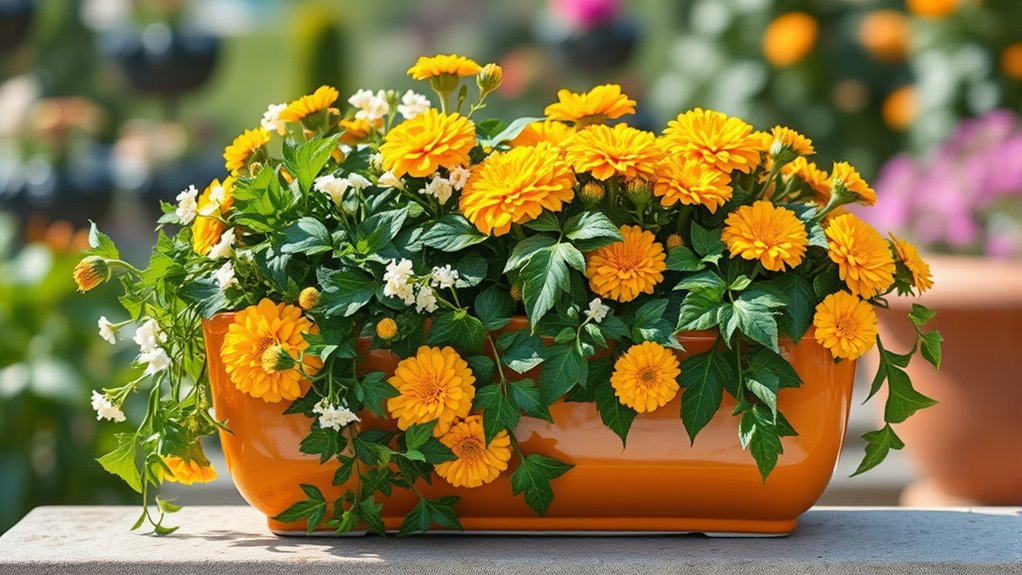
To maximize your container garden’s success, start by selecting plants that complement each other’s growth habits and needs. For example, pairing tall, sun-loving plants like tomatoes with shorter, ground-covering herbs such as basil can make efficient use of space while offering mutual benefits. Basil, in particular, not only attracts beneficial soil microbes that improve plant health but also acts as a pest repellent, keeping away aphids and mosquitoes. Marigolds are another excellent addition; their strong scent confuses pests like nematodes and beetles, acting as natural guards for your other plants. Combining these pest-repellent plants with your main crops creates a dynamic ecosystem within your container, reducing pest pressure without chemicals.
Beyond pest control, companion planting influences soil health profoundly. When you include plants that attract beneficial soil microbes—like certain herbs and flowers—you enhance nutrient cycling within your container. This natural process makes nutrients more available to your plants, encouraging lush, healthy growth. For example, legumes like beans or peas can fix nitrogen in the soil, benefiting neighboring plants that need this essential nutrient. Similarly, aromatic herbs like thyme and oregano can suppress soil-borne diseases, providing an additional layer of protection. Incorporating practices backed by scientific research can further optimize your gardening success. Mixing these plants thoughtfully creates a balanced environment, where beneficial microbes flourish and pests are kept at bay naturally.
In essence, creating a thriving container garden isn’t just about choosing the right plants; it’s about cultivating a mini-ecosystem. By selecting companion plants that attract beneficial soil microbes and repel pests, you ensure your plants stay healthier longer. This approach reduces reliance on chemical pesticides and fertilizers, making your garden more sustainable and resilient. With a little planning, you can turn your container garden into a thriving, pest-resistant oasis that rewards you with abundant blooms and bountiful harvests. The key is understanding these natural relationships and leveraging them to create a balanced, healthy environment for all your plants to flourish.

Garden Safe Insecticidal Soap Insect Killer Spray, 32 Oz
- Ready-to-Use Spray: No mixing needed, spray directly
- Versatile Use: Suitable for indoor, outdoor, greenhouse
- Safe for Edibles: Use up to harvest day
As an affiliate, we earn on qualifying purchases.
As an affiliate, we earn on qualifying purchases.
Frequently Asked Questions
How Do I Prevent Plants From Competing for Nutrients in a Container?
To prevent your plants from competing for nutrients, focus on maintaining soil fertility and proper plant spacing. Use high-quality potting mix enriched with organic matter to guarantee ample nutrients. Space your plants appropriately based on their mature size, giving each enough room for roots to grow without overlapping. Regularly feed with a balanced fertilizer and monitor soil moisture, helping plants thrive without stressing them or competing for resources.
Can I Grow Edible and Ornamental Plants Together in One Container?
Did you know that combining edible and ornamental plants can boost your garden’s productivity by up to 30%? Yes, you can grow them together in one container through companion planting, which enhances plant compatibility and natural pest control. Just make certain the plants have similar light, water, and nutrient needs. This way, you create a thriving, diverse container garden where both food and beauty flourish side by side.
How Often Should I Water Mixed Plant Containers?
You should water mixed plant containers based on your watering schedule, which depends on the plant types and container drainage. Check the soil moisture regularly, and water when the top inch feels dry. Make certain proper drainage to prevent overwatering and root rot. Typically, watering once or twice a week works well, but always adjust based on weather conditions, plant needs, and how quickly the soil dries out.
What Are Common Pest Issues in Container Gardens?
You’ll often face pest issues like aphids, spider mites, or whiteflies in container gardens. To manage them, start with pest identification to target the problem accurately. Use organic pest control methods such as neem oil, insecticidal soap, or introducing beneficial insects. Regularly inspect your plants and act quickly to prevent pests from spreading. Keeping your containers healthy and clean also helps reduce the chances of infestations.
How Do I Ensure Proper Sunlight for Diverse Container Plant Pairings?
Imagine you have a sunny balcony with some shade-tolerant plants and others needing full sun. To guarantee proper sunlight, you can rotate your pots periodically, giving each plant the right amount of light. By understanding each plant’s sunlight requirements and practicing sunlight rotation, you prevent shade intolerance issues. For shade-loving plants, position them where they get filtered light, while sun lovers stay in direct sunlight, optimizing growth for all.
Conclusion
By choosing the right companion plants, you create a harmonious symphony in your pot garden, each one playing its part in a beautiful dance. Your container becomes a tiny universe, full of life and promise, where every leaf and bloom symbolizes growth, hope, and connection. Nurture these plants, and they’ll flourish together, reminding you that even in small spaces, there’s endless potential for beauty and harmony—your own little garden of dreams.