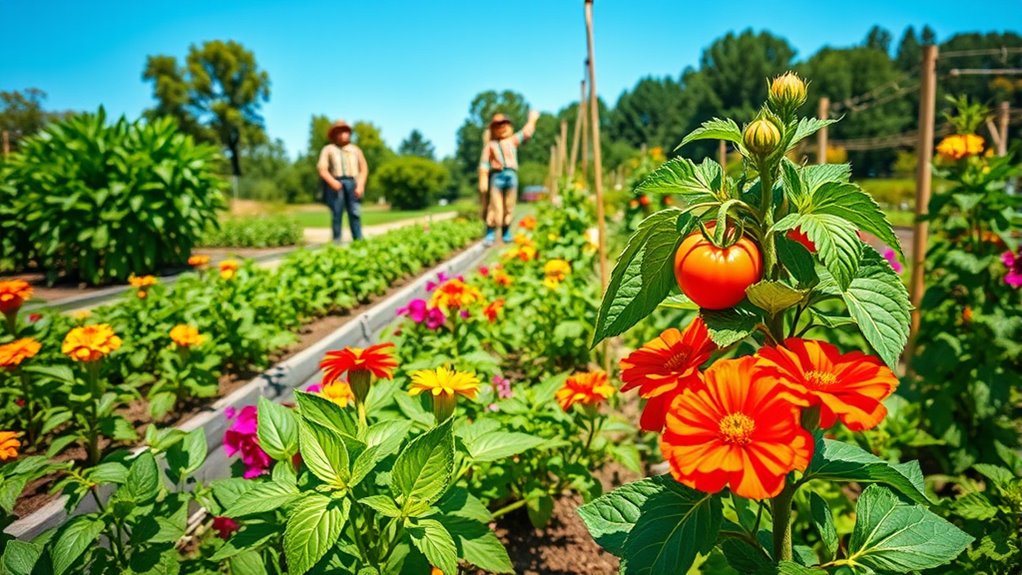

Companion planting isn’t a magic fix for all garden problems. It can help reduce certain pests and boost soil health, but it won’t eliminate pests completely or fix soil deficiencies. Relying solely on plant pairings won’t solve issues like soil pH imbalance or severe nutrient deficiencies. Instead, it should be part of a broader garden strategy. To discover what else needs attention, keep exploring effective gardening practices that work together.
Key Takeaways
- Companion planting is not a guaranteed solution for pest infestations or soil problems; it should be part of a broader garden management plan.
- Relying solely on plant pairings won’t prevent all pests; additional methods like barriers and organic pesticides are often necessary.
- It cannot replace proper soil management practices such as composting, mulching, or soil testing; soil issues require targeted interventions.
- Companion planting doesn’t fix pH imbalance, soil compaction, or contamination; these problems need specific soil amendments and aeration.
- It is a helpful supplement but not a magic fix; successful gardening requires integrating multiple pest and soil health strategies.
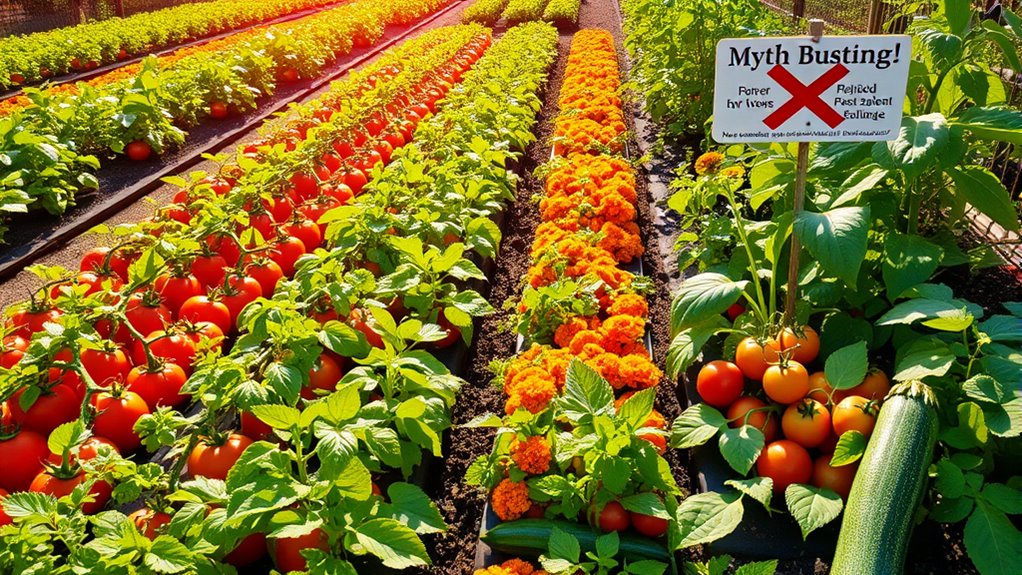
Many gardeners believe that companion planting is a magic solution for all their garden problems, but it’s important to understand its actual limitations. While pairing certain plants can help with pest control and soil enhancement, it’s not a cure-all that guarantees a pest-free, nutrient-rich garden. Relying solely on companion planting can lead to disappointment when pests still find their way in or soil issues persist. It’s essential to see companion planting as a supplementary strategy rather than a complete fix.
Companion planting is helpful but not a magic fix for all garden problems.
When it comes to pest control, companion planting can sometimes reduce the likelihood of certain pests, but it doesn’t eliminate the need for other pest management practices. For example, planting marigolds near tomatoes may deter some nematodes and aphids, but it won’t stop every pest from attacking your crops. Many pests are persistent and adaptable, so relying solely on plant combinations to keep them at bay can be risky. You might still need to use physical barriers, organic pesticides, or integrated pest management techniques to keep pests in check. Companion planting can be part of a broader pest control approach, but it’s not a guaranteed solution on its own.
Similarly, while certain plants can enhance soil quality, companion planting isn’t a substitute for proper soil management. Some plants, like legumes, do fix nitrogen in the soil, which can benefit neighboring plants, but their impact is limited. You can’t depend on plant pairings alone to rebuild depleted soil or correct serious deficiencies. Soil enhancement often requires additional practices like composting, mulching, and soil testing. Relying solely on companion planting to improve soil health can lead to nutrient deficiencies or poor plant growth if you neglect these other essential steps.
Furthermore, companion planting doesn’t address all soil-related issues such as pH imbalance, compacted soil, or contamination. These problems require targeted interventions like soil amendments, aeration, or remediation. Expecting companion plants to fix these problems is unrealistic. In fact, soil health management involves a combination of strategies beyond just plant pairing to ensure optimal growing conditions. Instead, use companion planting as part of an integrated garden management plan, combining it with proper soil care practices for better results.

Earth's Ally 3-in-1 Plant Spray 32 oz Conc. Makes 3 gal | Better Than Neem Oil | Insecticide, Fungicide & Spider Mite Control for Organic Gardening, Pest Repellent for Indoor & Outdoor Gardening
3-IN-1 GARDEN SPRAY – Earth’s Ally 3-in-1 Plant Spray is an insecticide, miticide and fungicide. The formula effectively…
As an affiliate, we earn on qualifying purchases.
As an affiliate, we earn on qualifying purchases.
Frequently Asked Questions
Can Companion Planting Replace All Chemical Pest Controls?
Companion planting alone can’t replace all chemical pest controls. While it helps reduce pests naturally, you still need organic pesticides for severe infestations. Relying solely on companion planting might overlook underlying issues like soil health, which also affects pest resistance. To keep your garden healthy, combine companion planting with good soil practices and organic treatments, creating a balanced approach that minimizes chemical use without risking pest outbreaks.
Does Companion Planting Guarantee Complete Weed Suppression?
You might wonder if companion planting guarantees complete weed suppression. The truth is, weed suppression myths exist, and companion planting alone can’t fully control weeds. While it helps reduce weeds and supports pest control limitations, it’s not foolproof. Relying solely on companion planting might leave some weeds unchecked. Combining it with other methods ensures better weed management, but no method guarantees total weed suppression.
Is Companion Planting Effective in All Climate Zones?
You might wonder if companion planting works across all climate zones. While it can improve planting compatibility and support climate adaptation, its effectiveness varies depending on local conditions. In some zones, certain plant combinations thrive, but in others, they may struggle. To maximize success, adapt your companion planting choices to your specific climate, understanding which plants naturally flourish together, rather than assuming it guarantees universal results.
Can Companion Planting Improve Crop Yields Significantly?
Imagine your garden as a bustling city, where companion planting acts like friendly neighbors boosting each other’s growth. You can see significant crop yield improvements when you attract beneficial insects and enhance soil nutrients through smart plant pairings. While it’s not a magic fix, this teamwork encourages healthier plants and better harvests. So, yes, companion planting can boost your yields, especially when you focus on these natural, supportive interactions.
Are There Any Plants That Should Never Be Paired Together?
You might wonder if any plants should never be paired together. Some plant incompatibility exists, where certain species hinder each other’s growth. Avoid toxic plant pairings, like planting nightshade near brassicas, as it can cause issues. Carefully research each plant’s needs and potential interactions to prevent negative effects. While companion planting offers benefits, always beware of plant incompatibility and toxic combinations that can undermine your garden’s success.
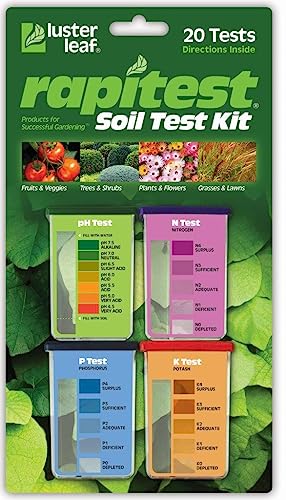
Rapitest Soil Test Kit for Gardens, Vegetables, Flowers and Lawns. USA designed and assembled soil tester completely, quickly and accurately measures/analyzes soil pH acidity and garden nutrients.
Quick, at home results for Soil pH, Nitrogen, Phosphorous and Potash Innovative and inexpensive soil test kit features…
As an affiliate, we earn on qualifying purchases.
As an affiliate, we earn on qualifying purchases.
Conclusion
So, next time you’re planning your garden, remember that while companion planting offers benefits, it’s not a magic fix. Don’t rely solely on it to solve every pest or growth issue—sometimes, a chance encounter with the right plant or a lucky weather change makes all the difference. Just like discovering a hidden gem among your seedlings, understanding its limits helps you grow smarter and more confidently. Sometimes, luck truly plays a part in a thriving garden.

Farmer’s Secret Soil Revitalizer (32oz) – Organic (OMRI Listed) Dirt Health Booster – Liquid Compost Soil Amendment – Activated Humic Acid – Great for Fall/Spring Application
Feed the soil not the plants – stimulate microbial activity in your soil and boost probability of success…
As an affiliate, we earn on qualifying purchases.
As an affiliate, we earn on qualifying purchases.

Walensee Lawn Aerator Spike Metal Manual Dethatching Soil Aerating Lawn with 15 Iron Spikes, Pre-Assembled Grass Plug Aerator Tools for Yard, Lawn Aeration, Garden Tool, Revives Lawn Health, Patented
EFFECTIVE LAWN REVIVAL TOOL:Walensee manual lawn aerator helps you loosen soil and thatch to let air, water, and…
As an affiliate, we earn on qualifying purchases.
As an affiliate, we earn on qualifying purchases.