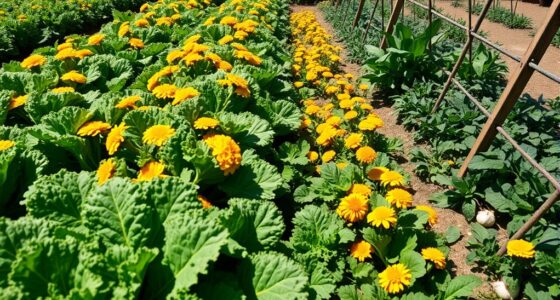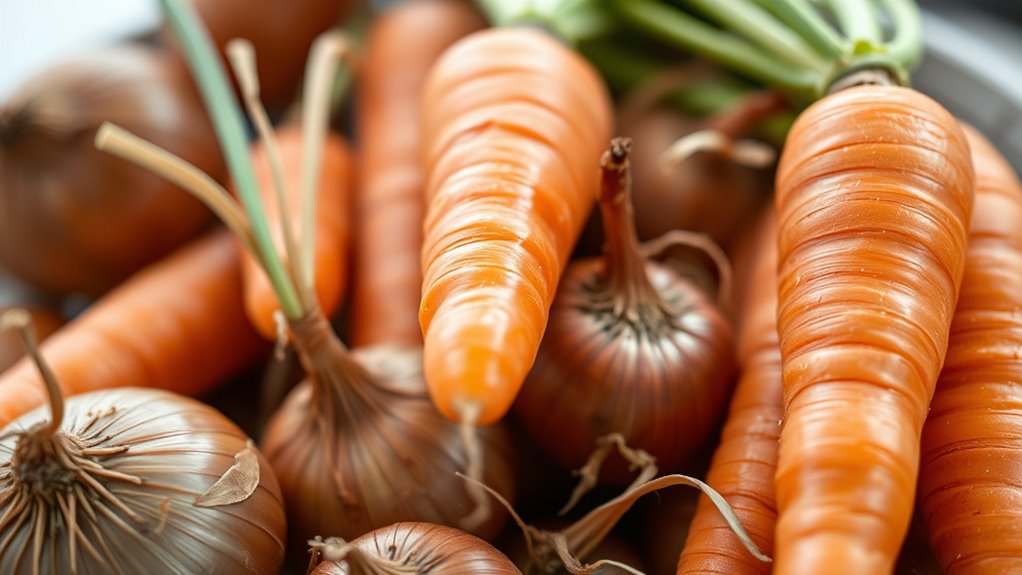

Combining carrots and onions in your garden can confuse pests through their distinct scents, making it harder for insects like carrot flies and aphids to locate their favorite plants. While carrots emit a sweet, earthy smell that attracts some pests, onions release a pungent aroma that can repel others or attract different ones. By understanding how these scents interact, you can better manage pest behavior and protect your crops. Keep exploring to discover effective strategies for scent-based pest control.
Key Takeaways
- Combining carrots and onions can confuse pests that rely on scent cues, reducing their ability to locate host plants.
- The contrasting aromas of carrots (sweet, earthy) and onions (pungent) disrupt pest scent trails and navigation.
- Interplanting these crops creates a scent barrier, making it harder for pests to identify and target specific plants.
- Using crop rotation and companion planting with these scents can mask pest attractants, decreasing pest infestations.
- Scent confusion from mixed planting supports natural pest control, reducing the need for chemical interventions.
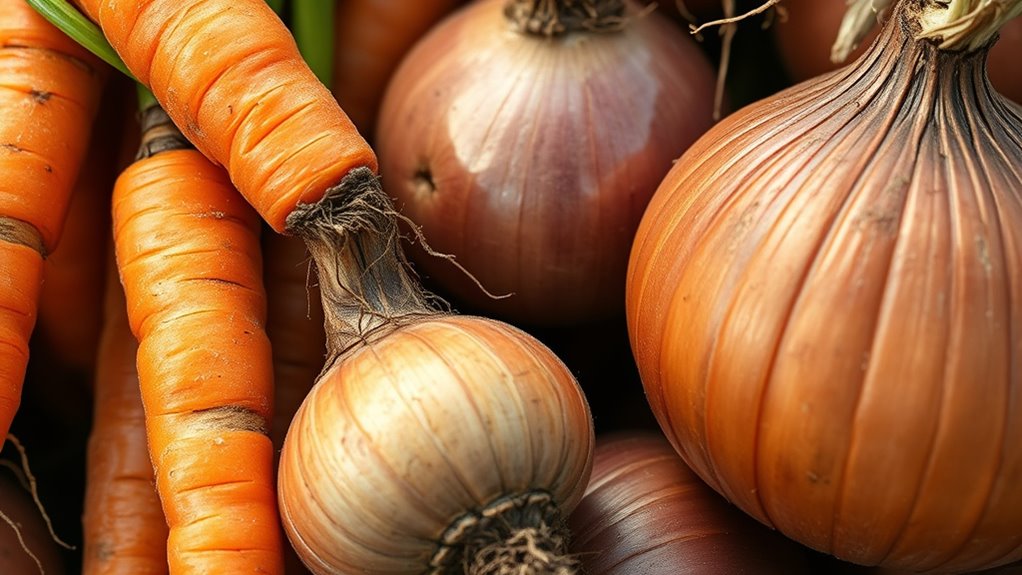
Carrots and onions are versatile vegetables that add flavor and nutrition to countless dishes. When you grow them in your garden, you might not realize how their smells can influence pest behavior. Both plants emit strong odors that can either attract or deter certain pests, making scent management vital for a healthy crop. Carrots, with their sweet, earthy aroma, tend to attract pests like carrot flies. These tiny insects are drawn to the scent of the roots, especially when the plants are stressed or weak. Onions, on the other hand, produce a pungent smell that can act as a natural repellent for some pests, including aphids and certain beetles. However, if not managed carefully, the smell of onions can also attract different pests, such as thrips or onion maggots, which are specifically attracted to allium family members.
To minimize pest attraction, crop rotation becomes an essential strategy. When you rotate your carrot and onion crops each season, you break the cycle that pests rely on to find their preferred hosts. For example, planting carrots in a different area after onions can reduce the likelihood of carrot flies establishing a foothold in your garden. Similarly, moving onions away from previous onion beds prevents pests that overwinter or linger in the soil from attacking again. This practice not only disrupts pest life cycles but also improves soil health by preventing the buildup of pests and diseases specific to these plants. Effective crop rotation involves planning ahead, so you don’t plant carrots or onions in the same spot consecutively. Instead, you can plant legumes, leafy greens, or other unrelated crops in between, which helps mask the scent cues pests follow, making your garden less attractive to them.
Furthermore, understanding how these plants attract pests through their smell allows you to implement companion planting and biological controls more effectively. For example, interplant carrots with herbs like dill or cilantro, which can repel some pests, or plant onions alongside crops that are less prone to pest attacks, creating a natural barrier. Combining crop rotation with strategic planting and pest management techniques not only reduces pest attraction but also promotes a balanced ecosystem in your garden. Additionally, incorporating mulching techniques can help suppress weed growth and maintain soil moisture, further supporting healthy plant development. By paying attention to the scents your vegetables produce and rotating crops wisely, you can considerably lower pest pressure, resulting in healthier plants and better yields. Remember, managing pest attraction isn’t just about using chemicals; it’s about understanding nature and working with it to create a thriving, pest-resistant garden environment.
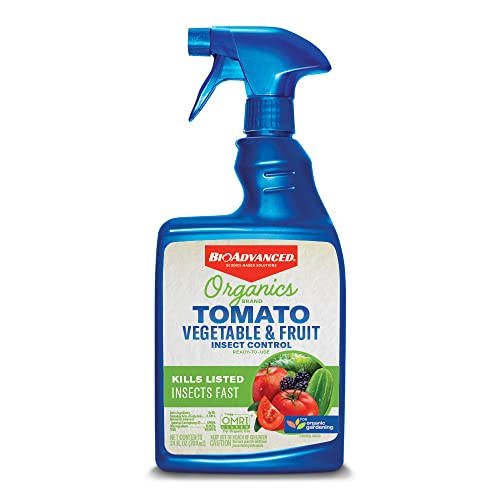
BioAdvanced Organics Brand Tomato, Vegetable & Fruit Plant Bug Spray, Ready-to-Use, 24 oz
KILLS LISTED INSECTS FAST: This plant insect spray kills by contact to protect your edibles, including organic tomatoes,…
As an affiliate, we earn on qualifying purchases.
As an affiliate, we earn on qualifying purchases.
Frequently Asked Questions
Do Carrots and Onions Repel Specific Pest Species?
Yes, carrots and onions can repel specific pests by disrupting their scent interaction dynamics. You’ll notice pest behavioral adaptations, like avoiding areas with strong onion or carrot odors, as these scents interfere with their natural navigation. By planting these vegetables, you create a scent barrier that confuses pests, making it harder for them to locate your crops. This natural method can help reduce pest activity effectively.
How Long Does the Smell Confusion Last?
The smell confusion from carrots and onions typically lasts for a few weeks, depending on pest adaptation and environmental factors. As the scents fade, pests may start to recognize the plants again, reducing their deterrent effect. To maximize scent longevity, regularly plant fresh layers or supplement with other pest-repellent strategies. Keep monitoring pest activity closely, and reapply or refresh your methods to maintain effective pest deterrence over time.
Can Interplanting Carrots and Onions Improve Crop Yields?
Imagine you’re in a science lab of your garden—interplanting carrots and onions can boost your crop yields through effective companion planting. This method promotes crop diversity, which confuses pests and reduces their damage. By combining these plants, you create a natural pest barrier, leading to healthier growth and better harvests. So, yes, mixing carrots and onions is a smart way to improve your garden’s productivity and resilience.
Are There Any Drawbacks to Planting These Vegetables Together?
Yes, planting carrots and onions together can have drawbacks. While this companion planting can aid pest management by confusing pests, it might also lead to competition for nutrients and space, potentially reducing overall yields. You should monitor plant growth closely, as overcrowding or imbalanced nutrient uptake can hinder both crops. Balancing pest control benefits with proper spacing guarantees you optimize the advantages of companion planting without sacrificing crop health.
Do Different Onion Varieties Affect Pest Confusion Effectiveness?
Different onion varieties do affect pest confusion effectiveness because their scent profiles vary markedly. Some varieties emit stronger or more distinctive aromas, which can enhance pest deterrence and confuse pests more effectively. Additionally, onion flavor variations influence the intensity of the scent, making certain varieties better at masking carrot odors. By choosing onion types with diverse scent profiles, you improve your pest repellent strategy and increase your garden’s overall health.

Laminated Companion Planting Chart for Vegetables Herbs Organic Gardening Guide with Plant Pairings to Attract Beneficial Insects and Prevent Pests(Unframed,12x18inch(30x45cm))
We have reserved a 0.6in (1.5cm) white margin for you, which is convenient for you to frame with…
As an affiliate, we earn on qualifying purchases.
As an affiliate, we earn on qualifying purchases.
Conclusion
By planting carrots and onions together, you confuse pests and protect your garden. You disrupt their senses, disorient their targets, and defend your crops naturally. You create a barrier, a distraction, a defense that works without chemicals. You harness the power of smell, the strength of diversity, and the beauty of balance. In your garden, you turn confusion into protection, chaos into harmony, and pests into no threat at all.
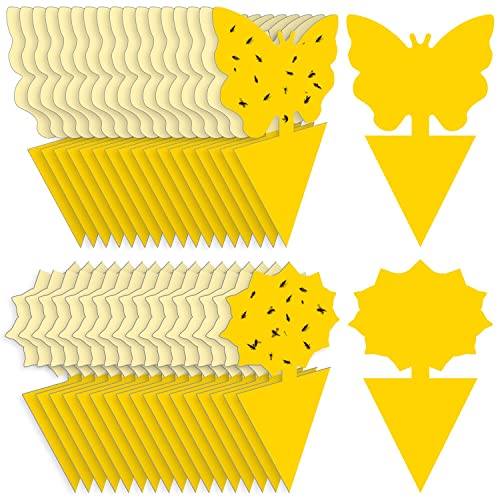
Fruit Fly Traps Fungus Gnat Traps Yellow Sticky Bug Traps 36 Pack No Harm and Odorless for Indoor Outdoor Use Protect The Plant
Yellow Sticky Traps — Bright yellow color attract flying insects, and high quality glue keeps them from escaping….
As an affiliate, we earn on qualifying purchases.
As an affiliate, we earn on qualifying purchases.

VermExon Peppermint Oil Insect & Pest Control Spray – 16oz Natural Plant-Based Bug Killer for Spiders, Ants, Flies, and Other Insects, Safe for Home & Kitchen Use
[Highly Effective Against Pests]: Scientifically engineered with the natural power of peppermint oil, VermExon 16oz spray is proven…
As an affiliate, we earn on qualifying purchases.
As an affiliate, we earn on qualifying purchases.