Planting brassicas alongside calendula and chamomile offers natural pest control and improves soil health. Calendula attracts beneficial insects like ladybugs, while chamomile deters pests such as aphids and beetles. These companion plants enrich the soil by drawing nutrients from deep within, reducing your need for synthetic fertilizers. Together, they create a resilient, thriving garden that’s easier to maintain. Keep exploring to discover how to maximize these benefits for a healthy, productive garden.
Key Takeaways
- Calendula and chamomile attract beneficial insects that naturally control pests on brassicas.
- These companion plants help improve soil fertility by enriching nutrients through their decomposing organic matter.
- Chamomile acts as a natural repellent, deterring pests like beetles and aphids from brassica crops.
- Calendula and chamomile support healthy plant growth and boost brassica yields through improved soil conditions.
- Incorporating these plants creates a pest-resistant, sustainable garden ecosystem for brassicas.
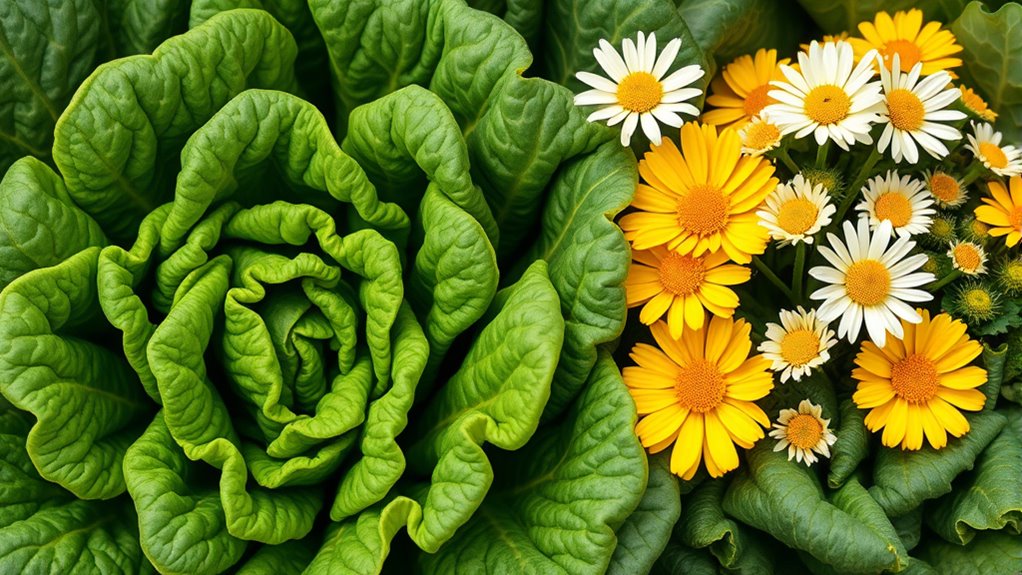
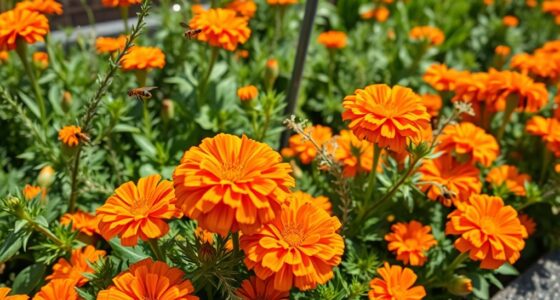
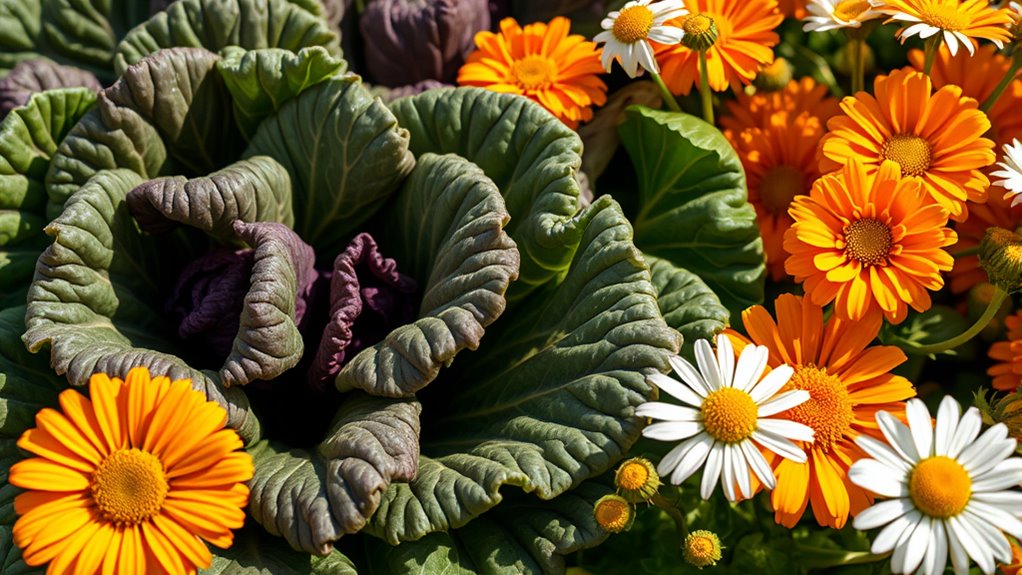
Have you considered combining brassicas with calendula and chamomile in your garden? This pairing isn’t just about creating a visually appealing space; it’s a strategic move to enhance pest control and soil enrichment naturally. Brassicas, which include crops like broccoli, cabbage, and kale, are often susceptible to pests such as aphids, cabbage worms, and flea beetles. By planting calendula and chamomile alongside them, you introduce powerful allies that help keep these nuisances at bay. Calendula, with its bright orange flowers, attracts beneficial insects like ladybugs and hoverflies that feast on pests, reducing the need for chemical interventions. Chamomile, on the other hand, acts as a natural pest repellent, deterring beetles and aphids while simultaneously improving the overall health of your soil.
Combine brassicas with calendula and chamomile to naturally boost pest control and enrich soil health.
When you incorporate calendula and chamomile into your brassica beds, you’re also enriching the soil. These plants are known as dynamic accumulators, meaning they draw up nutrients from deep within the soil and make them available to other plants when they decompose. As they grow and eventually break down, they release essential nutrients like potassium, calcium, and trace minerals, which enhance soil fertility. This natural soil enrichment reduces the need for synthetic fertilizers, creating a more sustainable and healthy garden environment. Plus, the organic matter from these flowers improves soil structure, increasing aeration and water retention—key factors in supporting strong, healthy brassicas.
Planting calendula and chamomile around your brassicas is straightforward. You can sow seeds directly into the soil or start them indoors and transplant once seedlings establish. Their vibrant blooms not only serve as pest control agents but also attract pollinators, which are essential for fruit and seed production. As a gardener, you’ll notice that these companion plants also help suppress weeds, further reducing competition for nutrients and water. The presence of calendula and chamomile creates a mini-ecosystem that balances pest populations naturally and fosters soil vitality, leading to healthier, more productive brassicas.
In essence, integrating calendula and chamomile with your brassicas is a simple, effective way to promote a thriving garden ecosystem. They work together to control pests without chemicals and enrich your soil over time, ensuring your vegetables grow stronger and more resilient. This approach aligns with organic gardening principles and encourages a sustainable, low-maintenance garden that yields delicious, healthy produce. So next time you’re planning your planting layout, think about how these companion plants can transform your garden into a thriving, pest-resistant, soil-enriched haven.
Top picks for "brassica calendula chamomile"
Open Amazon search results for this keyword.
As an affiliate, we earn on qualifying purchases.
Frequently Asked Questions
Can Brassicas Be Grown Indoors With Calendula and Chamomile?
Yes, you can grow brassicas indoors alongside calendula and chamomile. These plants make excellent companions in indoor gardening, as calendula and chamomile can help deter pests that target brassicas. To succeed, guarantee your indoor space has ample sunlight, proper ventilation, and suitable containers. Regular watering and good airflow will promote healthy growth. With proper care, you’ll enjoy a thriving, pest-resistant garden of brassicas with calendula and chamomile indoors.
Are There Any Pests Specific to These Plant Combinations?
You’ll find that pest behavior varies with plant combinations like brassicas, calendula, and chamomile. While no pests are exclusive to this mix, aphids and cabbage worms may still target brassicas, but calendula and chamomile can deter some pests naturally. This highlights the companion planting benefits, as these herbs attract beneficial insects that help control pests, reducing the need for chemicals and promoting healthier indoor gardens.
How Often Should I Water These Plants Together?
You should water your brassicas, calendula, and chamomile together about once or twice a week, depending on your local climate and soil moisture requirements. Keep the watering schedule consistent to maintain even soil moisture, which helps prevent stress and pests. Check the top inch of soil regularly; if it feels dry, it’s time to water. Avoid overwatering, as it can lead to root rot and other issues.
Do They Require Different Soil Ph Levels?
Ever wondered if your plants prefer different soil conditions? Brassicas typically thrive in slightly acidic to neutral soil with a pH of 6.0-7.0, while calendula and chamomile prefer a more neutral to slightly alkaline pH of 6.3-7.0. So, do they require different soil pH levels? Not greatly, but maintaining a balanced soil acidity will guarantee all three flourish together. Adjust your soil accordingly for ideal growth.
Can I Harvest These Plants at the Same Time?
Yes, you can harvest these plants at the same time, but keep in mind the companion planting benefits and harvest timing considerations. Brassicas, calendula, and chamomile often have similar growth cycles, so monitoring their development helps you plan harvests efficiently. While calendula and chamomile might bloom earlier, harvesting brassicas at their peak guarantees all are ready around the same time, maximizing your garden’s productivity and health.
Conclusion
When you combine brassicas with calendula and chamomile, you’re not just nurturing healthy plants—you’re creating a natural harmony that benefits your garden. It’s funny how these flowers seem to appear just when your brassicas need extra support, almost like they’re guiding your garden’s balance. Keep experimenting with this pairing, and you might find that nature’s coincidences often lead to the best results, turning your garden into a thriving, resilient space.