
To reduce pest pressure on your onion family crops, create strategic borders using companion plants like marigolds or basil, which repel pests such as nematodes and aphids. Incorporate crop rotation with legumes or leafy greens to disrupt pest lifecycles and prevent buildup. Borders act as physical and biological barriers, making it harder for pests to reach your main crops and encouraging beneficial insects. Keep exploring for more tips to boost your pest defenses effectively.
Open a free Amazon Business account
Business pricing, bulk buying and tax-exempt orders.
As an affiliate, we earn on qualifying purchases.
Key Takeaways
- Establishing borders with companion plants like marigolds or basil repels pests such as nematodes, aphids, and thrips.
- Borders act as physical and biological barriers, confusing or deterring pests from reaching onion family crops.
- Using non-host crops in borders interrupts pest life cycles, reducing infestations over time.
- Borders encourage beneficial insects that prey on pests, enhancing natural pest control.
- Strategic border placement minimizes pest pressure and decreases the need for chemical pesticide use.
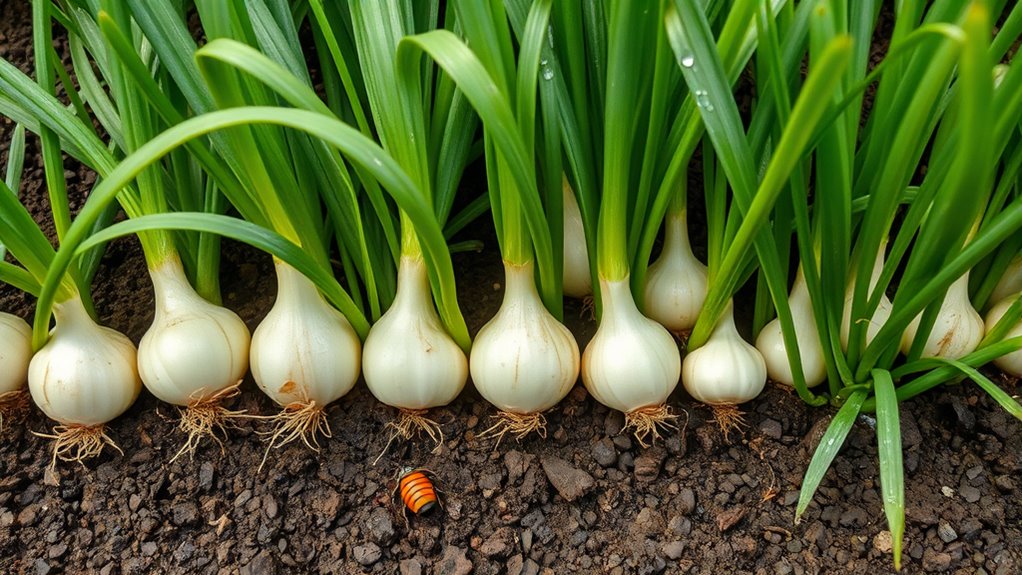
Have you ever wondered how onion family crops like onions, garlic, and leeks establish their borders in agricultural fields? It’s not just about planting them neatly in rows; it’s about strategic placement that minimizes pest pressure and promotes healthy growth. One effective way to do this is through crop rotation. By rotating onion family crops with other plant groups, you prevent pests specific to these plants from settling in and spreading. For example, switching your onions or garlic with legumes or leafy greens each season reduces the chances of pests like onion maggots or thrips from establishing a foothold. This practice disrupts their lifecycle, making it harder for pests to find a host year after year. It also benefits the soil by preventing nutrient depletion and reducing disease buildup, which can be common when the same crops are planted repeatedly in the same spot. Additionally, research shows that crop rotation can influence pest population dynamics, helping keep infestations under control naturally.
Beyond crop rotation, companion planting becomes a crucial tool in establishing effective borders. You can plant certain herbs and flowers alongside onions, garlic, and leeks to naturally repel pests. Marigolds, for instance, produce compounds that deter nematodes and aphids, while basil can repel thrips and flies. When you carefully choose companion plants, they act like a pest barrier, creating a natural border that keeps unwelcome visitors at bay. This strategy not only reduces your reliance on chemical pesticides but also enhances the biodiversity of your garden. As a result, beneficial insects like ladybugs and predatory beetles are encouraged, helping keep pest populations in check.
Strategic border placement also involves understanding the pests’ behavior. Many pests tend to crawl along the edges of a planting bed or are attracted to specific signals like certain scents or plant residues. By establishing a border of companion plants or rotating crops in these areas, you create a physical and biological barrier that confuses or repels pests. Think of it as setting up a natural fence that pests find less inviting. This method helps protect your main crops and reduces the need for intervention later in the season.
marigold plants for pest control
As an affiliate, we earn on qualifying purchases.
As an affiliate, we earn on qualifying purchases.
Frequently Asked Questions
Can Onion Family Borders Prevent All Types of Pests?
Onion family borders can’t prevent all types of pests because pest specificity varies. While they effectively deter certain insects like aphids and carrot flies, some pests may still find their way in. The border’s durability also matters; a sturdy, well-maintained barrier lasts longer and offers better protection. So, while onion borders are a helpful tool, combining them with other pest management strategies ensures thorough pest control.
How Long Does It Take for Onion Borders to Show Effectiveness?
You’ll see onion borders start working almost immediately — within days, in fact! Their strong scent acts as a powerful pest deterrent, making them unbeatable in companion planting. Usually, pests avoid your garden within a week, thanks to the onion’s natural defenses. Keep planting and maintaining these borders, and you’ll notice fewer pests and healthier plants in no time. It’s like having an unstoppable pest shield right at your garden’s edge!
Are Onion Borders Suitable for Organic Gardening?
Yes, onion borders are suitable for organic gardening. They work well with companion planting strategies, helping deter pests naturally. You can enhance their effectiveness by practicing crop rotation, which prevents soil depletion and pest buildup. By planting onions around your garden, you create a pest-resistant barrier, reducing the need for chemical controls. This approach keeps your garden healthy, sustainable, and aligned with organic gardening principles.
What Maintenance Is Required for Onion Family Borders?
Back in the day, maintaining onion family borders is straightforward. You’ll need to manage compost carefully to keep the soil healthy and prevent disease. Regularly inspect your plants, remove any weeds, and practice good border planting techniques to guarantee they stay vigorous. Mulching helps retain moisture, and crop rotation prevents pests. With consistent attention, your onion borders stay productive and pest-resistant, making gardening both rewarding and manageable.
Can Onion Borders Be Combined With Other Pest Control Methods?
You can definitely combine onion borders with other pest control methods. Using companion planting alongside pest deterrents strengthens your defense, as onions repel pests naturally. Plant onions near carrots, lettuce, or peppers to enhance pest resistance. Additionally, you might consider organic sprays or beneficial insects. This integrated approach creates a more effective, eco-friendly pest management system, helping protect your garden without relying solely on chemical solutions.
Conclusion
By planting onion family borders, you’re creating a vigilant fortress around your garden, a silent army ready to chase away pests. Think of these borders as your garden’s protectors, standing tall like guardians at a castle’s gate. With their sharp scents and sturdy presence, they turn pest invaders into unwelcome guests. So, let these green warriors stand guard, turning your garden into a flourishing, pest-resistant haven where your plants can thrive happily and safely.
NFL season / tailgating Picks
team gear
As an affiliate, we earn on qualifying purchases.