
TL;DR

Get garden gear delivered free with Prime
- Fast, free delivery on millions of items
- Prime Video, Amazon Music and more included
- Member-only deals all year
Gardening Know How reports that a slice of raw potato placed cut-side down on houseplant soil can attract fungus gnat larvae, making them easier to spot and remove. The method is a monitoring aid, not a complete treatment: it does not affect eggs, pupae or adult gnats.
A raw potato slice can help houseplant owners spot fungus gnat larvae by drawing feeding larvae toward the soil surface, according to a Gardening Know How report. The low-cost method can show whether larvae are present, but it does not eradicate an infestation or affect eggs, pupae and adult flies.
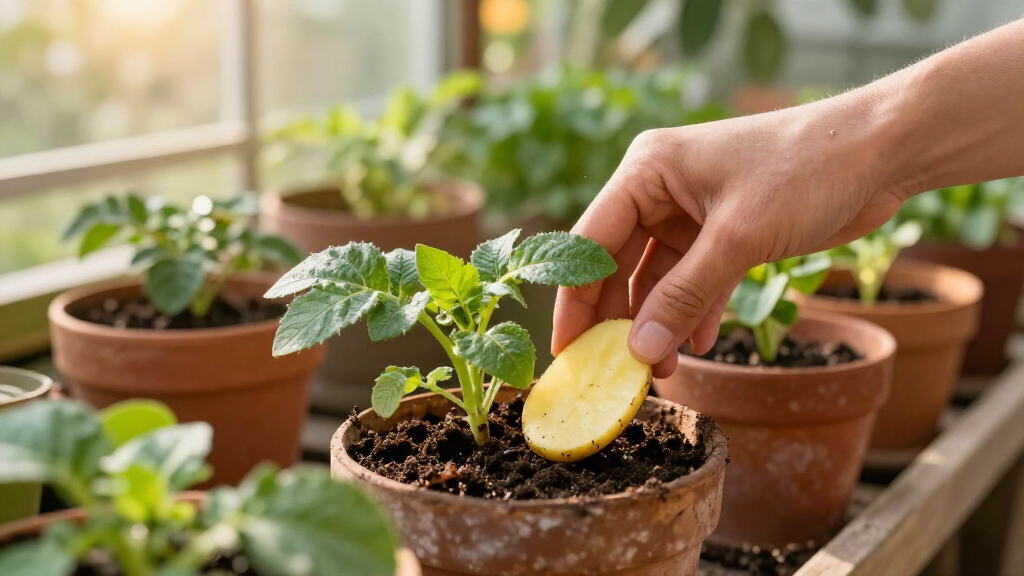
The report recommends cutting a raw potato into slices about ¼ inch (6.4 millimeters) thick, then placing one cut-side down on the potting mix and pressing it lightly against the soil. After a day or two, growers can lift the slice and inspect its underside and the soil beneath it for tiny larvae. If none are visible, the report says to replace the slice and check again after another day or two; larvae may take time to find it. A magnifying glass can help because the larvae are small and may be difficult to distinguish against damp, dark potting mix.
The larvae are described as clear or whitish, legless and worm-like, with a shiny black head. The report says they feed on fungi and decaying organic matter but can also consume fine root hairs. A minor infestation may cause little harm, while larger numbers can damage roots and stunt growth, particularly in seedlings and young plants.
Any larvae found on the potato can be discarded with the slice, but the report cautions against leaving it in the pot. A raw potato will break down in damp soil, adding decaying material that larvae can feed on. Replacing used slices also lets growers compare whether larvae are still appearing. A clean slice is not proof the pot is pest-free, since eggs and other life stages will not be drawn onto it.
A Soil Check, Not a Cure
The method offers a simple way to check for a hidden stage of the pest before relying only on visible flies. Adult fungus gnats are conspicuous, but the report says their larvae live in damp potting mix, where they can feed out of sight. Finding larvae can alert a grower to a potential root problem and help determine whether further control steps are needed.
Its limits matter: the potato does not poison or kill the infestation. It removes only larvae that gather on the slice and are then discarded. Eggs remain in the soil, while pupae and flying adults are not affected. The technique is best understood as a low-cost monitoring and partial removal measure, rather than a stand-alone solution.
Products Worth Considering

Philips Hue Festavia 130-Foot Indoor/Outdoor Smart String Lights, 500 Mini Color-Changing LEDs

Dyson Big Ball Multi Floor Canister Vacuum, Yellow

Hisense 43-Inch E6SR Series Hi-QLED 4K UHD Smart Roku TV (2026 Model)
As an affiliate, we earn on qualifying purchases.
Why Gnats Persist in Pots
Fungus gnats are small flies commonly associated with damp houseplant potting mix. The source report identifies many as belonging to the genus Bradysia and says a female can lay up to 200 eggs in damp mix. It describes larvae feeding for a couple of weeks before pupating near the surface, with adults emerging about a week later. At room temperature, the report estimates a generation takes roughly three to four weeks.
That cycle helps explain why a few adults can be followed by more flies, though the report does not provide a study or independent data for those estimates. It also points to seasonal watering habits: houseplants may use less water during fall and winter, while soil kept as wet as it was in summer can create favorable conditions for eggs and larvae.
“The potato doesn’t poison anything – it just draws feeding larvae up from the roots, and tossing a slice with larvae on it removes those ones.”
— Gardening Know How report
Limits of the Potato Test
The report presents the potato method as a practical home check but does not cite controlled testing that measures how reliably it detects larvae or how many it removes. One clean inspection cannot rule out larvae, and the slice does not reveal eggs, pupae or adult activity. The article also does not give a specific threshold for deciding when an infestation is severe enough to require another treatment.
Its suggested alternatives, including biological products, may vary by product and use. The source advises checking that a product label permits use on indoor potted plants and following its directions. The effectiveness of any treatment in a particular home can depend on conditions such as soil moisture and temperature.
Check Soil and Adjust Care
For growers who find larvae, the report recommends reviewing watering first: allow the top inch of mix to dry before watering again, empty the saucer and check that the pot drains properly. It also suggests yellow sticky traps to catch adult flies and track their numbers, while stressing that these traps do not reach larvae in the soil.
If gnats continue, the report lists products containing Bacillus thuringiensis subsp. israelensis (Bti) and beneficial nematodes as possible options. It says to follow the product label, including confirming that indoor potted plants are an approved use. The next useful check is whether repeated potato inspections and adult counts decline; the source does not specify a timeline for declaring an infestation resolved.
Key Questions
How do you use a potato slice to check for fungus gnat larvae?
Place a slice of raw potato about ¼ inch (6.4 millimeters) thick cut-side down on the potting mix. Check underneath after a day or two for small larvae; if none appear, replace it and check again later.
Does the potato trick get rid of fungus gnats?
No. It can attract and remove larvae found on the discarded slice, but it does not kill eggs, pupae or adult flies and is not a complete treatment.
What do fungus gnat larvae look like?
The source describes them as tiny, clear or whitish, legless larvae with a shiny black head. They can be hard to see in dark, damp soil, so a magnifier may help.
What should I do if I find larvae in a houseplant?
Remove and discard the potato slice, then review watering and drainage. The report suggests letting the top inch of soil dry before watering again and says any further treatment should be approved for indoor potted plants and used according to its label.
Source: gardeningknowhow.com