TL;DR

Get garden gear delivered free with Prime
- Fast, free delivery on millions of items
- Prime Video, Amazon Music and more included
- Member-only deals all year
Rural Sprout published a guide to 60 plants that can grow in gravel gardens and explains how to establish one. The approach uses a 3-to-5-inch gravel mulch over soil, not gravel as the plants’ sole growing medium; the report is an early-stage gardening account, not a trial establishing that every listed plant will thrive in every site.
Rural Sprout has published a guide to 60 plants for gravel gardens, with instructions for starting a garden using gravel as a mulch over soil. The report matters to gardeners considering a lower-water planting approach, but its author says their own gravel garden is still at an early stage, so the article does not document results from a completed planting trial.
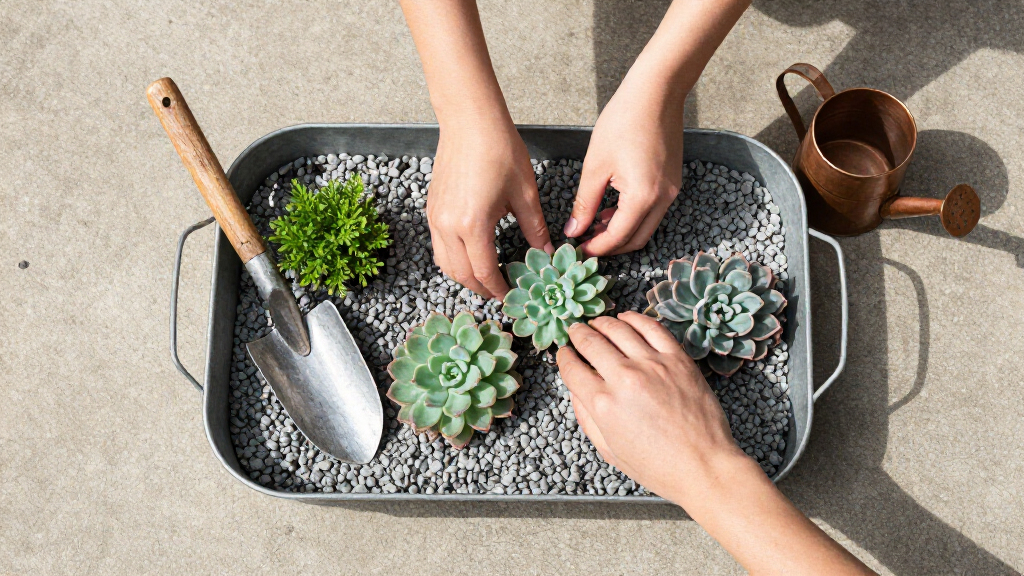
A gravel garden is not a bed in which plants grow solely in stones. The report describes a 3-to-5-inch layer of gravel over soil, with plants rooted in the ground beneath it. Gravel is intended to function as a mulch: rainfall passes through, while the cover can slow evaporation from the soil surface. The article says the method may suit a range of sites, with sunny, well-drained locations particularly appropriate for many Mediterranean plants.
The author presents four potential benefits: gravel can help soil retain moisture, moderate temperature swings around plant crowns and roots, reduce weed growth, and lower maintenance once plants are established. The report cautions that gravel does not eliminate weeds and says not to use a weed-suppressing membrane, arguing that it can restrict permeability and that debris accumulating above it may support weed growth.
The article’s writer is setting up a gravel garden in a court beside a driveway that had previously been used for boules, a French lawn game. The author says the first plant put in was olive herb. The project is at the initial planting stage; the source does not provide long-term results, a complete account of the 60 plants’ performance, or a site-by-site assessment of suitability.
A Mulch Method for Dry Sites
The guide offers a practical option for people rethinking paved or gravelled spaces, or planning beds in sunny, well-drained areas. Using gravel over soil rather than removing it can help turn an existing hard-surfaced or sparsely planted area into a garden, though the source’s example is a personal project rather than evidence that the method will work equally well in every climate or soil.
Its main relevance is the distinction between a gravel mulch and a gravel growing medium. Roots still need soil beneath the stones, and the stated benefits depend on local drainage, weather, plant choice and establishment. The report also sets a realistic expectation: gravel may reduce weed growth and watering needs, but it does not make a garden maintenance-free.
Products Worth Considering

Dyson W1 PencilWash Cordless Wet and Dry Floor Cleaner with Dock

LEVOIT Vital 200S-P Smart Air Purifier for Large Rooms

Philips Hue Smart LED Candle Bulbs, B39, E12, 2-Pack
As an affiliate, we earn on qualifying purchases.
From Boules Court to Planting
The author says the project began after moving to a property with a gravel court beside the driveway. Rather than keep the space for boules, they decided to plant it. The report describes the project as a challenge undertaken while researching the subject and invites readers to follow a possible later account of how the garden develops.
The article traces the approach’s prominence to British gardener and nursery owner Beth Chatto. According to the report, Chatto and her husband converted a nursery parking area in 1960 into a perennial garden at Beth Chatto Gardens in Elmstead, Essex. The garden is presented as an influential example of planting suited to dry conditions and as part of Chatto’s broader work with different terrains.
The source also attributes a detail about establishment watering to head gardener Asa Gregers-Warg, whom it says was interviewed on The Middle-Sized Gardener YouTube channel. According to the report, Chatto’s garden waters plants to help them establish but not routinely afterward, including during a hot summer. That account describes one garden’s practice, not a universal watering rule.
“The “garden” part of “gravel garden” is up to me.”
— Rural Sprout author
How the New Planting Performs
The supplied report does not specify a publication date, identify all 60 plants in the source material provided, or document how the author’s garden performed after planting. It is therefore unclear which selections have been planted, how they respond to the site, or whether a follow-up account has appeared.
The claimed benefits are described as general advantages of gravel mulch, not as measurements from a controlled comparison. The source does not quantify water savings, weed reduction or maintenance time, and it does not say that every listed plant will thrive in every region. Local climate, soil, drainage and establishment needs remain relevant.
Follow-Up on the Garden
The next reported milestone would be an update on how the author’s gravel court develops as plants establish. The author says they may publish a follow-up if readers show interest, but the supplied source gives no confirmed date or commitment for another report.
For readers using the guide, the practical next step is to assess the site’s sun exposure, soil and drainage, then select plants suited to those conditions. The source supports treating gravel as a soil-covering mulch and monitoring plants while they establish; it does not provide enough evidence to prescribe one watering schedule for every garden.
Key Questions
What is a gravel garden?
It is a garden where plants grow in soil beneath a gravel mulch. The report describes a gravel layer about 3 to 5 inches deep, rather than planting roots in gravel alone.
Does gravel stop weeds?
No. Rural Sprout says gravel can slow weed growth and reduce weed numbers, but it does not prevent all weeds. The author advises against a weed-suppressing membrane in this system.
Do gravel gardens need watering?
The report says plants may need water while they establish. It describes one established garden that is not routinely watered, but does not establish that the same approach suits every climate, soil or plant.
Will all 60 plants suit my garden?
Not necessarily. The report presents plants for gravel gardens, but suitability depends on local conditions, including sunlight, drainage, soil and climate. The supplied material does not provide individual guidance for every plant.
Source: ruralsprout.com