TL;DR

Get garden gear delivered free with Prime
- Fast, free delivery on millions of items
- Prime Video, Amazon Music and more included
- Member-only deals all year
A Country Living report describes three clues for identifying hummingbird sex: plumage, relative size and behavior. These are general patterns, not guarantees; young males may resemble females, and the source does not provide species-specific measurements or identification data.
Color, size and behavior can offer clues to whether a hummingbird is male or female, according to a Country Living report on identifying the birds in gardens. The distinctions are not definitive in every case: young males can resemble females, and the article describes broad patterns rather than a species-by-species identification guide.
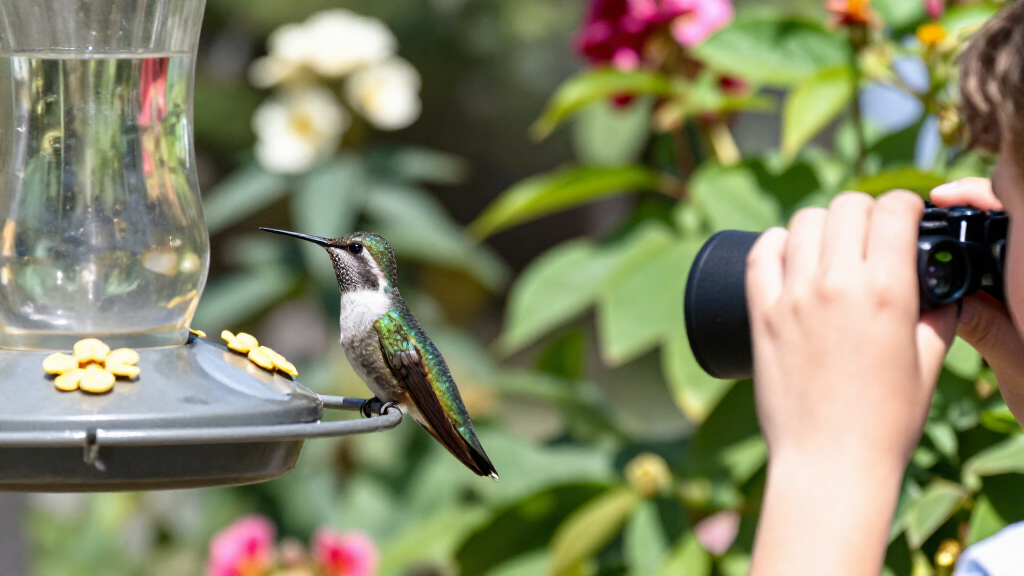
The first clue is plumage. Males often have brighter feathers, particularly on the gorget, the patch of feathers on the throat, and on the head. Depending on the species, those feathers may appear red, pink, purple or green. Females are generally less brightly colored, with throats that are white or lightly speckled, though they may show some iridescence on their backs.
Size is a second clue: females are often slightly larger than males, the report says. It also notes that females of some species may have longer beaks. These differences are subtle, however, and the source does not give measurements or explain how consistently they apply across species.
Behavior provides a third clue. Males may perform aerial displays during courtship, showing their feathers and flying in patterns. Females build nests, incubate eggs and care for chicks, according to the report. A hummingbird sitting on a nest is therefore a strong indication that it is female, while feeding behavior alone is not a reliable distinction: both sexes can defend food sources.
Reading Garden Visitors More Carefully
For people watching hummingbirds in gardens, the three clues can help distinguish observed behaviors and physical traits. Plumage and courtship displays may indicate males, while a bird tending a nest points to female parenting behavior.
The report cautions against treating a single feature as proof. A bird’s appearance can depend on age and species, and a brief view may not show its throat colors clearly. Considering several clues, while allowing for exceptions, is more reliable than relying on color alone.
As an affiliate, we earn on qualifying purchases.
Why Age and Species Matter
The report describes differences commonly associated with hummingbird sex: males tend to have showier plumage, while females are often larger and take on nesting and chick-rearing. It links the contrast in color to common bird patterns, in which male display plumage may play a role in attracting mates and less conspicuous female coloring may reduce attention around nests.
Juvenile males are a notable exception. Country Living says they can look much like females during their first month or two, before their brighter adult feathers develop. The article does not identify particular hummingbird species or provide a field-testing method, so its guidance is general rather than universal.
Limits of These Identification Clues
The source does not specify which species its size and color descriptions cover, or how much those features vary by location, age or individual bird. It also gives no measurements for comparing body size or beak length. As a result, the clues are suggestive, not conclusive, especially when a bird is seen briefly or is still young.
The article’s statement that a bird on a nest is female reflects the described division of nesting and parental duties; it does not offer a way to determine sex when a bird is not nesting. A single observation of territorial or feeding behavior is also not enough to distinguish the sexes, since both males and females can defend food sources.
What to Watch During a Visit
When a hummingbird returns to a garden, observers can look over time for throat and head color, relative size where a comparison is possible, and whether the bird performs a courtship display or tends a nest. Repeated observations may provide more information than a brief encounter, particularly while young birds are developing adult plumage.
The supplied report does not announce a new study, formal identification standard or follow-up research. More precise identification would require guidance matched to the species and age of the bird, details not included in the source article.
Key Questions
What is the quickest clue for distinguishing male and female hummingbirds?
Color is often the easiest clue: males commonly have brighter throat and head feathers, while females tend to be more subdued. It is not a sure test, particularly for young birds.
Are female hummingbirds larger than males?
The Country Living report says females are often slightly larger and that females in some species may have longer beaks. It provides no measurements, and the pattern should not be assumed to apply equally to every species.
Can behavior identify a hummingbird’s sex?
Some behavior can help: males may perform courtship displays, while females build nests and care for eggs and chicks. Both sexes can defend food sources, so feeder behavior alone is not a reliable identifier.
Why can a young male look like a female?
According to the report, juvenile males may resemble females during their first month or two, before brighter adult feathers develop.
Source: rss
Halloween Picks
halloween
As an affiliate, we earn on qualifying purchases.


