
TL;DR

Get garden gear delivered free — and shop member deals
- Fast, free delivery on millions of items
- Access to Prime Big Deal Days deals on October 6–7
- Prime Video, Amazon Music and more included
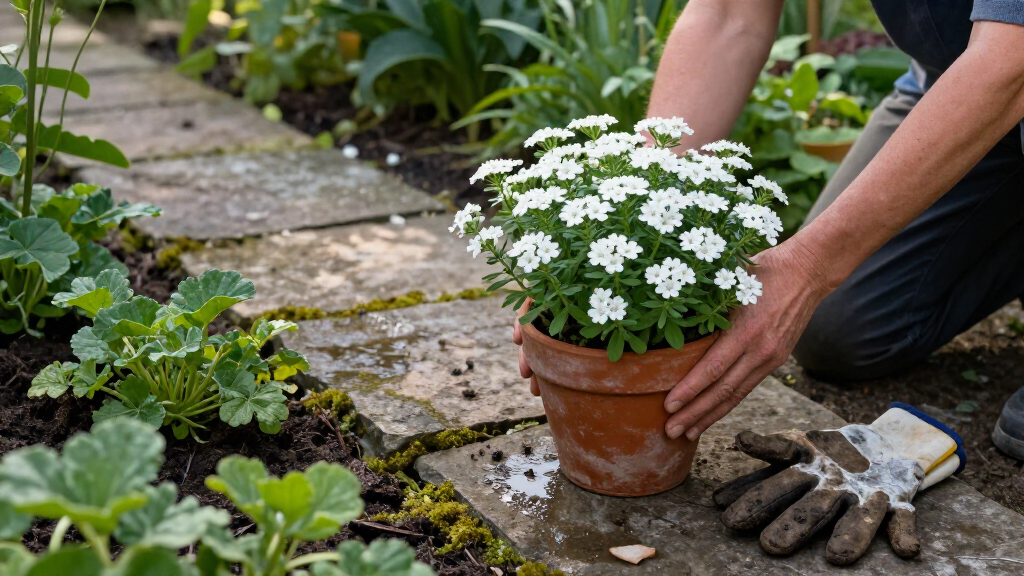
A photo shared by Monty Don shows an informal group of terracotta pots beside a garden path, with greenery blending into the paving. Garden designer Christopher O’Donoghue says staggered containers and foliage that spills onto the path can soften hard edges; the effect depends on plant choice and upkeep.
A photo of Monty Don’s garden path, shared on Instagram, shows terracotta pots arranged informally along its edges, with plants helping the paving blend into surrounding greenery. Ideal Home uses the image to illustrate a practical garden-design approach: stagger containers and let foliage reach the path, rather than lining pots up like a formal border.
The report describes a path leading from the timber-framed doorway of Don’s doghouse. Along its edges, terracotta pots of differing sizes sit among established planting. The arrangement is not symmetrical: some pots are grouped on one side, while greenery appears to continue toward and across the paving. The article does not give the photo’s publication date or identify every plant pictured.
Christopher O’Donoghue, director of Gardens Revived, recommends avoiding identical containers placed opposite one another. Instead, he suggests clusters and staggered spacing, with a larger pot set farther along the other side. The aim, he says, is to make the path feel connected to the garden rather than like a separate corridor. He advises allowing foliage to spill over container rims and touch the paving.
O’Donoghue also recommends mixing container heights and planting forms, a way to make containers look full. A taller plant can add structure, while low or trailing plants soften the edge. For sunny paths, he names Mexican fleabane and creeping thyme; for shade, he suggests trailing ivy, hostas, Japanese forest grass and hart’s tongue fern. These are expert recommendations in the report, not a confirmed inventory of Don’s own pots.
How Pots Can Soften Paving
Hard paving can make a narrow route or a large paved area feel sharply divided from the planted space around it. Containers offer a flexible way to introduce foliage at the edge without changing the paving itself. They can be moved as plants grow or as a layout changes, making the idea usable for renters and gardeners who do not want to dig into an established path.
O’Donoghue also points to drainage as a practical reason for using pots in the UK: containers allow gardeners to manage the soil and drainage conditions for individual plants, which he says can help during wet winters. The visual result is not automatic, however. Plants need suitable light, enough room and regular care, and containers can dry out or become waterlogged depending on their position and drainage.
As an affiliate, we earn on qualifying purchases.
The Photo Behind the Advice
Ideal Home reports that Don bought his home in 1991, inheriting a two-acre garden that included nettles and brambles. The article says he has worked on the garden over time and that followers often see it through his Instagram posts. The path photo is the immediate subject of the report; it is not presented as an announcement of a new project or a formal gardening instruction from Don.
The practical guidance in the article comes chiefly from Christopher O’Donoghue, rather than from a direct explanation by Don. O’Donoghue, who founded Gardens Revived with his brother Andrew in 2018, describes grouping containers as small pockets of planting. His suggested method is to begin with ordinary pots, let plants build up, then place selected plants in more decorative containers and fill around them with smaller pots.
“Using potted plants is an excellent way to blur the harsh, straight lines of paving.”
— Christopher O’Donoghue, director of Gardens Revived
What the Photo Does Not Show
The supplied report does not establish when the Instagram photo was posted, which plants Don used in the containers, or whether he intended the arrangement as advice. The article’s recommendations are attributed to O’Donoghue, so they should not be read as a step-by-step method personally endorsed by Don.
There is also no measured comparison showing that this arrangement makes every path feel more inviting or that it works in every garden. Results will depend on the route’s width, light, local conditions and the eventual size of the plants. The report does not provide a complete care schedule or detail the maintenance needed to keep foliage from obstructing a frequently used path.
Adapting the Idea at Home
The report offers no announced follow-up from Don or Gardens Revived. For readers trying the approach, the next step is to assess the path’s sun or shade, choose containers with appropriate drainage and place them without narrowing the walking route. O’Donoghue’s advice is to vary the heights, group pots loosely and select a mix of upright and trailing plants.
Plants should be watered and maintained according to their needs, with containers checked as conditions change. Gardeners can begin with inexpensive pots and move established plants into more decorative containers later, as the article suggests. Whether the finished arrangement resembles Don’s will depend on the site and the plants’ growth; the source gives no timeline for achieving that effect.
Key Questions
What does Monty Don’s path arrangement look like?
Ideal Home describes an informal arrangement of terracotta pots beside a path, with plants blending into greenery around the paving. The report does not identify every plant in the photo.
How should pots be arranged beside a garden path?
Christopher O’Donoghue recommends staggering pots rather than lining them up symmetrically. He suggests grouping several on one side and placing a larger container farther along the other.
Which plants does the report recommend for sunny paths?
O’Donoghue suggests Mexican fleabane and creeping thyme. The report says creeping thyme can trail from shallow bowls and tolerates relatively dry conditions.
What plants might suit a shady path?
The expert names trailing ivy, hostas, Japanese forest grass and hart’s tongue fern as options for shade, with hart’s tongue fern suggested for deeper shade.
Did Monty Don personally give these planting instructions?
The supplied report describes Don’s photo but attributes the practical placement and plant advice to Christopher O’Donoghue. It does not include a direct statement from Don giving those instructions.
Source: rss
Fall yard work Picks
leaf blowers
As an affiliate, we earn on qualifying purchases.