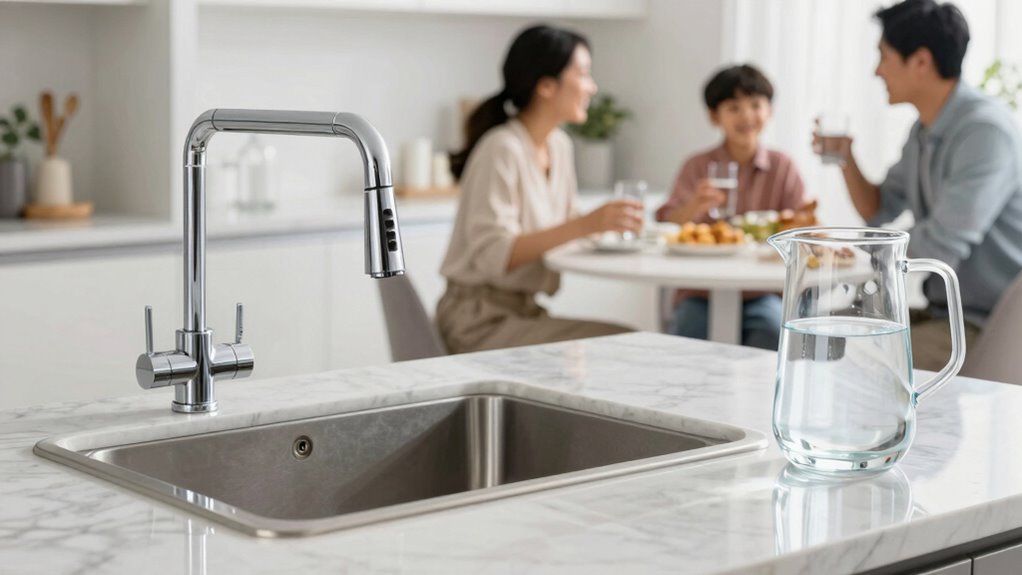

A whole-home water system means every tap in your house delivers safe, filtered, and great-tasting water. It protects you from contaminants like chlorine, heavy metals, and sediment, making daily activities safer and more convenient. You’ll notice fewer skin irritations, longer-lasting fixtures, and savings from avoiding bottled water or individual filters. Installing one improves your home’s water quality overall. To understand how it fits into your routine and lasts long-term, keep exploring the details.
Key Takeaways
- Provides filtered, safe water at every tap, improving daily health and hygiene.
- Eliminates the need for individual filters or bottled water, saving time and money.
- Protects plumbing and fixtures, reducing repair costs and extending lifespan.
- Ensures consistent, great-tasting water throughout the home.
- Offers peace of mind with ongoing water quality monitoring and maintenance.
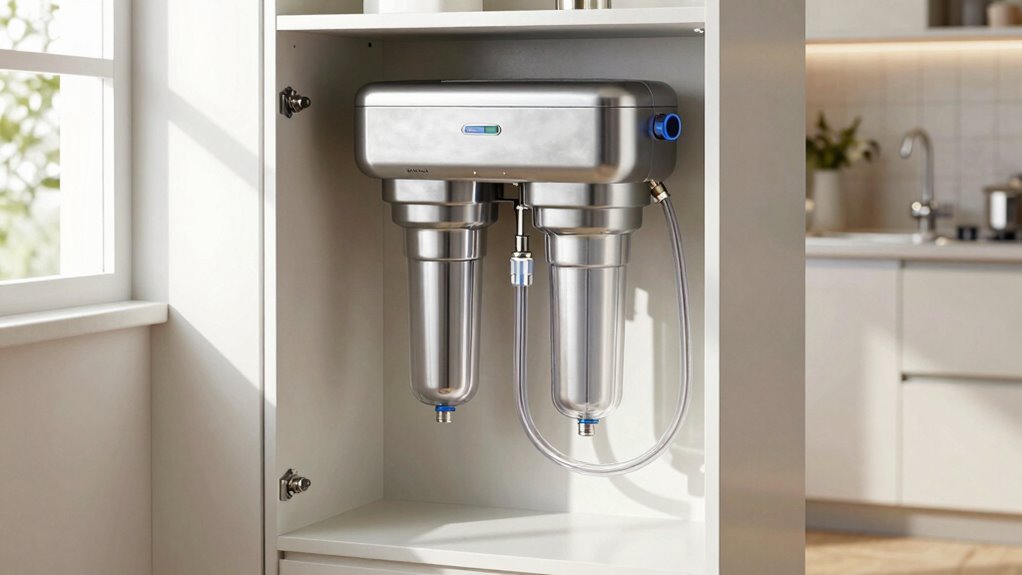
Have you ever wondered if your entire home is getting clean, safe water? With a whole-home water system, you can enjoy peace of mind knowing every tap delivers water that’s been filtered and purified. These systems are designed to treat water at the point where it enters your house, so no matter which faucet or appliance you use, the water is consistently pure. This is especially beneficial if you’re concerned about contaminants like chlorine, sediment, heavy metals, or other impurities. Instead of relying on individual filters for each sink or shower, a whole-home system offers extensive protection, making your daily routines safer and more convenient.
The key to a successful whole-home setup is understanding the water filtration process involved in its installation. The installation process typically begins with a professional assessment to determine your water quality and specific needs. Once they identify what contaminants need removal, they select the appropriate filtration units—these could include sediment filters, carbon filters, or specialized systems like reverse osmosis or UV purifiers. The installation process itself involves connecting these units to your main water line, usually in your basement or utility area. It’s a straightforward process for experienced technicians, who ensure the system is properly integrated into your plumbing. Properly understanding the water filtration process can help you better maintain and troubleshoot your system over time. Additionally, incorporating proper maintenance practices can extend the lifespan of your filters and ensure optimal performance. Being aware of your water quality can also help you choose the most effective filtration system for your needs. Regularly testing your water can provide valuable insights into any changes in water quality, ensuring your system continues to function effectively. Moreover, understanding the microplastics in dust and other potential contaminants can motivate further measures for indoor air quality improvement, complementing your water filtration setup.
Once installed, a whole-home water system operates quietly and efficiently, requiring minimal maintenance. You might need to change filters periodically, but this is simple and often indicated by your system’s alerts. The benefits are clear: throughout your house, from kitchen faucets to laundry machines, you’ll notice cleaner, better-tasting water. Showering becomes more pleasant too, as filtered water reduces skin irritation and extends the life of your plumbing fixtures. Plus, having a centralized system saves you money in the long run, since you’re not constantly buying bottled water or replacing individual filters. Investing in a whole-home system can also provide peace of mind, especially if you live in an area with known water quality issues.

Express Water Whole House Water Filter System, Ultimate Protection, 3-Stage
- Whole House Water Filtration: 3-stage process for entire home
- Reduces Heavy Metals & Contaminants: Chlorine, Lead, Arsenic, PFAs, more
- Protects Pipes & Appliances: Prevents scale and buildup
As an affiliate, we earn on qualifying purchases.
As an affiliate, we earn on qualifying purchases.
Frequently Asked Questions
Do Whole-Home Water Systems Require Professional Installation?
Yes, whole-home water systems typically require professional installation. You need to take installation considerations into account carefully to guarantee proper setup, and system compatibility is vital to match your home’s plumbing. Professionals assess your existing plumbing, select the right system, and install it efficiently, preventing issues down the line. While DIY options exist, expert installation guarantees peak performance and longevity for your whole-home water system.
How Often Should I Maintain or Replace System Filters?
Think of your filters like the filters on a camera—they need regular cleaning or replacement to keep things clear. You should check your system’s maintenance schedule and replace filters every 6 to 12 months, depending on water quality and usage. Pay attention to filter longevity, as neglect can diminish system efficiency. Regular maintenance ensures the water stays clean, fresh, and safe for your whole home.
Can These Systems Help With Hard Water Issues?
Yes, whole-home water systems can help with hard water issues. They typically use water softening technology to reduce minerals like calcium and magnesium, which cause hardness. Additionally, they can include mineral removal features to improve water quality. With these systems, you’ll notice less scale buildup on fixtures, softer skin and hair, and overall better water quality throughout your home. Regular maintenance ensures peak performance for hard water problems.
Are Whole-Home Systems Safe for My Family’s Health?
Research shows that whole-home water systems, when properly maintained, are generally safe for your family’s health. They effectively reduce water contamination, removing harmful chemicals and pathogens, which offers significant health benefits. By filtering out impurities, these systems guarantee clean, safe water from every tap. So, you can feel confident that investing in a whole-home system supports your family’s well-being without compromising safety.
What Is the Typical Cost of Installing a Whole-Home Water System?
The typical cost of installing a whole-home water system ranges from $1,000 to $5,000, depending on your home’s size and the water quality issues you face. You should do a cost analysis to evaluate installation expenses, equipment, and maintenance. Keep in mind, investing in a quality system can improve your water quality, save money long-term, and enhance your family’s health.
Conclusion
Imagine turning on your tap and feeling the pure, crisp water flow effortlessly, knowing it’s filtered and safe. A whole-home water system transforms your daily routine into a revitalizing experience, washing away worries and impurities. It’s like having a gentle, cleansing rain in your own home, nurturing your family’s health and comfort. With every drop, you’re reminded of the peace of living in a space where purity flows freely, making every moment at home truly invigorating.