
To organize your smart devices by room and function, set up a central hub to control everything easily. Label and group devices in each space, like lights and thermostats, for quick access. Use smart home apps to keep everything tidy and customize device names. Managing cables and accessories also helps keep your setup clean and efficient. If you want to learn more about creating a seamless system, you’ll find helpful tips ahead.

Get garden gear delivered free with Prime
- Fast, free delivery on millions of items
- Prime Video, Amazon Music and more included
- Member-only deals all year
Key Takeaways
- Group devices physically by their specific rooms for easier access and management.
- Categorize devices by their primary functions, such as lighting, security, or entertainment.
- Use smart home apps to assign devices to different rooms and functions for centralized control.
- Label cables and accessories clearly to streamline setup and troubleshooting within each area.
- Create automation routines tailored to each room’s devices and usage for efficient operation.
As an affiliate, we earn on qualifying purchases.
Set Up a Central Hub for Your Smart Devices
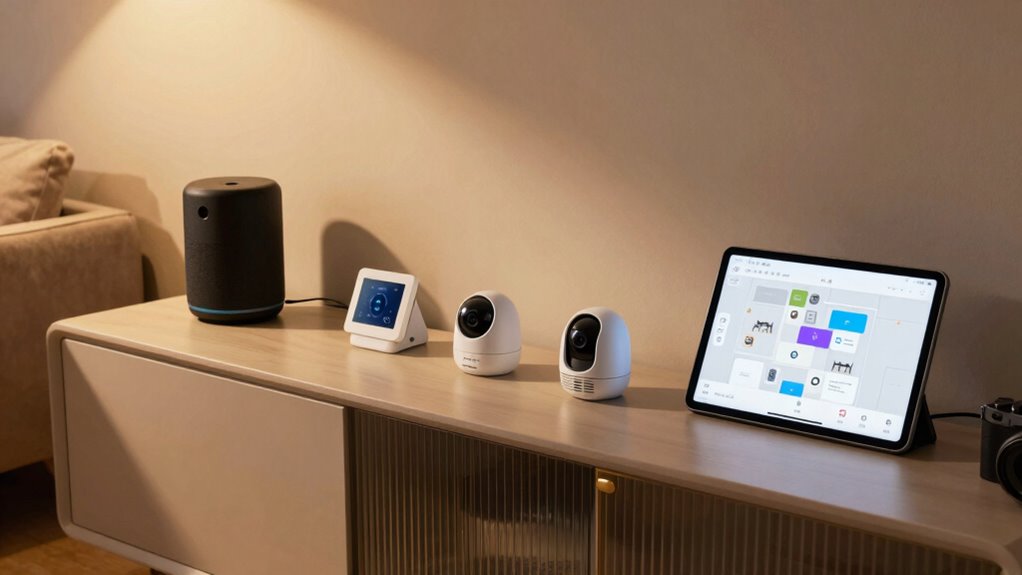
To effectively manage multiple smart devices, it’s essential to set up a central hub that connects and controls them all. A central hub simplifies device management by acting as a single control point, making voice control and device automation more seamless. With a hub in place, you can issue voice commands that trigger multiple actions at once, such as turning off lights and adjusting the thermostat. It also helps reduce clutter by consolidating different device protocols into one system. Choose a hub compatible with your devices and smart home ecosystem, ensuring smooth integration. Once set up, you’ll enjoy effortless control, improved automation capabilities, and a more organized smart home environment. This foundation keeps everything connected and responsive to your commands. Incorporating local automation can further enhance responsiveness and privacy within your smart home setup, especially as emerging trends in digital publishing emphasize the importance of privacy and personalized control.
Organize Devices by Room and Usage
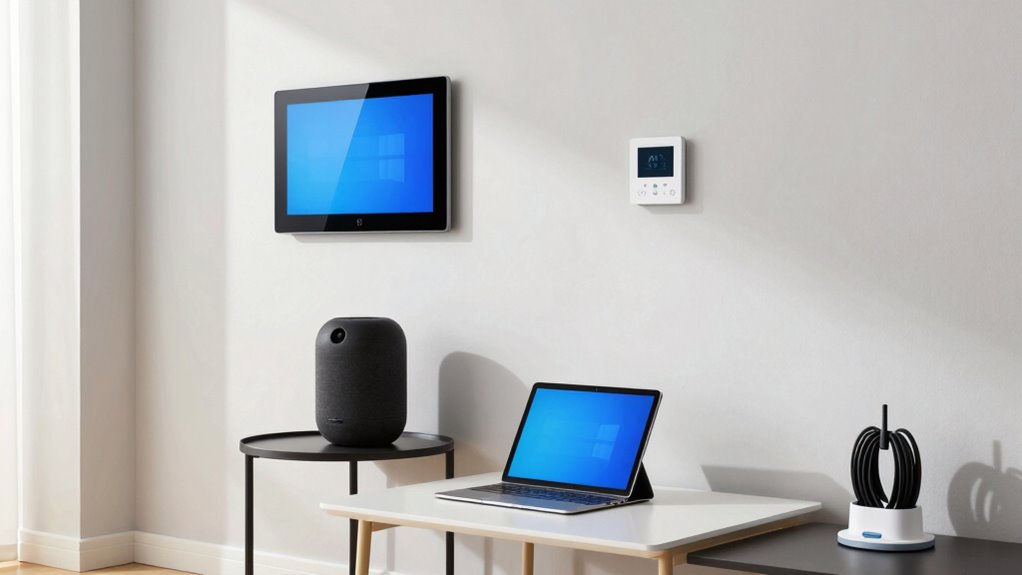
Organizing your smart devices by room and usage helps keep everything streamlined and easy to access. You should categorize devices based on where they’re used most often, like the kitchen or bedroom, and assign specific functions to each group. This method can also improve your device safety by reducing the risk of accidental changes or misuse. Additionally, maintaining a trustworthy system for your devices can prevent complications and enhance your overall experience. Using a centralized smart hub can further improve organization by allowing you to control multiple devices from a single interface. Incorporating smart device management best practices can help ensure your system remains reliable and secure, especially when deploying AI-enabled devices with enterprise-grade governance features to prevent unauthorized access.
Categorize Devices by Room
Have you ever struggled to find the smart device you need in a cluttered room? To fix this, start by categorizing devices by room. Group all smart devices—like lights, thermostats, or speakers—together in their respective spaces. This makes device pairing easier, since you can connect everything within the same area at once. Regularly check for software updates, ensuring all devices function smoothly and stay secure. Label cables and devices clearly to avoid confusion later. Keep a quick reference list of which devices belong where, so you can troubleshoot or reset devices without hassle. Additionally, consider home automation systems and other specialized equipment to maintain an organized and efficient setup. Incorporating a device management system can further help you monitor and control your smart devices remotely. Understanding the role of drone bees in hive stability can inspire you to develop a more resilient and adaptive home network. Plus, staying informed about smart device security best practices can help protect your connected home from cyber threats. By organizing your devices by room, you streamline your smart home setup, reduce clutter, and avoid wasting time searching for the right device when you need it most.
Assign Devices by Usage
Ever wondered how to make your smart home even more efficient? Assigning devices by usage helps streamline daily routines. Start by grouping devices based on their function—like lighting, security, or entertainment—and guarantee their device compatibility. This makes managing routines easier and minimizes confusion. When setting up, double-check security protocols to keep your network secure. Properly assigning devices by usage allows you to quickly control specific functions without sifting through unrelated gadgets. For example, keep all security devices in one group for instant access, while entertainment devices stay separate. By organizing this way, you improve both convenience and security, ensuring your smart home runs smoothly and safely. Clear usage assignments help you optimize device performance and simplify your smart home management.
Label and Manage Cables and Accessories

Label your cables clearly so you can quickly identify which is which. Use cable organizers to keep cords tidy and prevent tangling. These simple steps make managing your accessories much easier and more efficient. Consider grouping related devices by electric dirt bikes to streamline setup and maintenance.
Label Cables Clearly
Wondering how to keep your cables organized and easily identifiable? Labeling cables clearly is key. Start by examining the cable insulation—different colors or markings can help you quickly recognize each cable’s purpose. Include details like connector types on your labels, so you know whether it’s HDMI, USB, or power. Use durable, waterproof labels that won’t peel or fade over time. Wrap labels around the cable or attach them with cable clips for easy visibility. Clear labeling prevents confusion, especially when cables look similar or run behind furniture. Being aware of best woods for farmhouse tables can inspire you to create a cohesive and warm space where your tech setup blends seamlessly with your decor. Additionally, considering luxury lifestyle products can elevate your organization system with premium accessories that add elegance to your setup. Incorporating essential oils for organization into your space can promote a calming atmosphere that reduces stress during setup or troubleshooting. Using labeling tools designed specifically for cables can make the process even more efficient. This simple step saves you time and hassle when troubleshooting or upgrading devices. Well-labeled cables make your entire smart device setup more streamlined and manageable.
Use Cable Organizers
After clearly labeling your cables, the next step is to keep them organized and prevent clutter. Use cable organizers like clips, sleeves, or boxes to bundle cords neatly. This keeps cables for wireless charging stations and device synchronization tidy, making it easier to find what you need. Velcro straps or cable ties can secure long cords, preventing tangles and damage. Consider color-coded labels or transparent sleeves for quick identification. Proper cable management reduces stress during setup and troubleshooting. It also helps maintain a clean look in your space. When cables are organized, you’ll enjoy seamless device syncing and wireless charging without the hassle of tangled cords. Staying proactive with cable organizers keeps your smart devices functioning smoothly and your area clutter-free. Regular gear inspection and proper storage, inspired by survival gear maintenance, can also help ensure your cables and accessories remain in good condition over time.
Use Smart Home Apps to Keep Devices Organized

Have you ever felt overwhelmed by the sheer number of smart devices in your home? Using smart home apps helps you stay organized by grouping devices logically. These apps let you customize device names, assign rooms, and set automation routines. You can optimize voice command recognition, making controlling devices effortless. Plus, adjusting security settings guarantees your devices stay protected. Imagine this layout:
| Device Type | Location & Function |
|---|---|
| Smart Lights | Living Room, Dimmable |
| Thermostat | Bedroom, Temperature |
| Security Camera | Front Door, Monitoring |
| Smart Locks | Main Entrance, Secure |
| Speakers | Kitchen, Music Control |
This visual helps you quickly identify and control your devices, streamlining your smart home experience. Proper template compatibility ensures all devices function seamlessly together, reducing setup frustration. Familiarity with smart home ecosystem integration can further enhance your organization and automation capabilities. Paying attention to comogenic ratings can also help prevent skin irritation from smart device touchpoints that may be close to your skin. Additionally, utilizing essential oils for device maintenance can help keep your smart devices free of dust and prolong their lifespan, especially when combined with regular cleaning routines that consider device longevity best practices.
Troubleshoot Common Smart Device Organization Problems
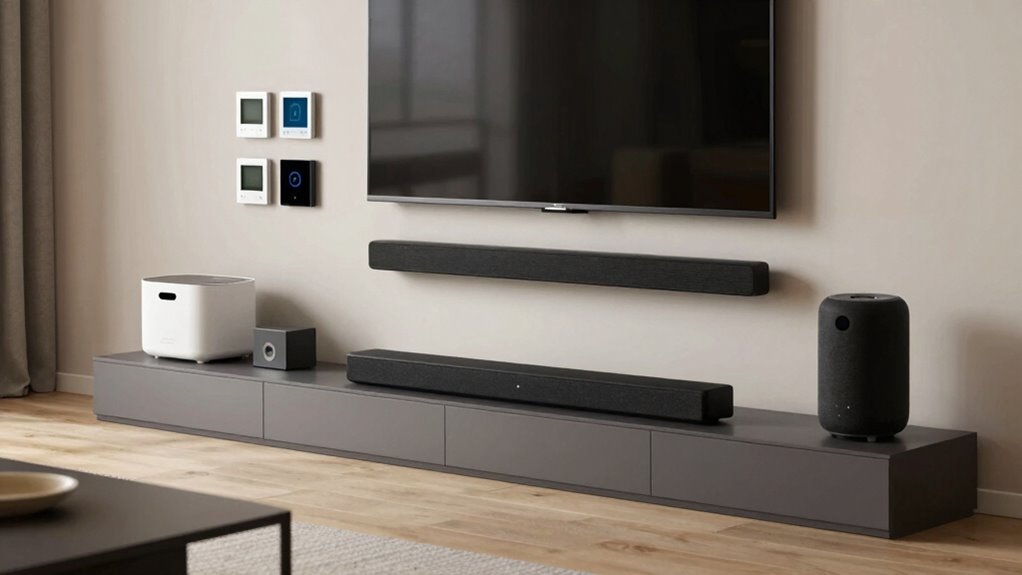
Even with careful planning, organizing smart devices can run into common problems that disrupt your system’s efficiency. One major issue is device compatibility; sometimes, devices don’t communicate well or refuse to connect. To fix this, check if your devices are compatible with your existing hub or platform, and consider replacing incompatible items. Firmware updates also play an essential role. Outdated firmware can cause connectivity issues or prevent devices from functioning properly. Regularly update all your devices’ firmware to guarantee smooth operation and enhanced security. If problems persist, restart devices or reset them to factory settings, then reconnect. Keeping firmware current and verifying compatibility helps prevent many organization headaches, ensuring your smart home runs seamlessly. Additionally, understanding the regional flavors and device integrations can help optimize your smart device setup for different environments.
Choose the Best Control Platform for Your Smart Home
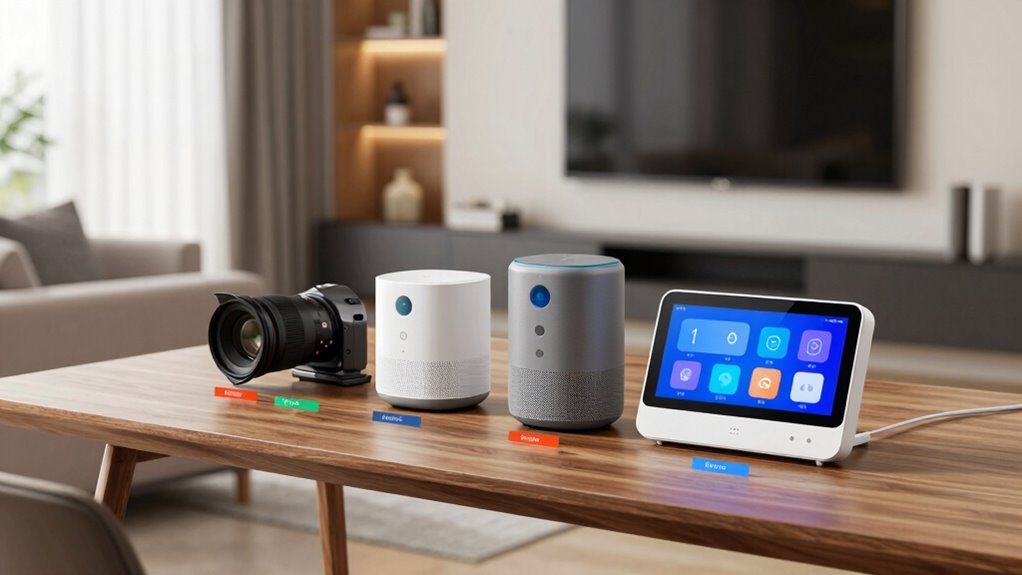
Choosing the right control platform is essential for managing your smart devices effectively. It determines how smoothly you can control everything, from lights to security systems. When selecting a platform, consider:
- Compatibility with your existing devices and smart home ecosystem
- Support for voice control to make commands hands-free
- Security integration to keep your home safe and connected
- Ease of use and customization options
A good platform simplifies managing multiple devices and enhances overall security. It should seamlessly integrate voice control, allowing you to operate devices with simple commands. Security features like alerts, remote monitoring, and secure access are also vital. By choosing a platform tailored to your needs, you’ll enjoy a more organized, secure, and effortless smart home experience.
Frequently Asked Questions
How Can I Ensure My Smart Devices Maintain Security and Privacy?
To guarantee your smart devices maintain security and privacy, regularly update their firmware and strong, unique passwords. Enable features like data encryption and two-factor authentication whenever possible. Keep user privacy a priority by reviewing app permissions and disabling unnecessary data sharing. You also want to secure your Wi-Fi network with a strong password, limiting access, and using a separate network for smart devices to prevent unauthorized access.
What Are the Best Practices for Updating Device Firmware?
Think of firmware updates as giving your smart devices a fresh set of wings. You should regularly check for firmware updates from manufacturers, ensuring your devices stay compatible with your system. Always download updates from official sources to prevent security risks. Before updating, verify device compatibility to avoid glitches. Keeping firmware current enhances performance and security, transforming your smart home into a well-oiled, responsive ecosystem that adapts smoothly to your needs.
How Do I Integrate New Devices Into My Existing System?
To integrate new devices, first check their device compatibility with your existing system. Guarantee they support the same protocols or platforms you use. Then, follow the setup instructions, typically through your smart home app. Adjust user permissions if needed, granting access to family members or guests. Once connected, test the device’s functionality and update firmware if necessary. This seamless integration keeps your smart home efficient and user-friendly.
Can I Automate Device Organization and Management?
Did you know that 85% of smart device users find automation boosts convenience? Yes, you can automate device organization and management by setting up device categorization, which groups devices by function or room. This process allows you to streamline user access, granting permissions based on roles. Automation tools or smart home hubs enable you to create routines or rules, ensuring your devices are always organized and accessible without manual effort.
What Should I Do if a Device Becomes Unresponsive or Disconnected?
If a device becomes unresponsive or disconnected, start with device troubleshooting by restarting it and checking connections. Make sure your network stability by rebooting your router and verifying that your Wi-Fi signal is strong. If issues persist, update device firmware or software, and consider resetting the device to factory settings. Regularly monitor your network’s performance to prevent future disconnects, ensuring seamless operation across your smart home ecosystem.
Conclusion
By organizing your smart devices by room and function, you create a seamless, efficient smart home experience. A well-structured setup not only saves you time but also keeps everything running smoothly. Remember, isn’t it easier to enjoy your smart home when everything is in its place? Stay proactive with regular updates and labeling, and you’ll enjoy the full benefits of your connected living space without the chaos. Happy organizing!
Halloween Picks
halloween
As an affiliate, we earn on qualifying purchases.