When planting near a black walnut, it’s vital to take into account juglone’s impact. This natural compound can cause nutrient competition and root toxicity, which harm many plants. To stay safe, plant sensitive species at least 50 feet away and choose juglone-tolerant plants closer in. Also, be aware that juglone residues can linger in soil long after the tree is gone. Want to understand the full steps to plant safely? Keep exploring for expert tips.
Key Takeaways
- Maintain at least a 50-foot buffer zone from black walnut trees to prevent root contact and toxicity.
- Select juglone-tolerant plants, such as certain grasses and mature trees, for planting near black walnuts.
- Test soil for residual juglone toxicity before planting, especially after black walnut removal.
- Avoid planting sensitive species like tomatoes, azaleas, and blueberries within the black walnut’s root zone.
- Be aware that juglone can persist in soil long-term, requiring careful planning for long-term landscaping.
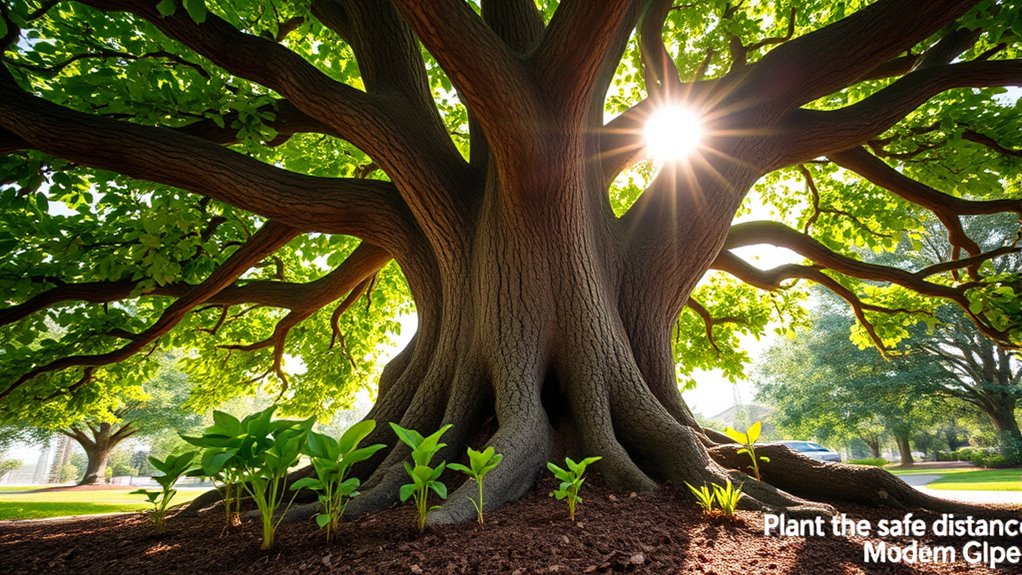
Black walnut trees produce a natural compound called juglone, which affects nearby plants by inhibiting their growth. This chemical plays a significant role in how black walnuts influence their surroundings, particularly through nutrient competition and root toxicity. When you plant near a black walnut, you need to understand how juglone impacts other plants’ ability to access essential nutrients. Juglone interferes with the uptake of vital minerals like nitrogen, phosphorus, and potassium, which are crucial for healthy growth. As a result, many plants struggle to thrive or even survive within the root zone of black walnuts because they can’t compete effectively for these nutrients. Recognizing this nutrient competition helps you decide what to plant nearby and prevents wasted effort on incompatible species.
Root toxicity is another critical factor caused by juglone. The compound is released into the soil through the roots, leaf litter, and decaying wood, creating a zone of influence around the tree. If you plant sensitive species too close, their roots can absorb juglone, leading to toxicity symptoms such as leaf yellowing, wilting, or dieback. This root toxicity can severely limit the types of plants that will grow successfully near a black walnut. To avoid this, you need to establish a safe planting distance, typically 50 feet or more from the trunk, depending on the tree’s size. This buffer zone minimizes the risk of root contact with juglone and reduces the chance of root toxicity affecting your plants. Additionally, understanding soil residual toxicity**** can help you plan more effectively for long-term planting success.
You also have to consider how juglone persists in the soil. It can linger long after the tree is removed, continuing to inhibit plant growth through residual toxicity. If you’re planning a garden or landscape, it’s wise to test the soil or choose plants that are tolerant of juglone. Some species, like certain types of grasses, mature trees, and some shrubs, have developed resistance, making them safer choices near black walnuts. Conversely, sensitive plants like tomatoes, azaleas, and blueberries often fail to thrive because of nutrient competition and root toxicity caused by juglone.

Rapitest Soil Test Kit for Gardens, Vegetables, Flowers and Lawns. USA designed and assembled soil tester completely, quickly and accurately measures/analyzes soil pH acidity and garden nutrients.
- Quick at-home soil pH and nutrient testing: Measures pH, Nitrogen, Phosphorous, Potash
- Complete testing kit for 20 tests: Includes 5 tests for each nutrient
- All-in-one testing for multiple garden spots: Test multiple areas in yard or garden
As an affiliate, we earn on qualifying purchases.
As an affiliate, we earn on qualifying purchases.
Frequently Asked Questions
Can Juglone Affect Plants Beyond Black Walnut Trees?
Juglone can indeed affect plants beyond black walnut trees, especially if they’re sensitive and grow near these trees. Its historical impact shows how it limited certain crop cultivations. You should consider alternative uses for juglone, like natural weed control, but be cautious. Understanding which plants are resistant helps you prevent damage. Keep a safe distance from susceptible plants, and explore safe, effective ways to use juglone in your garden.
How Long Does Juglone Remain Active in Soil?
Imagine planting vegetables near a black walnut tree; juglone can stay active in soil for months, sometimes up to two years, especially if soil degradation occurs. Its persistence depends on factors like organic amendments, which can break down juglone over time. To minimize risks, wait at least one to two years before planting sensitive plants, and improve soil health to help neutralize residual juglone.
Are There Specific Plants Resistant to Juglone Toxicity?
Yes, there are Juglone resistant plants and compatible plant choices you can consider. Plants like Eastern redbud, white oak, and certain grasses tolerate juglone toxicity well. When selecting plants, look for those labeled as Juglone resistant to guarantee they thrive near black walnuts. This way, you can enjoy a diverse garden without worrying about juglone harming your desired plants. Always verify plant compatibility before planting.
What Are the Signs of Juglone Poisoning in Plants?
A word to the wise: “An ounce of prevention is worth a pound of cure.” You’ll notice juglone poisoning signs as plant stress symptoms like wilting, yellowing, or dieback, especially near black walnut trees. To confirm, use soil testing methods to detect juglone’s presence. Early detection helps, so monitor your plants closely and test your soil regularly to prevent long-term damage.
How Can I Test My Soil for Juglone Presence?
To test your soil for juglone presence, you should perform soil testing specifically for juglone detection. Start by collecting a soil sample from different areas around your property, especially near black walnut trees. Send your samples to a certified lab that offers soil testing services for juglone. This way, you’ll get accurate results, helping you determine if your soil contains harmful juglone levels that could affect your plants.
Conclusion
Now that you know how black walnuts and juglone can affect your garden, are you ready to plant safely? By understanding their impact and taking proper precautions, you can enjoy lush, healthy plants without worry. Remember, awareness is your best tool for preventing damage. So, will you take the necessary steps to protect your garden and ensure successful planting around these powerful trees? Your green thumb deserves the best chance to thrive.