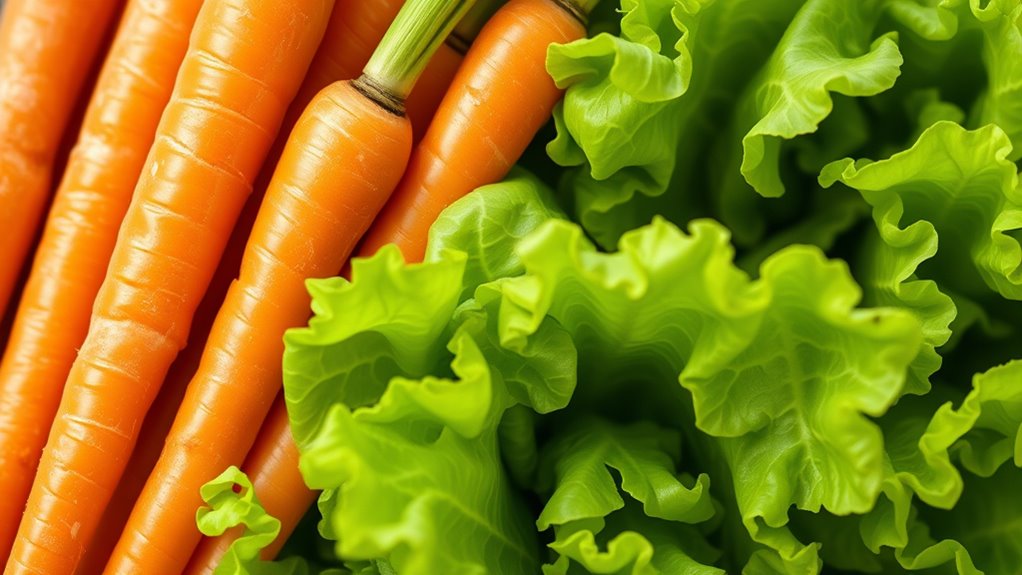

To guarantee your carrots and lettuce stay tender and ready in succession, harvest carrots when they reach a thin, uniform size, around 1/2 to 1 inch in diameter, and loosen the soil carefully to avoid root damage. For lettuce, cut outer leaves or whole heads regularly to promote continuous growth while maintaining crispness. Proper timing and gentle handling maximize flavor and nutrition. Keep exploring to learn how to optimize your garden’s harvest at every stage.
Key Takeaways
- Thin carrots during initial harvest to ensure proper size and prevent overcrowding.
- Practice succession planting for both carrots and lettuce to maintain continuous harvest.
- Thin lettuce leaves to promote healthy growth and prevent disease.
- Schedule successive planting of carrots and lettuce for ongoing supply.
- Proper thinning and succession techniques maximize flavor, texture, and nutritional benefits.
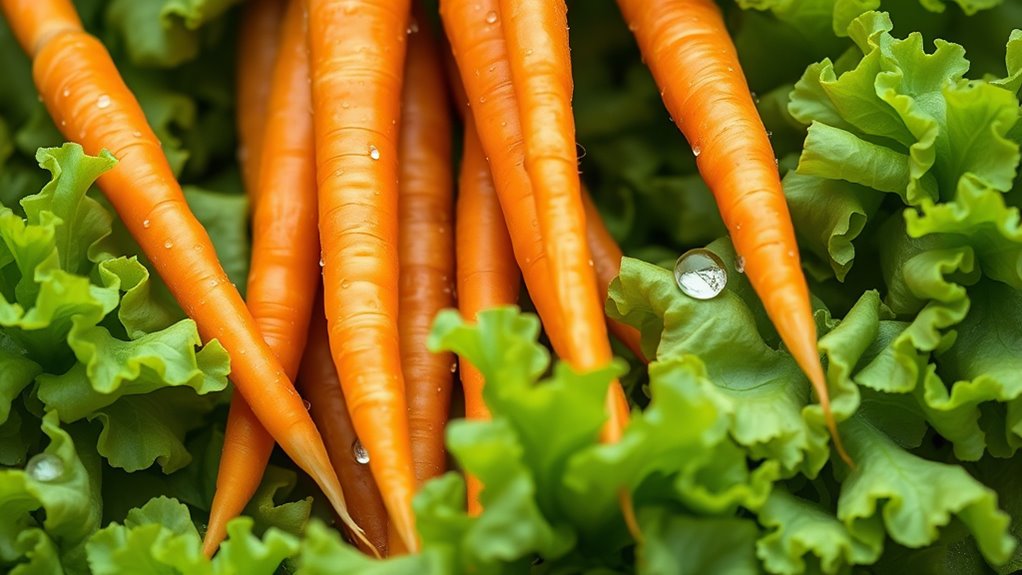
Carrots with lettuce make a simple yet invigorating combination that enhances any meal or snack. When you’re growing these vegetables, understanding proper harvesting techniques is key to enjoying their freshest flavors and maximum nutritional benefits. For carrots, harvesting typically involves loosening the soil around the root carefully, using a garden fork or hand tools to avoid damaging them. You know they’re ready when the tops are lush and the roots have reached your preferred size—usually about 1/2 to 1 inch in diameter for thin, tender carrots. Timing is essential; harvesting too early can lead to underdeveloped roots, while waiting too long may result in tough, woody carrots. Lettuce, on the other hand, can be harvested by cutting the outer leaves or harvesting the entire head when it reaches a desirable size. Regularly harvesting lettuce encourages new growth, ensuring a continuous supply of crisp, fresh leaves. Recognizing the signs of ripeness helps ensure you pick vegetables at their peak nutritional value.
Focusing on the nutritional benefits, both carrots and lettuce pack a punch of essential nutrients that support your health. Carrots are renowned for their high beta-carotene content, which your body converts into vitamin A—a critical nutrient for good vision, immune function, and skin health. They also provide fiber, antioxidants, and a range of vitamins like K and C, making them a great addition to your diet. Lettuce, especially varieties like romaine and butterhead, offers hydration thanks to its high water content, along with vitamins A, C, and K. It also supplies minerals such as potassium and magnesium, which help regulate blood pressure and support muscle function. When you combine carrots with lettuce in salads or snacks, you’re not only creating a revitalizing meal but also boosting your intake of these essential nutrients. Proper harvesting techniques not only preserve flavor and texture but also ensure you enjoy the maximum nutritional benefits from your homegrown vegetables.
To maximize these benefits, always choose fresh, firm vegetables and handle them with care during harvest. Proper harvesting techniques ensure that you pick produce at peak ripeness, preserving their flavor, texture, and nutritional content. For carrots, gently loosen the soil and pull the roots out without excessive force to avoid bruising. For lettuce, use clean scissors or knives to cut the leaves or head at the base, preventing damage and promoting regrowth. Keeping your produce cool and storing it properly helps maintain its nutritional value for longer. When you take these simple steps, you get the most out of your gardening efforts and enjoy the crisp, sweet flavor of fresh carrots with the crunchy freshness of lettuce. This combination offers a satisfying, nutrient-rich addition to your meals, emphasizing the importance of proper harvesting techniques and understanding the nutritional benefits of your homegrown vegetables.
garden hand tools for harvesting carrots
As an affiliate, we earn on qualifying purchases.
As an affiliate, we earn on qualifying purchases.
Frequently Asked Questions
How Do Carrots and Lettuce Benefit Each Other in a Garden?
You benefit from planting carrots and lettuce together through companion planting, which helps improve soil compatibility and pest control. Lettuce provides ground cover that keeps the soil moist, benefiting carrots by preventing weeds and maintaining soil temperature. Meanwhile, carrots break up compacted soil, making it easier for lettuce roots to grow. This mutual relationship promotes healthy growth, maximizes your garden space, and creates a balanced, productive environment for both crops.
What Are Optimal Planting Times for Carrots and Lettuce Together?
In early spring, you should plant carrots and lettuce together for ideal results. For example, starting in March or April allows you to take advantage of companion planting benefits and soil compatibility, ensuring healthy growth. These crops thrive when planted at the same time because they prefer similar cool temperatures. By timing your planting just right, you maximize yield and promote a thriving, mutually beneficial garden.
Can Carrots and Lettuce Be Grown in the Same Soil?
Yes, you can grow carrots and lettuce in the same soil since they have similar soil compatibility. They thrive in well-drained, loose, and fertile soil. This combination is also great for companion planting because lettuce can help shade the soil, keeping it moist and cool for carrots. Just guarantee the soil is rich in organic matter, and you’ll have healthy crops growing side by side.
What Pests Commonly Affect Carrots and Lettuce Simultaneously?
Think of your garden as a battlefield where pests like aphids, carrot rust flies, and slugs attack both crops. These pests often strike carrots and lettuce simultaneously, making pest control tricky. Using integrated management helps you target these pests efficiently, reducing damage and protecting your harvest. Regular monitoring and natural predators are your best allies, keeping pest populations low without harming beneficial insects or relying solely on chemical controls.
How Does Succession Planting Improve Yield for These Vegetables?
Succession planting boosts your yield by allowing you to grow carrots and lettuce continuously, maximizing your garden space. It also promotes crop rotation, which reduces the buildup of pests and diseases, and enhances soil fertility by alternating crops with different nutrient needs. This practice keeps your soil healthy, ensures a steady supply of fresh produce, and helps you prevent planting the same vegetables in the same spot repeatedly, leading to healthier, more productive plants.
Conclusion
Think of carrots with lettuce as a gentle dance, each step perfectly in sync, creating a harmony that delights the senses. When you combine these fresh ingredients, you’re not just preparing a simple dish—you’re orchestrating a symphony of flavors that refresh and energize. So, next time you toss them together, remember, you’re weaving a vibrant tapestry of health and taste. Let this pairing be your canvas, and enjoy every delicious stroke.