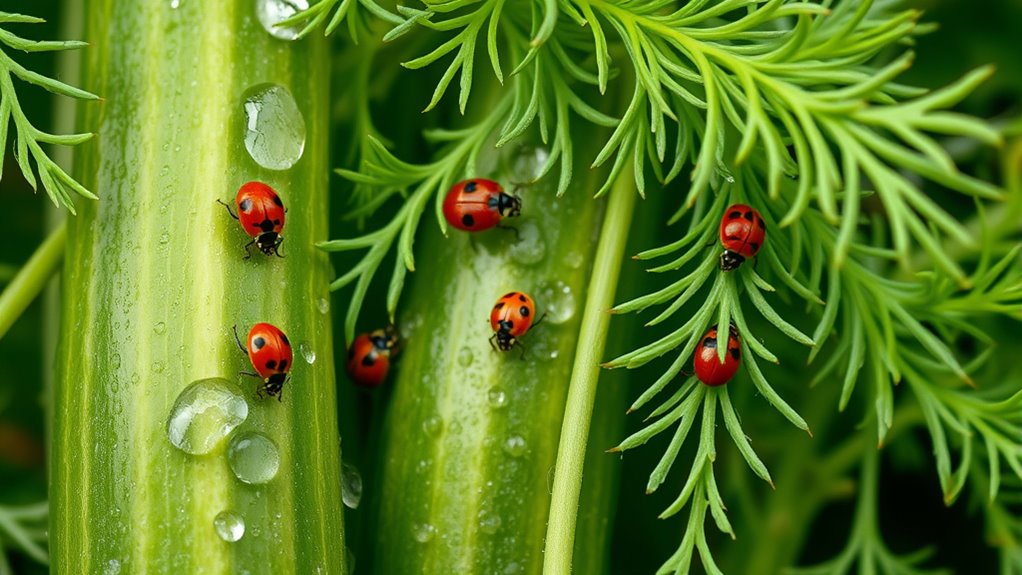
Planting dill near your cucumbers is a smart way to attract natural predators like ladybugs and hoverflies, which hunt common pests such as aphids and beetles. The aromatic scent of dill draws these beneficial insects into your garden, helping reduce pest damage naturally. As dill attracts these helpful predators, your cucumber plants stay healthier and stronger. Keep exploring to discover more tips on creating a thriving, pest-free garden using companion planting techniques.
Key Takeaways
- Dill attracts beneficial insects like ladybugs, lacewings, and hoverflies that prey on cucumber pests.
- The aromatic scent of dill confuses or repels pests, reducing damage to cucumber plants.
- Dill’s tall, feathery foliage provides shade and habitat for predatory insects around cucumbers.
- Companion planting with dill naturally enhances predator presence, decreasing reliance on chemical pest controls.
- Increased predator activity from dill helps maintain healthier cucumber vines by controlling aphids and beetles.
Have you ever wondered how to elevate simple dishes with fresh, vibrant flavors? When it comes to gardening, the secret isn’t just in choosing the right vegetables and herbs but also in understanding how to work with nature to safeguard your plants. One effective way to do this is through companion planting, and pairing cucumbers with dill is a perfect example. Not only does this combo enhance your garden’s health, but it also serves as a natural pest control method by attracting beneficial predators that keep harmful pests at bay.
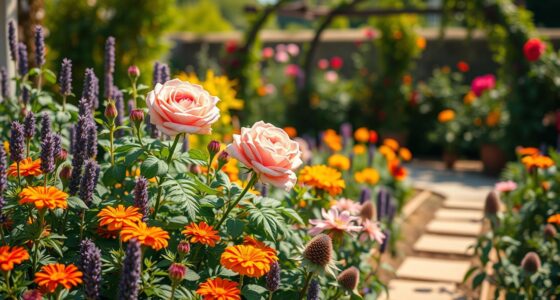
Dill is more than just a flavorful herb; it acts as a magnet for beneficial insects. When you plant dill near your cucumbers, you invite predatory insects like ladybugs, lacewings, and hoverflies. These predators hunt down common pests such as aphids, cucumber beetles, and spider mites, reducing the need for chemical pest control. By encouraging these natural predators, you create a balanced ecosystem where pests are kept in check without harming your environment or your plants. This approach to pest control through companion planting is sustainable and cost-effective, making your garden healthier and more resilient.
Your choice to plant dill alongside cucumbers also benefits your plants in other ways. Dill’s tall, feathery foliage provides some shade, which can help protect delicate cucumber plants from harsh sun and heat. Plus, the aromatic qualities of dill can confuse or repel some pests that might otherwise target your cucumbers. The scent acts as a natural deterrent, further reducing pest pressure and safeguarding your harvest. Over time, you might notice fewer holes in your leaves and healthier, more vigorous cucumber vines.
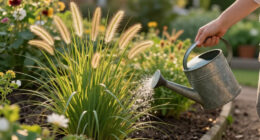
Implementing this pairing is straightforward. Simply plant dill seeds around the base of your cucumber plants early in the season. Keep the soil moist and ensure you give both plants enough space to grow. As dill grows, it will attract those beneficial predators that keep pests away, creating a self-regulating system. This method not only minimizes your reliance on chemical pesticides but also encourages biodiversity in your garden, which is essential for long-term health.
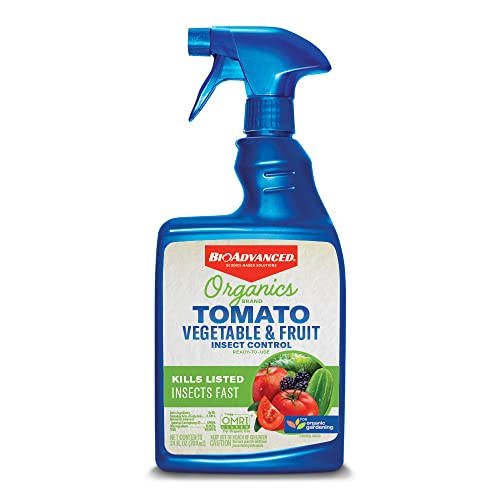
BioAdvanced Organics Brand Tomato, Vegetable & Fruit Insect Control – 24 oz
- Fast-Acting Insect Killer: Kills pests on contact
- Cures Powdery Mildew: Provides curative plant protection
- Versatile Plant Use: Suitable for vegetables, fruits, herbs
As an affiliate, we earn on qualifying purchases.
As an affiliate, we earn on qualifying purchases.
Frequently Asked Questions
Do Cucumber and Dill Attract Beneficial Insects Naturally?
Yes, planting cucumbers and dill naturally attracts beneficial insects. Dill, for example, supports pollinators like bees, boosting pollinator support. Both plants also help with pest deterring by attracting predatory insects that feed on harmful pests. You might notice more ladybugs and hoverflies around your garden, which naturally reduce pest populations. This balance creates a healthier, more productive garden without needing chemical interventions.
Can Cucumber and Dill Repel Specific Pest Species?
Imagine you’re a knight wielding a secret weapon—cucumber and dill can indeed repel certain pests. Their pest deterrent properties come from their plant scent mechanisms, which confuse or deter pests like aphids and cucumber beetles. By planting these herbs, you actively reduce pest issues naturally, creating a barrier that keeps unwanted insects at bay. So, yes, they serve as effective natural pest repellents, helping your garden stay healthy.
How Long Does It Take for Cucumbers and Dill to Attract Predators?
You’ll see cucumbers and dill attract predators within a few weeks after planting, typically aligning with their harvest timing. This process hinges on the pest lifecycle, as mature pests are more likely to be drawn to the scent of these plants. When you plant early, predators may arrive sooner, helping control pests naturally. Regular observation ensures you notice beneficial insects early, reducing the need for chemical interventions.
Are There Any Companion Plants That Enhance Their Predator-Attracting Abilities?
Sure, you can boost predator attraction with companion planting. Marigolds and nasturtiums, for example, act like pest deterrents but secretly invite beneficial insects. Plant them near cucumbers and dill to create a pest magnet zone that draws predators and keeps pests at bay. Think of it as a botanical pest control party—your garden’s version of a predator-friendly hotspot, making pests wish they’d missed the invite.
What Environmental Conditions Optimize Their Pest Control Effectiveness?
To optimize their pest control, make sure your soil moisture stays consistently moist but not waterlogged, as this encourages healthy plant growth that attracts beneficial predators. Additionally, provide wind protection, like a fence or planting near taller plants, to prevent wind from disturbing predator activity and pollination. These conditions help attract natural enemies, boosting pest control naturally and keeping your cucumbers and dill healthy.
Conclusion
By planting cucumber and dill, you naturally attract beneficial predators that help keep pests in check. Did you know that gardens with diverse plantings see up to 30% fewer pest problems? This simple strategy not only boosts your garden’s health but also reduces the need for chemical pesticides. So, next time you’re planning your garden, remember that a few humble plants like cucumber and dill can make a big difference in attracting helpful predators and creating a healthier, thriving space.